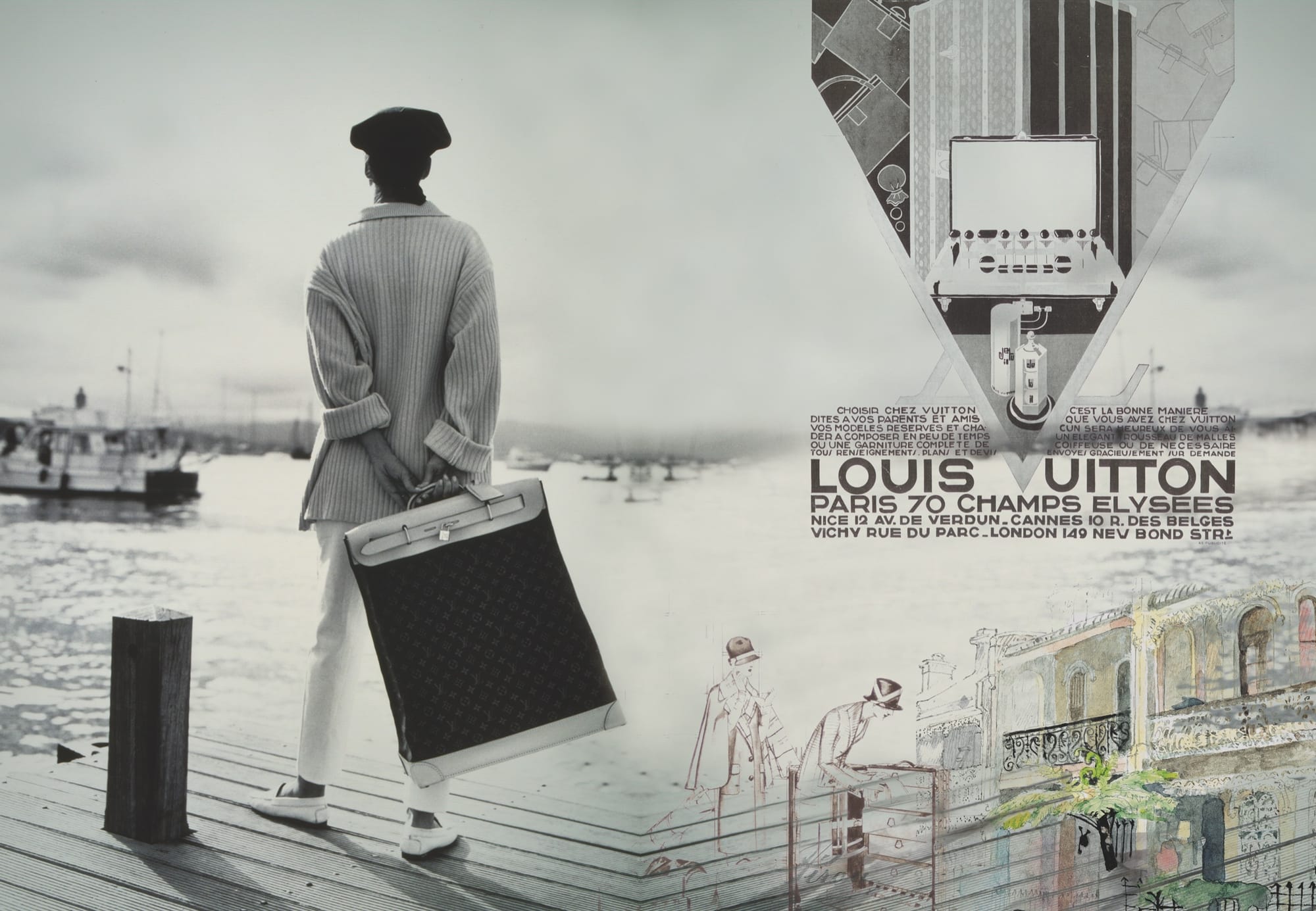
Standing in the factory where a young Louis Vuitton’s dreams of creating luxury luggage were still in their infancy, it’s inspiring to imagine that five generations later LV would be one of the most recognised brands worldwide. In 150 years, the company extensively expanded its portfolio of products, became the first two letters in one of the largest mergers in corporate history and took the very unorthodox decision of bringing in the talented yet unpredictable Marc Jacobs as creative director. The original Louis Vuitton factory in Asnières is hard to miss. Set in what used to be an uninhabited part of town with wide open countryside, it is now a prized relic from a more pristine age.
The Vuitton property, now surrounded by Parisian suburb dreariness, is astonishing for two reasons. The first is that the workshop itself, with its white-washed walls, has apparently changed very little since 1860 when Vuitton moved his operations from central Paris. It is still very much in operation, even though there are now other factories in the US, Spain, Italy and Germany. The second and possibly more surreal aspect is the adjacent Art Nouveau building, with its plaster tendrils and eye-catching flowery arabesque stained-glass-windows that served as the Vuitton family home until 1984. Today, marble busts of Louis, Georges and Gaston-Louis are the only remnants of Vuitton life on the premises, though the home makes for a charming museum.
But few know much about the demise of the family that headed their own company for 130 years. Gaston-Louis Vuitton was succeeded by his son-in-law businessman Henry Racamier who made a fortune in the steel industry. In 1977, Racamier was put in charge of the family company which he expanded massively up until 1990 when he was unwittingly forced out following the merger with champagne and cognac producer Moët Hennessy. Following internal division and misalignment, Bernard Arnault took over and the Vuitton family ended up selling their remaining shares. Currently and under the controlling eye of Arnault, Louis Vuitton’s annual turnover is over five billion USD, twice superseding prestigious front-runners Prada and Gucci Group’s Gucci division. Not bad for a brand which had to vie with the Spade tote and Fendi baguette for female attention in the 1990s and whose bags were deemed drab.
Sadly there remains but one token executive family member, Patrick Vuitton who is now head of the special orders division headquartered in Asnières. The day-to-day business is overseen by Lebanese production engineer Jade Hantouche, and it is here that any product can be adapted to your specific needs. There are, however, two golden rules: the product has to be associated with travel and be in keeping with the company’s aesthetic codes.
So whether you desire a case for your iPod or perhaps a trunk that conceals a writing desk, three drawers, and a compartment for your laptop or perhaps even a special case for your tea set, Vuitton’s special orders is the last bastion of bespoke craftsmanship where all your desires can be fulfilled. A visit to Asnières can also inspire some of the more amazing made-to-order pieces. You may even chance a meeting with Patrick Vuitton himself – the fifth generation Vuitton in a long line of legends.
HYPERLINK "http://www.louisvuitton.com" www.louisvuitton.com