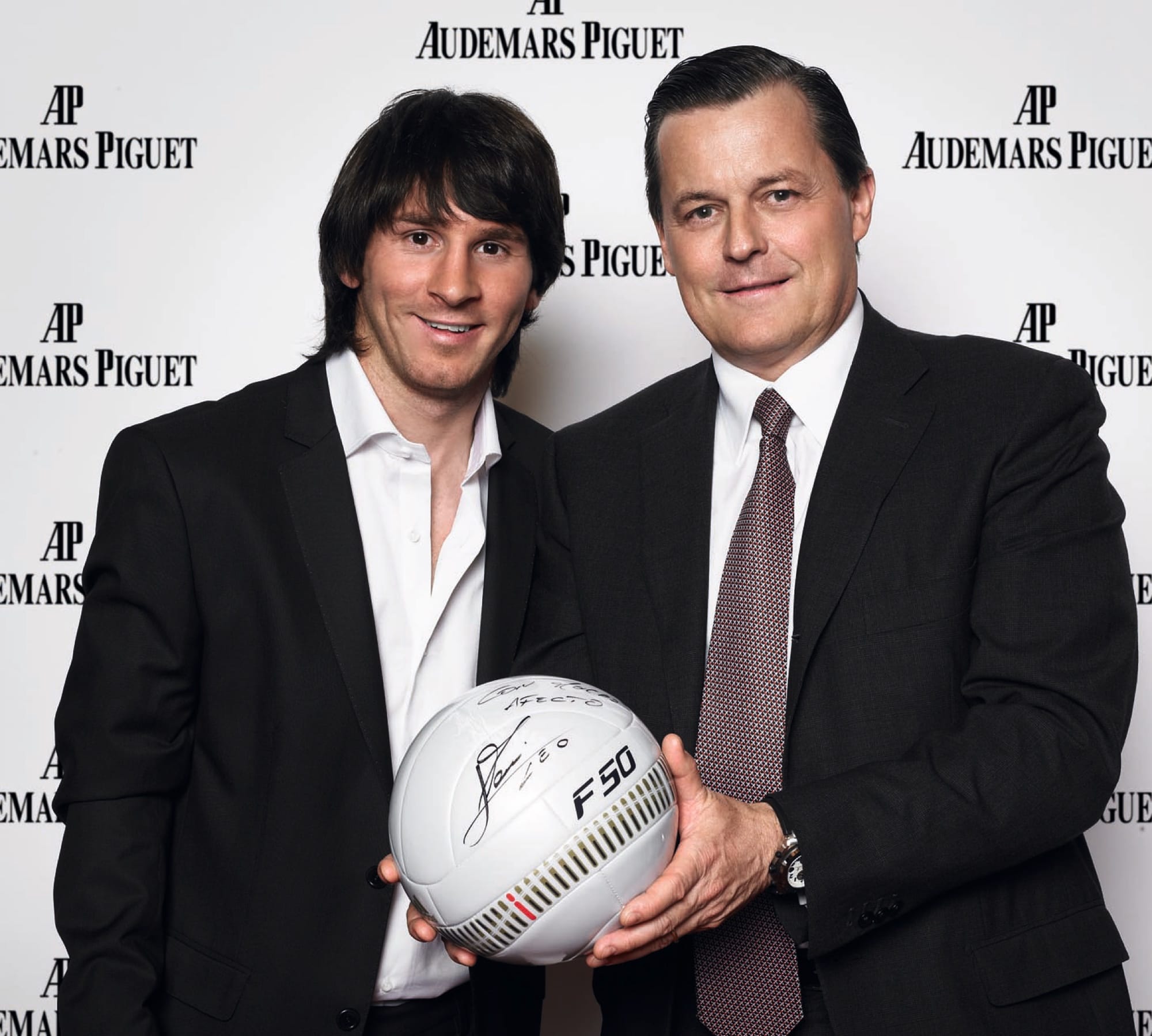
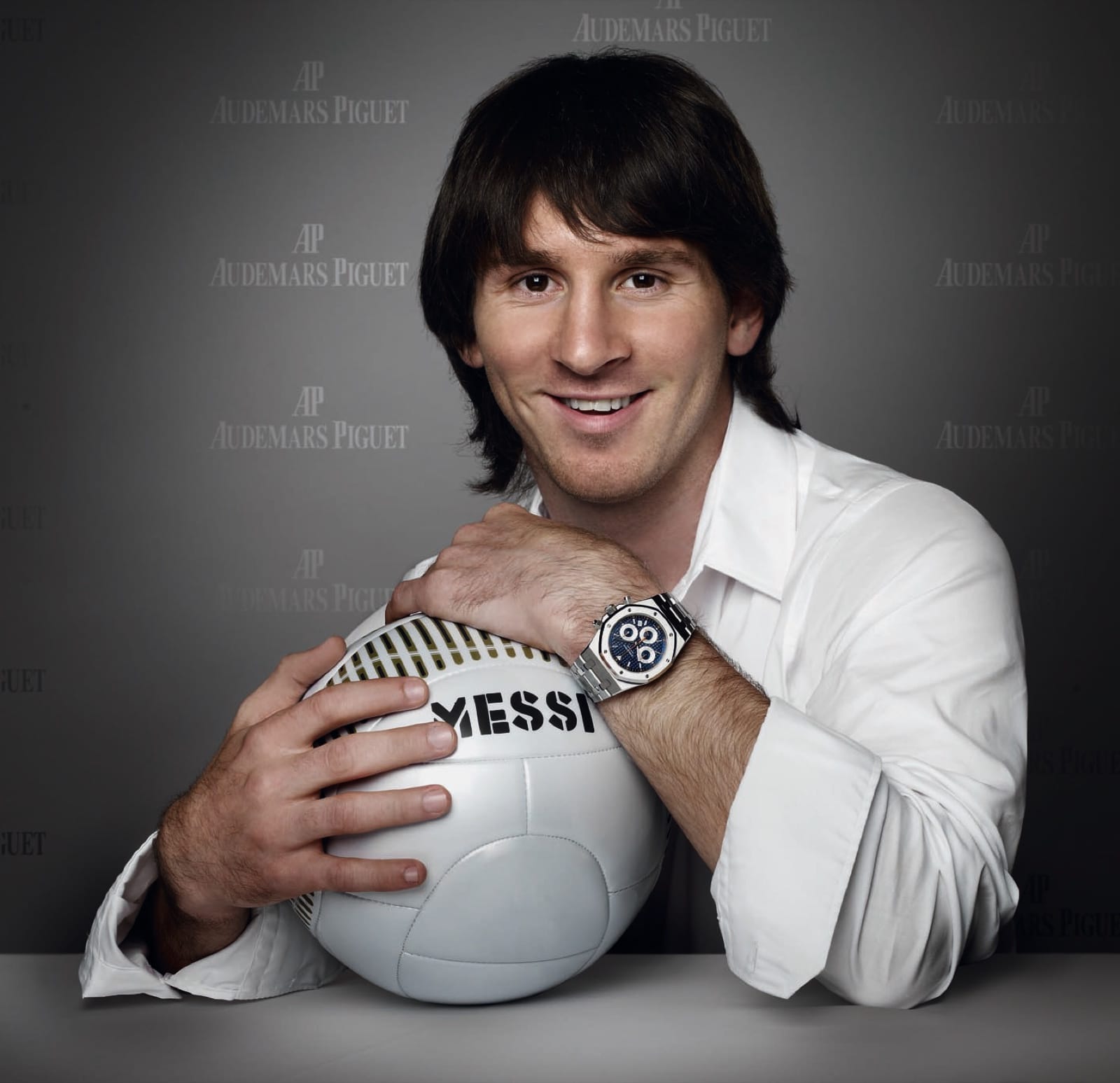
Lionel Messi is nothing if not honest. Asked about Argentina’s group opponents in South Africa, he shrugs his shoulders. “I haven’t seen much of Greece,” he explains. “And I know even less about South Korea. I’ve seen more of Nigeria because I watched a bit of the Africa Cup of Nations, but I don’t really like to watch football on television. I prefer to play.”
“What’s important to me is that Argentina are well prepared,” continues Messi, his voice barely above a whisper, peering self-consciously from beneath his heavy, boyish fringe. “I’d rather focus on Argentina and let others worry about us. We need to feel comfortable and create our own style. I prefer a free role with three strikers as at Barcelona, but that’s not my decision.”
Argentina’s formation will be the responsibility of maverick coach Diego Maradona, who made so many changes to the Argentina team during qualifying that they nearly didn’t make the finals. “We made life difficult for ourselves, but we’ve put that behind us now,” says Messi. “We are going to South Africa to win the World Cup and I believe we can win it. There will be tough opponents: Brazil, Spain, England, Italy, but we have the players to beat them all.”
Above all, Argentina have Messi, the footballer many feel is on his way to becoming the best ever, yet many of his compatriots have been underwhelmed by his performances for the Albiceleste, saying that he was used too deep or, more damningly, lacked the commitment he gives to Barcelona. “I’ve heard what people have said,” Messi’s tone is defensive, “but I’ve always been committed to the national team and always will be.”
The statistics back him up. Most of Argentina’s versatile squad play club football in Europe, but Messi was the only one who made the lengthy and tiring plane journeys to appear in all 18 World Cup qualifiers. That he only scored four goals backs up the theory about him being used too deeply or being too isolated, but he’s often played deeper for Barcelona this season and that didn’t stop him equalling Ronaldo’s club record of 47 goals in a single season.
Still only 22, Messi’s won every honour possible in football except the World Cup, where he hopes to emulate his hero Maradona. Maradona, in turn, is always generous about Messi’s talents. “What most surprises me about Messi is that he hasn’t got control problems,” says Maradona. “The ball remains on the upper part of his foot, like it’s glued to it. He feels the ball, and that makes him different to the rest. He seems to have an extra gear, a sixth speed. I see a lot of myself in him, but that doesn’t mean that he’s going to be worse or better than Maradona. He will be Messi.”
It is easy to see echoes of Maradona’s genius in Messi’s style – the low centre of gravity, lethal acceleration with the ball and the ability to dribble past players like training ground dummies. “It’s an honour to be compared to Maradona, but I have to say that I’ve never enjoyed those kinds of comparisons,” says Messi. You sense that he’d rather be at home on his computer than dealing with the media. “I don’t go out much,” he says. “I enjoy being alone at home, listening to Argentinian music, using the Internet to stay in contact with my family and watching TV.”
Messi has grown used to being man marked and it will be no different in South Africa. It would be fair to say that he’s been targeted, rather than marked, in some games but he is ready to deal with it. “I don’t know about targeted,” he interjects. “It’s true that sometimes I have been kicked when I don’t have the ball and that is wrong. But that just makes me more determined to beat the opposition. And I can switch. I can play on the left or the right. Or in the centre. And I don’t always have to run with the ball. I can pass it so they can’t touch me. I’ve been tempted to retaliate, but what would that achieve?”
Messi may seem to have been blessed. But his route into top-level football has not been easy. “When I was 11, I had a growth hormone problem. But being small meant I was more agile. And I learnt to play with the ball on the ground because that’s where it felt more comfortable. Now I realise that some bad things can turn out good.”
There were serious complications before things ‘turned out good’. When he began a course of hormone injections, the 1,300 USD annual bill was footed by Newell’s Old Boys of Rosario, the Argentinian club whose legendary talent spotter Jorge Griffa discovered Gabriel Batistuta, Juan Roman Riquelme, Carlos Tevez, Gabriel Heinze and Roberto Sensini. As Newell’s’ academy manager Enrique Dominguez recalled, “The things this kid used to do, My Lord, they were against the laws of physics. The only kid I had seen playing like that was Maradona.” It was the first of many comparisons with the man they call El Diego.
When they refused to carry on funding his medication, Newell’s lost their most promising youngster. Messi grew up in a family with Italian and Catalan roots and on a visit to see his cousins in Spain, one of Barça’s Argentinian scouts alerted them to Messi’s potential and he was given a trial. “It took me less than 10 minutes to be sure that he was a future star,” asserts coach Carlos Rexach, who also managed Barça several times. “In my 40-year career I hadn’t seen such a talent. But I can’t put any medals on myself for noticing him. Anyone with a minimal knowledge of football would have done exactly the same.”
Rexach made Messi sign a napkin as a contract and his family returned to Argentina and made plans to move to Catalonia. “I can remember when we left our neighbourhood in Rosario all the neighbours and our friends came out to say goodbye,” he recalls quietly. “Everybody was on the street with us. It was the first time I had ever been on a plane. We went straight to Camp Nou. It was so impressive and it felt like we had made the right decision to go through so much sadness and pain. Everyone told me that Barcelona would look after us but I was worried that had been a lie.
“The club needed to give me some medical injections and I was so overawed by what was going on that I didn’t even feel the pain. Even if I had I could not have let it show in front of my new club. It was February then and it was cold which didn’t help us to settle and we knew nothing – not even that Barcelona was by the sea. In Argentina I lived near a river, but the beach was an amazing discovery.”
Messi joined La Masia, the youth academy of the Catalan giants at the age of 13. At 1m42 (4 feet, 8 inches), when he sat on a bench he was the only player whose legs were not long enough to reach the floor. He still bears the nickname ‘la pulga’ - ‘the flea’ - from his early days at Barça.
The club paid for Messi’s hormone treatment and he grew by a centimetre a month for almost three years, reaching 1m67 (5 feet, 6inches). By then other clubs had spotted his talent, including Arsenal. The Spanish Federation also came calling. “I couldn’t play in certain youth tournaments because they were Spanish-only,” says Messi. “A man asked if I was interested in playing for Spain”. That was Ginés Menéndez, Spain’s Under-16 coach who now says: “For a 15-year-old, he was the best I had ever seen. Unfortunately, we couldn’t call on him because he still hadn’t obtained Spanish nationality.”
Besides, Messi’s dream was to play in the Under-17 World Cup for Argentina, not that Argentina knew about him. Then he got lucky when Argentinian sports magazine El Gráfico featured him. The journalist called Hugo Tocalli, Argentina’s Under-17 manager, for an opinion. Tocalli feigned interest, but later had to fend off hordes of Spanish journalists questioning why Messi had been ignored. The Argentinian FA arranged an Under-20 friendly purely as an excuse to call Messi up, thus negating any potential threat from Spain. Barcelona played down the speculation until they unleashed Messi in a friendly against Juventus in 2004. The then Juve manager Fabio Capello (now at the helm of England’s World Cup campaign) asked a startled press pack, ‘Where did that little devil come from?’
In May 2005, aged just 17, Messi became the youngest player ever to score for Barcelona with a debut goal against Albacete. He chipped in a Ronaldinho assist with such nonchalance that most of his peers stood laughing, shaking their heads. Messi ran to his brother in the seats. “He made me climb on his back in front of the entire crowd,” he recalls, slightly embarrassed.
Messi’s favourite goal remains one he scored in March 2007, when he skipped effortlessly past five men against Getafe in the Spanish Cup, a goal reminiscent of El Diego’s sublime individual effort against England in the 1986 World Cup. Three months later, in the penultimate league game of the season against Espanyol, Messi virtually replicated Maradona’s famous ‘hand of god’ goal.
Against Mexico in the semi-final of the 2007 Copa America, Messi hit another implausible goal. Carlos Tevez received the ball and hit a quick pass into the path of Messi, who was approaching the Mexican penalty area from the left. With defenders closing in on him, everybody, including his Barça teammate and Mexico captain Rafa Marquez, expected a low shot or a return ball to Tevez who was moving into space in front of goal. Instead, Messi controlled the ball deftly and then chipped goalkeeper Oswaldo Sanchez with his second touch. “That is probably my second favourite goal,” he says, smiling. “My first instinct was to chip the ball and that’s what I did. Tevez would not have been happy if I had shot and the goalkeeper had saved it, but a striker has to be selfish if he sees a chance.”
The world’s press has already run out of superlatives to describe Messi’s many dizzying performances this season. He goes to the World Cup as a sublime and gifted footballer, who, incredibly, is young enough to have not yet reached his peak. Millions hope to see him dominate the tournament. He has the talent and the maturity to let the ball speak for him and to do all that is expected of him and more.