Even though many countries officially view Lebanon as an unsafe place to visit, the global art world hasn’t taken this stance. Indeed, last September’s Beirut Art Fair was the biggest and best yet, whether you measure success in terms of participants, visitors or sales.
Foot Traffic
If we consider the number of people who flew in to attend the art fair’s fifth edition, it was more than three times that of the previous year. According to Rania Tabbara, VIP Relations manager, the number of international VIP attendees reached 2,125.
To put this in a larger context, there were 20,000 total visitors, which was 2,000 more than 2013 and double that of two years ago. So we can clearly deduce that much of the latest edition’s growth has been due to international gains, rather than domestic ones. And it didn’t materialise without a considerable investment in public relations either, which amounted to 7 million USD. Nevertheless, the general progression has been remarkable if you take into account that only 3,500 people visited the inaugural fair in 2010.
At the Tills
The total art sales in 2014 reached 3 million USD, according to Laure d’Hauteville, the fair’s founder and director, which is almost five times as much as when the fair was first launched and 200,000 USD more than last year. When dealing with the art market though, it’s important to also look at the number of pieces sold and their price range. This year, although the volumes were much higher, the prices weren’t, ranging from 5,000 to 80,000 USD, as compared to 2013’s range of 15,000 to 350,000 USD.
Show Highlights
I would argue that the Beirut Art Fair’s most significant contribution to its Arab art platform was its lens on contemporary South and Southeast Asian art. And the real highlight of the Asian artworks exhibited wasn’t the main pavilion of Indian miniatures but the Shanghai-based art collective, Liu Dao/ island6 - in terms of popularity too - they managed to sell almost half of multimedia works exhibited for prices ranging from 7,000 USD to 28,000 USD.
With playful puns on the high-tech elements of contemporary art, Liu Dao featured satirical twists on both the traditional and the modern, combining holograms with rice paper and video/animation with Chinese calligraphy.
Such links with Asia have also culminated in the ME.NA.SA (Middle East, North Africa, South and Southeast Asia) mission of the Beirut Art Fair launching its first show in Singapore in November, and reciprocating the favour with MENA and Lebanese pavilions.
Christie’s Insight
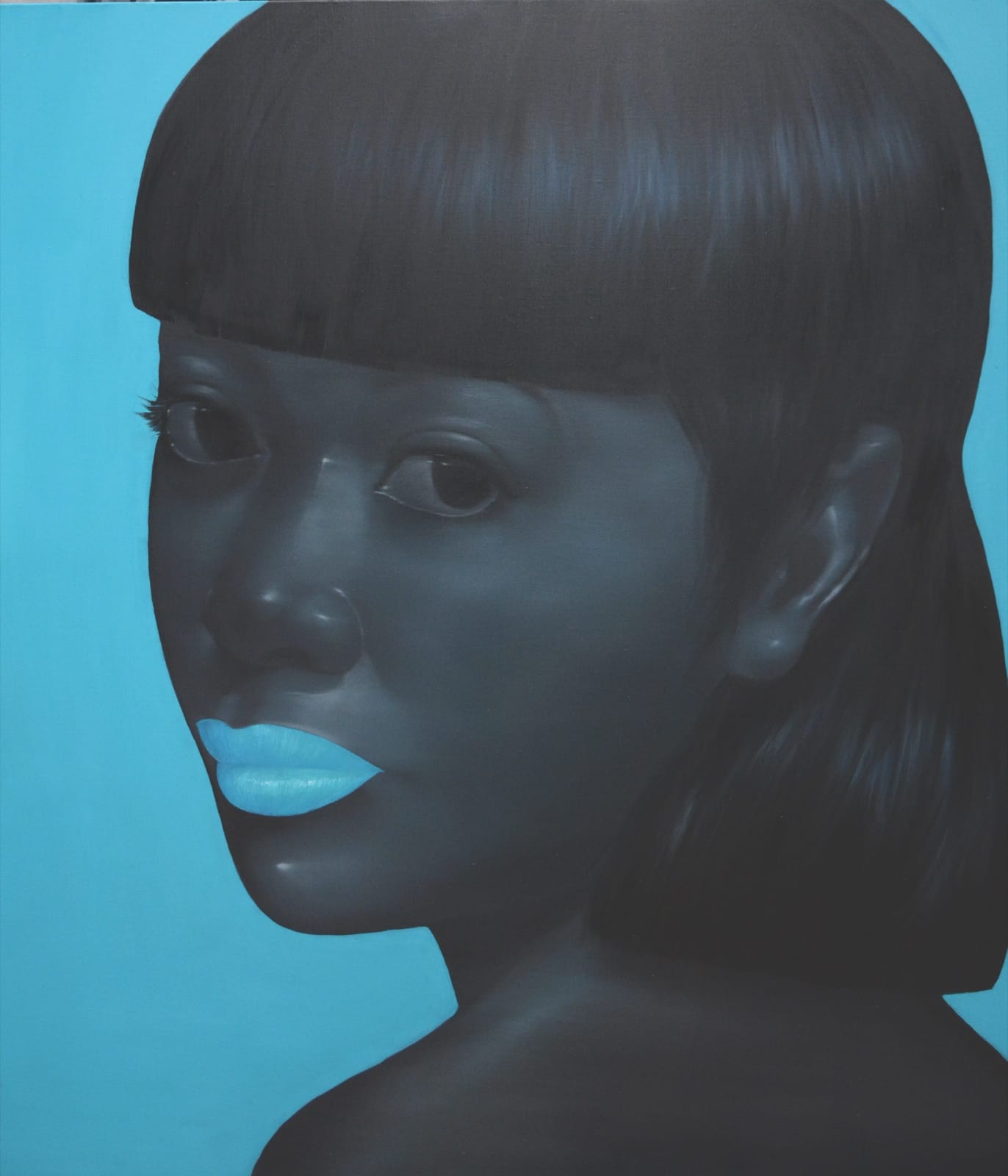
Understanding why investments in contemporary art, and especially contemporary Asian art, can be considered a sensible choice, the Beirut Art Fair talk given by Christie’s managing director in the Middle East, Michael Jeha lent valuable insight.
Jeha documented the shift towards contemporary art on a global level, attributing this to two main factors: the rise in contemporary art collectors and art fairs, which are main drivers of the market growth after galleries. For example, last year, both international and local art fairs made up 33 per cent of the 59 billion USD of total art sales according to The European Fine Art Foundation (TEFAF).
Further breakdowns of these sales by TEFAF show that contemporary art makes up the largest chunk with over 46 per cent, followed by modern art at 29 per cent, then impressionist and post-impressionist art, which accounts for 13 per cent and finally, the Old Masters total around 10 per cent. Interestingly, Jeha explained that some of the reasons why investors and collectors are so drawn to contemporary art is because it isn’t an academic category that requires detailed expert knowledge and it has also become more accessible in recent years.
Now, the highest number of art collectors in the world are based in the US, which is no surprise considering 42 per cent of the world’s millionaires are American. This is also why the US has the largest share of the global art market, followed by China and the UK. But when it comes to just the emerging markets in contemporary art, Chinese art comes first, valued at the highest price artwork being sold, followed by Latin American, then Middle Eastern and Indian art.
In a way, this is an interesting representation of what has been happening at the Beirut Art Fair. By banking on our own developing and still undervalued market and tying it to the largest emerging market of all, the organisers of ME.NA.SA.ART are making a sound investment for the future.
WHAT ME.NA.SA.ART Beirut Art Fair
FOUNDED By Laure d’Hauteville in 2010
WHERE Beirut International and Exhibition Leisure Centre
WHY This fair is becoming a growing institution for international art collectors interested in the Middle East and this November, it has also morphed into Singapore Art Fair, creating a solid connection to Asia as well.