The leading international museums have long been interested in the art of the Islamic world. Well before our own museums and collectors caught on, museums like the Louvre, the Metropolitan Museum of Art and the Victoria and Albert, among others, have been the keepers of Islamic art, celebrating its traditions and treasures. In recent years, the focus of these museums seems to have shifted to the contemporary art of the region. Glenn Lowry, director at New York’s Museum of Modern Art (MoMA), a leading scholar of Islamic Art and one of today’s greatest advocates for contemporary Middle Eastern artists explains the growing popularity: “There are a number of reasons why contemporary art from the Middle East is gaining attention outside the region. The most important reason, I think, is that the art merits the interest because it often deals with powerful and compelling issues in engaging and thoughtful ways, but it is also because more galleries and museums in Asia, Europe and North America are open to a global approach to the visual arts and welcome the conversation with art and artists from the Middle East.”
In 2006, MoMA hosted one of the first contemporary displays of Middle East contemporary art in their exhibition entitled, ‘Without Boundary: 17 Ways of Looking’. This showcase included established artists, like Palestinian Mona Hatoum but also rising stars, like Lebanese Walid Raad. As with most regional showcases, critics objected to the exhibition’s fundamental premise, citing that many of the artists had nothing more in common than birthplace, if that. However, the exhibition, in the newly renovated galleries of a museum with one of the greatest collections of modern and contemporary art in the world, made others take notice.
Since then, the Tate Modern, the British Museum and the Los Angeles County Museum of Art, have all established acquisition committees that seek to increase holdings of Middle Eastern modern and contemporary art. The Solomon R. Guggenheim Museum is in the process of establishing a Middle East Circle of Friends to help advise and imagine how it can better engage with the region. Founding member of the Tate’s Middle East Acquisition Committee and Middle East liaison for Art Basel, Alia Al-Senussi shares her perspective: “In the past, decorative art, and particularly Orientalist art, dominated conversations relating to art and culture. This has all changed with the announcements of major new museums and galleries across the Middle East. However, not only has the transformation been inwards-out but vice versa, and I would say foreign interest in Arab artists has increased local attention.” Speaking of her work with Art Basel as their representative for the Middle East, Al-Senussi adds that this “illustrates that the leading art fair in the world believes Arab artists to be an integral part of its programme through the galleries in the fair, the artists represented and the panel discussions that take place, not to mention the collectors and curators who attend.”
The work of Arab artists is also increasingly visible at global art events, not only at art fairs like Art Basel (in Basel, Miami and now Hong Kong) and Frieze (in London and New York) but also at biennales (in Venice and Sydney among others). Documenta 13, 2012’s edition of the revered exhibition of modern and contemporary art that takes place every five years in Germany, featured five of Lebanese gallerist Andree Sfeir-Semler’s artists including Etel Adnan, Akram Zaatari, Wael Shawky, Walid Raad and Rabih Mroué. If you take into account country size, Lebanese artists were the most heavily represented in the whole exhibition! All this attention ultimately leads to work matriculating into museum collections, which is still the ultimate achievement for an artist. Sfeir-Semler confirms that the artists she represents are increasingly sought-out by international museums and curators and she has succeeded in placing works by her artists in almost all major museums in the U.S. and Europe including MoMA, the Chicago Museum of Modern Art, the Tate Modern, the Centre Pompidou, the National Gallery Hamburger Bahnhof-Berlin, the Hamburger Kunsthalle and the Frankfurt Museum of Modern Art.
Here’s our look at some of the hottest Arab artists, as seen by some of the greatest museums in the world:
The Museum of Modern Art, New York
Walid Raad (b. 1967, Lebanese)
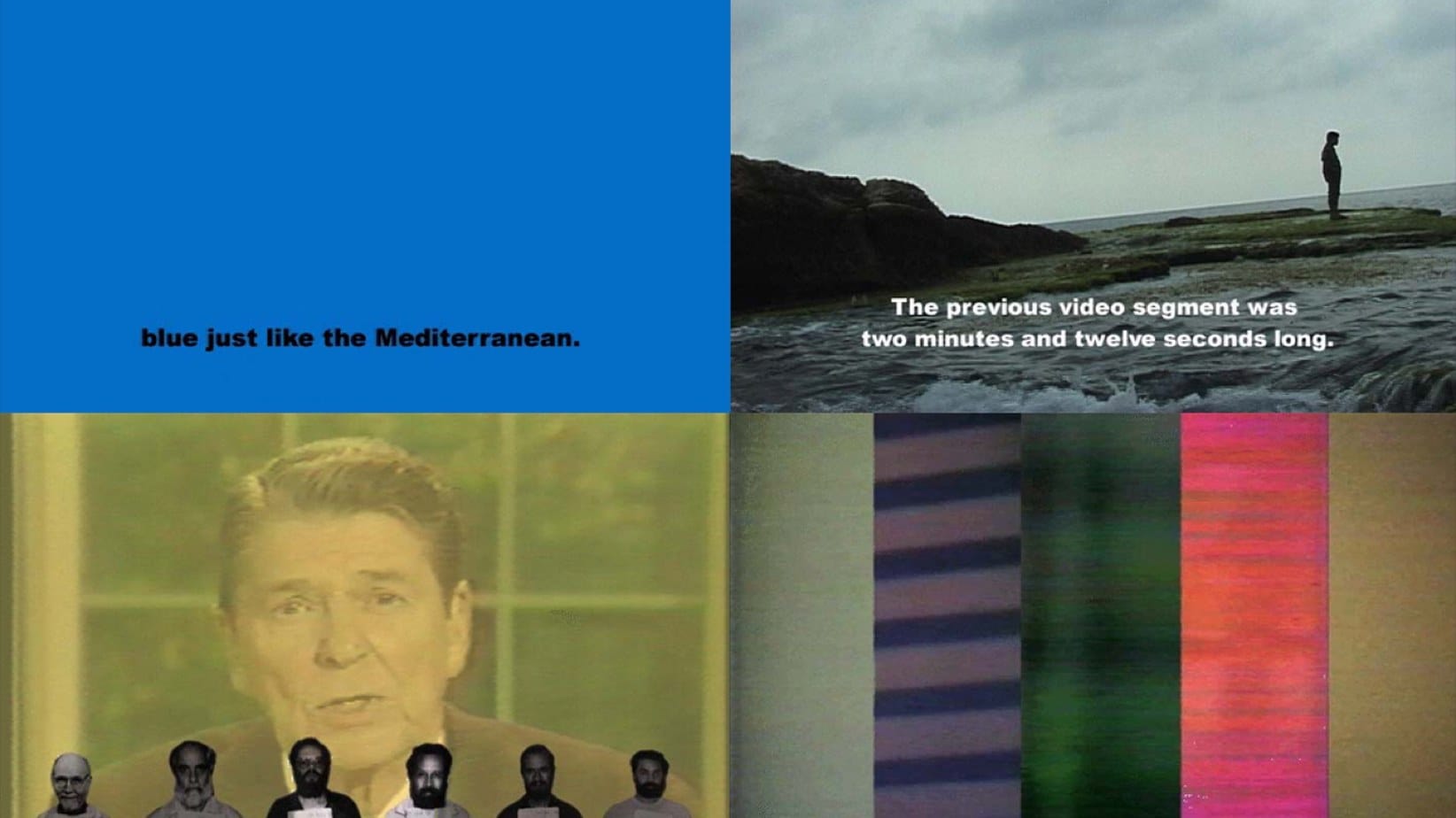
As one of the most sophisticated conceptual artists working today, Raad’s work is featured heavily in MoMA’s permanent collection. I cannot remember a time when I have visited the museum in recent years and not found one of his works on view. Professor at Cooper Union School of Art in New York, Raad’s complicated practice includes photography, video, literary essays and performance lectures. Earlier work authored by his fictional collective, The Atlas Group deals with the material and immaterial impacts of the Lebanese Civil war. His seminal work, ‘My Neck is Thinner Than a Hair: Engines 1996-2004’, consists of 100 photographs of car engines, the only part that remains after an explosion, was the first work acquired by the museum. His current ongoing project ‘Scratching on Things I Could Disavow: A History of Art in the Arab World’ examines the major recent cultural developments and growing infrastructure in the Arab world, including museum projects, biennales, galleries and more.
Akram Zaatari (b. 1966, Lebanese)
Zaatari’s work will be on view at MoMA for Projects: 100, an exhibition series that features promising emerging contemporary artists in June 2013. ‘After They Got the Right to Arms. Fourteen Young Men Posing with Guns’ was acquired in 2012 by the Museum’s Fund for the 21st century, which strives to collect the most important contemporary art for the collection. Like Raad, Zaatari’s work also deals with the impact of the Lebanese Civil War, with an emphasis on the document. Zaatari uses found photographs, videotapes, journals and personal collections, amongst other things, to comment on post-war dynamics, including the clouding of memories and histories. This coming summer, he will represent Lebanon at the 55th Venice Biennale.
The Solomon R. Guggenheim Museum, New York
Tarek Al-Ghossein (b. 1962, Palestinian born in Kuwait)
Since the announcement of The Solomon R. Guggenheim Foundation’s expansion to Abu Dhabi, the New York museum has been making a concerted effort to add works by the most promising Middle Eastern artists to their collection. Photographer Al-Ghossein’s most well known body of work is his Self-Portrait series in which he appears wearing the emotionally charged keffiye in different locations - at an airport, looking to Palestine from across the Dead Sea in Jordan and in deserted landscapes. Professor of Photography at the American University in Sharjah, Al-Ghossein’s stunning photography explores issues of Palestinian identity and the right of return. A recent series of abandoned construction sites in the Emirates, with their imposing walls and barriers offer his reflections on the plight of the Palestinian condition. His work was also featured in the first United Arab Emirates pavilion in Venice in 2009.
The Tate Modern
Ayman Baalbaki (b. 1975, Lebanese)
Lebanese painter Baalbaki is one of the most successful young Arab artists, achieving impressive numbers at auction house sales. His portraits of Lebanese fighters and depictions of bombed-out buildings are evocative and emotionally charged. Characterised by strong, gestural strokes and canvases weighed down by heavy applications of paint, Baalbaki succeeds in embedding intensity into his paintings. Represented by Saleh Barakat’s Agial Gallery in Beirut, he was also included in The Future of a Promise in 2011, a pan-Arab exhibition sponsored by Edge of Arabia, Abdul Latif Jameel Community Initiatives and Abraaj Capital, in Venice.
Lamia Joreige (b. 1972, Lebanese)
Filmmaker, photographer and installation artist, Joreige has written, directed and produced works ranging from short videos to multimedia installations and documentaries. Like many of her contemporaries, Joreige relies on archival documents and objects to comment on the collective histories transformed by the Lebanese Civil War and reflects on memories lost due to wartime traumas. Objects of War, No. 3, 2006 includes a single-channel video projection, as well as a selection of miscellaneous objects displayed in glass vitrines. The video features Lebanese interviewees discussing their respective and seemingly banal object, explaining their significance, while illustrating the immaterial transformation that can occur post-trauma. Joreige, has not only differentiated herself as an artist, but is the co-founder of the much acclaimed Beirut Art Centre, which has succeeded in bringing remarkable contemporary art programming to Lebanon.
The Smithsonian
Janane Al Ani (b. 1966, Iraqi)
As a photographer and filmmaker, Al Ani, draws from the journalistic tradition to construct images of the Middle East. Through her work, she explores questions such as the impact of photography and image making on current views and stereotypes of the region and landscape. Winner of the 2011 Abraaj Capital Art Prize, Al Ani has exhibited globally. Her work was first acquired by the Smithsonian’s Sackler Freer Galleries - the wing dedicated to exhibiting and preserving Asian Art - twelve years ago. Currently, images from her recent series, Shadow Sites are the subject of a retrospective at the Sackler Freer Galleries, in celebration of their 25th Anniversary.