The clue is in the name: Mille (thousand), Miglia (miles), which works out at around 1,600km. And, as is the way in Italy, it’s an event born of passion, having been instigated by the people of Brescia, a town near Lake Garda in the north of the country, when the Italian Grand Prix was unceremoniously stolen from their Montichiari circuit in favour of the technically superior Monza in 1922. Suitably outraged, the Brescians devised an event that would keep the town’s name alive: a road race from Brescia to Rome and back again to Brescia. After all, they reasoned, why should the capital city get all the benefits of their hard work?
It was a fast and furious race that punished competitors and cars alike, taking place 24 times between 1927 and 1957, (World War II got in the way) and was banned after one too many fatalities when a Ferrari crashed and wiped out, not only its driver and co-driver, but nine spectators, five of whom were children. Drive the route today, see how many people line the streets, and you’ll wonder how more weren’t killed.
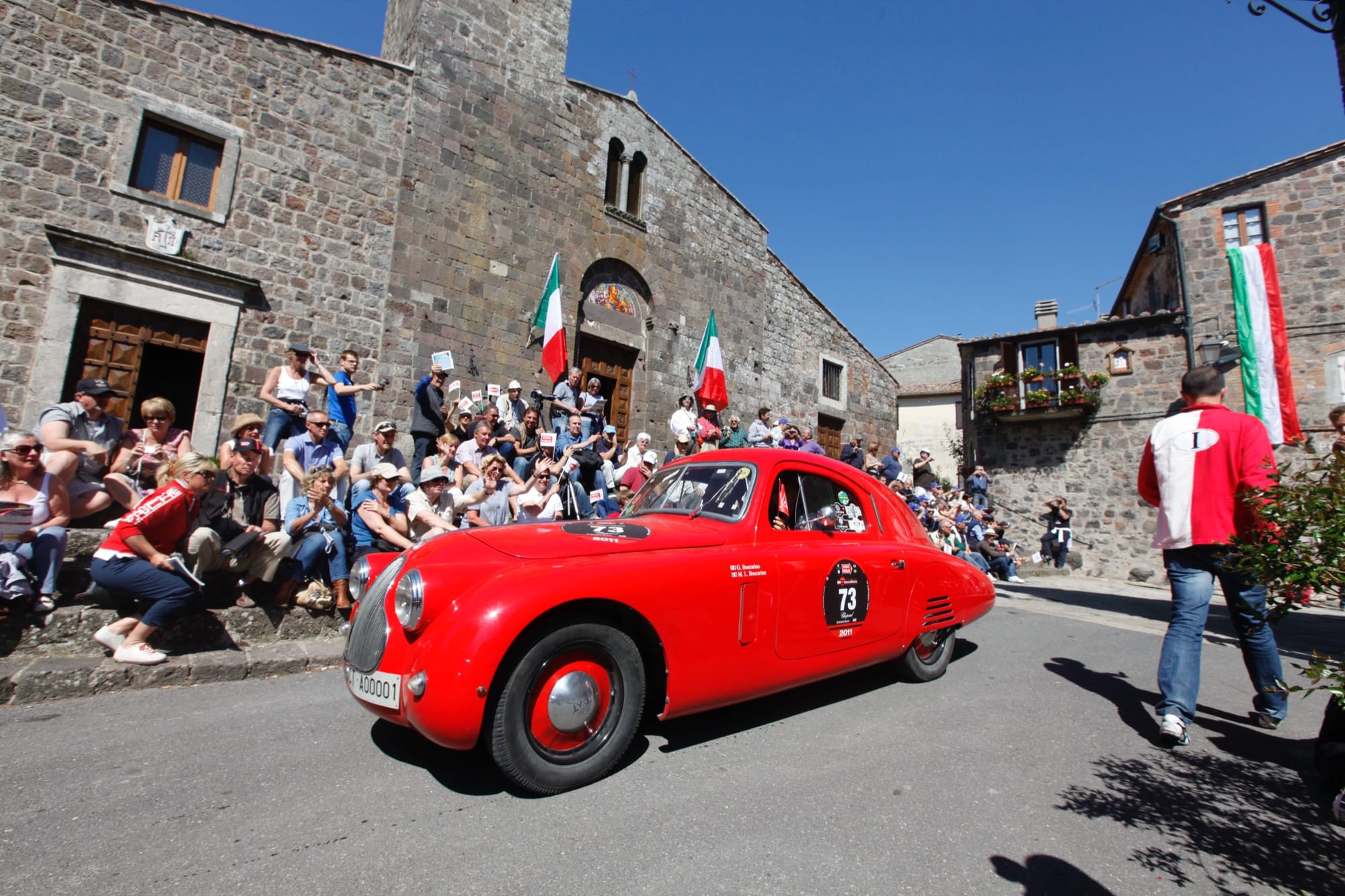
In 1977 the Mille Miglia was revived, only this time as a historic rally. The journey is essentially the same, but instead of being a race against the clock, it now tests the navigational and driving skills of teams, while still being an ordeal for the cars and occupants that take part. And to take part, in order to preserve the sanctity of this most revered motoring event, cars must have previously been entered into one of the original Mille Miglia races. Which means every competing car has provenance and history by the truckload. Which, in turn, means they’re worth absolute fortunes.
For most, participating in the Mille Miglia is an ambition that will remain unfulfilled for an entire lifetime. But there’s a way around the rules, so that you can actually take part with your own car – one that wasn’t involved in the original race series. But there’s a catch: it has to be a Ferrari.
Ferrari is the only organisation that has been granted special permission to run an official side event, called the Ferrari Mille Miglia Tribute, and the fortunate few that are chosen from the thousands of applicants get the full experience.
2010 was the first year the Tribute was run and it was a resounding success. The basic gist of the event is that the Ferraris run an hour ahead of the rest of the rally but they cover the exact same route, drive through the same closed-off towns and villages and appear on the same podiums, being cheered on by the same crowds that line this extraordinary route. Ferrari scrutinises the applications from all around the world in order to make sure the cars driven are unmolested examples of the breed and to provide a good cross section of old and new machinery. And this year Bespoke was invited to join 150 other privileged Ferrari drivers in its very own California. Who says dreams don’t come true?
Although the speed element of the competition has ostensibly been removed, that doesn’t stop drivers from pushing their priceless cars to their limits. On the contrary, it appears to be a necessity if any, of that history that is to be preserved and enjoyed. The upshot is that Italy is shaken to its very foundations by the exhaust pipes of 300 old racecars and 150 Ferraris.
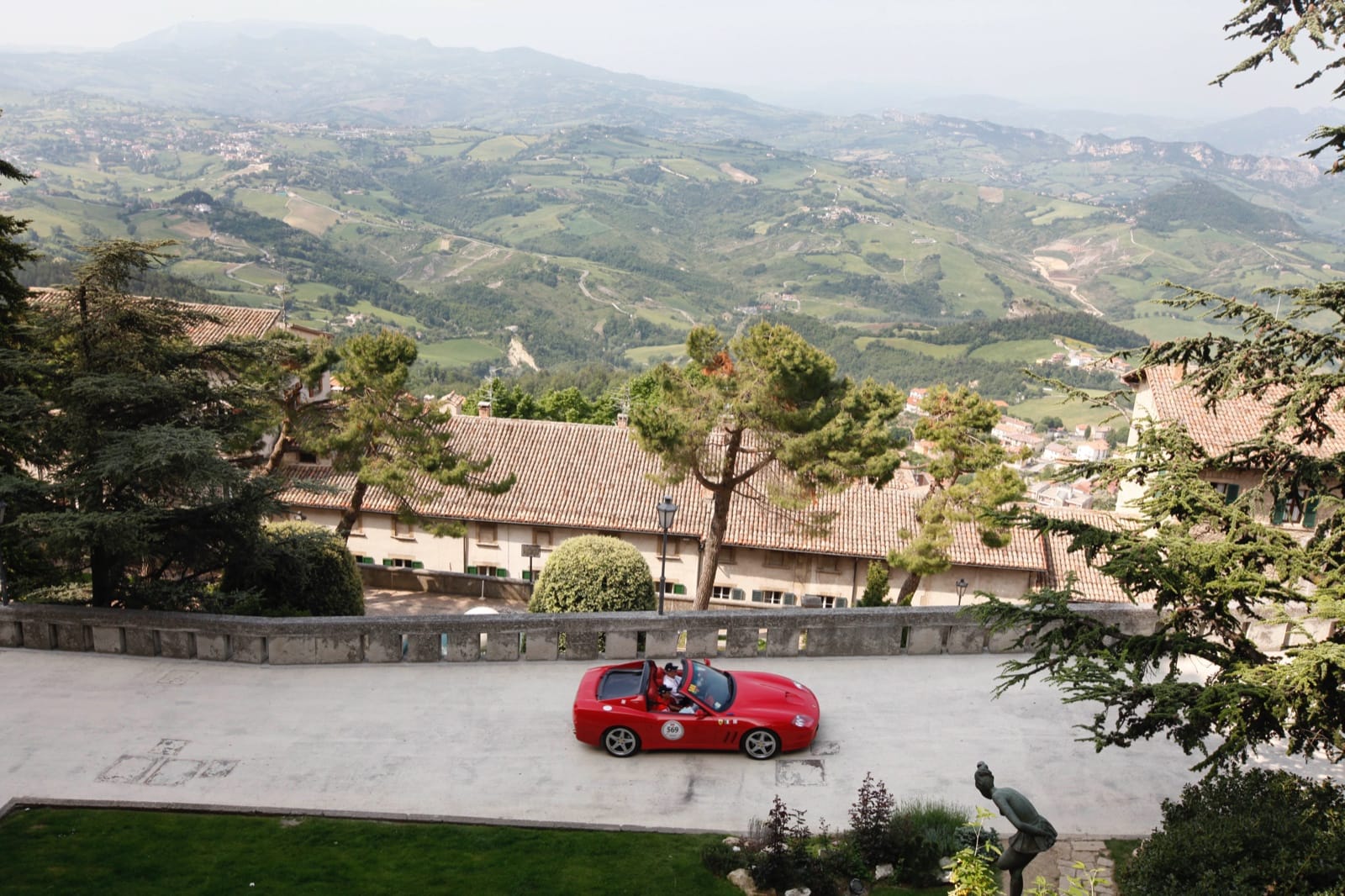
Every May, these cars are driven hard for the requisite thousand miles on a road route that looks like a gigantic figure 8. Starting at Brescia, teams head south through Verona, Cento and Bologna, before diverting to the east coast and Repubblica Di San Marino. Then south to Rome, which is the traditional halfway point and sees the end of nearly two days of driving. The third, and most gruelling day, is all the way back to Brescia via Siena, Florence, Bologna (again), then northwest to Modena, Parma and, finally, a heroes’ welcome at the finish stop.
Seemingly every millimetre of the route is lined by Italian well wishers. Every age group, from babes in arms to frail old ladies, is there. In the unspeakably beautiful towns the crowds are often ten deep, everyone shouting for you to rev your engine then cheering when you do. If you ever wanted to know what a rock star feels like at a homecoming concert, this is probably as close as it gets. The roar of engines is the music that flows through Italy – it’s the lifeblood of a nation.
So many unforgettable sights, sounds and experiences, it’s difficult to hone in on anything in particular. But one thing will never, ever leave us. Arriving in Rome at the end of the second day of driving, the city was gridlocked. It always is. We had to make it through the heaving, deafening traffic for the pre-arranged parade and were going nowhere fast. Stuck in one of Rome’s many tunnels, a noise emerged above the roar of engines and the blaring horns of a billion scooters. It was the police, forcing their way through on motorcycles. As they caught sight of any Mille Miglia participant, the traffic was stopped and parted, like some metallic Red Sea, for participants to squeeze their way through. Surreal doesn’t come close.
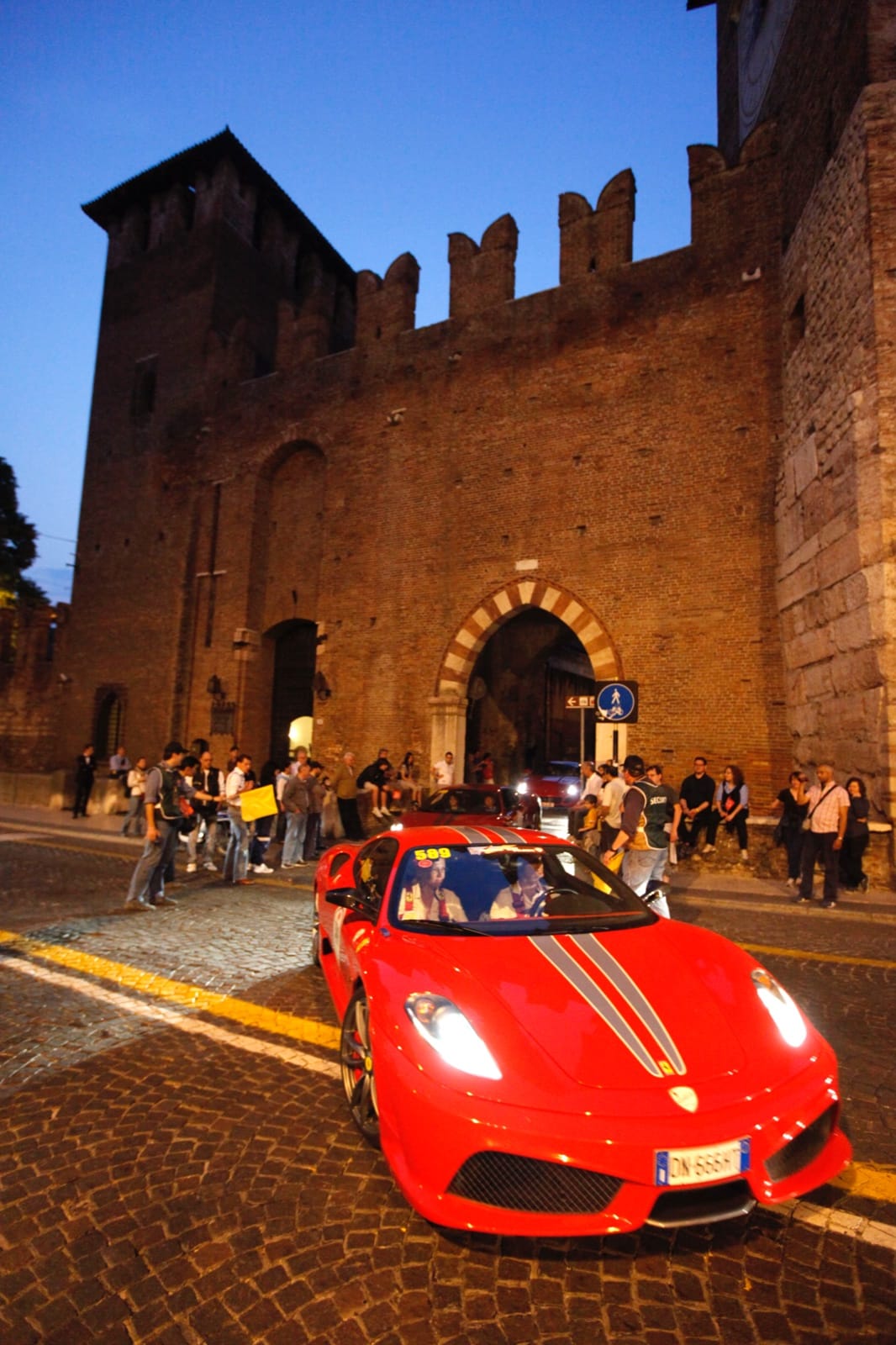
For anyone that takes part, either as a spectator, driver or navigator, there’s a tangible air of respect for the beautiful cars and the drivers who raced them all those years ago. These machines are entirely bereft of creature comforts or safety features we take for granted in modern cars. The Mille Miglia was, and still is, the ultimate test of endurance but for us, getting to do it in the comfortable yet still exciting cockpit of a new Ferrari California is the best of both worlds. How on earth are we going to top this?
www.1000miglia.eu