1. The 1940s
Bonnie Cashin (American)
1907 – 2000
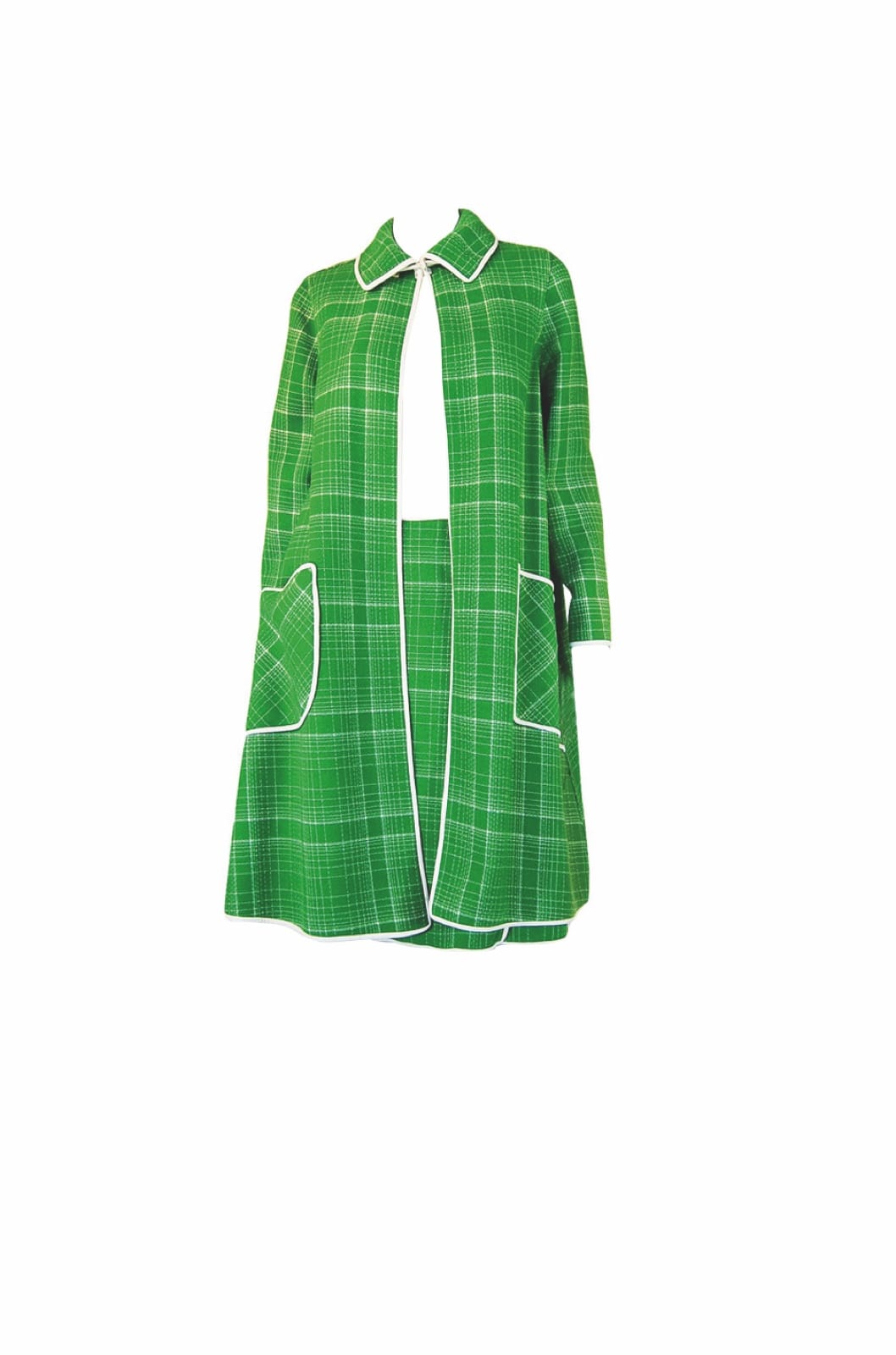
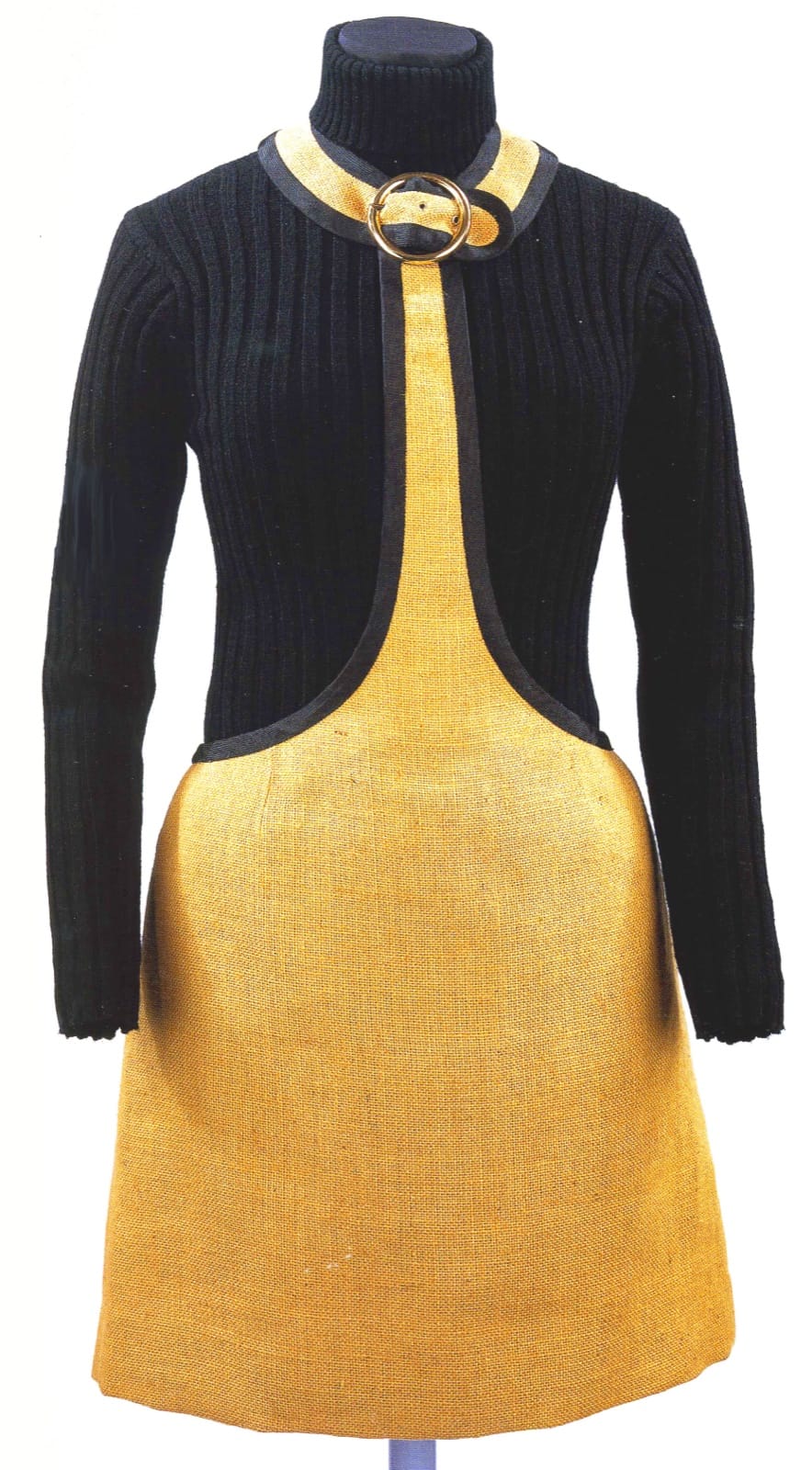
During the Second World War and Paris’ isolation in the 1940s , Americans were finally able to make the most of their own fashion aesthetic, which lead to the birth of sportswear. One of its most acclaimed pioneers was Bonnie Cashin, the designer whose approach of treating clothing as kinetic art paved the way for sportswear to become a staple of the modern wardrobe. Working with lush and organic materials such as leather, mohair, tweed, wool and cashmere, Cashin extended their use to high fashion. She is most famous for using industrial hardware in her accessories, such as the brass toggles used at the women’s accessories department she launched at Coach in 1962. Anyone who cherishes boots and enjoys layering has Cashin to thank. These cold winter days, we send warm wishes your way you, Bonnie.
2. The 1950s
Jean Louis (French-American)
1907 – 1997
Once considered passé, the silver screen glamour of the 1950s has transcended its time, its look etched forever in our mental movie archive. Breaking with the Parisian style at the time, Hollywood couturiers focused on creating a new classicism that would be timeless and flattering on stage. Towering above them all was Jean Louis, head designer for Columbia pictures, the man responsible for iconic looks like Rita Hayworth’s black strapless dress in Gilda, Marlene Dietrich’s beaded soufflé stage wear for her cabaret world tours and the memorably sheer, sparkling gown Marilyn Monroe wore when she sang “Happy Birthday, Mr. President” to John F. Kennedy in 1962. For over four decades, Jean Louis filled the closets of Hollywood legends like Judy Garland, Katharine Hepburn and Joan Crawford. Need we say more?
3. The 1960s
Mary Quant (English)
1934
The youth revolutions of the 1960s all but swept way the formal, if ethereal, sartorialism epitomised by the stars of the silver screen. For the first time in history, fashion became a statement of personal freedom. The streets of London gave birth to talent such as Mary Quant, creator of the miniskirt and hot pants. Not one to shy away from novelty and experimentation, Quant changed the industry’s attitude, making it more inclined to the trends of the youth market and Pop culture. Her most popular designs included plastic collar sweater dresses, balloon-style skirts, pinafore dresses, vinyl boots, knickerbockers and stockings in all sorts of wild colours and patterns. Quant became synonymous with what became known as the ‘London look’ and ushered in Mod style.
John Stephen (English)
1934 – 2004
John Stephen, otherwise known as the ‘King of Carnaby Street,’ was the first designer to identify and sell menswear to a mass market, epitomising a time when teenagers no longer wanted to dress like their fathers. He eventually became the pioneer of high turnover and the disposable fashion ethos of contemporary operators. In an office behind his boutique, Pop music blaring, Stephens began creating flamboyant yet affordable designs, amongst them mini-kilts for men and low slung elephant-cord trousers. With androgynous velvet double-breasted jackets hung alongside kaftans and Aertex T-shirts on the rails outside his boutique, Stephen’s designs were snapped up by those at the forefront of Swinging London and were favoured by bands like The Who, The Kinks and The Rolling Stones.
Rudi Gernreich (Austrian-American)
1922 – 1985
Daring and dismissive of the norms, Gernreich was a strong advocate of unisex clothing. He began his career in dance (which certainly influenced his constraint-free fashions), but soon became known as the most radical designer of his time. Known for dressing male and female models in identical outfits, both with shaven heads and bodies, he is most noted for his design of the first topless women’s swimsuit, the monokini and later on, the thong swimsuit and the pubikini- which revealed as much as it covered, Applying his talent to underwear, Gernreich revolutionised the brassiere by creating his No-bra, a sheer fabric brassiere free of wires and lining, which was fastened by one metal clip in the front. In 1972, he took the idea further with the No bra-bra, which like its predecessor was made of stretchy fabric and free of wires but which had no clip and was instead worn by being pulled over the head.
4. The 1970s
Roy Halston Frowick (Norwegian-American)
1932 – 1990
Roy Halston was an icon of the 1970s, who first made his name when he began designing hats for Jacqueline Kennedy. He then established himself as the designer of knitwear, sweaters and wide-legged jersey trousers. His long, slinky cashmere halter-neck dresses, sweater sets and boxy square jackets and coats made him the eveningwear designer of choice for American socialites at that time. Halston trademarks were tie-dyed chiffons, matte jersey pieces and an infamous use of Ultrasuede. Curiously, by drawing inspiration from Greek and Roman draping, Halston almost single-handedly defined the fashion aesthetic of the late 1970s, as popularised at glamorous places like New York’s Studio54, where his jersey dresses and lean trouser suits were so widely worn that they were practically a uniform. A little Disco chic goes a very long way.
5. The 1980s
Rei Kawakubo (Japanese)
1942
Rei Kawakubo has no formal training in fashion design. Instead, the founder of Comme de Garcons specialises in anti-fashion; austere, deconstructed garments that when first seen caused an uproar, bestowing upon her the questionable, if not tasteless epithet of the queen of Hiroshima chic. With her frayed fabrics, raw edges and asymmetrical shapes, a colour palette that rarely strays from black, grey or white, Kawakubo works in a way that inextricably links all aspects of design, from the label’s graphics and advertising, to its shop interiors. Her designs were enormously influential on the later avant-garde movement, inspiring the likes of Martin Margiela and Helmut Lang. Despite phenomenal success, Kawakubo is media-shy and unlike most modern designers, prefers to let her clothes do the talking, displaying a wisdom that deserves respect. Nikanshite, as they would say in Japan.
6. The 1990s
Ann Demeulemeester (Belgian)
1959
For better or worse, the 1990s as a decade marked an end to the fear of being underdressed and set the stage for the return of minimalism and stark simplicity. As one of the Antwerp Six, an experimental group of Belgian designers, Ann Demeulemeester is known for designs built on a play of opposites and contrasting elements in unusual fabrics, inspired by Gothic, Japanese and Punk fashions. A deconstructivist designer, the silhouettes she creates are fluid and streamlined and her work is based on cutting-edge techniques and a solid mastery of tailoring. Lending discreet touches of fantasy to womenswear, she appeals to those who swept trends under their closets and made their own style. God, as Demeulemeester shows, is definitely in the details.