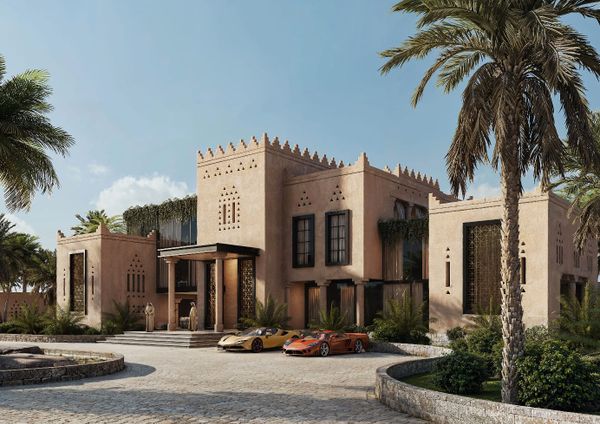
Architecture has always been a weapon, flaunting power through the built narrative like a silent fort. In doing so, it is the tool of the incredible, mediator of choreographed awe. It is an encapsulation of the histories of its builders, their rituals and their ways of life. Islamic architecture, for example, is sometimes called ‘the architecture of the veil’ because of its inwardly oriented nature. Opening internally upon lavish, spacious and well-lit courtyards, while maintaining a fortress-like relationship with the outside, this architecture says much about its culture.
So too is the state of contemporary Middle East apparent in its cityscapes. In the race to the top, literally and figuratively, Arab regimes are investing in constructing their contemporary identities. On one hand, the glitz, the glamour and the vertically fabulous, on the other the Green, the sustainable and the horizontally fantastic.
It’s an interesting duel, one that will hopefully end in a tie, so we reap the best of both worlds. But with the surplus of funding washing around our region, will we be able to invest wisely, to yield the functionally fantabulous? One of Dubai’s World Expo 2020 videos humorously claims Ketchup as one of the past debutants, along with the Eiffel Tower but I can’t help feeling that our first Arab World Expo ought to be less Ketchup and more healthy breakthroughs.
Qatar’s 2022 World Cup is also at the forefront of the region’s race to realise the imaginary. The Al Wakrah stadium, though, which has been designed by Zaha Hadid, could almost be a symptom of the ongoing yield of bizarre, bastard children born from the crosspollination of a government’s desire to impress and an architect’s abuse of leeway. The stadium has inadvertently made Qatar famous for being the prospective home to the world’s largest vagina-shaped building – something that probably wasn’t a major task on the monarchy’s To-Do list.
The future, through the lens of expensive architectural experiments, still looks interesting. Qatar, for example, is planning to cool all of its 2022 World Cup stadiums - aesthetically controversial or otherwise - using solar power, which will mark them with the first zero-carbon stadiums in the world. It has also come to terms with the fact that its 1.7 million inhabitants will not need a dozen colossal stadiums after the event is over, and has made this a factor in their design. Most of the stadiums are modular structures that can be dismantled after the World Cup and then donated to countries lacking proper sports infrastructure.
In its World Expo bid, Dubai is promising an agenda that even if only partially implemented, could help change the world. Their Expo programme includes outreach offices across the world, which will be engaged in research and development initiatives, such as ways of making potable water available for everyone. Never one to shy from the limelight, the Emirate is also planning local developments that will dress their desert to impress the world.
The question remains though, will these projects be a part of the vertically fabulous or the horizontally fantastic? With them, will Gulf countries, so often accused of creating synthetic, environmentally-costly environments, become a part of the vanguard of sustainable architecture? It’s an exciting time. What kind of culture will this new architecture show us and how will it blow us away, this time around?