Feng Shui (pronounced fung shway) is the ancient Chinese art of creating a harmonious living and working environment to influence your quality of life. Translating as ‘wind and water’– seen as the two most important elements for survival – practitioners say that Feng Shui is about making your surroundings work with you rather than against you by directing and containing the flow of positive energy, or ‘chi’. But it goes beyond having a flashy office or cool pad. Enthusiasts believe good Feng Shui increases prosperity, helps relationships, enhances health and thwarts bad luck.
Read some Feng Shui tips and the words ‘common sense’ spring to mind. Few would argue with the contention that a cluttered desk harms concentration or that working and sleeping areas should be clearly separated. Working with a door behind you might create a feeling of discomfort; a window in front might distract. More far reaching tips include to banish all mirrors facing your bed which may startle you (or rather your soul) awake. But according to Grace Salem, Feng shui consultant for Emaar real-estate company and a pioneer of the discipline in the Middle East, such amateur website pointers are the tip of the iceberg.
“We have paths where the energy flows like water,” says Salem, “For these big office buildings, for example, sometimes you destroy the flow of money by putting an entrance in the wrong place.” Salem measures the energy of a building, takes compass readings and assesses the layout to work out where to place which objects. In a home for example, she says the bedroom and living space should be where optimal ‘chi’ is found, while humbler functions as the toilet or storage can go in less propitious areas.
As well as object placement, colours, shapes and materials are also believed to affect energy. For true Feng Shui, it is not enough to add a water feature, a few crystals or use a colour you believe to be lucky or serene – it’s all about how the elements work together, the location, building, the energy and even the people in it. “Sometimes you have colours that are not balancing the energy, or an element that is emphasising the imbalance of energy in a certain area,” Salem says.
Former client Maha Alameddine says she slept badly in her Jordan residence until Salem ‘Feng Shuied’ the place. “She found that there was negative energy in the area where we were sleeping and placed 12 copper rods in the room to change the magnetic field. After that I could sleep much better,” she says.
Feng Shui is an ancient art. The Chinese first used the practise between 6,000 and 8,000 years ago to find the best burial sites, believing their ancestors’ resting places would affect the dynasty’s future. US researchers stumbled upon Feng Shui’s secrets in the 1960s in a study to find the most economically successful place on earth. They found that it was Hong Kong, and the whole state was built on Feng Shui principles.
The art itself has been slow to catch on in the Arab world, mainly through lack of exposure but also perhaps concerns about its compatibility with Islam. An architect, who preferred to remain anonymous, working on some of the main building projects in Downtown Beirut said he found Feng Shui too limiting. “Some of the common sense stuff is okay, but when it starts getting technical it’s very restrictive: when someone tells you for example that you can’t use a certain shape, and your whole design was based around it.”
Salem, who is working on Dubai’s Media City among other projects, says Feng Shui does not contradict Islamic principles. Buddha statues may be popular among Chinese, or even Western new-agers, but the basic principles of Feng Shui are the important part. “You don’t have to stick with the Chinese symbols, it’s better to use whatever is holy for you, a verse from the Quran, for example.” According to the UK-based Feng Shui Society, Feng Shui is not a religion, a belief system or even a philosophy, but a life-enhancing art. “Ultimately, Feng Shui is a sound and sensible way of living with a conscious connection between our outside environment and our inner world,” it says in its definition of the discipline.
According to Salem, some Gulf real estate companies use Feng Shui in the belief the building will be more successful. But it is not used as a selling point for property as in the United States, where a dose of good ‘chi’ can push value higher than a levitating monk.
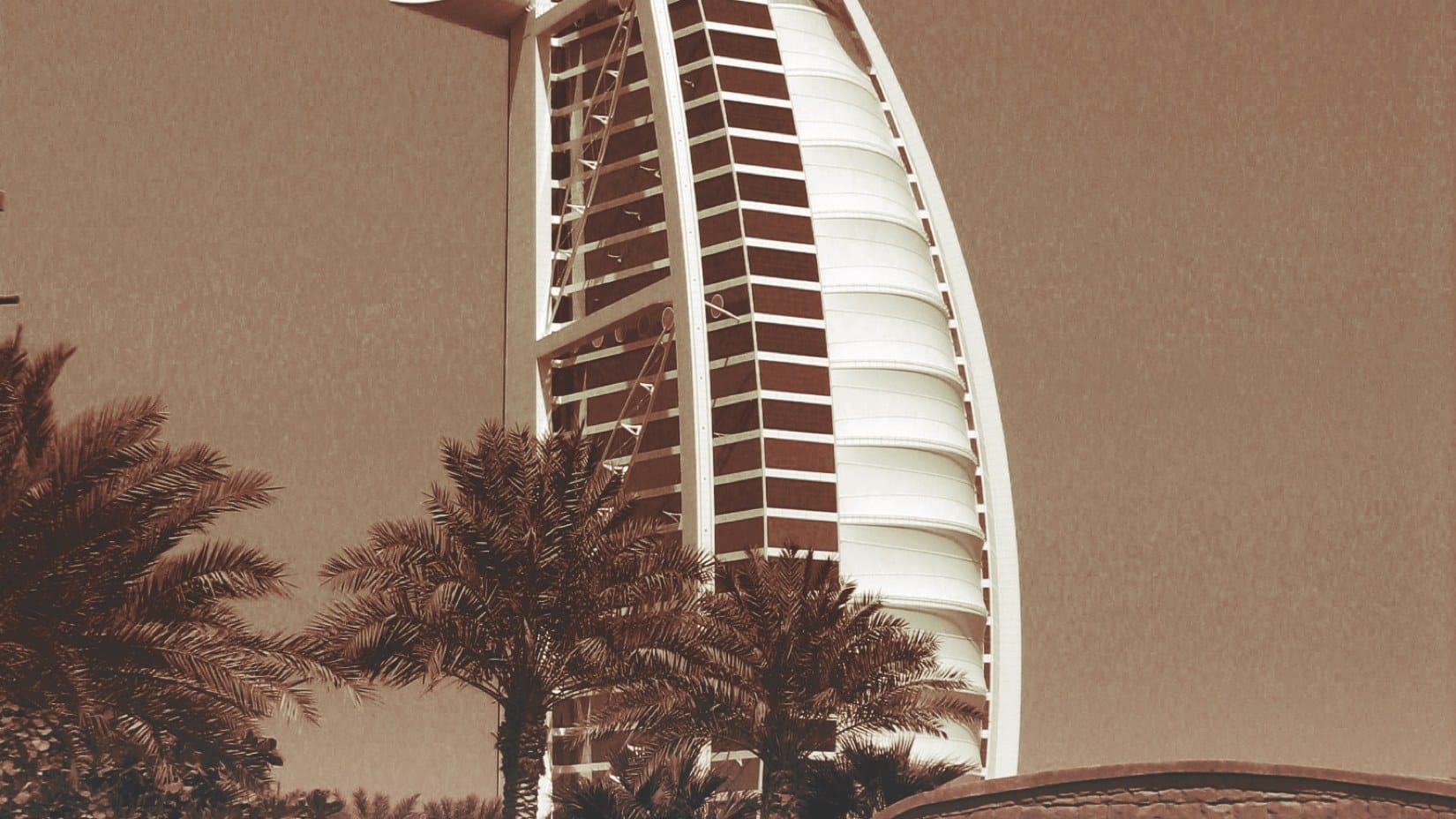
That may yet happen. Dubai’s landmark Burj Al Arab, for example, has a Feng Shui design. Practitioners say tall buildings surrounded by flat areas attract ‘chi’, and the shape of the tower and its location were arranged to trap it. And you thought the seven-star rating was the key to the hotel’s success.
Salem, unusually in the region, practises holistic Feng Shui, often drawing up birth charts and psychoanalysing the inhabitants along with the site. “This soul of ours wears the body but it actually lives in our dwelling,” Salem says. “The Chinese say a bowl of rice and a roof over our heads –these are the basics for human existence.” And also, it would seem, some Feng Shui.
Contact
Grace Salem
Dubai, UAE
Tel
www.