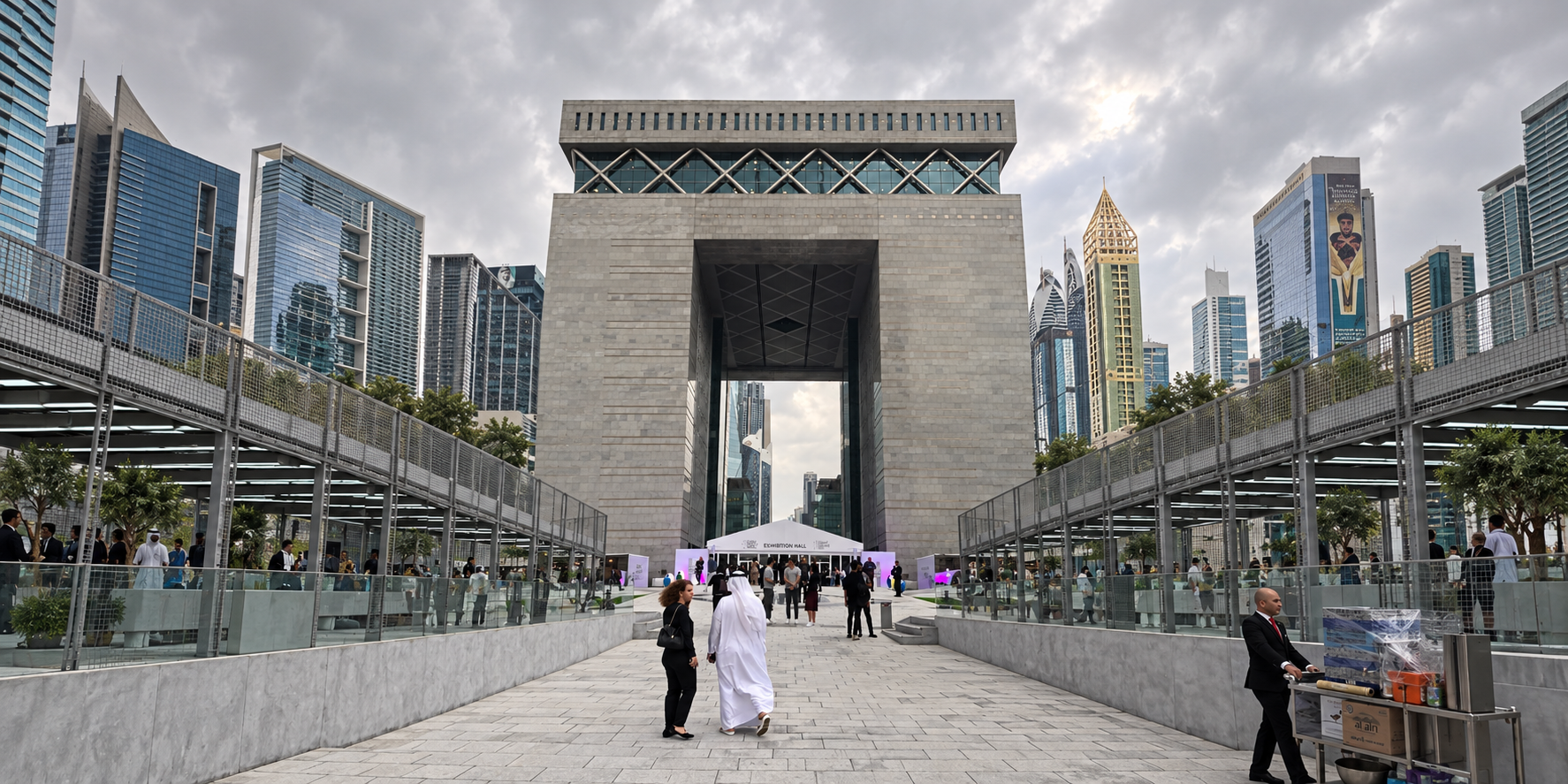
Unfortunately, fairs are losing steam. The concept of the car show is all but dead, boat shows are struggling, the Dubai Film Festival went under, Art Basel is losing money and Baselworld is in an existential crisis. Yet, the Dubai Watch Week (DWW) is not just a game-changer it’s also somehow continuing to gain momentum. How? Because it’s genre defying. Still only four editions old, it’s free to attend, open to anyone and totally uncommercial. It’s also not organised by any brand or luxury group but is instead put together by one of the world’s largest watch retailers – Ahmed Seddiqi and Sons. Their vision was to create a sanctuary, free from the shackles of needing to sell, in which leaders from the horology world could come together in Dubai to share ideas and celebrate their love of watches. As such, the four-day festival revolves around key figures and brands but with a programme that includes masterclasses, workshops and interactive session on all things timekeeping. This supplement is our take on everything that went down in November 2019.
REVEAL: Hublot
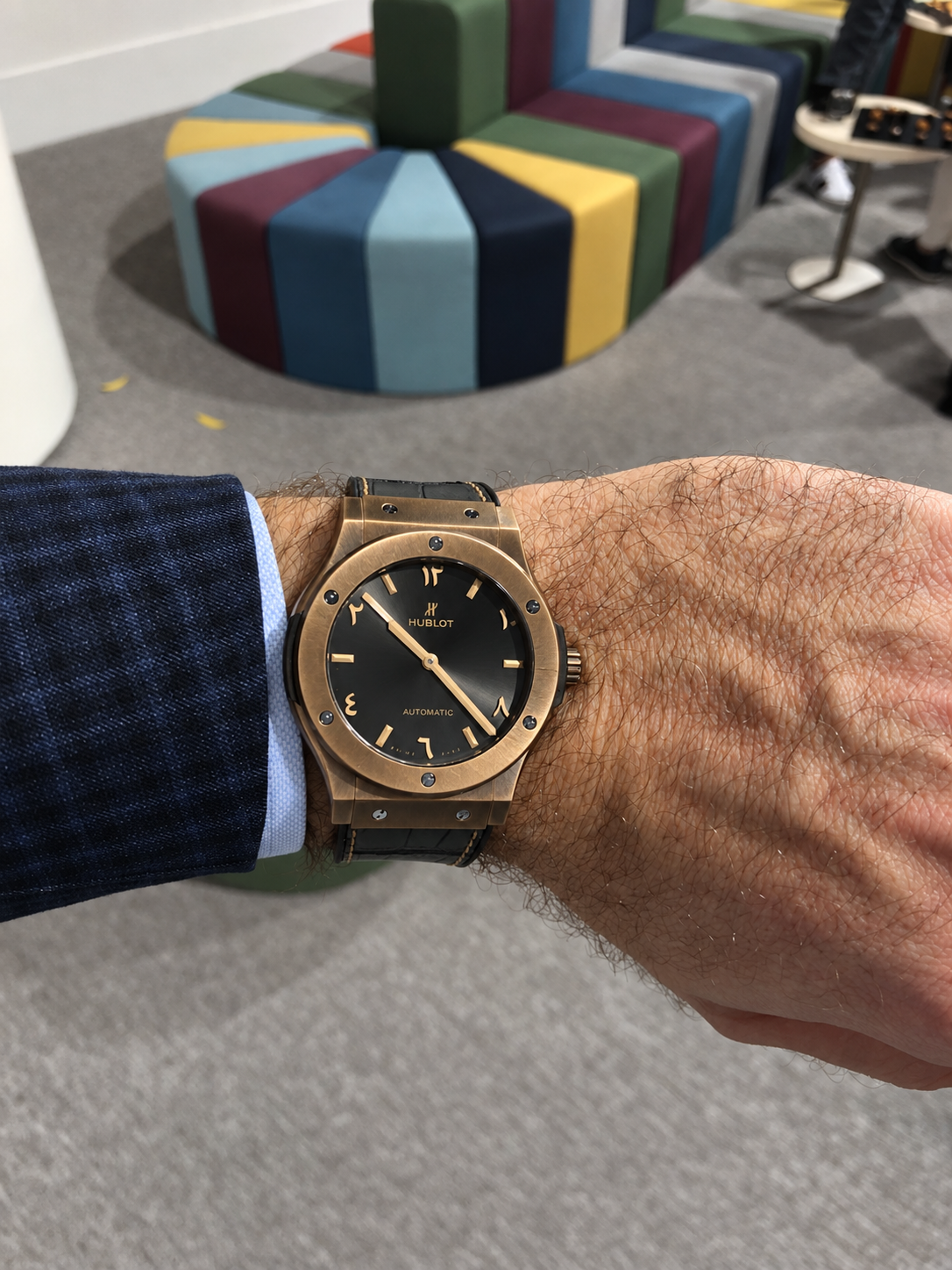
A cool new limited edition Classic Fusion developed just for Seddiqi.
Let’s put aside the fact that Hublot makes a looooot of special editions because this one’s much more than just ‘another’ limited Classic Fusion. For starters, it took five years to develop. It also features Eastern Arabic numerals (on a sunburst grey dial). And finally, it has a custom-designed mechanical movement that sends the minute and hour hands anticlockwise in order to suit Arabic customers more used to reading from right to left. It even had the customary second hand removed. “We wanted to maintain the mystery of the anticlockwise movement,” explains Mohammad Seddiqi (below).
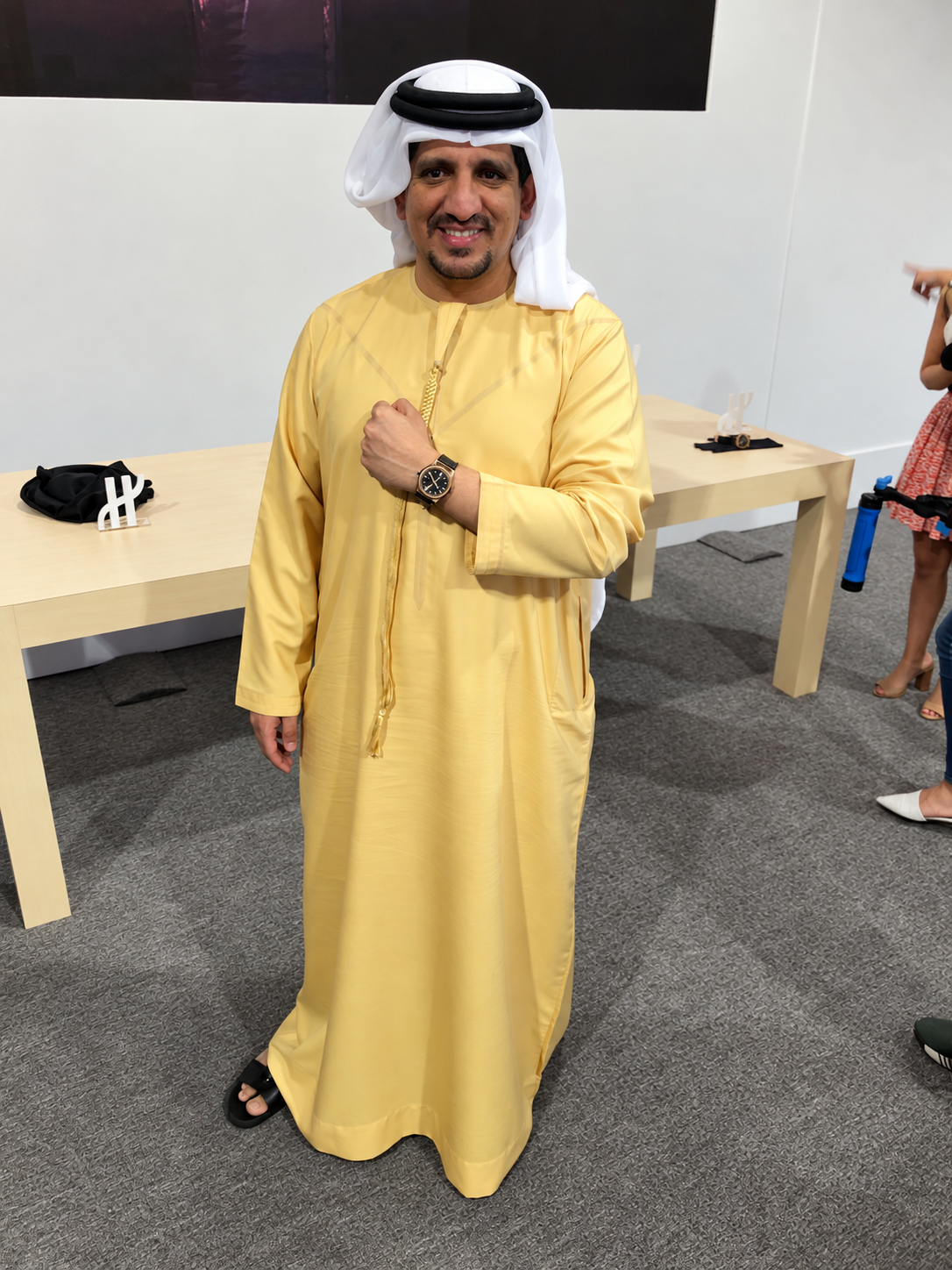
Only 100 examples will be made, all exclusive to Ahmed Seddiqi and Sons, in a single colourway of aged bronze with a rubberised grey aligator strap.
REVEAL: Chopard
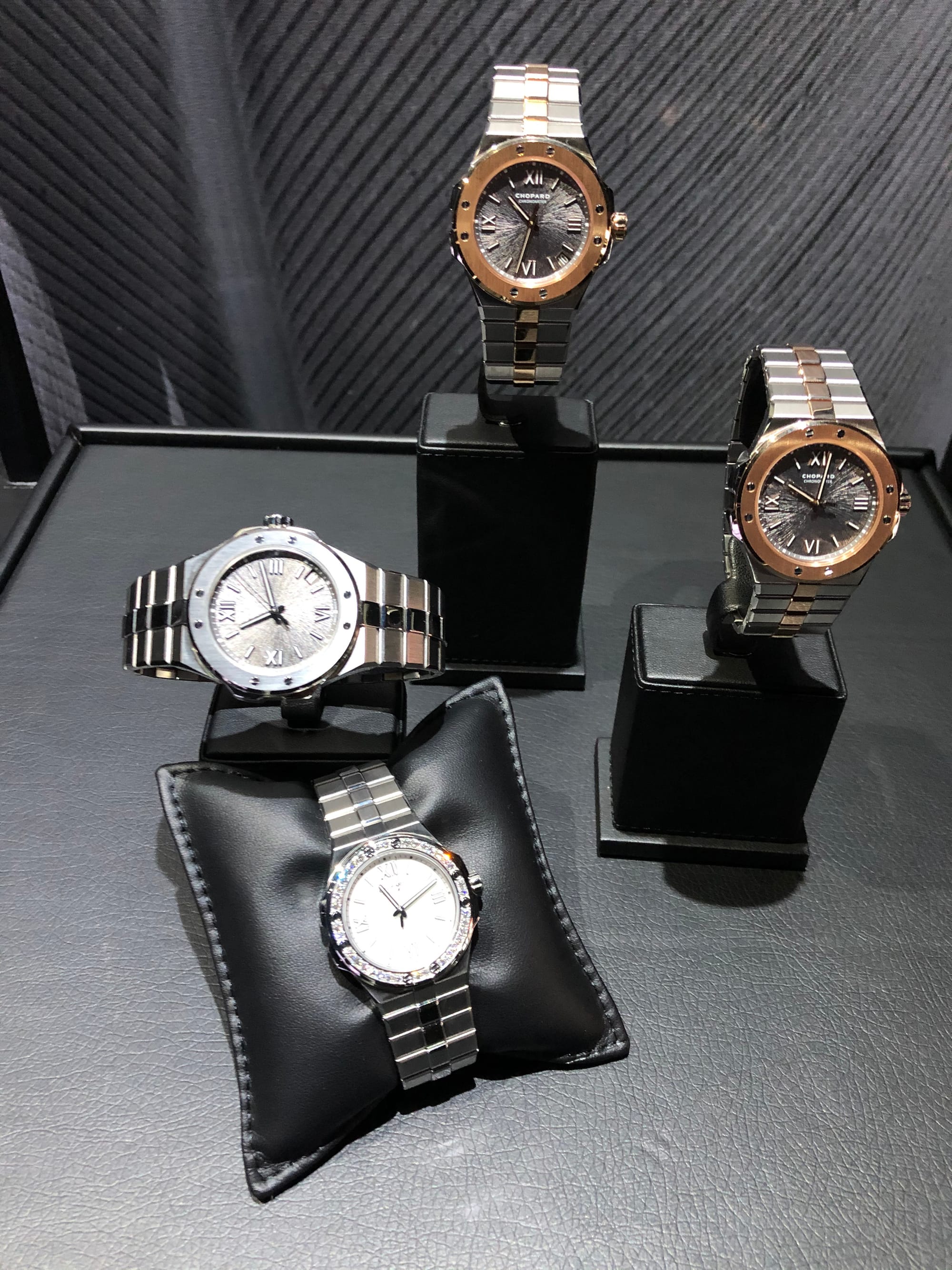
The 41mm & 38mm Alpine Eagles take pride of place at the 2019 DWW.
An official launch event of the Alpine Eagle watch was held on November 21st in a custom-built booth, designed to take visitors on an immersive journey of discovery into how Chopard went about creating this important new watch.
Only the brand’s second sportswatch (after the St. Moritz, which was launched in 1980 but is no longer in production), the Alpine Eagle is certainly more sophisticated than its predecessor, and should prove popular considering how well integrated-bracelet watches are doing these days.
Our choice would be the the 41mm model with a Bernina grey dial, as it really sets off Chopard’s proprietary, and unusually bright, Lucent A233 Steel. It’s reasonably priced too, at 12,850 USD, which means it’s 6,350 USD cheaper (and far easier to find) than an Audemars Piguet Royal Oak.
REVEAL: Breitling
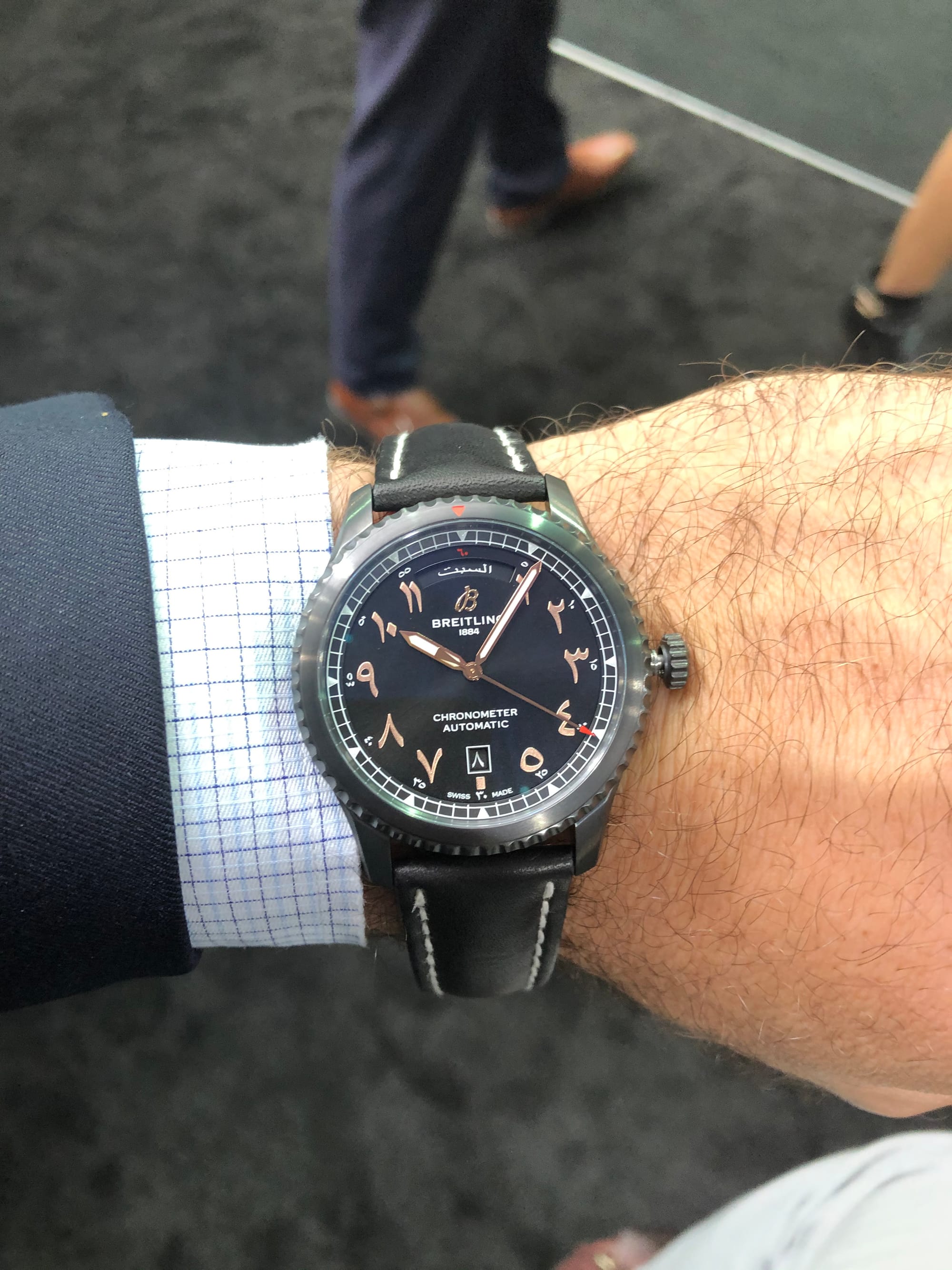
A rare Eastern Arabic numeral watch.
Last September, Breitling announced it had become Etihad’s official timekeeper and to fête the partnership they launched the 5,000 USD Aviator 8 Day & Date 41, which was at the DWW. It runs on Breitling’s Caliber 45 (which is an automatic movement with more than 40 hours of power reserve) and features gold-coloured Eastern Arabic numerals set against a black steel dial. Only 500 pieces will be made.
MASTERCLASS: Jean Claude Biver
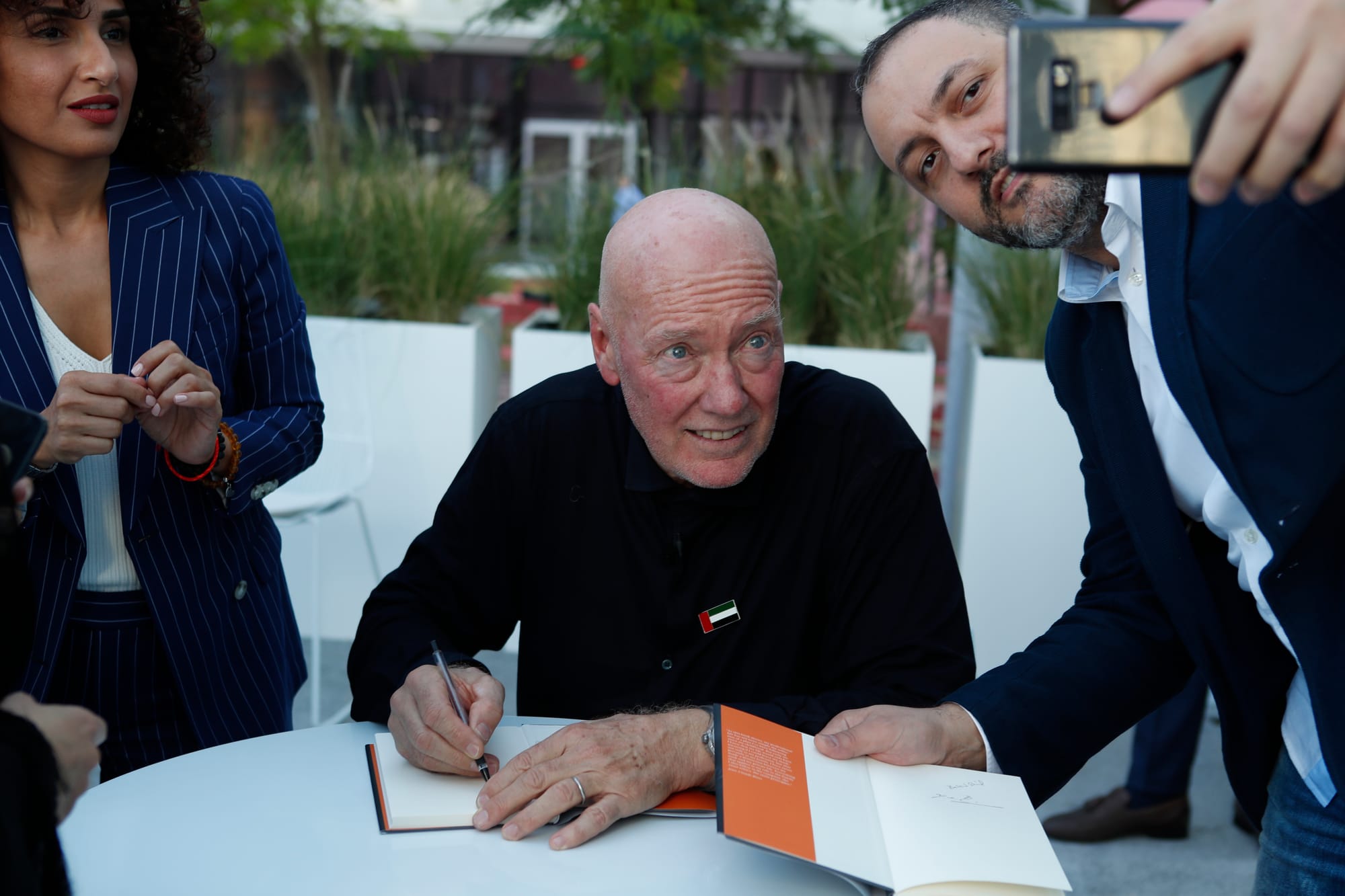
The Non-Executive President of LVMH’s watch unit had plenty to say.
This year’s attendees of the Dubai Watch Week were treated to a masterclass talk by Jean-Claude Biver, the legend of the watch industry. Having previously worked for Audemars Piguet and Omega, this is the man who acquired, resurrected and sold Blancpain, who rejuvenated Omega (by aligning the brand with James Bond and Cindy Crawford, while also putting the spotlight back on their history with space missions), and whose crowning achievement was of course magicking Hublot back from the dead.
“We are surrounded by products – phones, cars, washing machines and so on – that are going to die. We are surrounded by obsolescence. I ask you then what is eternal?” said the 70-year-old rhetorically. “Art! Watchmaking is art. A mechanical watch is eternal. So when you buy a watch, you are buying a piece of art, a piece of eternity, a piece of God even.”
WORKSHOP: Patek Philippe
Why Pateks reign supreme over the vintage collectible watch market.
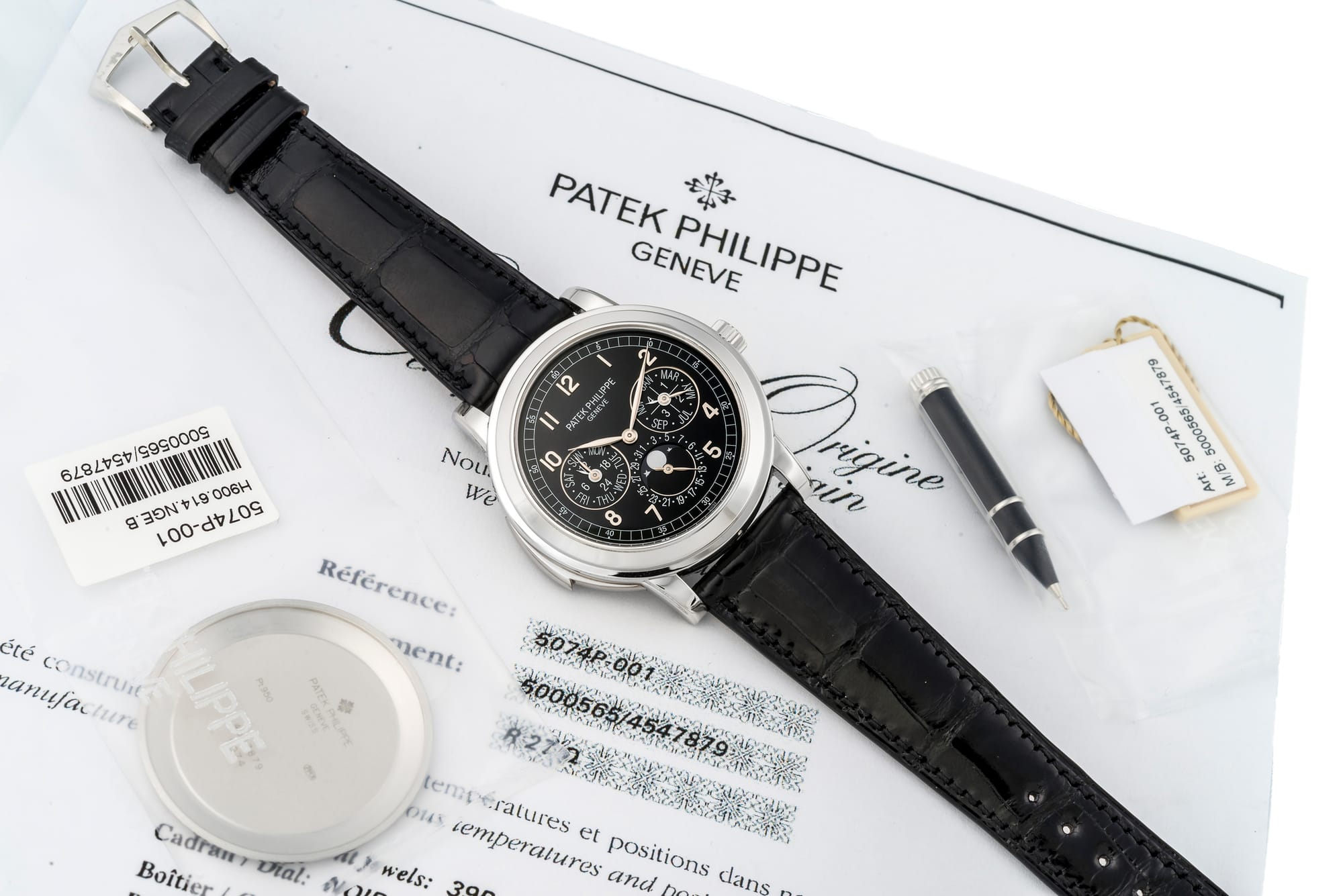
Eric Tortella is a former auctioneer and one of the world’s foremost experts on Patek Philippe and Rolex watches. And while he clearly has a deep love and respect for both brands, he sees them as two different creatures. “Patek Philippe represents the pinnacle of hand-watchmaking, Rolex is the pinnacle of industrial watchmaking,” he explains. “Also, Rolex has a turnover of 5 billion USD, making a million watches a year but Patek is a niche brand in comparison, making a billion USD from 65,000 watches.”
Tortella has spent decades studying the brands, cataloguing their refrences and advising collectors and auctioneers alike. He reveals that the vintage watch market has grown in leaps and bounds since the 1970s. “Take a selection of ten watches and check their values from 1974 till today and make a comparison with the stock market. The performance for 1 USD will be 30 times more than the Dow Jones. In other words, if you put 10,000 USD in the Dow Jones, you’d have 2 million USD today. But with watches, you’d have 60 million USD today.”
His key data was as follows:
— 20 per cent of the lots at auctions across the globe every year are comprised of Patek Philippe watches.
— 55 per cent of the proceeds at auctions across the globe every year are generated by Patek Philippe watches.
— 12 per cent of unsold watches at auctions across the globe every year are Patek Philippe watches.
— 78 of the 100 most expensive watches sold at auction are Patek Philippe (ten are Rolex).
FORUM: Six Ways from Certified
An interactive talk on buying behaviour and the wisdom to know your place.
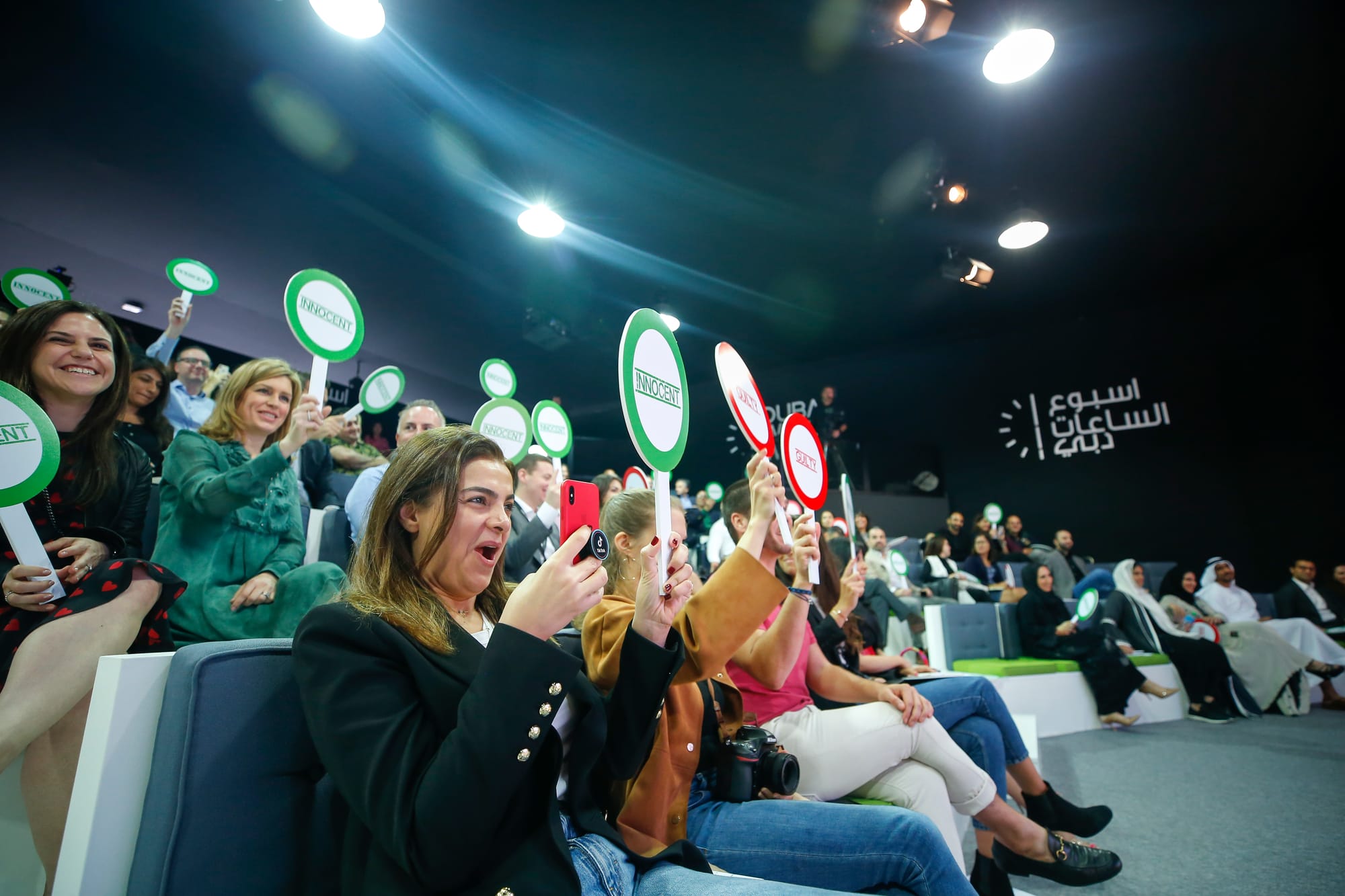
Question 1: ‘Farah’ is dying to buy an exotic leather handbag from a certain Parisian brand but she doesn’t want to wait three years to get it. So she acquires one through a dealer who is able to get it for her in just two months. Now the question is whether this grey market purchase is innocent or not?
Unlike black market goods, which are illegal due to the fact they’re either counterfeit or stolen, grey market means a product that is sold outside of the product manufacturer’s authorized sales channel. That’s becoming more and more common now thanks to the internet and in this instance both the panel and the audience found the purchase to be a 100 per cent innocent.
Question 2: ‘Amir’ doesn’t care about purchased goods, only his investment in them. As such, he doesn’t have any particular love for art and will only buy a piece with a view to selling it. But, is flipping art even ethical?
The panelists found this to be fine, and the majority of the audience did too. But, as the moderator pointed out, gallerists and collectors will most probably blacklist Amir.
Question 3: ‘Dany’ wants to purchase a Damien Hirst spot painting but won’t buy it because it wasn’t actually produced by Hirst. (It was made by his team of assistants). So, can an artist claim a painting is their own if it wasn’t actually produced by them?
The panelists and the audience were split by this one. Even though watches often carry the founder’s name but are nearly never produced entirely by them, and architects always take credit for the work that their teams produce, there seemed to be a difference among all those in attendance when in comes to art.
INTERVIEW: Christophe Nicaise
The chief strategy and business development officer at Seddiqi Holding.
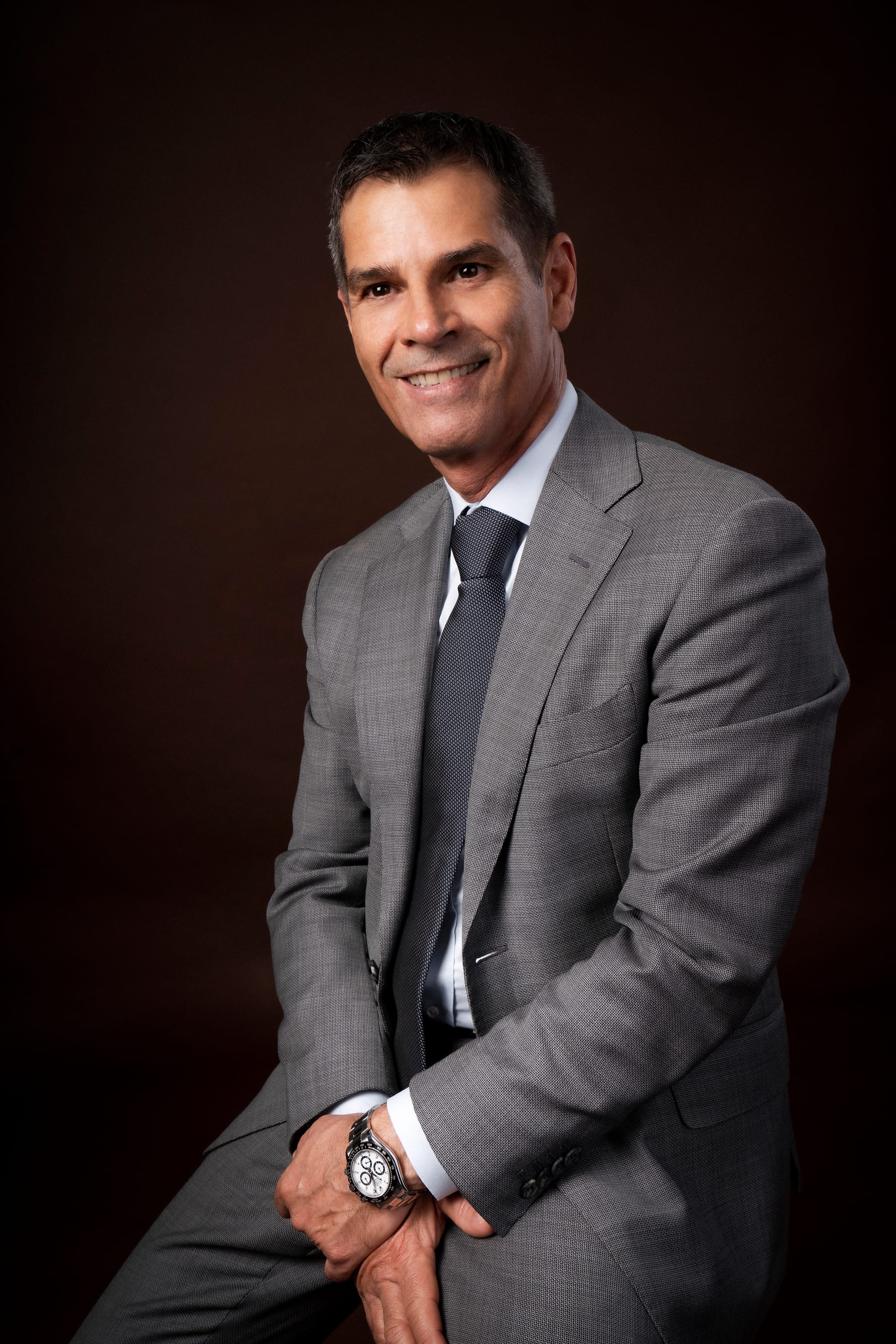
Ahmed Seddiqi and Sons is a business that began in 1960 with a single shop in the souk of Bur Dubai. It is now one of the world’s most important watch retailers, with more than 60 luxury brands and 70 points of sales, including the largest Rolex boutique in the world. But it has also become one division within a larger group, Seddiqi Holding. “In the past we were very focussed on watches and jewellery, and in one geographic location – the UAE – and that was very challenging in terms of risk exposure,” says Nicaise during our interview. “That is why we decided to branch out and start a new retail division in 2017.” That business, Mizzen, currently consists of three verticals: beauty (Aesop), fashion (Orlebar Brown) and accessories (Gentle Monster), with a fourth in the works: FnB.
Interestingly, it was this sort of longterm planning that got Seddiqi to launch the Dubai Watch Week. “I don’t think the DWW would be what it is today if it had been commercial. But by removing any commercial pressure we changed the dynamic,” says Nicaise before we press him on the fair’s return on investment. “You’re right, it is a very expensive operation but the return is as follows: firstly, it has brought Seddiqi to another dimension in terms of international recognition, both in the industry and on a consumer level. Next, any new brand now wishing to enter the market only wants to work with us. And finally on the consumer level, as people have become more educated on horology they have become incentivised to spend more and their purchase is no longer purely contingent on a price negotiation.”
FORUM: State of Affairs
A discussion on how watch fairs can stay stay relevant.
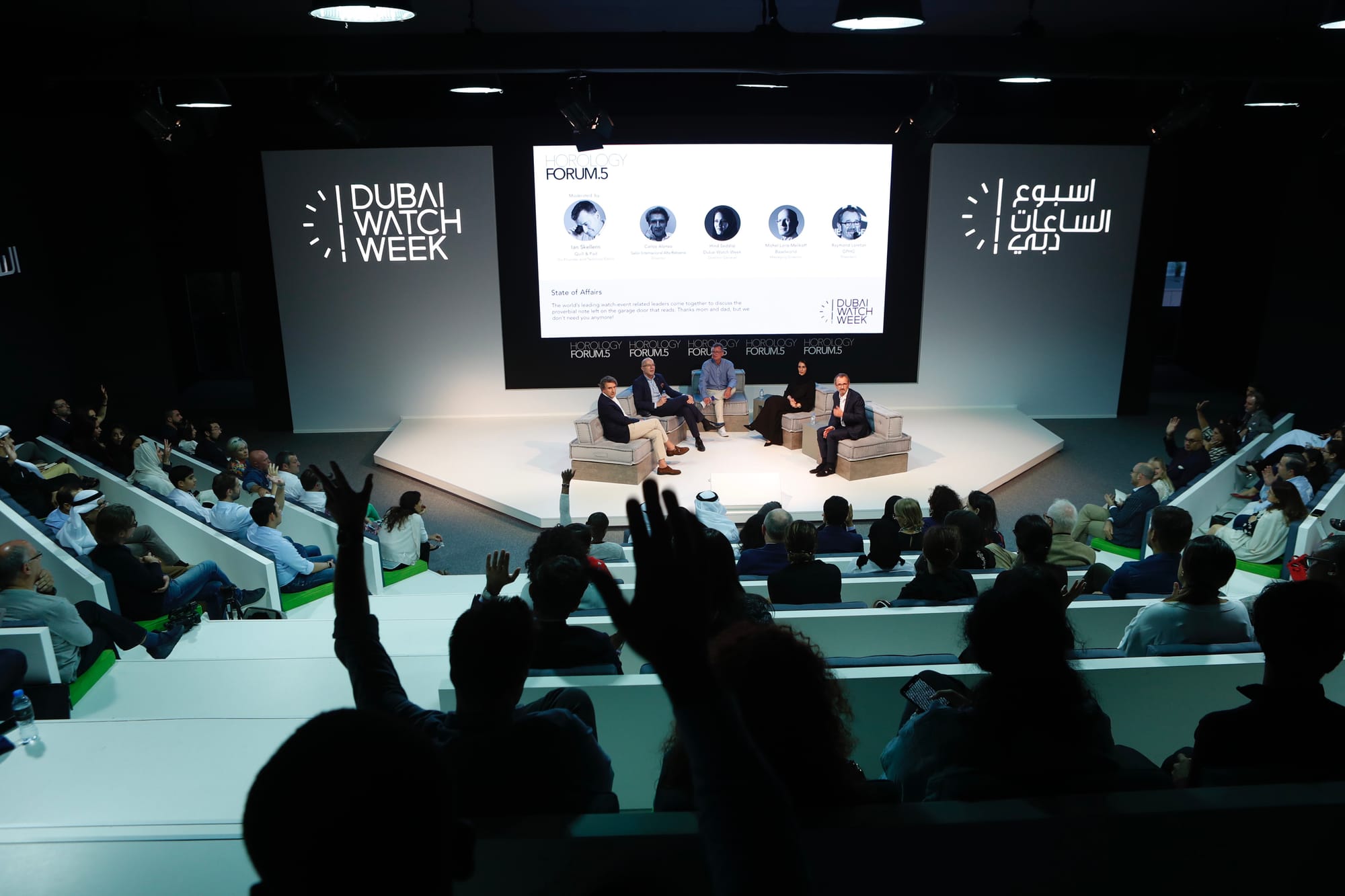
What exactly has gone wrong with Baselworld?
[Michel Loris-Melikoff, Managing Director of Baselworld] We can talk about arrogance, yes. We can also talk about pricing. And with many brands now spending more money on their communications and less on their booths at fairs, budgets have shrunk so we have been asked to help with the securing of smaller booths. But since I started last year, we have made it our mission to create a new and better Baselworld and this process will take two to three years.
What is the key differentiator of Dubai Watch Week?
[Hind Seddiqi, Director General of Dubai Watch Week] One of the advantages of Dubai Watch Week is how everyone is in good spirits. There is no pressure to sell. And at the end of every fair we get together with the brands and see what they need and that’s why, for example, we have increased the size of the exhibition space. Essentially, we are always listening, and are ready to adapt.
Why has it been important to maintain the Dubai Watch Week as a non-commercial fair?
[Hind Seddiqi] We believe it’s very important to separate the commercial side. We want to appeal to the youth and teach people about the craft of watchmaking. It’s why we brought F&B concepts [including ‘Salt’, Dubai’s favourite burger chain, and ‘Cipriani’, the world-famous restaurant known for simple, traditional Italian food] this year, as they will help draw people in and make the Dubai Watch Week less intimidating. If we were to then bring in sales people, it would contradict that mission and only make the fair more intimidating, not less so.
What have been the major improvements in the latest edition?
[Hind Seddiqi] In the first two editions, we found it difficult to attract locals to the masterclasses but we are doing much better now. By adding classes beyond just movement making and by doing more digital activations to raise awareness, and by offering attractions that will excite them, we have seen a marked improvement.
LAUNCH: Watchbox
Seddiqi completes its one missing link.
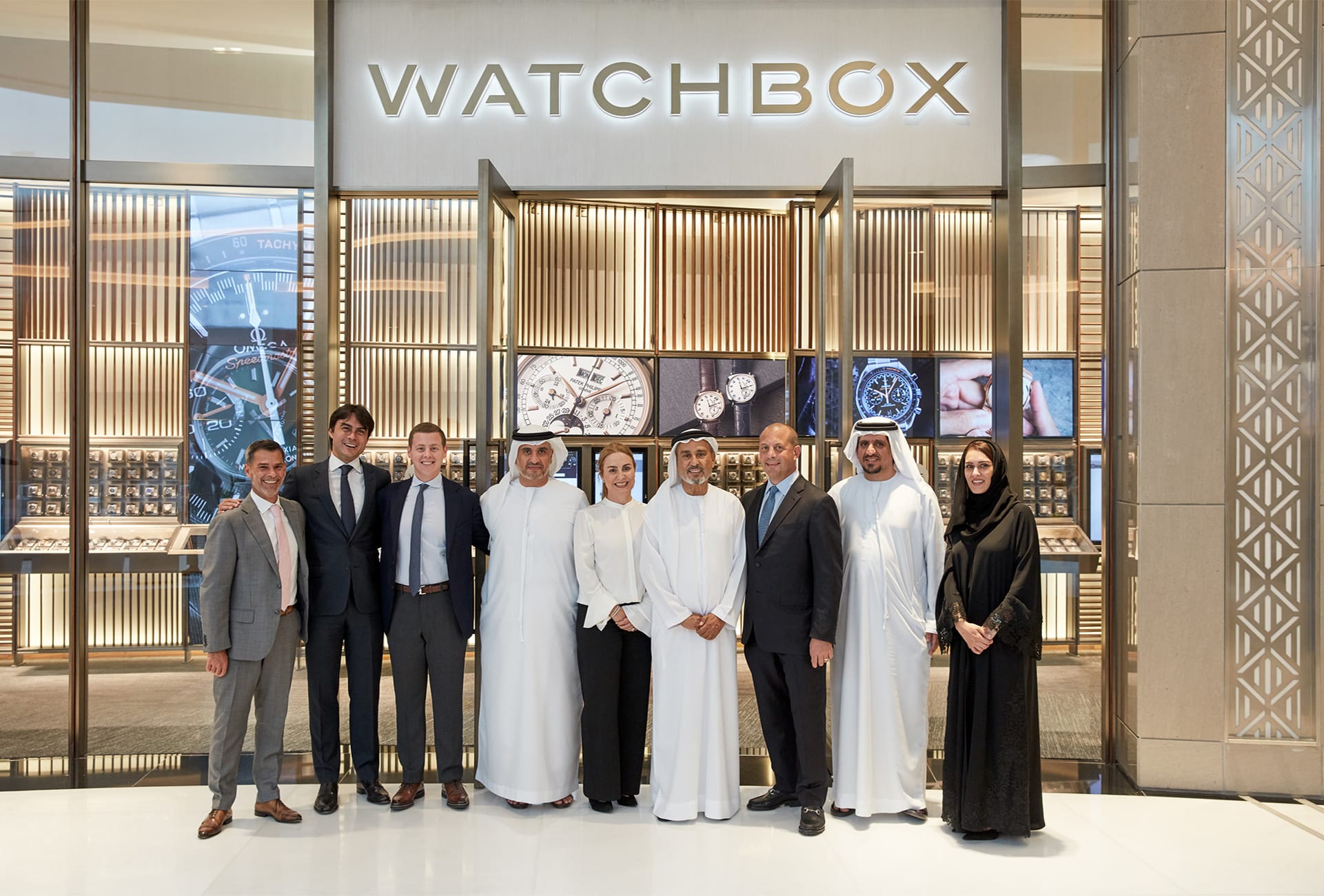
Primary meets secondary, they call it. In November, WatchBox, the world’s leading online platform for the buying, selling, and trading of certified pre-owned luxury watches, opened its first boutique, in Dubai’s DIFC, in partnership with Ahmed Seddiqi & Sons. Not only was this boutique WatchBox’s first physical location, it was Seddiqi’s first foray into pre-owned. “We have always wanted to be active in the certified pre-owned space but didn’t do it earlier because it wasn’t a priority and we hadn’t yet identified the right way to go about doing it. Then we got exposed to the WatchBox concept, and we really found it amazing because they look at pre-owned in the same way we look at new,” says Christophe Nicaise (far left), the chief strategy and business development officer at Seddiqi Holding, the parent company of Ahmed Seddiqi & Sons.
INTERVIEW: Barbara Palumbo
The maverick watch & jewellery blogger/writer/journalist.
“23 years ago, or should I say half my life ago,” starts Barbara Palumbo, “I took a job as a runner on Jewelers’ Row in Philadelphia, the oldest jewellery district in the US. It allowed me to fall in love with the whole process.” Well, after working in several different fields in the industry, from manufacturing and sales to marketing and media, she then started a jewellery blog – Adornmentality.
“That was around six years ago,” she says, “But I got a couple of nominations by the Women’s Jewelry Association for excellence in media and the blog really blew up. Why? Because I think it was all about storytelling.”
Most recently, Palumbo took an interest in watches. “I began by reading stories by Jack Forster, which, while they made my brain bleed because they were so heavy, were also quite edgy and humorous,” she reveals facetiously. “I also began to read Jason Heaton, who’s an amazing storyteller, and what I found was that, even though there were some female voices out there, they weren’t my voice and, I don’t know if it was an age thing, but I couldn’t relate to them. I figured maybe there were others like me who were also looking for something real and humorous.”
So, four years ago, Palumbo decided to fill that void with a second blog – What’s On Her Wrist. Like before, it was purely editorial, free from advertising – she self-effacingly thanks her husband, who works in the real estate sector of Atlanta, for bringing home the bacon – but she takes pride in never having accepted advertorials. Also, like Adornmentality, it quickly caught on, helping to propel her as a prominent watch writer, contributing to media outlets like Revolution and Watchonista.
“You know in the US, women control 85 per cent of the spending power of a household. Honestly, adding a few diamonds to a boring quartz watch won’t cut it for us anymore,” she says before admitting she’s a fan of Dior, Van Cleef and Fiona Krüger. Palumbo takes satisfaction from the fact that women are finally being able to buy the watches they deserve. “I actually have a funny story: when Max Büsser first told me he was going to do a women’s MB&F watch, he told me it was going to be gem-set and I literally felt my butt cheeks clench. I thought in my head “Oh no Max, please don’t f**k it up.’ But flash forward two years to the release of the FlyingT and it was so perfect, and brilliant, and unlike what I had been expecting that I got choked up. I’m even getting a little misty now just thinking about it.” Is it possible that Marilyn got it wrong? Is it maybe extraordinary diamond-set mechanical watches that are a girl’s best friend?
“All I can say is, any man who is willing to spend 315,000 USD on a watch for me is pretty much guaranteed to die happy, and that’s as vague as I’m going to keep that description out of respect for MB&F, but feel free to use your imagination.”

EXHIBITION: Rolex
Rolex hosts an exhibition of arguably the most important watch ever created.
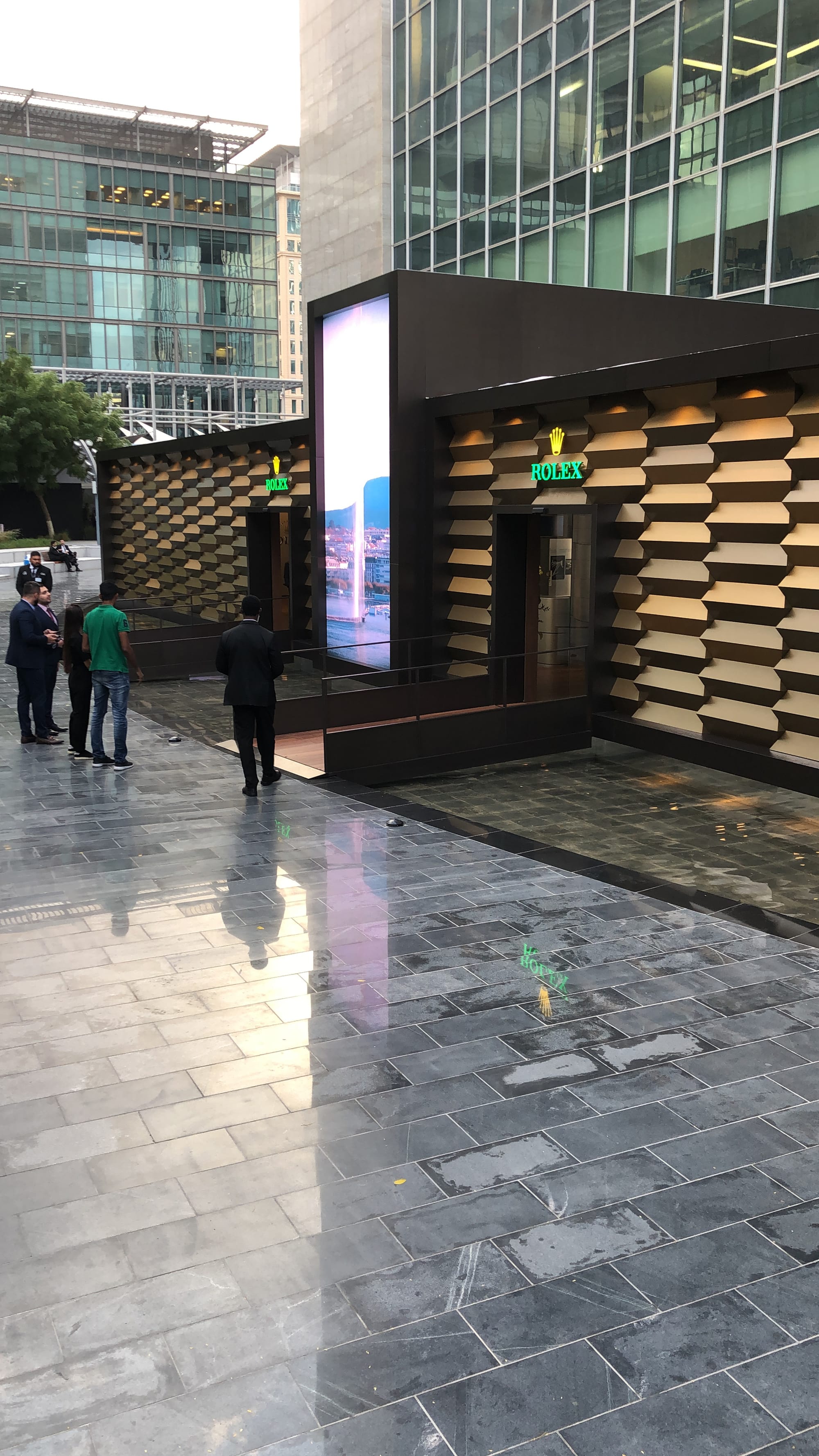
This last DWW was the first time that Rolex has ever participated at a watchmaking event in the Middle East and they did so with a big presence, installing a dedicated exhibition space that was devoted to the history of the Oyster Perpetual Submariner as well as a vintage Rolex watch exhibition curated by the Seddiqi family.
Entering the space, the first room was configured to look like a giant Oyster bracelet and on the right wing there was a Rolex library, where invited guests were served tea or coffee. And through the use of panels and interactive displays, the Submariner exhibition told the story of how this celebrated divers’ watch has developed over the years allowing visitors to better understand how it has managed to become such an emblematic watch, both on land as well as at sea.