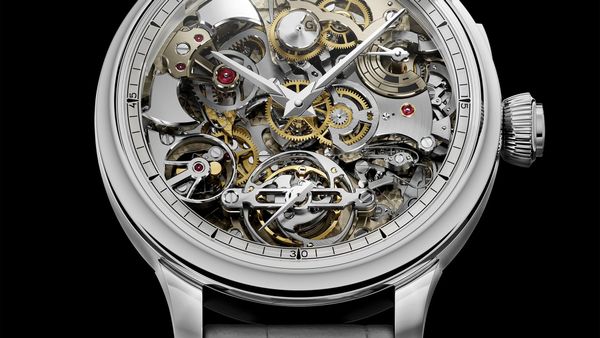
Although Audemars Piguet was founded in 1875, the brand only really took off when it turned to a relatively young half-Italian, half-Swiss visionary, by the name of Gérald Genta, nearly a century later. Born in Geneva in 1931, Genta had grown up yearning to become an artist but this was something his parents never accepted. Instead they had him train as a jeweller and it is said that on the day of his graduation, he walked over to a bridge on the River Rhône and threw his jewellery-making tools over the side, taking two swift oaths before they hit the water. The first was that he would never again work as a goldsmith and the second was that he would never again be anyone’s subordinate. He adhered to both until the day he died in August 2011, at the age of 80.
The significance of Genta in the world of watchmaking is of such magnitude because he was not just a pioneer in his field, he was a pioneer of his field. Back in the 1950s and 60s, watch design was purely a byproduct of internal artistry and most brands would simply sketch out the final look as an after-thought at the end of a design process. There were certainly no independent designers at that time but Genta recognised the need for them. And after working for the big manufactures and building up a solid portfolio that included the Constellation and Seamaster for Omega and the hugely popular Golden Ellipse for Patek Philippe, he decided to venture out on his own in 1969 and emerge from behind the banner of the brand.
Amazingly, it was his very first client – Audemars Piguet – that would forever define him. This small but respected company from the quiet hamlet of Le Brassus specialised in slim gold watches but they needed something revolutionary to truly put them on the map and save them from the quartz crisis in Switzerland created by cheap Japanese goods. On the eve of a Basel jewellery and watch fair, they asked this talented, young and dapper designer to come up with something in 24 hours and apparently, his initial sketches were so extraordinary that the Piguet family immediately signed him up, and exclusively, for the next five years. And in 1972, they unveiled the Royal Oak.
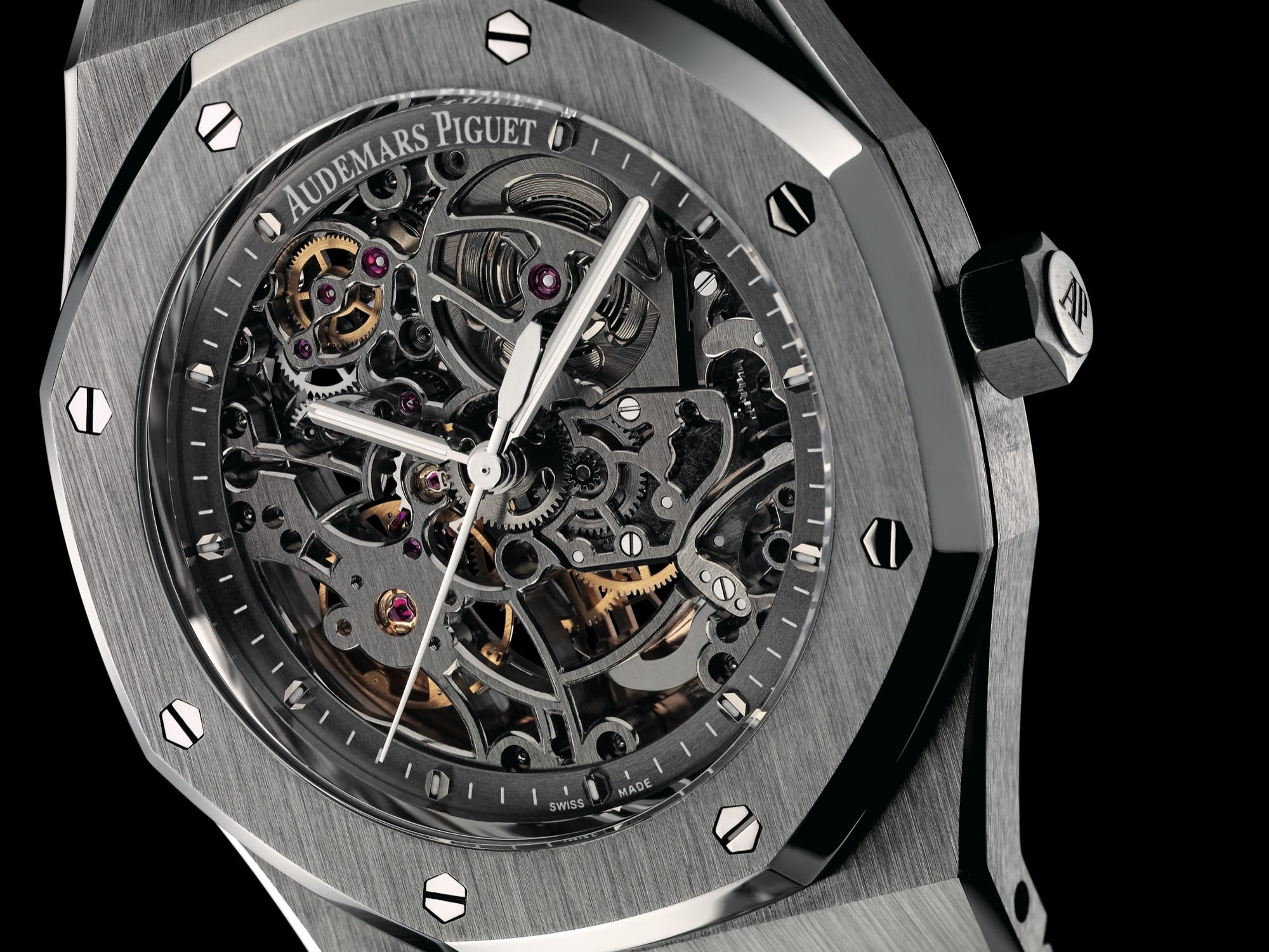
To say it was a game-changer doesn’t even give it justice. This was a watch quite unlike anything anyone had ever seen before. For starters, it was a steel watch that cost more than the gold Patek Philippes of its era. What’s more, its steel was celebrated: brushed, polished and faceted, much like a jeweller might treat gold. Then there was the octagonal bezel – visually inspired by the hermetic sealing of a ship’s port – with eight visible hexagonal screws, which were in direct contradiction to the prevailing wisdom that dictated humble components should be disguised and hidden. Then there was the size of the thing. At 39mm in diameter, it was nicknamed the Jumbo by early customers, more used to men’s watches being between 33mm and 36mm. (Nowadays, it comes in 41mm for men and 37mm for women). But the Royal Oak’s true genius lay in its holistic design that integrated the case with the bracelet. Marrying a sporty ruggedness with an undeniable savoir-faire, it struck a chord with jet-setters then, as it continues to do now.
Marcus Margulies, 72-year-old connoisseur and currently the owner the world’s finest collection of vintage Audemars Piguet watches, recalls the arrival of the Royal Oak. He remembers the seismic change it caused. “The Royal Oak is one of the great watch innovations of all time. The Italian distributor then – I think his name was Villa – decided that there would be a big market in Italy for a steel sports watch. And it really took off. It is the best sports watch in the world, there’s no question about it.”
Within four years of its launch, the brand’s major rival, Patek Philippe, would unveil the Nautilus – also designed by Genta. What could not have been foreseen then was how Genta’s concept – the exposed screw heads on an octagonal-shaped bezel – would spawn an entire genre, as well as a full range for Audemars Piguet.
Today, there isn’t a single brand without an oversize sport model but what’s really astonishing about this is that the Royal Oak, machined from a solid-steel 48 x 39mm case, didn’t need revising to make it ready for the 21st century: it foreshadowed the 21st century. With a fully integrated bracelet, a Genta signature, and universally spaced lugs, the Royal Oak could also accept other bracelets or straps. Like the bezel, the chunky bracelet became a trademark while later on, with the larger Offshore models (a more daring, masculine collection established in 1993) and precious metal variations, straps in assorted materials from rubber to leather to Kevlar, would be fitted.
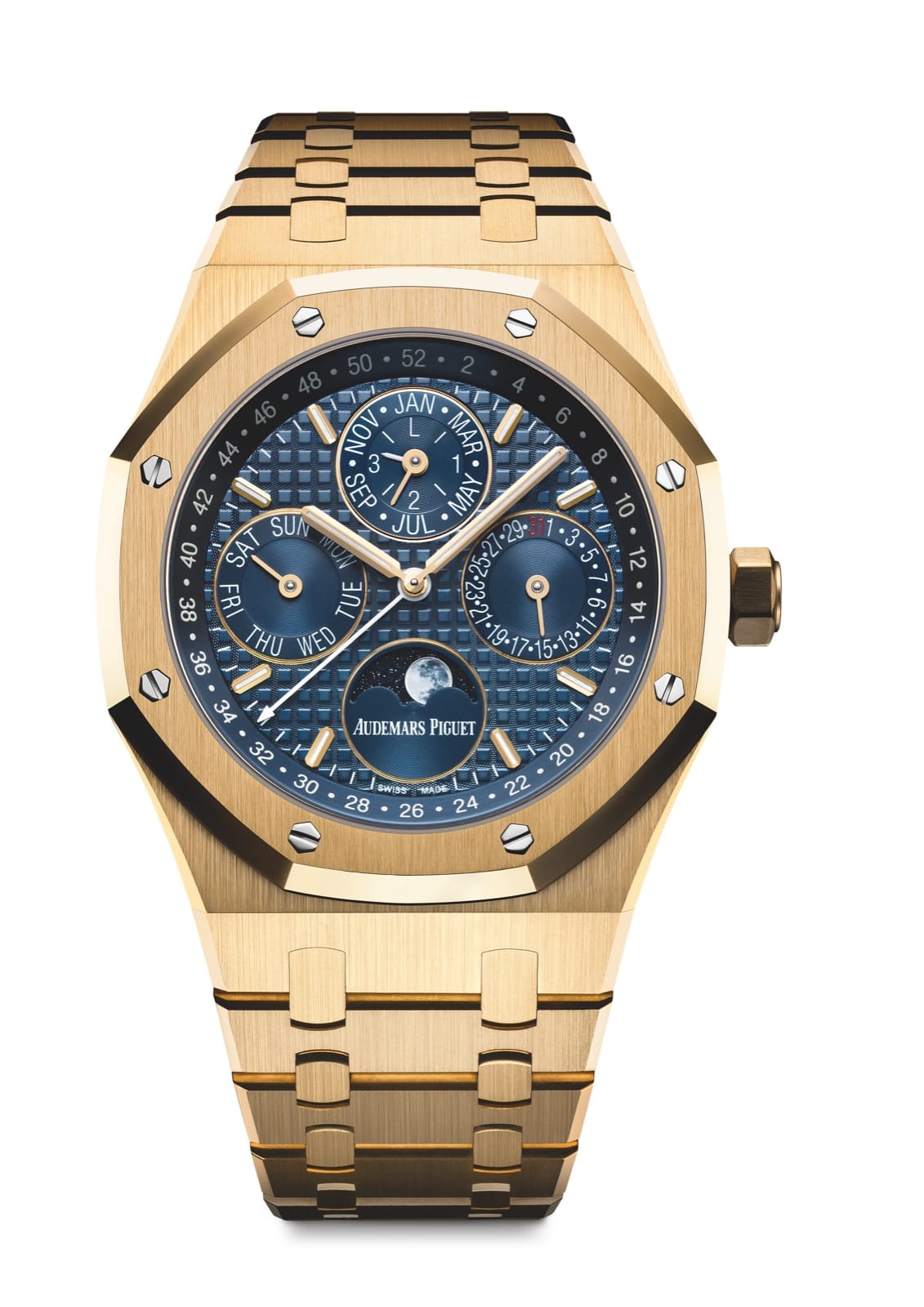
After the Patek Philippe Nautilus, Genta went on to create the Bulgari Bulgari, re-work IWC’s Ingénieur and then pen Cartier’s Pasha, among other extraordinary models. The Royal Oak however will forever be his magnum opus.
WHAT Royal Oak
BY Gérald Genta for Audemars Piguet
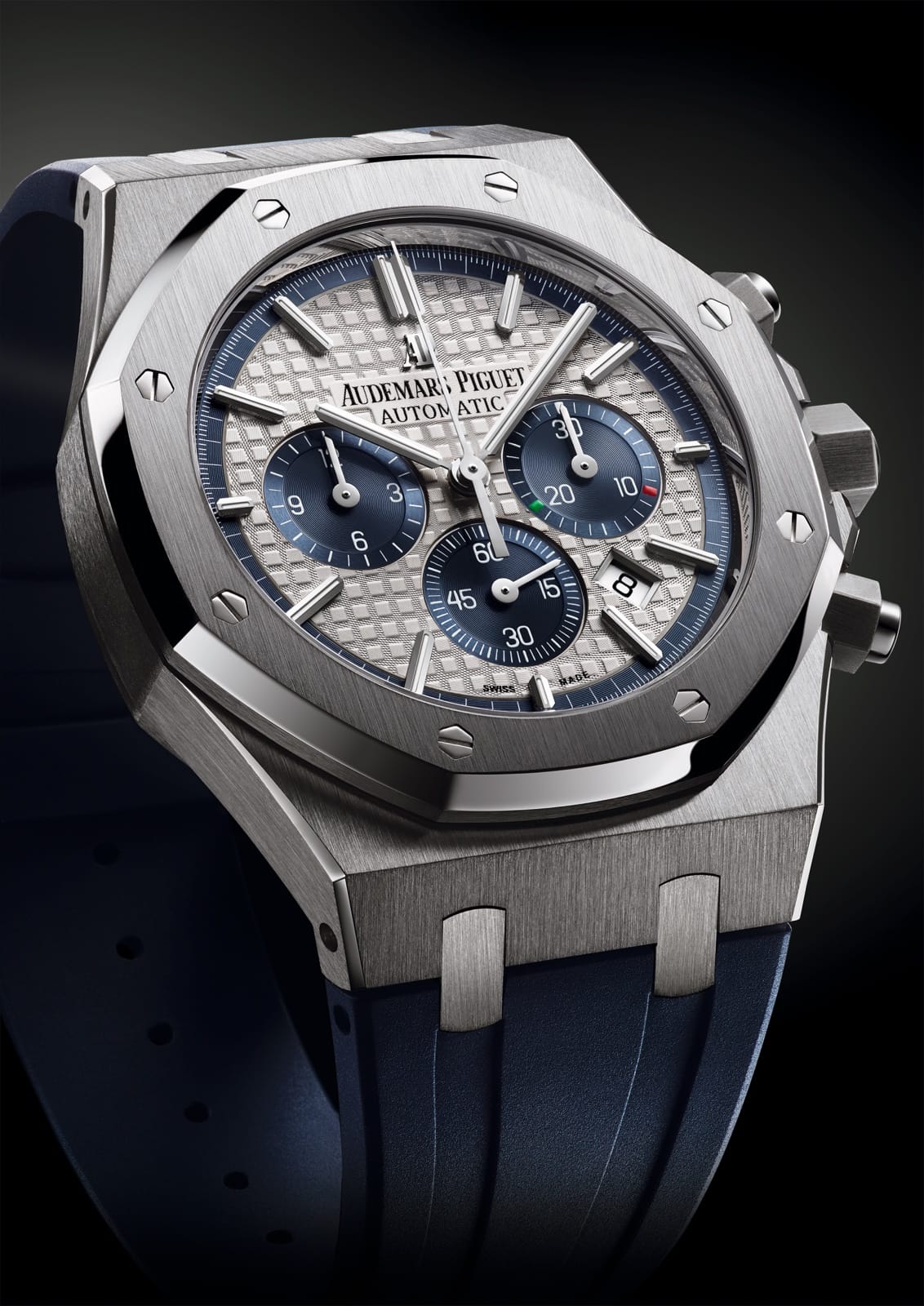
PRICE Ranges from 12,500 USD to 700,000 USD, with an average price of 30,000
WHY This emblematic watch, designed 43 years ago by a visionary man, completely redefined the luxury sports watch industry and it’s remained as desirable today as it was the day it was launched.