The opening night of the Biennale des Antiquaires draws a deeply chic crowd. A curated selection of dealers - overseeing some of the most rare antiques, fine art and decorative art objects in the world - come together under one roof, and the international aesthetes naturally follow suit.
In its 25th edition, there was a buzz about the crowd as the fair’s administrators toyed with tradition for its anniversary year. An effort was made by the governing committee to include more international galleries (the fair is notoriously Francophile) as well as debut dealers, with 25 exhibiting for the first time in such a prestigious environment.
Perhaps the most sparkling - literally - of the changes made in 2010 was an enhanced section dedicated to contemporary and historic High Jewellery: of the 80 exhibitors in attendance, this year seven were jewellers and together they comprised the world’s most impressive jewellery selection available for private viewing in one place. And, while Haute Joaillerie has been integrated into the show since it began in 1962, this year jewels were more prominently displayed than ever before, with a dedicated wing in which each brand erected a temporary boutique.
The Cartier boutique was strategically positioned alongside the free-flowing champagne, as if the apex of the wing was this most revered of French jewellers. The content of Cartier’s presentation was exalted, comprehensive and pushed at boundaries; it presented contemporary and historic pieces as well as venturing into objets d’art for the home. What came forth overall was Cartier’s standout pedigree and utterly unique culture – one that champions close, collaborative relationships between designers, artisans and clients in service of the artistic ideal.
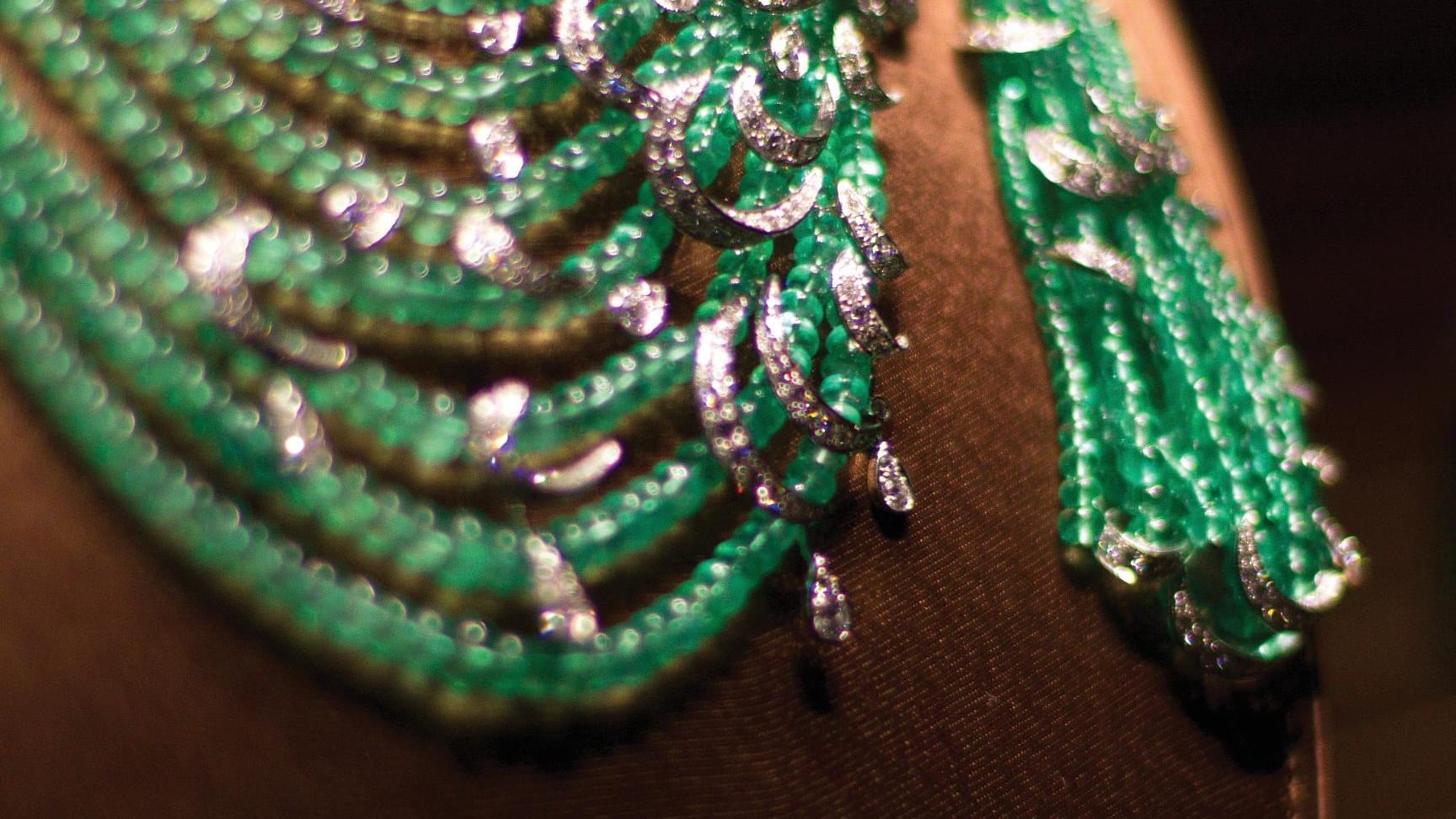
Cartier’s workshop above the marble-fronted boutique on Rue de la Paix, just steps from Paris’ Place Vendôme, worked overtime to produce an exceptional collection of 70 contemporary pieces of High Jewellery for the event. Many subtly reworked the house’s signature pieces and motifs such as an extravagant necklace, in a shape reminiscent of one that belonged to an Indian prince of the 1920s, crafted from platinum with a 41.29-carat cabochon-cut emerald, a natural pear pearl of 9.40 carats, a 4.02-carat rose-cut diamond, as well as a plethora of diamonds, onyx, emerald beads and brilliants.
Alongside such stunners, Cartier also shared some of its 160-year-old legacy through rare vintage pieces retrieved from its archives. The collection is entitled ‘Cartier Tradition’, which is also the name of the internal specialist department founded in 1997 that identifies, restores and appraises Cartier objects produced before 1980; since its founding, nearly 5,000 rare creations have been handled, which greatly justifies having officiated such a pursuit. Highlights of the collection include a tiara from 1914 with an unusual ivy-leaf motif, an exquisite skeleton watch gilded in yellow gold, rock crystal and enamel from 1929, and a selection of classic Cartier necklaces that date from 1913 to 1942.
Furthermore, Cartier ventured into the art of living, with objects of interior decoration and accessories focused on the pleasures of the home and the refinement of one’s living spaces. Such pieces were once the preserve of loyal customers only, that is, those who requested special orders (it is to be noted that a stunning 80 per cent of the jewellery made in the workshop are unique pieces). Cartier recently, however, made the decision to anticipate such a demand by creating one-off pieces for sale at its flagship stores. The range presented at the Biennale was truly mesmerising: a bowl of agate encrusted with precious stones such as one 14.25-carat cabochon-cut yellow sapphire, rock crystal, cornelian, an onyx trinket tray decorated with a white gold dragon, and a traditional desk set crafted from white gold, rock crystal, onyx and coral. It is a wonder that these objects have actual practical functions for living, when truly they are no less works of art than what could be expected of the Cartier master craftsman tradition.
On the heels of this fantastically successful Paris presentation, for the first time Middle Eastern luxury lovers were exposed to the technical, as well as artistic, heritage that inherently defines Cartier’s cult of exclusivity. Comité Colbert, an ambassadorial institution for French culture and identity that also works at the heart of luxury at home, brought icons and dream objects of French style to The Dubai Mall from October 29th to November 7th, 2010. Director of the Ateliers of High Jewellery Creation at Cartier, Mr. Xavier Gargat, who has been orchestrating the powerful team of Cartier master jewellers back in Paris for over 12 years, arrived in town to communicate to clients the passion behind its pieces.
For across Cartier’s recurring stylistic themes gleaned from its encounters over the years with Russian and Indian clients and its dashes into Art Deco stylings, there is invariably a common thread throughout: an unrivalled dedication to savoir-faire. For Cartier’s craftsmen, some of which undertook apprenticeships of 10 to 15 years in order to complete their training, there is no amount of complication, perfection and delicacy that cannot be achieved by means of their discipline; some pieces require thousands of hours' work.
One motif is truly Cartier to the core: the panther – haughty, elegant and feminine. Ever changing and forever in motion, she is a symbol and ode to freedom that is simply inseparable from Cartier. This graceful feline served as the backdrop of the décor designed by Francois-Joseph Graf for the Biennale des Antiquaires temporary boutique. She also reared her head in a truly exquisite piece crafted from petrified wood, which is wood that was turned into stone more than 70 million years ago by natural silica. Taming such an exquisite material is the work of only the most rarified stone craftsman who must work entirely with its natural form and evoke the original patina.
With a hint of extravagance that infuses the ultimate standard in meticulous yet grand tradition, Cartier is the best of the best. With a design history as rich as the rare material it refines, the pursuit of perfection is the essence of Cartier culture. Who else could we have awarded the Ultimate Fashionism gong to this year?
WHO Cartier
FOR The Biennale des Antiquaires collection
SHOWN In Paris from September 15th - 22nd 2010, and in Dubai from October 29th to November 7th 2010
WHY The ultimate creator of the world’s finest jewellery, Cartier is, without a doubt, the standard bearer for luxury jewels and the guardian of a collection the likes of which likely will never be surpassed.
www.cartier.com