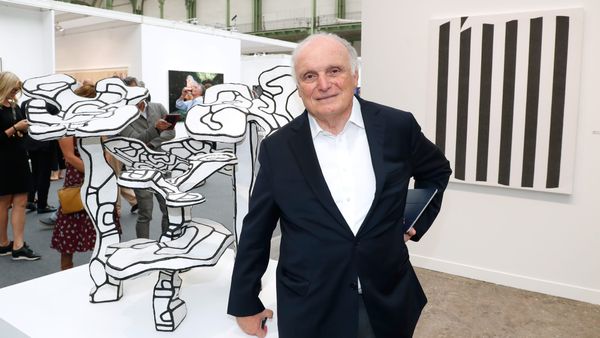
There are two things that strike me when I meet David Crickmore, CEO of luxury fragrance house Amouage. First, his confident manner is so disarming that you almost forget you’re in an interview – he doesn’t just smile, he beams. Second, he has impeccable taste in ties. Today’s is satiny and salmon-coloured, which contrasts nicely against his dark suit.
We meet in Muscat’s Chedi hotel. I am here for the opening of Amouage’s 3-years-in-the-making factory and Visitors’ Centre. It’s the middle of December, but if feels like spring. The heat of the sun is softened by a fresh breeze that ruffles the palms lining our view of the sea.
“Oman has become my surrogate home,” Crickmore says, as we begin our conversation. He smiles as he recalls the circumstances that brought him to the helm of the 30 year-old company in 2006. Like many things in life, it was a combination of serendipity and ability, with a touch of daring.
Seven years ago, Amouage’s chief executive knew little about perfume. After spending almost three decades in the luxury goods segment as managing director for high-end men’s fashion brands like Duchamp, Farlows and Dunhill, a headhunter called him from London. “He asked me, ‘how would you like to move to Oman?’ I thought the idea was ridiculous at the time but went to the interview anyway.” Crickmore was working for bespoke tailor, Ozwald Boateng then.
“I remember thinking that the fragrance wasn’t so bad but the packaging was so Arabic in style, it wouldn’t really sell elsewhere. So I told them the packaging was the problem and organised a blind smelling,” he continues, candidly. Next thing Crickmore knew, he was the prime candidate for the job.
“It was a brave decision on their side, since I wasn’t part of the fragrance industry,” he adds. Neither was Christopher Chong, who Crickmore hired as creative director. “Christopher had never worked in the perfume world, he was an opera singer. But I needed someone fearless.”
Where Crickmore did have expertise was in brand repositioning. Together with Chong, he began working on a total makeover. This meant recapturing customers Crickmore calls the ‘lost generation.’
“Amouage had become an old person’s fragrance, not one you would buy for yourself. It was seen as too sleepy.” It may never be a young person’s brand but his decision to develop lighter perfumes, quite different to the musky Middle Eastern-style fragrances for which Amouage had been known, has made it more appealing to the global market.
While the company reflects the romantic ethos of this part of the world, drawing on Silk Road imagery and the traditional cultivation of frankincense, Crickmore insists that Amouage is an international brand that happens to be based in Oman, not the other way around. “We’re proud to be the only luxury brand stemming from the Gulf with such an international reach,” he adds.
While Amouage’s perfumes are now manufactured in Oman, where everything from maceration to bottling takes place at the company’s birthplace in Al-Mawaleh - the spot where Chairman HE Sayyid Khalid bin Hamad bin Hamoud Al Busaidi says his father planted the first frankincense tree 30 years ago - conception and development happens abroad. Amouage’s perfumers are based in Paris and Grasse, centre of the world’s perfume industry. Chong, meanwhile, works from London.
“The whole process of making a fragrance starts in Christopher’s head. As the creative force behind Amouage, he needs to be where it’s cutting edge in the worlds of fashion, literature and art,” Crickmore says. “I like to think of myself as the bean counter, the nose that sniffs out what will sell.”
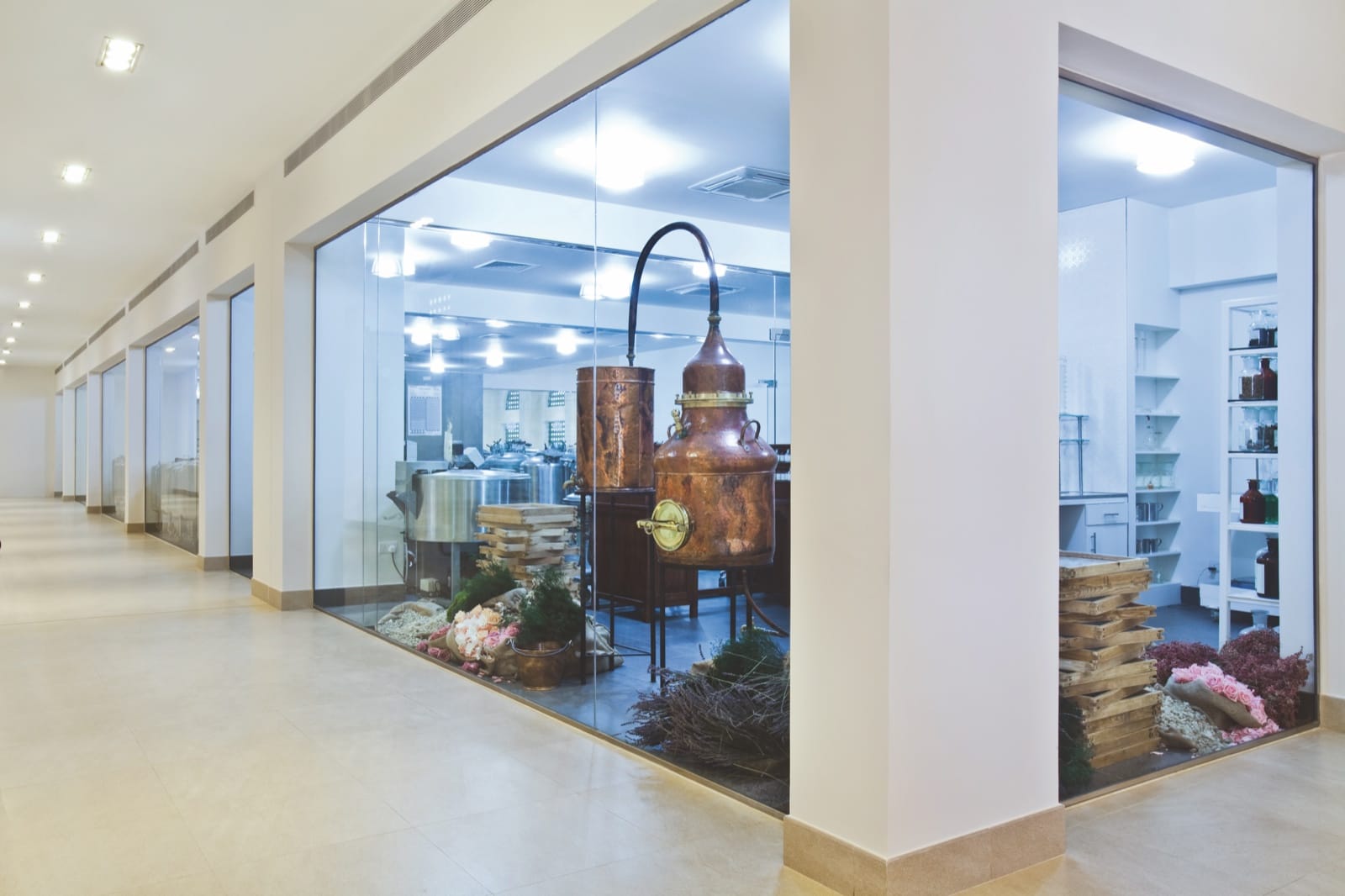
Judging by the fact that the company has grown at a rate of 35 per cent every year since he took over, that nose seems to working. From a manufacturing capacity of 500 bottles a week, Amouage now produces 8,000, and is sold in 52 countries, from Kuala Lumpur to Uruguay. “When I arrived, the brand was very Gulf-centric in distribution and really only selling in Harrods in the UK,” he continues, describing how Russia, Germany and Italy are the largest markets in Europe, with the brand growing in popularity in Australia, South Africa and Hong Kong. “This year will see further penetration in South America and the Far East.”
Currently, 60 per cent of Amouage’s revenue comes from Arab markets, 40 per cent from elsewhere. The strategy, according to Crickmore, is to reverse this in the next 5 years. “Now we are adding more internationally-recognised ingredients, such as gardenia and jasmine as white flowers rather than Damascene rose, and replacing heavy woody scents with something lighter.”
So if you try the company’s latest fragrance, ‘Interlude’ which is intended to convey that moment of inner harmony in a world of chaos and disorder, it’s as complex and floral as its heavier signature scents but in a muted, smoky way. It reads like an intense pause before motion.
The company also has a 4-year old bath and body line, as well as a home and leather goods collection. “If you think about it, fragrance is an accessory. When Valentino started, it was clothes. Then sunglasses, jewellery and perfume,” Crickmore says, “but instead of moving from fashion to fragrance, we’re doing it the other way around.”
It’s by turning things on their head that Crickmore has made Amouage more contemporary. For instance, the Library collection launched in 2010, comprised of six Opus fragrances, stands out because it is unisex. “Christopher and I have seen both men and women buying fragrances intended for the other gender. We believe the trend is moving towards non-specific gender fragrances, so we decided to create a collection to reflect this.” Contrary to their naming, they smell nothing like old or new books, rather the Opus’ are deeply layered, spicy and pervasive.
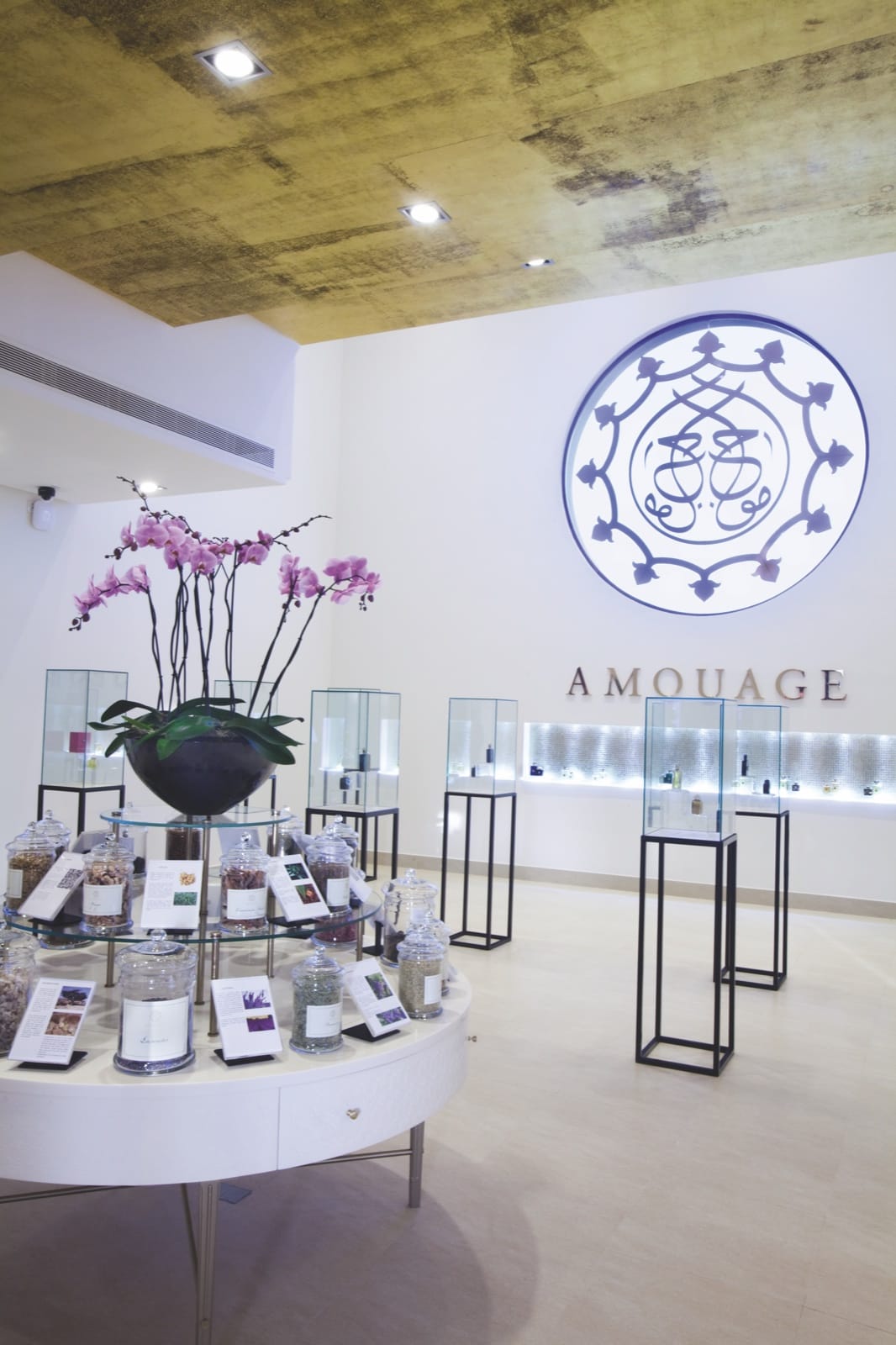
The pervasiveness of the new Amouage scents is perhaps the only thing that hasn’t changed, thanks to the high percentage of concentrate in each, which ranges from 25 per cent in eau de parfum to 45 per cent in candles. It’s this liberal use of often rare essential oils – rather than the extravagant packaging - that explains the price each bottle commands.
“One of the priciest ingredients we use is ambergris, which is hard to find,” explains Crickmore, adding that even basic ingredients, such as rose oil, are of the highest standards. “With the rose, some makers crunch the whole plant up before extracting the oil, which gives a much greener smell. We only used the petals. This gives a headier aroma but is far more expensive to produce. There are several instances like this where we go for higher quality rather than the cheaper alternative.”
The enduring fragrance of each perfume is all-encompassing. “A friend once told me that you usually spray on a perfume and it’s gone in two hours but with Amouage, the next day, you’ll still be able to smell it on your pillow.”
I know what he means. The day after the factory opening, I realised that the dewy, floral aroma I kept noticing and which seemed to follow me everywhere, was coming from my hands. Puzzled, it took me a while to remember that I’d applied some of Amouage’s Epic hand cream in the bathroom of the visitors’ centre the evening before. Several hand washes and even a shower later, its delicate aroma clung to me still.