If you were to take a stroll around Dubai’s design district today (otherwise known as d3), its actual boundaries will elude you. Last year for instance, as part of its inaugural Design Week, it was responsible for the installations that covered the historical district of Al-Fahidi and the seaside promenade facing the Jumeirah Beach Road (which interrogated issues of artisanal craft and indigenous architecture, how we negotiate intimacy in digital media, and how waste can be repurposed in multifunctional furniture). But the bulk of d3 is actually a series of eleven, unfinished, numbered buildings with steel and glass façades in an area spanning 18.5 hectares adjacent to the Business Bay.
While this work-in-progress aspect may make it feel a little like a ghost town, or derelict business quarter, it isn’t out of place in a fast-growing city like Dubai, which is of course a seemingly constant construction site for manmade dreams of tall(er) buildings. In fact, one could argue that what the city is trying to create with d3 is a vibrant, artistic space that will soon have the trappings of other global cultural capitals (here, I’m thinking particularly of Miami or Berlin). To give you an idea of the ‘how,’ let’s go back to last October, when d3 hosted the Downtown Design annual fair, then in its third edition, essentially a tent-like enclosure that featured a bustle of emerging and established brands across a range of product categories, including furniture, lighting, bathrooms, kitchens, textiles and accessories, all sharing the same space (which is something you’d be hard pressed to find in more longstanding fairs like Salone del Mobile), alongside a destinations initiative that saw design weeks from Mexico, Melbourne, Helsinki, San Francisco, Beijing and Istanbul present a selection of their most exciting emerging brands for the first time in the region.
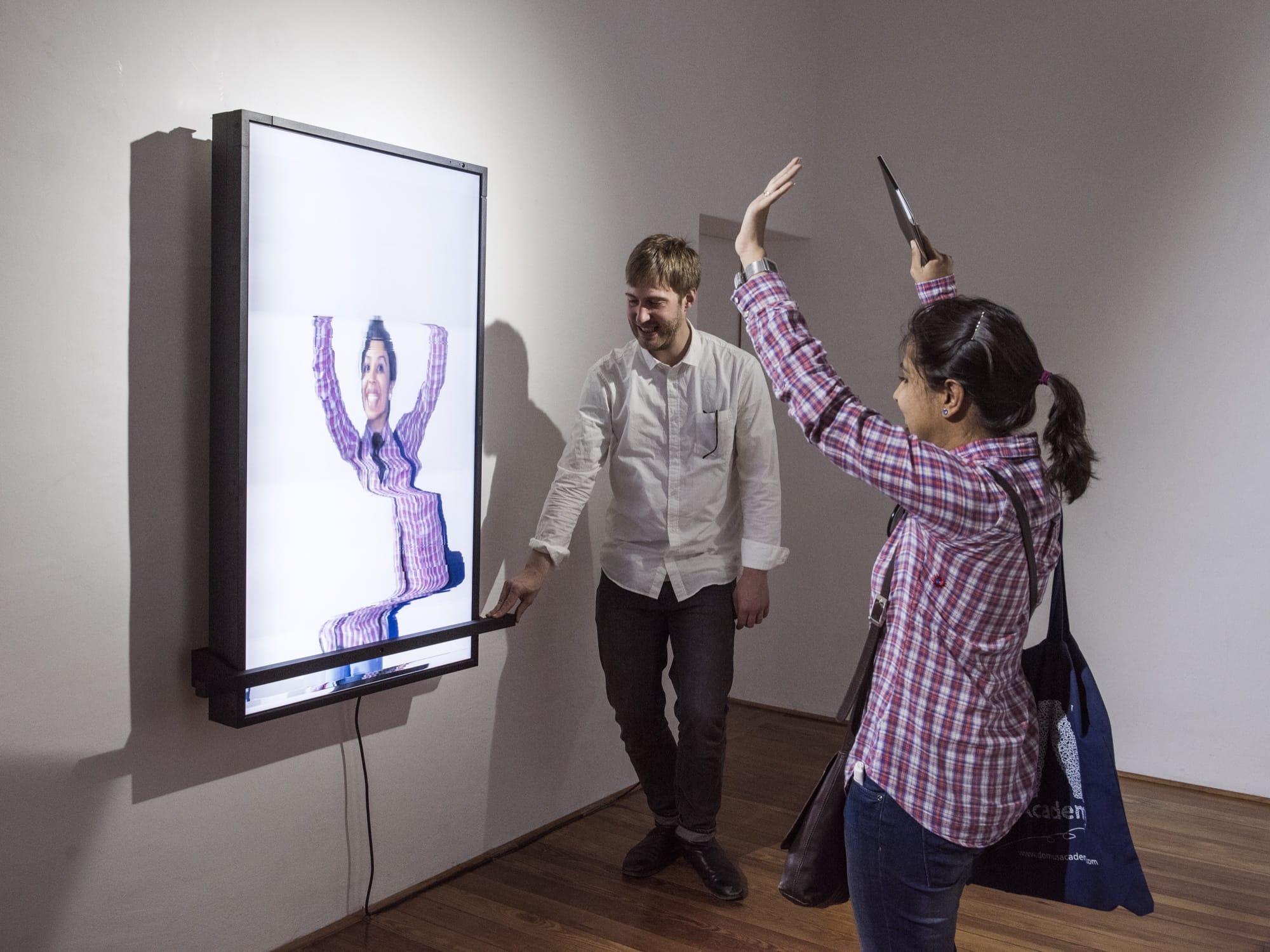
The event coincided with Dubai’s Design Week (managed by the Art Dubai group), where several of the ground floors in d3 buildings were opened for international and regional artists’ works. For example, in Building 8, you’d have found the Love project, by the award-winning Brazilian architect Guto Requena, which transformed people’s greatest love stories into 3D-printed mandalas – small geometric microcosms of a personal universe. To show how it all worked, Requena’s studio had set up a special electronic system of sensors that could tap into any visitor’s emotional reactions and translate them into raw data via a graphic interface. Sharing the same unfinished space was Tokyo’s Yohei Iwaki. His ‘Fragments of Now’ installation was a series of mirrors that simultaneously recorded your every motion and expression and then played them back for you, in a slow rewind of the moment that just passed.
In the passageways between the buildings were six identical-looking national pavilions (for Jordan, UAE, Kuwait, Saudi Arabia, Tunisia, and Pakistan), built by Loci, a local architectural firm, containing different patterns of sand in polycarbonate panels that functioned as blinds to keep out the heat. Part of an exciting initiative by Abwab, overseen by creative director Rawan Kashkhoush, this was a new platform that aimed to expose the diversity of regional design talent in the region, and the pavilions housed the artists’ richly diverse, interactive interpretations of the brief: the element of games and play in our culture.
While it all sounds particularly hip and seductive in terms of cutting edge art, d3 clearly wants to be more than just infrastructure. Fundamentally indicative of this were two trailblazing shows d3 launched that are far-reaching in their implications on the historical and scientific levels. The first, curated by Lebanese designer Rana Salam, was the ‘Brilliant Beirut’ exhibition that unravelled the city’s major shifts in thinking about design and creativity through the lens of architecture and furniture, graphic design and popular culture from the 1950s until today. Second was the first ‘Global Grad Show’, displaying 50 innovative projects from the world’s leading design schools (amongst them Pratt, MIT and the Royal College of Art), which, as curator Brendan McGetrick mentioned, would take 37,557 kilometres and 47 hours of flying to actually see in one go. Although these works weren’t aesthetically driven, they were forward-looking and devised solutions to problems that designers around the world were responding to in terms of home, work, play, memory, construction and health. They included a power glove that sculpts concrete like clay, a medical kit that uses UV light to sterilize equipment and save energy, a dinner set that introduces new ways of eating and a megayacht that can conduct research and clean the ocean.
So who exactly is behind all this d3 cultural activity? The quick answer is Tecom group, one of the region’s biggest real estate developers (responsible for Dubai’s Media and Internet cities, Knowledge Village, and others), along with participants and partners that run the gamut from Foster+Partners architects to luxury retailers Chalhoub. According to d3’s director of business development, Maitha Al Suwaidi, formerly PR manager for Tecom Investments, who has been working with the group for seven years, particularly in relation to its free-zone business parks (and d3 is considered the newest one), “Tecom’s vision for the UAE is to build knowledge-based clusters and the d3 project was launched for the sake of the design, fashion, art and luxury industries.”
Al Suwaidi continues, “The original site for d3 was totally different, in the middle of the desert but because of the financial crisis, this land became available. Its positioning is much more strategic since it runs across three highways, the Dubai mall is five minutes away and it’s by the waterfront with an amazing view of Burj el Khalifa and Ras el Khor [a wildlife sanctuary].”
“You know in 2012, it felt like the right time for this cross-pollination of design, fashion and art” – d3 was officially launched in June 2013 and should be completed in 2019. Here, it must be mentioned that in November 2015, Deloitte released a report on the outlook for the design industry in the MENA region, which showed that the UAE dominated the scene, contributing over 27 per cent market share (27.6 billion USD in 2014 out of 110 billion USD in the region), with Saudi Arabia coming in second. It also estimated that the MENA design market would continue to outperform the global industry by a factor of two in terms of growth rates, and concluded that only 35 per cent of the total regional market is locally sourced design, so it’s an industry that’s still largely based on imports. “At the time, the main thing we realised was missing here was a regional flavour,” Al Suwaidi continues. “So we invited 300 designers and creators – all of whom I personally met – into focus groups, and 15 were from Beirut. We asked them what they thought they would need from such a district.”
In order to build a model for their homegrown design district, d3 also looked abroad for inspiration. “We researched examples like the meatpacking district in New York, which began as inexpensive places to set up shop. In this way, we were on point in terms of offering affordable, blank canvases and modular, co-working spaces for creatives; it’s what the industry wants.” The managing director of d3, Lindsay Miller had mentioned in a previous conference how they were taking a core and shell approach with flexible offices, showrooms, and studios. “As master developers, we don’t want to get involved on that level and we looked to places like Shoreditch, where creatives leave their own mark.”
On the other hand, d3 was also aware that a design movement cannot be built artificially. “We needed to work with an existing ecosystem,” Miller added. The interesting aspect about d3’s business strategy is that it’s meant to be all-inclusive; global luxury brands, emerging designers and startups will all be present (obviously, there will be an applicable hierarchy of costs and there’s also corporate interest because of the tax exemptions and foreign ownership entailed in free-zones.) So it isn’t that surprising that by March 2015, d3 had already reached 85 per cent occupancy and a month later, over 220 companies had signed. So far, regional fashion designers such as Rami Al Ali and Michael Cinco are in, along with high-end brands like Dior, La Perla and Hugo Boss, not to mention a host of architects, furniture and jewellery designers.
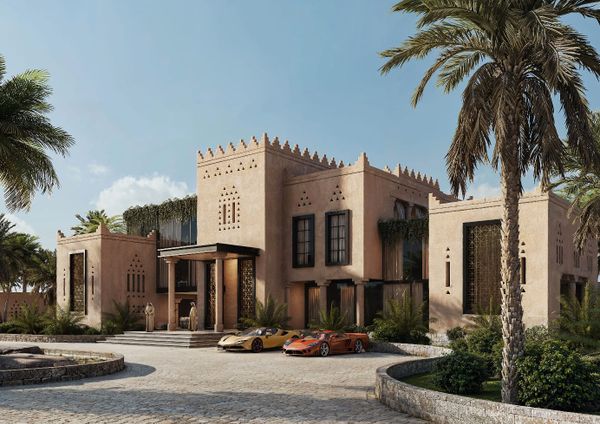
“The spaces with skyline views will have higher rents and the high-end interior finishings and the waterfront access also make them a good fit for luxury flagships. When we told big retailers like Chalhoub (who will have two of their own d3 buildings) about this initiative, they said, ‘if there’s a place that will become the locus for creativity, we want to be there.’” The part of d3 that’s dedicated to luxury brands, boutique hotels and restaurants is designated as the North zone and it will have interiors made with brass, silver and dark walnut. Then there’s the Core zone for the regional taste-makers, designed with glass atriums and a lot of natural wood, emphasizing craftsmanship and finally, the South block, home to the tallest buildings, is a mix between the raw and the refined. When I ask Al Suwaidi if this won’t be a bit of a mishmash, she posits, “Perhaps the most interesting part about this job is to see who fits in with whom. We are also bringing in a few two and three-Michelin star restaurants as well, one is Peruvian, as well as 13 design hotels.” The hospitality and entertainment outlets will be part of the 1.8 kilometre Creekside development of the waterfront, which should form the last phase of the project.
In a similar way that the Miami design district encompasses design, architecture and dining, d3 envisions its transformation as a combination of shopping, artistic, and culinary experiences that combine the best of design, fashion and culture in one creative space. “It’s expected to become home for 6,000 artisans and designers as well as around 10,000 people working for 500 companies,” Al-Suwaidi affirms. In essence, d3 plans to serve as a new cultural hub for both creativity and entrepreneurship. As Dr. Amina Al Rustamani, Tecom’s CEO said, “Our ambition is to pioneer a location where passion and purpose come together to connect each area of the sector and drive forward the region’s design community.”
It’s definitely an interesting proposition but only time will tell if Dubai can go from being a consumer of design culture to a creator.