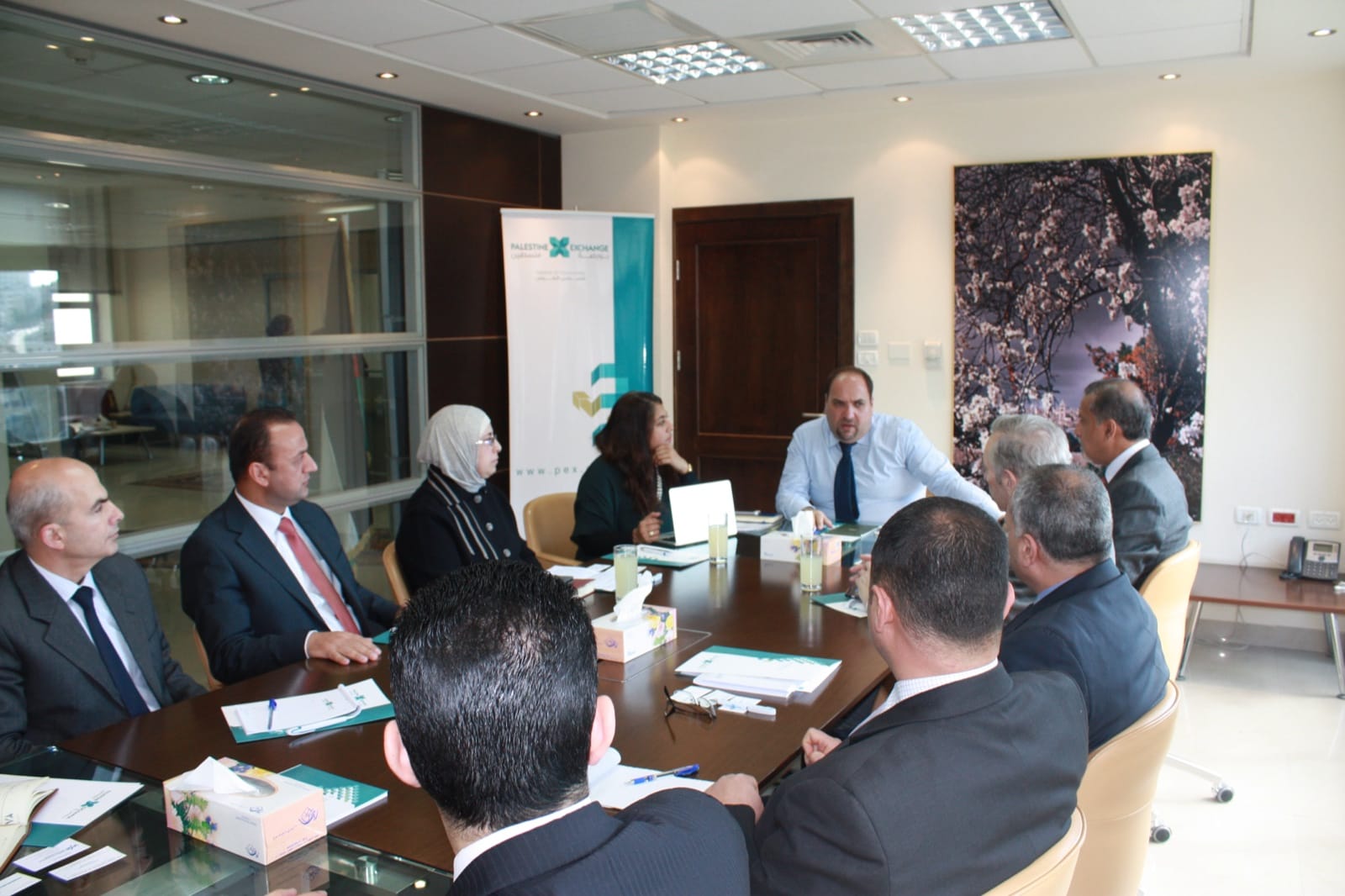
Ahmad Aweidah commutes over an hour each morning past Israeli Defence Forces’ checkpoints to reach PEX headquarters in Nablus. It can be a little rough sometimes with strict regulations from Israelis who restrict the freedom of movement in the State of Palestine. One time, he was delayed seven hours due to checkpoints and closures before he could finally get to work. Another time, he had to leave his car behind, walking through a mountainous rocky road. But that’s par-for-the course for the current CEO of the Palestine Exchange (PEX), Palestine’s very own stock market.
Luckily, PEX is mostly an online operation. “We can operate from anywhere and run the exchange remotely if we have to,” says Aweidah, showing the nous to overcome yet another obstacle. In a heavily conflicted Middle East, Palestine is one of the most economically challenging environments in the world. Amid the turmoil, one man has committed himself to the success of a business that requires, above all things, a high measure of stability. Ahmad Aweidah is the embodiment of persistence.
“If I only had a cent for each time I wanted to throw in the towel, but we have a saying in Palestine: ‘He who digs into the rocks will develop strong muscles,’” says Aweidah. Indeed, PEX has just recently been included on the Russell Frontier Index placing it ahead of several others markets in the region. “That is a very good place for us to be; it was a big step and it shows our work is paying off.”
“You can create your own opportunities,” he continues, “everyone thinks the grass is greener on the other side.” But there is potential everywhere and the British-educated Jerusalem native seized the opportunity to become what he describes as a big fish in a small pond. “I don’t think I could have risen the ranks quite as quickly in the west,” he self-effacingly admits.
Aweidah, who is the youngest of nine children, went to boarding school in England, gained a Master’s in Economics from St. Andrews University, and did a stint banking in France before he gave it all up and returned to Palestine in 1996. He was in his mid twenties and he took a job as bank teller in Ramallah. “I was making 225 USD a month but I was happy,” he asserts. At the time, the recently signed Oslo Accords were conceived as a breakthrough in Israeli-Palestinian peace negotiations, and Aweidah describes the palpable sense of opportunity and optimism that was in the air. However, that positive atmosphere of hope would disappear by the time of the Second Intifada in September 2000.
When you are Palestinian, politics impact your life every day, explains Aweidah. But one lesson he learned early on from his father – a successful businessman in his own right whose endeavours were sometimes thwarted by conflicts in the Mideast – is to live in the moment. “My father was the kind of man who really enjoyed life and never wasted time. You could die tomorrow, so never wait or postpone,” he reflects.
Shortly after moving to Palestine, Aweidah’s potential was recognised and a series of quick promotions placed the then 32-year-old as Vice President of Retail Operations at the Arab Bank, the largest financial institution in the Middle East in terms of network, and then Vice President of Commercial and Operations at Palestine Telecommunications (PalTel), the largest private-sector company in the country, three years later.
Achieving a senior position at a relatively young age proved daunting at first and chairing a meeting with senior management wasn’t always easy. “I remember walking into our first meeting with these managers who were all aged 50-plus and thinking, I’m 35 years old; I was scared, but I never showed it. I just got on with the job and eventually people realised I was a good manager and I gained their respect and support very quickly.”
A serious commitment to the job and plenty of hard work were the primary reasons he was able to convince even the ‘old dinosaurs’ of his capabilities, jokes Aweidah. “Arabs can be quite conservative and sceptical when it comes to those younger than them,” he says.
After careers in banking and telecom, Aweidah then took over PEX in 2008, at the peak of a global financial crisis. He was 38 years old and the financial collapse of Dubai the following year had an even bigger effect on regional exchange. “It was a much bigger collapse than Lehman Brothers [for the regional stock exchange], and it was an extremely difficult time.” Business had dropped more than 80 per cent and Aweidah had to make some tough decisions. The business shifted from bringing in more companies to trying to ensure it merely survived. “We had to do a lot of cost cutting; many people were let go… PEX was making losses,” he recalls.
Alongside economic downturns, political crises, regional struggles and raging wars in the Mideast have all discouraged investments. But PEX not only survived the political and economic challenges, it thrived. Under Aweidah’s leadership, the exchange market went from 37 listed companies to almost 50 in a few short years, attracting quality companies and building PEX’s reputation along the way.
In 2016, the prospects have also been positive. “The exchange has been growing at a rate of three per cent. So far, it has been a good year,” he says. “Now we are back to bringing more companies and investors.” But it had taken a lot of grit.
Aweidah’s work ethic is totally transparent. “You have to be fair and honest,” he says. And coupled with a laisser-faire approach to management, his big picture-approach leaves room to breathe. “I leave it to other people to cross the t’s and dot the i’s,” he explains. “If you are going to micromanage people, you might as well fire them and go and get someone who can do the job.”
“Basically a CEO is a glorified salesman. My job is to sell and to convince companies to enlist and then I sell those companies to investors,” he continues. Selling demands a lot of interaction with people and Aweidah loves this part of the job. “Travelling across the country and abroad to constantly meet with people is the best part,” he says. “Bringing in lots of investors from Palestine and abroad is the challenge.”
Because the stock exchange is not like a regular business, many external factors influence success. “There are so many things that affect our work and which I have no control over,” says Aweidah citing war in the Middle East, oil prices, the rise of ISIS and other determining factors. “It really teaches you to take a punch in the face and deal with disappointments, then pick yourself up again and keep going,” he adds.
Running a stock exchange has also taught Aweidah to become a lot tougher and a lot more persistent. When he made the transition from retail banking to the stock exchange, Aweidah realised that unlike in retail banking, there is no marketing campaign that can increase business.
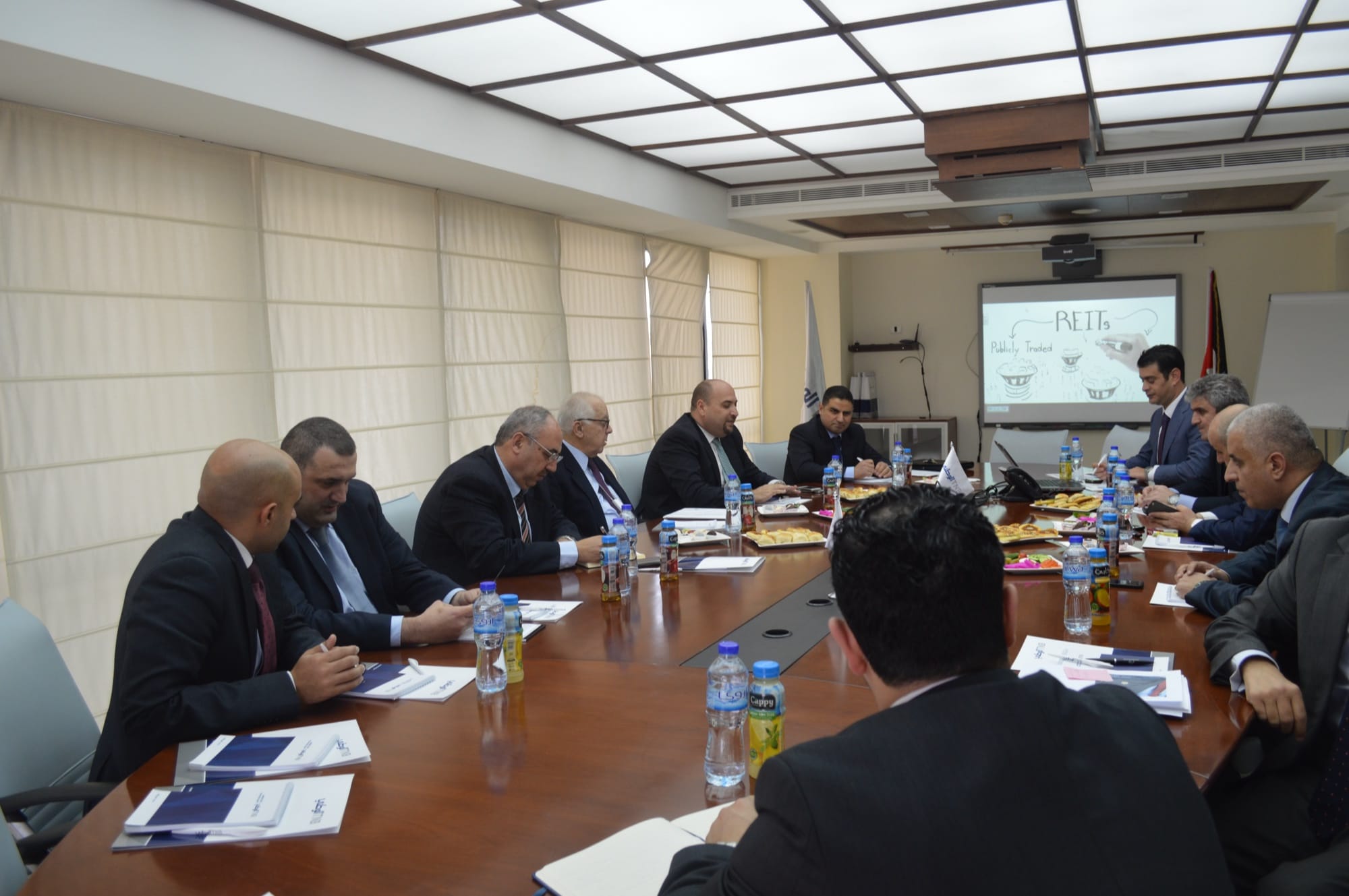
To attract investors, PEX participates in financial roadshows, which constitute a series of meetings between top company executives in different cities. The aim is to bring in financial investors, but hosting roadshows is an expensive affair. “It costs around 180,000 USD just for a day so we do it semi-annually,” said Aweidah, “and there is absolutely no guarantee that you will get a single investor out of that day.”
A large venue must be rented, a financial PR company is brought in to reach out to investors and create business-to-business meetings. “We usually do it in London because it has the largest concentration of investment funds,” said Aweidah adding that his company does several smaller-scale events in Jordan, Dubai and elsewhere.
“You have to keep meeting people. You have to keep talking to people,” says Aweidah who believes the Palestinian exchange market fairs better than many other countries in the Middle East. “I’d say I’m a good middle in the region, but in terms of our governance, structure and ownership we are ahead of everyone else,” Aweidah asserts, explaining the automated PEX system was 20 years ahead of other regional markets when it was established.
With a large appetite for life, Aweidah appreciates the simpler things, taking nothing for granted. Citing cooking and entertaining as hobbies, he regularly hosts dinner parties for family and friends. He also loves to give back to his community and has secured several scholarships for deserving Palestinian students to go to university.
“Unfortunately in the Arab world there is a shortage of talent, the good people leave. I do a lot to personally match students with opportunities,” says Aweidah who taps into his extensive network to help young Palestinians aspire to more in a country where state-run schools put little emphasis on character building and offer little to no career guidance.
“There is a lot of scope for growth,” says Aweidah returning to the subject of PEX. This despite the fact that not many in Palestine have enough savings to invest, and the economy has been in a recession since the last Gaza war. Political uncertainty affects the level of investment, but Aweidah insists on pushing forward. “We still continue because the political situation is not very different from what it was 20 years ago. And look, we started with a 20 million USD market cap and now we are at 3.5 billion USD. It means you can still do it.”