Who Ahmed Alsoudani
What An artist many are already calling “the next Picasso”
From Baghdad, Iraq
Why This Iraqi-born, Yale-educated, Berlin-based artist is one of the most thrilling young contemporary artists at work today.
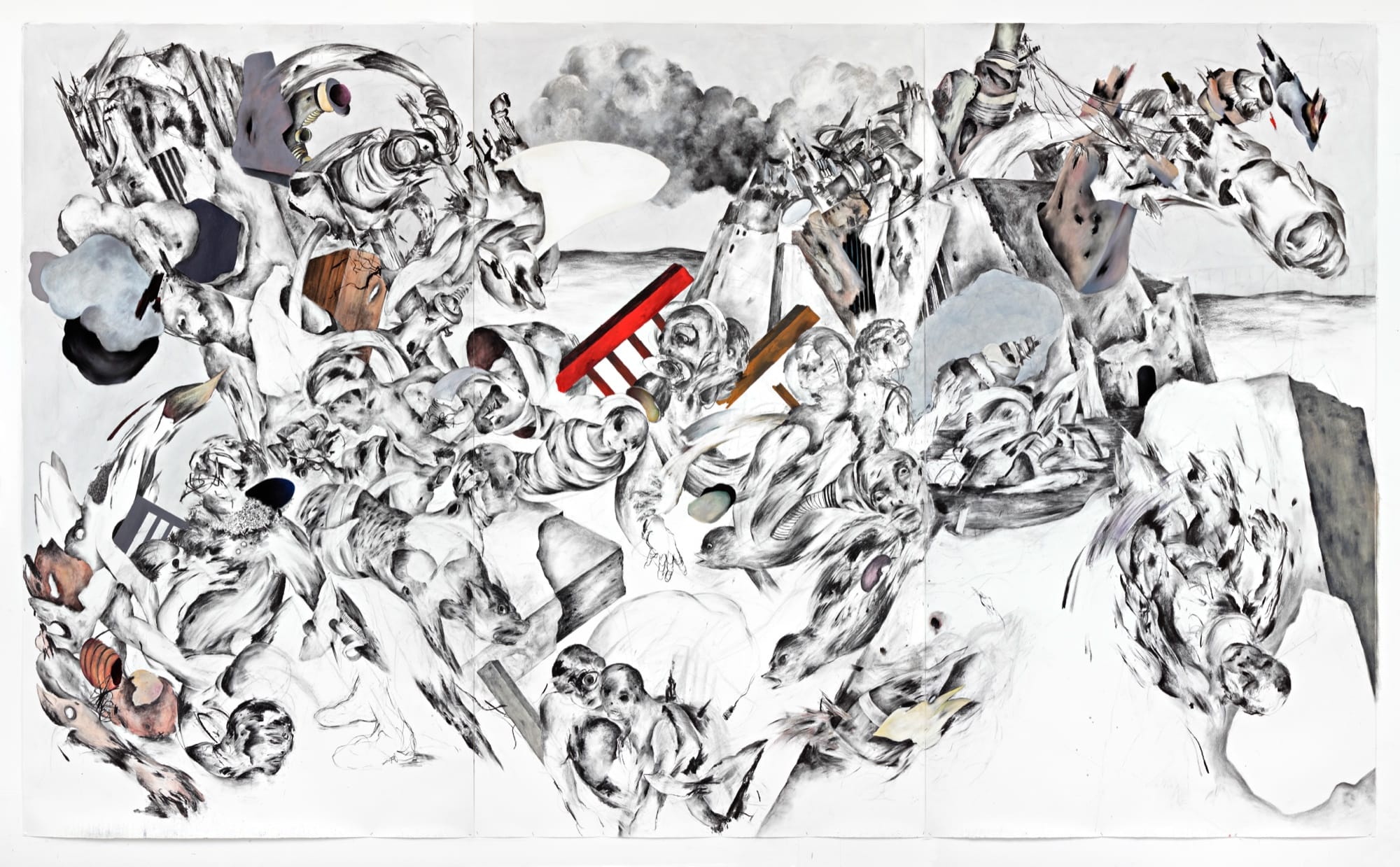
The building at 33 Vossstraße, in central Berlin is one of the city’s more fascinating addresses. The Nazis took it over in the 1930s, and made it the headquarters of the Reich’s Transport Division. Following the thunderous destruction of much of the city in 1945, it somehow survived, to exist alone in the shadow of the Berlin Wall for nearly thirty years. And today, it remains the oldest building in the area, an imposing and solemn reminder of the city’s dark, shadowy recent history. And aptly, the ten large drawings that are currently being displayed inside the malodorous rooms and halls of this building immediately echo the building’s history of fear and oppression, in powerful, surreal maelstroms of rage and aggression. “One of the things I’m trying to capture in these drawings is the palpable sense of fear,” says their creator, 35-year old Ahmed Alsoudani. A cursory examination of the ten large drawings is enough to conclude that in this ambition, he has quite emphatically succeeded. These are terrifying brilliant and nightmarish works and serve proof that for their creator, 35-year old Baghdad-born Ahmed Alsoudani is one of the most thrilling young contemporary artists at work today.
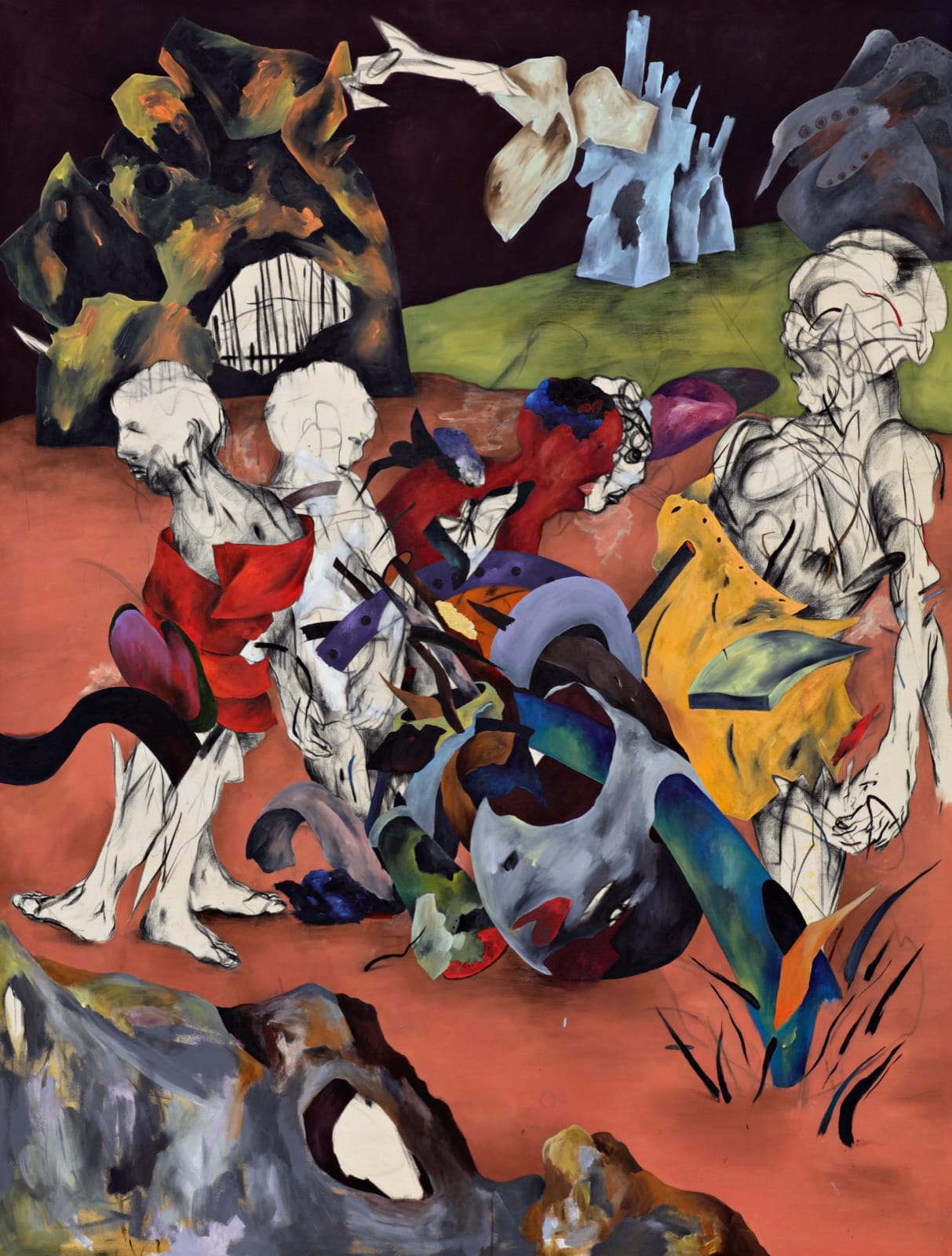
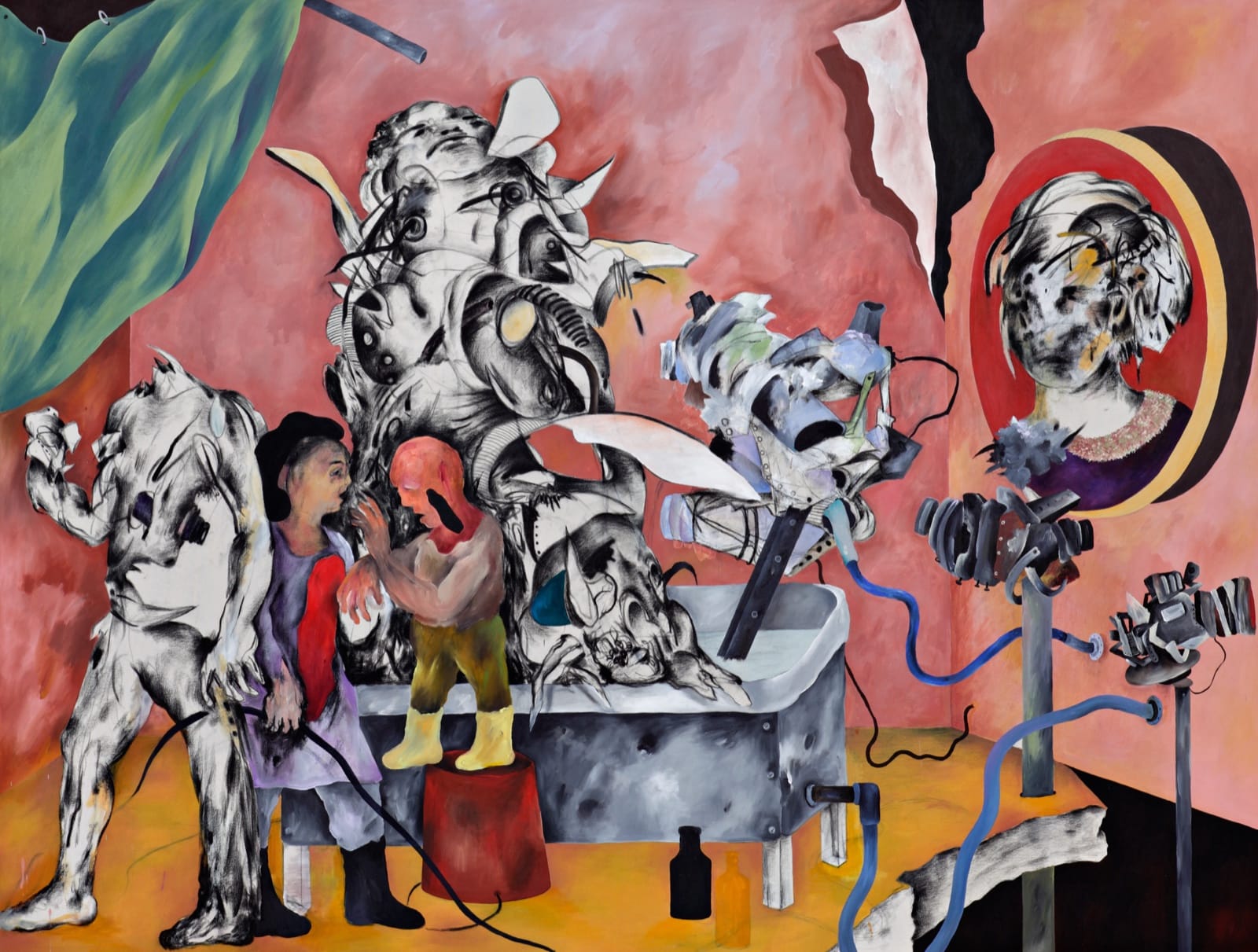
You may have heard of Alsoudani before now. The Iraqi-born, Yale-educated artist, who is currently based in Kreuzberg, a vibrant quarter of Berlin, produces works that are typically concerned with elements of suffering, quite frequently inspired by theatres of war. Within these nightmarish canvases, wild grotesque figures lour and writhe, set off by strange, unsettling backdrops. From plain, monochromatic line drawings to richly coloured yet desolate landscapes, Alsoudani’s work recalls, variously, the figurative distortion of Francis Bacon, the bleak despair of Goya and the burning intent of Picasso. Recently featured in the prestigious "Unveiled: New Art from the Middle East" group show at London’s Saatchi Gallery, Alsoudani’s paintings and drawings are already in some of the world’s most prestigious and exclusive collections. A number of notable clients including Iraqi-born Charles Saatchi, Ebrahim Melamed, Lebanese clients Hala and Issam Fares and one of his biggest supporters, Sheikha Paula al-Sabah of the Kuwaiti royal family have been waiting on line for the next work to emerge from his studio, whilst another renowned collector, Sherri Grace, from Long Island even goes so far as to claim Alsoudani is “the next Picasso. How on earth does this quiet, diffident man remain focused, whilst caught up in an increasingly hysterical whirl of global hype and expectation?
“All these exciting things have happened really quick,” he says, perching on a sofa in his Kreuzberg atelier. “You know, I just finished school last year! I work really hard to separate myself from these issues, I try to just paint the way that I used to paint two years ago and enjoy that because, media, critics – the moment they forget your work, they will destroy you the next day. They don’t really care about me, Ahmed, as a person. They care about work and if they’re not satisfied with the work you’ll be gone because always there are hundreds of people, hundreds of artists, waiting, for example, to be having this interview we are doing now. Hundreds, if not thousands. So, I get so excited and very happy [with the reaction] but then I block it out and I go to my studio and just work.”
Born in Baghdad, in 1975, Alsoudani escaped to Syria shortly after the first Gulf War and fell in with a small boho scene in Damascus, where he ended up living (illegally) for four years. His distinctive style was as yet undeveloped and embryonic, but a chance encounter with a couple of American tourists in the lobby of the Damascus Sheraton (where he was exhibiting as part of a group show) set him on the path to leaving Syria and ending up in Washington DC, albeit speaking barely a word of English and washing dishes for a living.
While he was quickly snapped up by the Maine College Of Art, subsequently progressing to a Masters at Yale, Alsoudani absorbed his new surroundings avidly, working almost non-stop in his studio, or at one of the varied part-times jobs he supported himself with. During his time at Yale, he tells me, he was working in care homes, with senior citizens as well as disadvantaged teenagers – experiences that would soon begin to seep into his maturing art works.
“When I was in grad school, I was working about sixty hours a week in nursing homes, or with teenagers. They were absolutely different worlds to going to school. And yes, I think those experiences came into my paintings, in many ways - the way parts of the proportions of the human figure, some of the faces and features or something, came from there in part.”
His tutors encouraged him to move beyond drawings on paper – his first love – and experiment with a colour palette, on canvas. But Alsoudani was initially reluctant, feeling his expressive lines, sensitive, nervy and bold, were incompatible with colour. “[At grad school], I’d just make lines and they would say, use colour. So I would just put the colour. But colour never came naturally. My first solo show in New York, after I’d finished my first year, was drawings. And four months later I had another show in another gallery with just paintings. And they were like I had been told to make, I tried to bring them together. But after my first show, instead of drawing on paper, I stretched a really tight canvas and I start drawing on the canvas. It sounds like a very easy solution.”
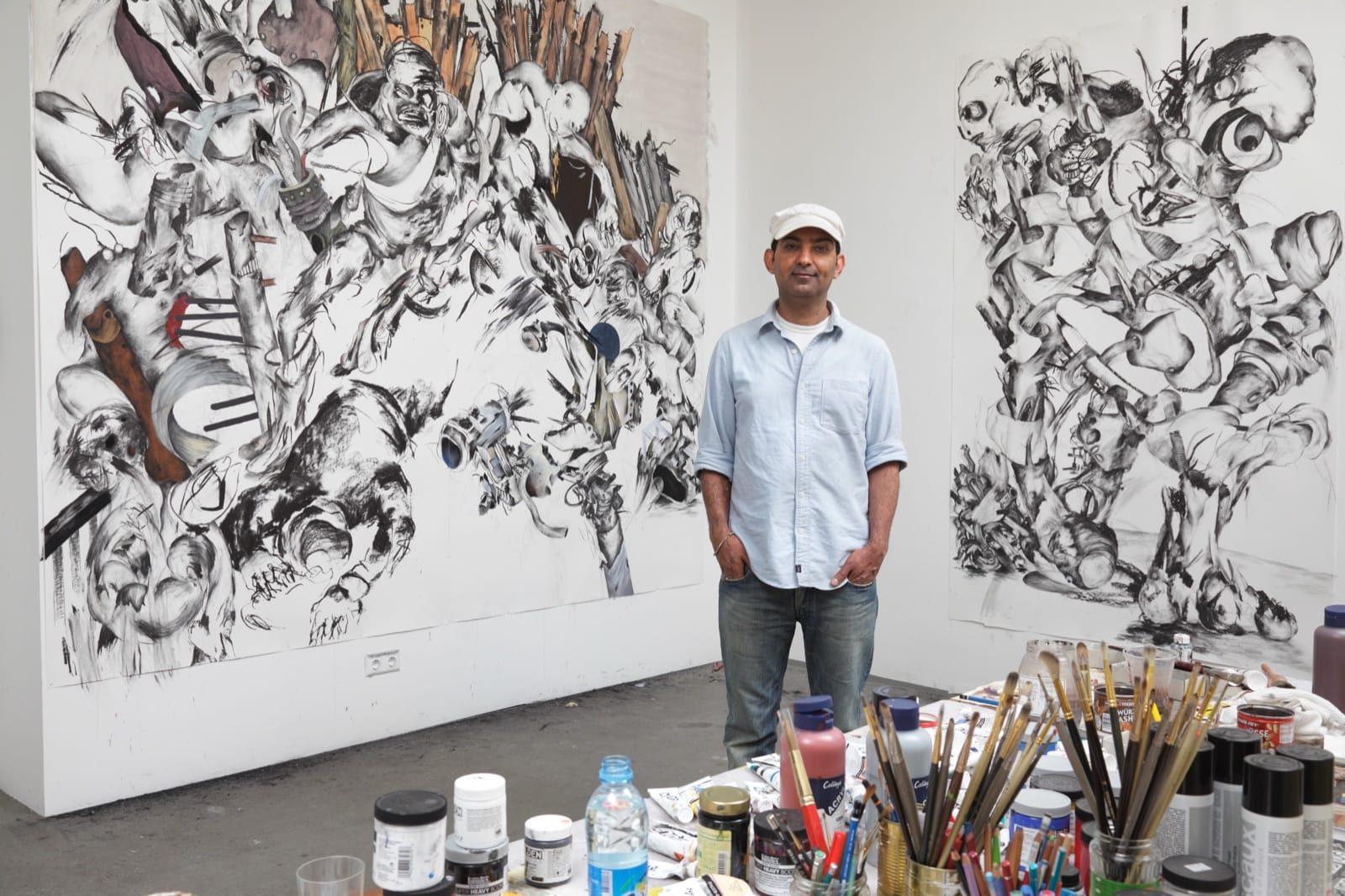
A quietly modest man, Alsoudani moved to Berlin from New York a year ago, drawn by the city’s complex historical and cultural past as well as its present incarnation as a hotbed of unfettered creative freedom. Having spent much of the year holed up in his studio, intently working through the long waiting-list his gallerist, New York’s Robert Goff of Goff + Rosenthal has nurtured around the world, this exhibition marks Alsoudani’s debut solo show in his adopted home city and an increasingly rare opportunity to enjoy a room full of Alsoudanis.
“Berlin has a very unique personality as a city,” reflects Alsoudani. “And to me, even if I don’t go out much in the city, at least not very often, I smell the history of the city. I feel the history is showing in small details of the city. “My paintings are not specifically about war. If you look in my pictures, there is not a lot of blood. But for me war is a very complicated issue that we have been facing for hundreds of years and it affects our lives on a daily basis. We cannot ignore it. As an artist, I feel I’m responsible to do what I should do. War painting is a tradition. Great artists, great masters, have done that. To me it’s more challenging when you go and put yourself with these artists, yet you have to say something that you feel is your own.”