I admit it, I’ve always had a soft spot for convertibles. You see, whereas SUVs yearn to be taken off-road and sportscars pace themselves on-track, convertibles are happiest when they’re cruising empty country lanes.
Open-air motoring just isn’t about high-octane speeds and break-neck thrills, rather the appeal stems from a civilised sun-on-your-face, wind-in-your hair connectedness to the environment. The convertible, at least historically, has represented a refreshing bohemian-ness in an otherwise regimented industry.
Fast-forward to today and there’s unfortunately very little romance left in owning a convertible. More often than not, you don’t want to get sweaty, sunburnt, smell toxic fumes or ruin your passenger’s hair. For those two or three days a year when you do throw caution to wind and drive top down, you’ll undoubtedly love it but you’ll also wonder if it was worth the higher insurance premiums, heftier fuel bills and tighter cabin. And let’s not mention the extra weight, shaky ride and less driver-focussed characteristics you’ve had to endure day in, day out.
Fundamentally, the world has changed. As the saying goes, “the pessimist complains about the wind; the optimist expects it to change; the realist adjusts the sails” and so propitiousness has made way for practicality.
Car manufacturers are not unaware. In fact, they’ve been spending the better part of a decade trying to solve such First World problems. Unfortunately, their solutions have nearly always revolved around the bulky folding metal hardtop. Now Porsche is entering the fray and it has a back-to-the-future solution it calls Targa.
Originally launched in 1967, the Targa – named after Italy’s second-most-celebrated road race, the Targa Florio, which Porsche dominated in the 1960s – is a type of convertible that’s akin to a coupé that converts. Comprised of a removable roof panel, which extends from the windscreen to a fixed central roll bar, the Targa owes its existence to a U.S. regulatory environment that was close to outlawing convertibles. The ban never happened but Porsche stuck with its roll-hoop convertibles and for a decade and a half they were the only open-topped 911’s you could buy, accounting for as much as 40 per cent of sales. When they did finally launch a proper 911 convertible in 1982, you would have thought they’d have done so over the grave of the Targa but there was still enough demand for the car that they kept it going.
The Targa’s death knell finally came in 1993 when an update to the concept turned it into a 911 with an oversized electric glass sunroof. This revised model may have offered hatchback practicality and functional simplicity but the roof treatment never resonated with customers. By the end of the last 911 model in 2012, the Targa accounted for just seven per cent of sales.
Clearly, it was high time Porsche re-evaluated the Targa. After much head scratching, it must have been a funny sight to see those Stuttgart’s execs realise that they had been sitting on the solution all along. You see, a classic Targa with a removable roof panel offers more structural stiffness than a cabriolet, better security in case of a rollover and less wind noise both with the roof up and down. Plus, there are the less quantifiable advantages, like a pleasing sensation of feeling only partially exposed to the elements as well as the increased privacy the extra bodywork provides against the prying eyes of curious pedestrians. Essentially, with the roof in place, the 911 Targa could almost feel like a coupé but with the panel stowed it can also feel like a cabriolet. This was the halfway house solution that every car manufacturer had been looking for.
After teasing us with camouflaged prototypes for way too long, the all-new Targa was finally revealed at the Detroit Auto Show this January and the company’s number crunchers stated expectations that sales would double to around fifteen per cent of 911’s.
A few months ago, we finally got the call to fly to Bari, down at the heel of Italy’s boot, to put the car through its paces. I didn’t expect to care all that much as the latest incarnation of the 911 has been out for a couple of years already and I’ve even taken the top dog of the line-up, the Turbo S, for a run. But seeing the car in the flesh for the first time is an eye-opener. Literally. Live, the new Targa isn’t just gorgeous, it could well be the best-looking 911 of all. Especially in black.
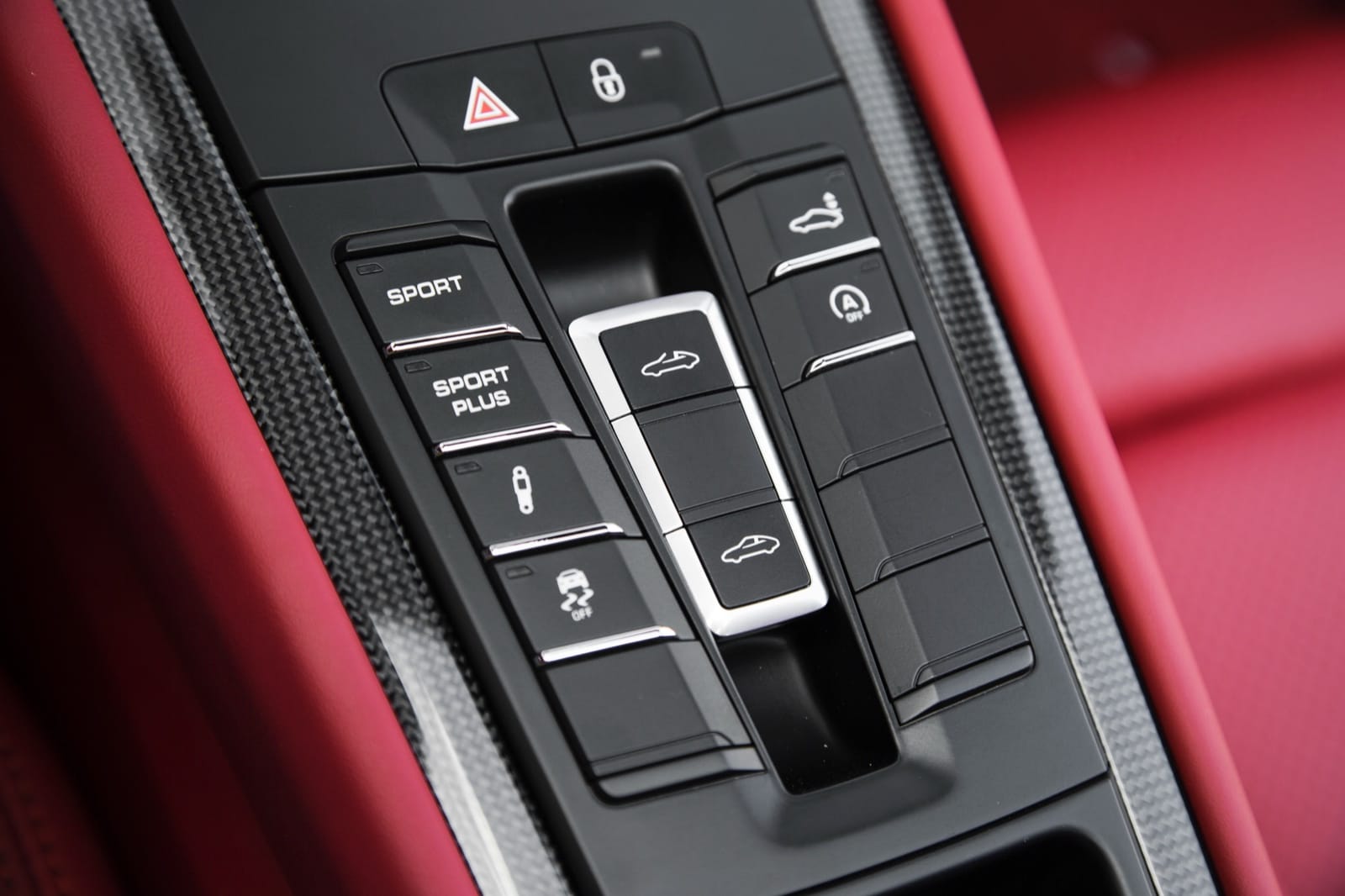
One rather cool new party trick is that you no longer need to remove or replace the Targa roof by hand. “The manual solution was a little bit old-fashioned,” explains 911 product line director, Dr. Erhard Mössle. In its place, Porsche has engineered a highly complex harmony of motors, pivots, pistons, pushrods and spool-reels that spring to life at the touch of a button. While it’s a marvel to watch this feat of engineering wizardry in action, I recommend you don’t engage the roof unless you’ve parked to the side of the road. I attempted to drop the top at a red light and only twenty seconds (and a cacophony of beeps from angry drivers behind me) later, could I get moving again. You see, the roof only works when you’re stationary.
The reasons for this are many but the most obvious is that the rear section with the curved glass must swing back to the point that it obscures the taillights and this creates legal issues. Another is that Porsche designed the mechanism to be as light as possible, meaning that it’s not sturdy enough to handle additional g-forces. The last, and this is my own hypothesis, is that the rear section swings back in such a way that it actually resembles a parachute - I could only imagine the disasters that would unfold if you tried launching a glass parachute while hurtling down a busy road, for instance.
At least for the moment, the Targa comes in just two guises. There’s the regular 102,000 USD Targa 4 and the 116,000 USD Targa 4S. “There’s no real reason for this, it’s just that we think the car looks better with the wider track and we also assumed the typical Targa driver would appreciate the added safety dimension of all-wheel drive,” says Mössle when I ask why potential buyers are being forced to stick to the four-wheel drive options. In any case, the Targa 4 serves up 344bhp and 390Nm for a 100km/h sprint of 5 seconds and a limit of 280km/h. Not bad, though I didn’t care for it.
If you’re in the market for a Targa then there’s really only one model to go for and that’s the Targa 4S. Statistically, it’s got 50 more horsepower and 50 more Newton metres of torque. In reality, what that means is it’s able to deliver a much more punchy experience that’s far more in line with what you’d be expecting from a 911.
While the Targa is a little cheaper than the 911 cabriolet, it’s unfortunately a bit heavier too. Never mind though because it’s ride is even better. In a region of Italy with roads that would make even Lebanon’s cringe with embarrassment, the car wasn’t even fazed. There was no shake or rattle and only a slight bit of roll. That’s because Porsche has loosened the suspension a smidgen and before you get your knickers in a twist, I actually applaud them for going down the comfort route. As I said earlier, convertibles aren’t supposed to be tracked, so all they’ve done is enhance your experience, not detract from it.
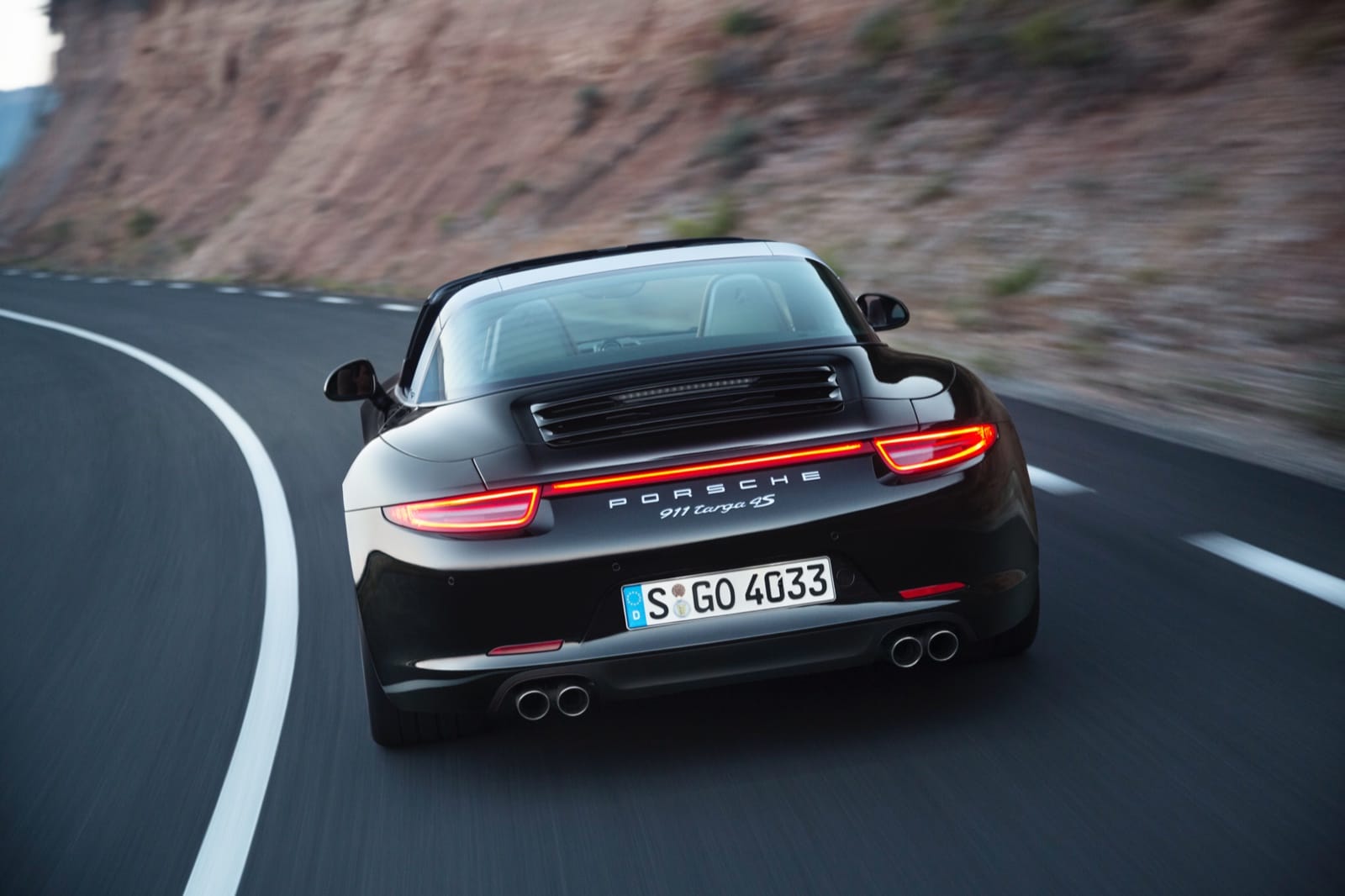
As should be the case for an all-wheel drive car, the Targa 4S has outrageous amounts of grip but the brilliantly sorted dynamics of the 911 package also allow you to safely push the car well beyond what you think are its limits, should you be so inclined.
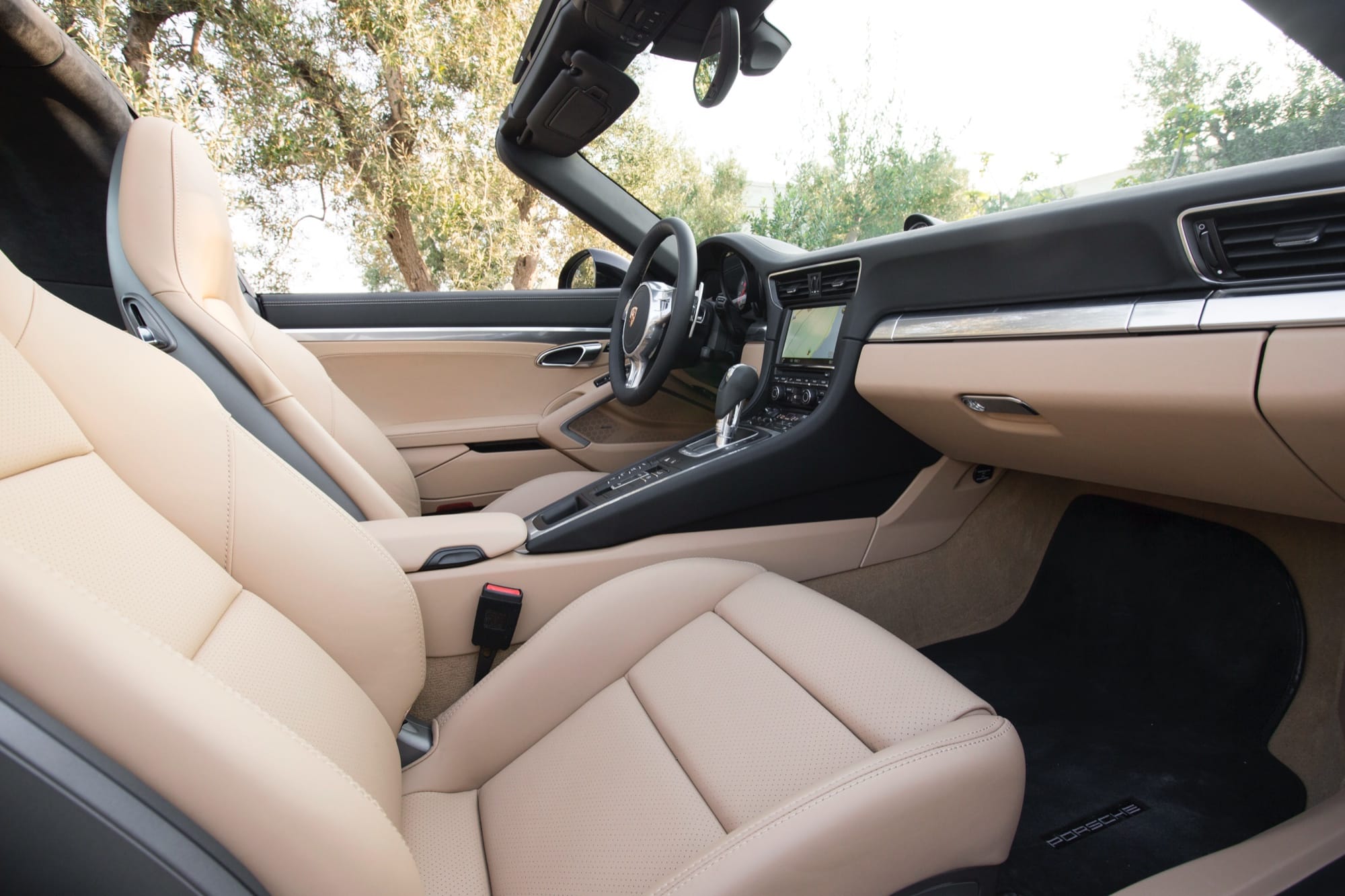
The Targa’s greatest accomplishment, I’d say, is the happiness it bestows from the inside. Both driver and passenger (and perhaps even two toddlers) will love travelling in this car. With the roof up, the cabin is brighter and breezier than a regular 911 coupé. Roof down and the rear glass section keeps most of the wind at bay, even at high speeds.
To prove a point, I was able to hold a conversation with my passenger while enjoying a light stream of air-conditioning and listening to relaxing tunes on the stereo even as the sun beamed down onto my face and the wind rustled through my hair. Open top motoring can’t really get much better than this.