Poetic intifada
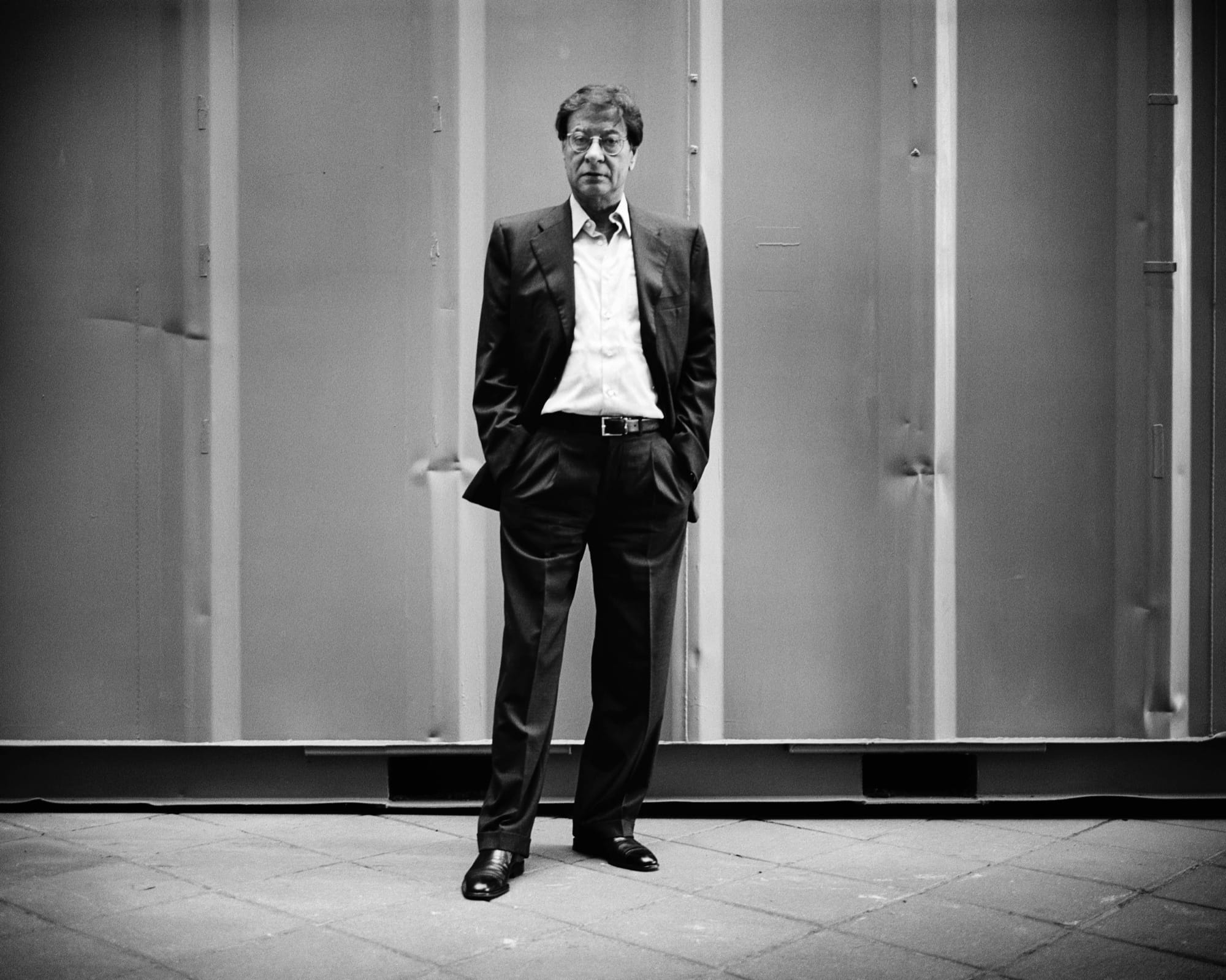
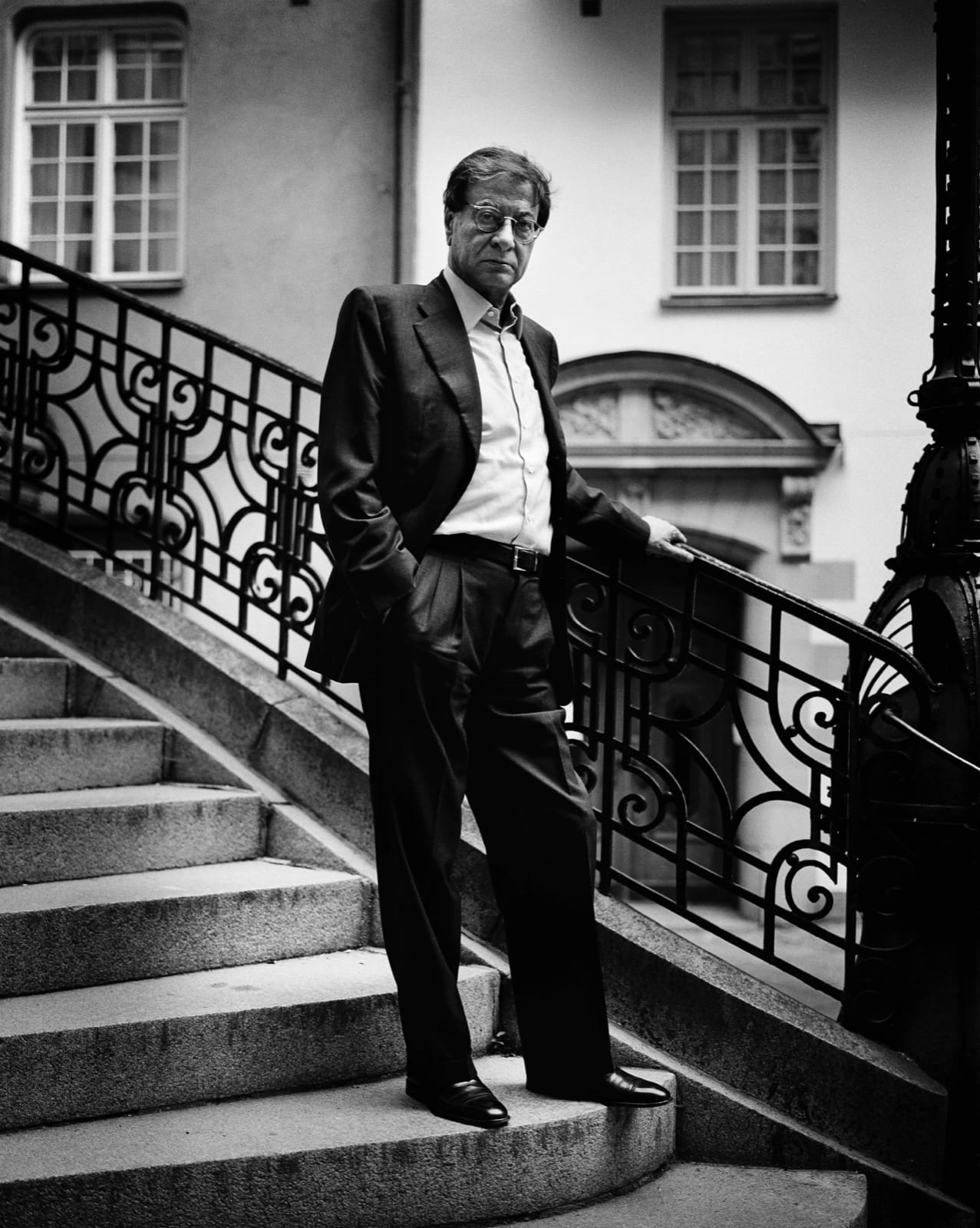
When world-renowned poetic genius Mahmoud Darwish, passed away on August 9th, 2008, it shocked the world and left countless in mourning. Already pegged to win Bespoke’s Legacy Award, it is only fair that he nevertheless receives it posthumously. No tribute could ever do justice to this maverick with lyrical intellect, but his legacy will live forever.
"What does life say to Mahmoud Darwish?" the poet pondered in This Hymn (1986). Life spoke to Darwish about the full range of human experiences, which he put to paper in a language that evoked with equal force the bitterness of exile, the sourness of political disappointment, the saltiness of the earth's pleasures, and the sweetness of erotic passion.
Life began speaking to Darwish on March 13th, 1941. Born in Birwe in upper Galilee, Darwish was seven years old when the Carmeli brigade raided his village on June 11th, 1948, forcing the inhabitants to flee into nearby fields. Eleven days later, the villagers, armed as best they could be, decided to return in order to harvest their crops. They consequently allowed the Arab Rescue Army to take over the village, only to see it retreat in the face of an Israeli advance in July.
After that the Darwish family fled to Lebanon, but they returned a year later to Deir al Assad, a village not far from the remnants of their former village, which is today a settlement in Israel. Having left in 1948, they were given the Kafka-esque designation of ‘present-absent aliens’. By this time, aged seven, Darwish was already writing poetry. His mother, Hourieh, was in fact illiterate, and so it was his grandfather who taught him to read and write.
But according to his close friend, the Lebanese novelist Elias Khoury, Darwish’s first love was actually drawing. However, being the child of a refugee family, he could not afford coloured pencils and so he turned to poetry which requires only the contributions of the mind. Darwish himself explained his early propensity for poetry otherwise; he was “physically weak,” bad at sports, and, unable to play games with his peers, so he spent his time in the company of adults, absorbing the old Arabic legends they recited. Language for him quickly became a refuge, a place where he could retreat and re-arm; a tool for him to face extraordinarily challenging life circumstances.
“I would listen to them and feel stirred by the poetry. I did not understand why. All I knew was that the sound of the poetry appealed to me. I did not understand the high-flown language of much of the poetry, but it gave me a sense that my dilemma could be resolved through language. The experience aroused in me the love of language. I began to dream of becoming a poet. I believed the poet was a mysterious figure with superhuman capabilities,” he once said.
Five years later, at the age of 12, he would have his first chance to exercise these capabilities. Wielding language, the pre-adolescent had already established himself as an enemy of the Israeli state.
His village was under Israeli military rule. Darwish, who was the top student in his class, was invited to recite one of his poems to honour Israel’s ‘Independence’ Day. Being who he was, he offered his perspective on the situation: the grim irony of being forced, as Arabs, to celebrate a day that for them signified death, destruction, and the erasure of history. This poem landed him in the office of the military governor the following day, who threatened to revoke his father’s work permit.
Darwish recalled: “As far as I was concerned, what I wrote and read was what I felt to be the truth…The incident made me wonder: The strong and mighty state of Israel gets upset by a poem I wrote! This must mean that poetry is a serious business.”
Often classified as the father of ‘resistance poetry’, Darwish drifted from overtly political subjects to more universal, emotional ones later in his career. In his view, this thematic evolution was itself a political statement. It was also what thrust him into the canon of world poets, those whose provenance melts away as they delve into those experiences that are common to all people, love, of course, being chief among them.
“My writing on love was also an assertion and a development. The Palestinian writer used to be unable to write about metaphysical subjects - love and death - because there were more pressing issues: oppression, occupation, resistance, and liberation. So writing about love was a form of liberating the human side of me,” he told his friend and neighbour Raja Shehadeh in an interview.
As liberated as he became, his youth was split between captivity and exile. Jailed for the first time at the age of just 16, he moved in and out of Israeli prisons, and was under house arrest for three years. In 1961, like other Palestinians who sought refuge from Zionism in radical politics, he joined the Israeli Communist Party. His confrontation with the gnawing, quotidian indignity of life under occupation began to materialise in verse, and leapt into the Arab public consciousness in 1964 with the electric, life-affirming Identity Card (1964) a reaction to being stopped by an Israeli policeman for his papers.
Record!
I am an Arab
And my identity card is number fifty thousand
I have eight children
And the ninth is coming after a summer
Will you be angry?
Record!
I am an Arab
Employed with fellow workers at a quarry
I have eight children
I get them bread
Garments and books
from the rocks..
I do not supplicate charity at your doors
Nor do I belittle myself at the footsteps of your chamber
So will you be angry?
Record!
I am an Arab
You have stolen the orchards of my ancestors
And the land which I cultivated
Along with my children
And you left nothing for us
Except for these rocks..
So will the State take them
As it has been said?!
The poem reaches back generations, affirming Palestinian history and the intimate ties of Palestinians with their land. It ends with a double warning to the Israeli occupier. Twice-warned, however, the occupier is first assured that the dispossessed Palestinian speaking in the first person is not inherently aggressive, but merely yearns to fill that most basic of human needs, hunger. Denied this right, he warns of the fury to come.
Therefore!
Record on the top of the first page:
I do not hate people
Nor do I encroach
But if I become hungry
The usurper's flesh will be my food
Beware..
Beware..
Of my hunger
And my anger!
In directly addressing the “enemy,” this poem was emblematic of his approach to politics, a belief in dialogue and humanising the ‘other’ that was to earn him both accolades and criticism from all sides. He was fluent in Hebrew and read Israeli poets alongside Rimbaud and Ginsberg, as well as the classical Arab poets (Imru al Qais, Abu Nuwas, al Mutanabbi, Abu al Ala al Marri) whose incantatory, desert-bound verse he described in the poetry journal Parnassus as, “Questions for Stones.”
In 1971, while on a scholarship to study political economy in Moscow, he decided not to return to Israel, going first to Cairo, where he was given an office at Al Ahram newspaper that he shared with the famed novelist Naguib Mahfouz. Legend has it that Mahfouz’s intense, almost obsessive dedication to his daily routine drove the comparatively easy-going Darwish crazy, and he left two years later to Beirut, where he joined the Palestinian Liberation Organization.
During his years in Beirut, in addition to editing the journal Palestinian Affairs, he founded Al Karmel, widely considered one of the region’s finest literary reviews, which under his editorial guidance brought the work of Israeli writers to the Arab world, and cemented his (controversial) reputation as a bridge-builder. Years later, in 2000, then-Minister of Culture Yossi Sarid attempted to introduce five of Darwish’s poems into the Israeli school curriculum, a proposal that triggered public outcry and political backlash, forcing a no-confidence vote on then-Prime Minister Ehud Barak. So much for dialogue, then.
But back to Beirut in the late 1980s. Darwish deepened his relationship with Yassir Arafat and the PLO by penning the 1988 Palestine National Council Declaration of Independence while also running the PLO research centre. This relationship, particularly with Arafat, was to endure even after he broke with the PLO in 1993 to protest their signing of the Oslo accords, which he prophesied would result in political disaster. Their personal ties were strong, but Darwish was no lackey, bearing little resemblance to the court poets of early Islamic times, who put their talents at the service of imperial rulers. When Arafat once complained to him that the Palestinians were “an ungrateful people,” Darwish promptly advised him “Then find yourself another people.”
Ironically, it was the Oslo accords that permitted him to return to Ramallah, where he took up residence in 1996 after ten years of living in Paris. He spent the rest of his days shuttling between Palestine and Amman, where he lived a rather solitary existence. In Ramallah, his exilic condition curtailed, his poetry veered towards the abstract, dealing with love, with language, with mortality, but ever more rarely with the politics that saturated his earlier work.
He explained, in an interview with Adam Shatz in the New York Times that the turn towards new subjects was a “form of resistance: we Palestinians are supposed to be dedicated to one subject - liberating Palestine. This is a prison. We're human, we love, we fear death, we enjoy the first flowers of spring. So to express this is resistance against having our subject dictated to us. If I write love poems, I resist the conditions that don't allow me to write love poems.”
One notes the change from the straightforward, brutally direct language once he used, in poems such as He Embraced His Murderer (1986).
He embraces his murderer.
May he win his heart: Do you feel angrier if I survive?
Brother…My brother!
What did I do to make you destroy me?
Two birds fly overhead.
Why don’t you shoot upwards?
What do you say?
Darwish’s foray into love poetry was a bold move that was not without its critics, especially religious ones. But it elevated him from his status as ‘resistance poet’ to ‘world poet,’ often mentioned in the same breath as Federico García Lorca, Pablo Neruda, and Osip Mandelstam. Like Neruda, his descriptions of love evoke an exquisite sensuality, a result of his imaginative, musical turns of phrase, as can be seen here in Lessons from the Kama Sutra (2000).
Wait, and polish the night for her ring by ring.
Wait for her until Night speaks to you thus:
There is no one alive but the two of you.
So take her gently to the death you so desire,
and wait.
His audience initially felt betrayed, but Darwish, while always grateful to his audience, refused to be a poet-on-demand. He once admonished his audience, “Spare me that public love,” knowing that, at its roots, poetry is an individual matter, his matter. “When I move closer to pure poetry, Palestinians say go back to what you were. But I have learned from experience that I can take my reader with me if he trusts me. I can make my modernity, and I can play my games if I am sincere,” he told the New York Times.
Even in Ramallah, he claimed, he still retained his feeling of exile. "Exile is not a geographic state. I carry it everywhere, as I carry my homeland," he had said. A 1995 poem, A Rhyme for the Odes (Mu’allaqat), elaborates on the notion of residing in a “country of words,” the situation of both the refugee and the desert nomad.
Who am I? This is a question that others ask, but has no answer.
I am my language, I am an ode, two odes, ten. This is my language.
I am my language. I am words’ writ: Be! Be my body!
And I become an embodiment of their timbre.
I am what I have spoken to the words: Be the place where
my body joins the eternity of the desert.
Be, so that I may become my words.
No land on earth bears me. Only my words bear me,
A bird born from me who builds a nest in my ruins
before me, and in the rubble of the enchanting world around me.
I stood on a wind, and my long night was without end.
This is my language, a necklace of stars around the necks
of my loved ones. They emigrated.
They carried the place and emigrated, they carried time and emigrated.
Despite his attempt to escape his material reality by turning to more spiritual themes, he was, and always has been, a writer firmly tied by his five senses to the land. Furthermore, he could not ignore the political conditions, in which he wrote, a fact that he addressed in his 2000 masterpiece, Mural.
A nation is as great as its ode.
But weapons, for the dead and the living, enlarge the meaning of words.
Letters polish the sword hung in the belt of dawn,
and by means of songs, the desert expands or recedes.
In this passage, one can see him facing down the Hebrew poet Yehuda Amichai, whose work he was known to admire. "His poetry put a challenge to me, because we write about the same place. He wants to use the landscape and history for his own benefit, based on my destroyed identity. So we have a competition: who is the owner of the language of this land? Who loves it more? Who writes it better?"
But this competition was bound to end in peace, he insists. "Poetry and beauty are always making peace. When you read something beautiful you find coexistence; it breaks walls down... I always humanise the other. I even humanised the Israeli soldier," he told the New York Times.
This humanised portrait of an Israeli soldier, in A Soldier Dreams of White Tulips (1967) was one of his most poignant, if controversial (it was the year of the Arab defeat in the Six Day War), poems. In it, he and an Israeli friend are drinking and smoking cigarettes, discussing all they have in common: dreams of flowers, a weeping mother fearful for her son’s life. Here, Darwish opens a dialogue about death, with the murder of himself.
Pained, I asked him to tell me about one of the dead.
He shifted in his seat, fiddled with the folded newspaper,
then said, as if breaking into song:
He collapsed like a tent on stones, embracing shattered planets.
His high forehead was crowned with blood. His chest was empty of metals.
He was not a well-trained fighter, but seemed instead to be a peasant, a worker, or a peddler.
Like a tent he collapsed and died, his arms stretched out like dry creek-beds.
When I searched his pockets for a name, I found two photographs, one of his
wife, the other of his daughter.
Do you feel sad? I asked.
Cutting me off, he said, Mahmoud, my friend,
Sadness is a white bird that does not come near a battlefield.
Soldiers commit a sin when they feel sad.
I was there like a machine spitting hellfire and death,
Turning space into a black bird.
He told me about his first love, and later, about distant streets,
About reactions to the war in the heroic radio and the press.
As he hid a cough in his handkerchief I asked him:
Shall we meet again?
Yes, but in a city far away.
And it was indeed in a city far away, in Texas, where Darwish finally confronted his own mortality, not in language, but in reality. Since his first heart attack in 1984, he had been dialoguing with Death.
So what did Death say to Mahmoud Darwish? Whatever Death said, one can be sure the conversation was friendly. In Mural he takes an informal, hospitable tone with it.
Death, wait.
Have a seat and a glass of wine, but don’t argue with me.
One such as you shouldn’t argue with a mortal being.
As for me, I won’t defy the servant of the Unseen.
Relax. Perhaps you are exhausted today,
dog-tired of warfare among the stars.
Who am I that you should pay me a visit?
Do you have the time to consider my poem?
Ah, no. It’s none of your affair.
You are charged only with the earthly body of man,
not with his words and deeds.
Knowing his poetry will outlive him, he approaches the spectre fearlessly.
O death, all the arts have defeated you, all the Mesopotamian songs.
The Egyptian obelisk, the Pharaoh’s tombs, the engraved temple stones,
all defeated you, all were victorious.
You cannot trap the immortal.
So do with us and with yourself whatever you wish.
Towards the end of the poem he even manages a wink and a smile for his delicate heart condition, acknowledging his descent into medical minutiae with wordplay, the poet’s best defence.
By heart, I learned all my heart.
According to Syrine Hout, a close family friend of Darwish’s, this was typical of his courageous demeanour. When he went for the operation that eventually killed him, he did so knowingly. He called her father before leaving for Houston, and told him that despite the odds stacked against him, if he did not risk the surgery, it was only a question of time.
“At least he would be timing his death,” she told me. “He told my father, ‘At least I know when I’ll be dying, and not just waiting for it.’”