There is something of a tectonic shift afoot when sophisticated Lebanese are holidaying in Syria, rather than the other way around. This thought struck as I breakfasted in the enormous dining hall-cum-art gallery of the Art House Hotel, observing an extended family of well-dressed Lebanese (plus one Italian) scurrying about nearby, inspecting paintings and deliberating their day’s itinerary.
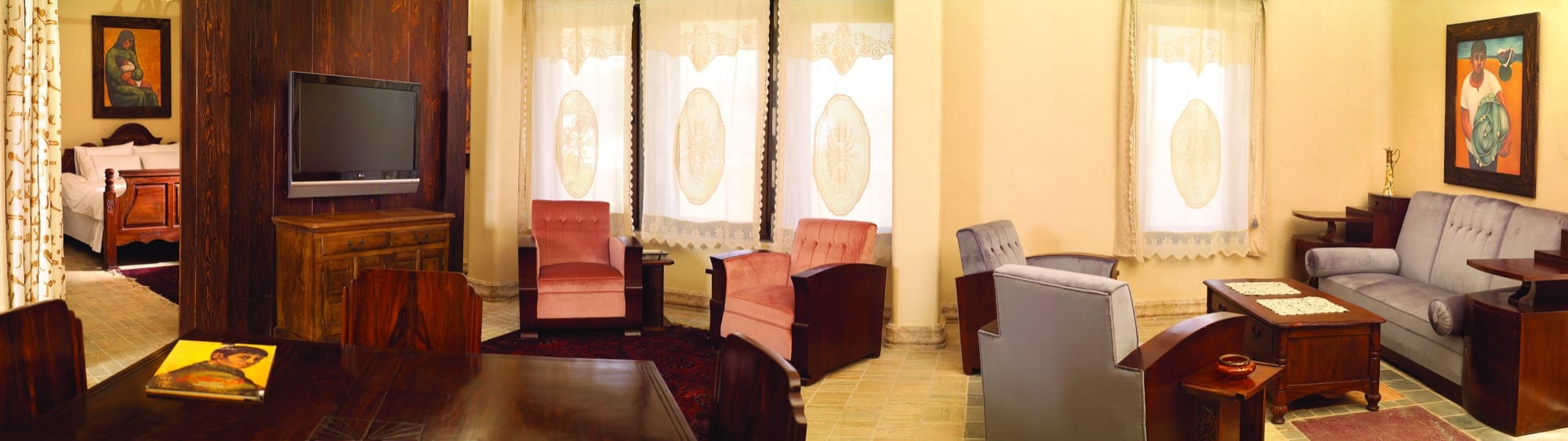
In front of me stood several cabinets full of art books, exhibition catalogues, monographs and magazines. On the surrounding walls hung works by Rima Salamoun, the floors were stacked with canvases by Saad Yagan and a vase by Zaha Hadid, a thank-you gift from the architect herself. Of course, Syria has much to offer as a tourist destination, but Ghiath Machnok, the designer and director of Art House says the destination is often the hotel itself. “People come for cultural tourism,” says Machnok. “I have people, art collectors, coming just for two days, for an exhibition.”
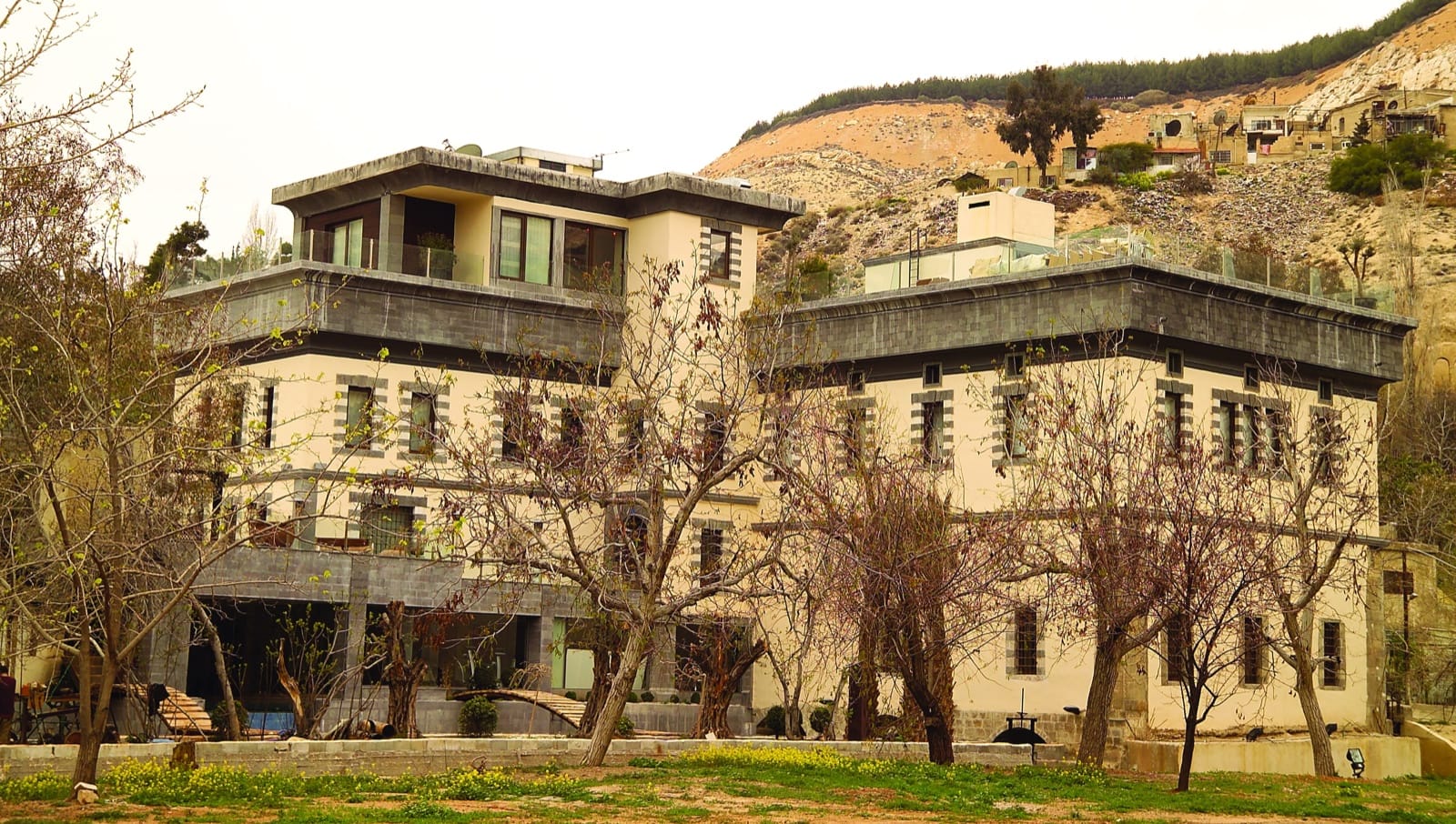
Machnok originally conceived of the hotel, which is housed in a 400-year-old flour mill, as simply a modern art gallery, of which Syria has only a few. When it opened, in 2007, there was neither food nor accommodation, just art. Then, Machnok said, “I fell in love with my project. It became my baby – not a business.” He still prefers to think of it as an art gallery that offers lodging, rather than a hotel that offers art.
A well-known architect in Syria, Machnok began a five-year restoration of the property in 2002. At that time, there were few five-star hotels in Syria, and few five-star tourists. In the intervening years, as the project came together, luxury hotels like Beit Al Mamlouka, in the Old City, and the Four Seasons, opened their doors. But Machnok had a different vision: rather than a sumptuous Oriental fantasy, or the predictable corporate splendor of the Four Seasons, he would offer people a chance to explore Syria’s hidden cultural treasures. “Syrian artists are famous all around the world,” he says. “The main purpose of this hotel is to let people know about these artists and their work. It’s good to let people know the truth about Syria.”
He stocked the rooms (there are seven rooms, and three suites) with paintings and books, naming each after a prominent Syrian cultural figure such as Nizar Qabbani and Moustafa Akkad. “It’s like you’re living with them,” Machnok says. “I grew up in the house of Nassir Chora, and I can say these rooms have the spirit of the original houses of the artists.” Among Syria’s many illustrious artists, poets and literary figures, how did he choose only ten? “I chose the dead ones, so no one can blame me!” he laughs. He also took pains to include women, such as Mary Al-Ajami, to remind people of their contribution to the culture.
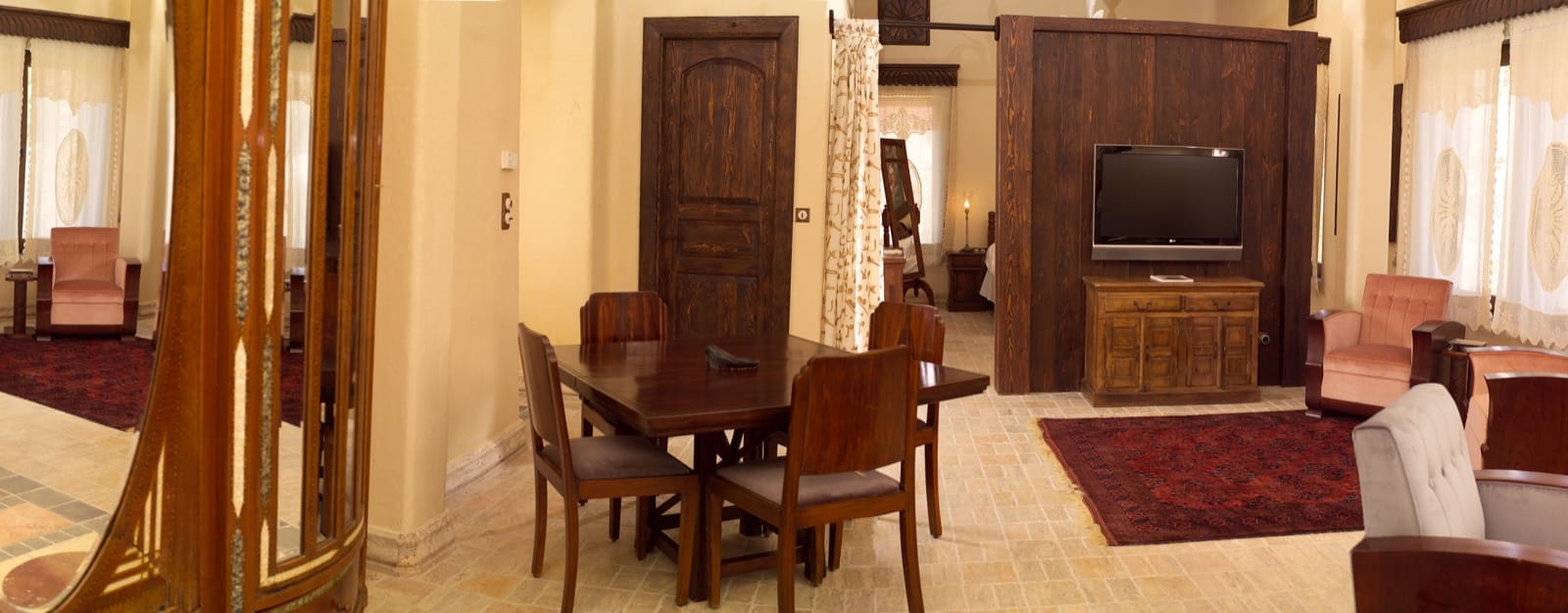
Machnok, who trained at the University of Damascus, and whose architectural work is mostly in the modern style, took care when restoring the mill to balance its stone arches and wooden beams with a more contemporary look. He raided old Damascene houses for furniture, mostly choosing pieces from the 1950s whose clean lines set off the elegant architecture of the building. Other items he ordered from abroad, these ranged from a wicker sofa from Paris to heavy wooden tables on the roof, originating from India. “I didn’t want to make it Oriental,” he says. “I wanted it to be very simple. Not too strong, so that the guests can focus on the art.”
The rooms have simple white cotton curtains with crochet detail, luxurious beds, flat screen TVs, and bathrooms stocked with exquisite soap that he special-orders from a hammam in Istanbul. The ratio of staff to guests hovers at around five to one, and the staff is unfailingly lovely. As I was dozing off by the side of the rooftop pool (over which is inscribed, in mosaic tile, a verse by the Syrian poet Nizar Qabbani), an alert waiter materialized with two pillows. “When I train them, I tell them to feel as though they are having guests at their own home,” explains Machnok. It works. “People feel at home here. They don’t leave their doors locked when they stay. I’m surprised!”
The hotel has become something of a scene for local artists and literary types, who linger on the rooftop, with its views over the city, on a weekend evening for dinner and drinks, or swing by one of its frequent art openings, concerts and film screenings. The hotel has even been given a nod by celebrities such as Sting, David Miliband, and Sheikha Mozah of Qatar, all of whom have passed by.
While Machnok and his staff make every effort to pamper their visitors, it’s clear that his passion for culture outstrips even his passion for hospitality. He takes infinite delight in planning (up to a year in advance) the gallery’s exhibitions and cultural schedule, booking artists who range from a hip-hop group from Texas to the French jazz trio Air. For each of the art shows, which often sell out, he also publishes a catalogue.
“My dream has always been to have a special place, dedicated to the arts,” he says.
What Art House Hotel
Architect Ghiath Machnok
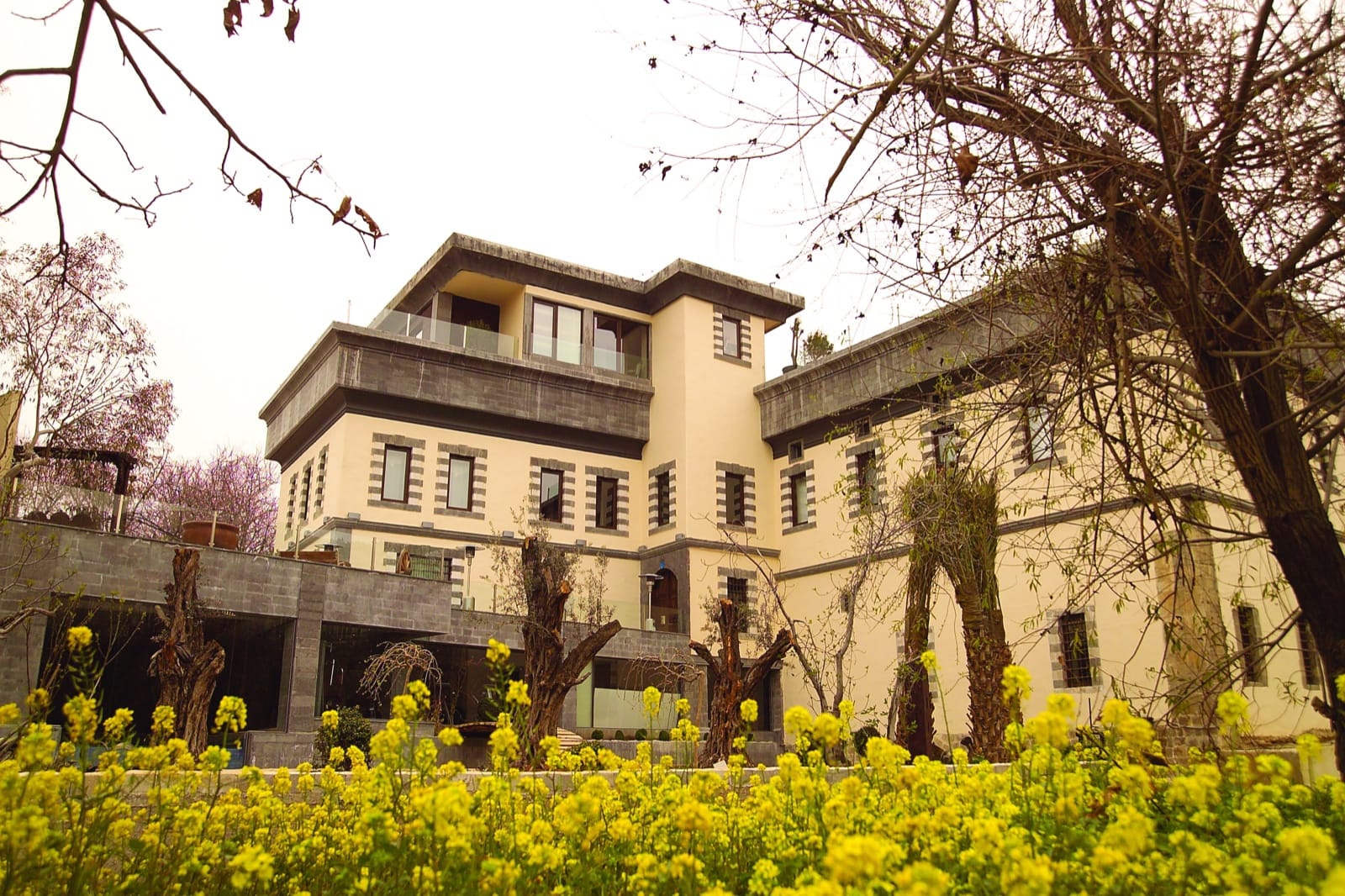
Where On the bank of the Barada River in Mezzeh, Northwest of Damascus
Why An exquisitely restored 400-year-old stone mill, has been turned into a highly original boutique hotel.
www.arthousedamascus.com