What goes up must come down? Not necessarily in the superyacht world. The former owners of Baglietto Yachts created a vibrant new business with their upstart shipyard called Tankoa. At the same time, bankrupt Baglietto found a white knight that is bringing it back to its former glory. Welcome to the superyacht world where things are rarely as they seem.
Among the items on the top one per cent’s bucket list – private jets, vintage wine, rare Picassos – superyachts are arguably the most glamorous and fun. The floating palaces, extending from 30 metres all the way to the world’s longest, the 180-metre Azzam, transform ports like Monte Carlo, St. Tropez, and Antibes into the world’s most envied retreats.
Despite its appearance though, the industry isn’t all champagne and caviar. “It looks glamorous from the outside, but it’s not a business where you make a lot of money,” says Michel Karsenti, director of sales and marketing for Tankoa Yachts and a veteran yachting magazine publisher. “If you’re smart, you can make a bit to keep your shipyard healthy.”
Given the constant shifts in global fortunes and owner preferences, and the often unpredictable costs of building a custom yacht, the hard truth is that winners and losers emerge during every up and down sales-cycle. Mondomarine and its sister shipyard, Cantieri di Pisa, went into bankruptcy last year. Other big brands like Custom Line, CRN, ISA, CCN and Baglietto were acquired following financial difficulties due to the recession.
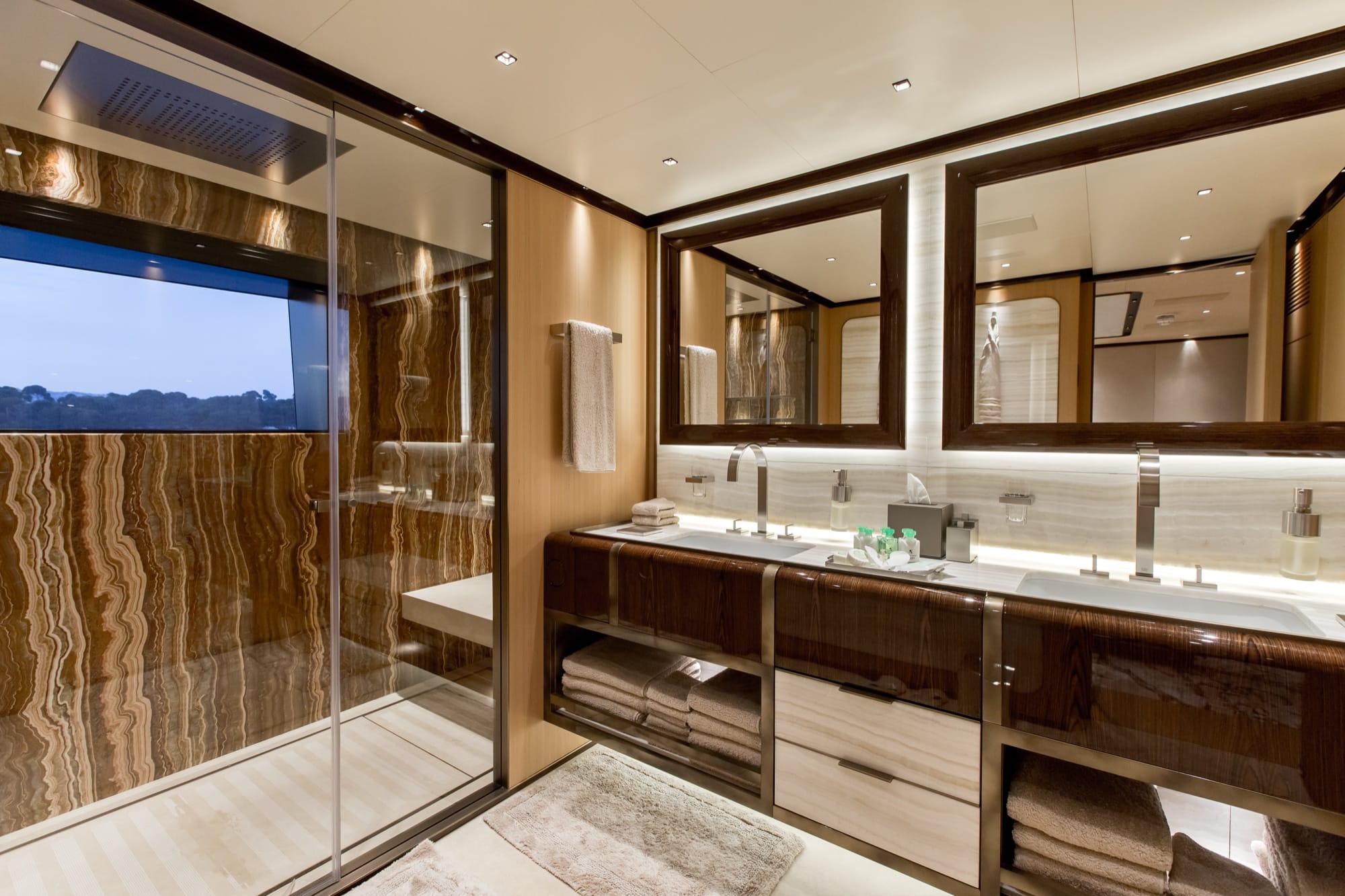
On the other hand, an upstart yard like Tankoa is managing to enjoy success, thanks in no small part to groundbreaking designs and a meticulous attention to detail. Indeed its 2015 launch, the 70-metre Suerte, gave the Genoa yard instant credibility among yacht owners, as it clearly established the new yard could build a high-quality custom yacht. Last year, Vertige also wowed the superyacht world with its beauty and of coruse fit and finish. The 50-metre design by Francesco Paszkowski came with some unique features like a beach club that converts to a full gym, a VIP suite located beside the master on the main deck (the owner didn’t want his important business guests in a lower-deck stateroom), two foldout terraces in the master suite, and a climate-controlled wine “cellar” with hundreds of the owner’s prized bottles displayed behind glass. (Vertige is after all named after his favourite Rhone Valley white wine.)
At the Monaco show, Karsenti said Vertige was only the start of a new fleet from Tankoa. It currently has six deals in motion, ranging from a custom 55-metre to larger builds including a 65-metre and a 72-metre. But Karsenti adds that the yard will limit its launches to just two per year. “We don’t want to chase volume by doing deals that are near cost or even under it,” says Karsenti. “We’ve seen that happen with too many yards. They put themselves in danger of losing money on every boat just to keep the shipyard open.”
Tankoa will also limit its largest yacht to 80 metres, while most builds will likely be between 50 and 65. “A 100-metre yacht has ten times the volume of a 50-metre,” says Karsenti. “The bigger you go, the more exposed you are because you can’t always control the costs,” explains Karsenti, before revealing the yard has rather cleverly anticipated demand by completing two empty 50-metre hulls, so that when an order comes in, it can finish the yachts in just 14 months – or half the time it would take a competitor who has to start laying the keel.
“Our owners aren’t the typical Italian executives,” he adds. “They’re good old boys who know how to build yachts using the same standards as those from Northern Europe.” Guido Orsi, Tankoa’s founder and primary shareholder, has a long connection with the superyacht world. He owned Italy’s most renowned brand, Baglietto, for nearly a decade until the private-equity Camuzzi Group acquired it in 2005.
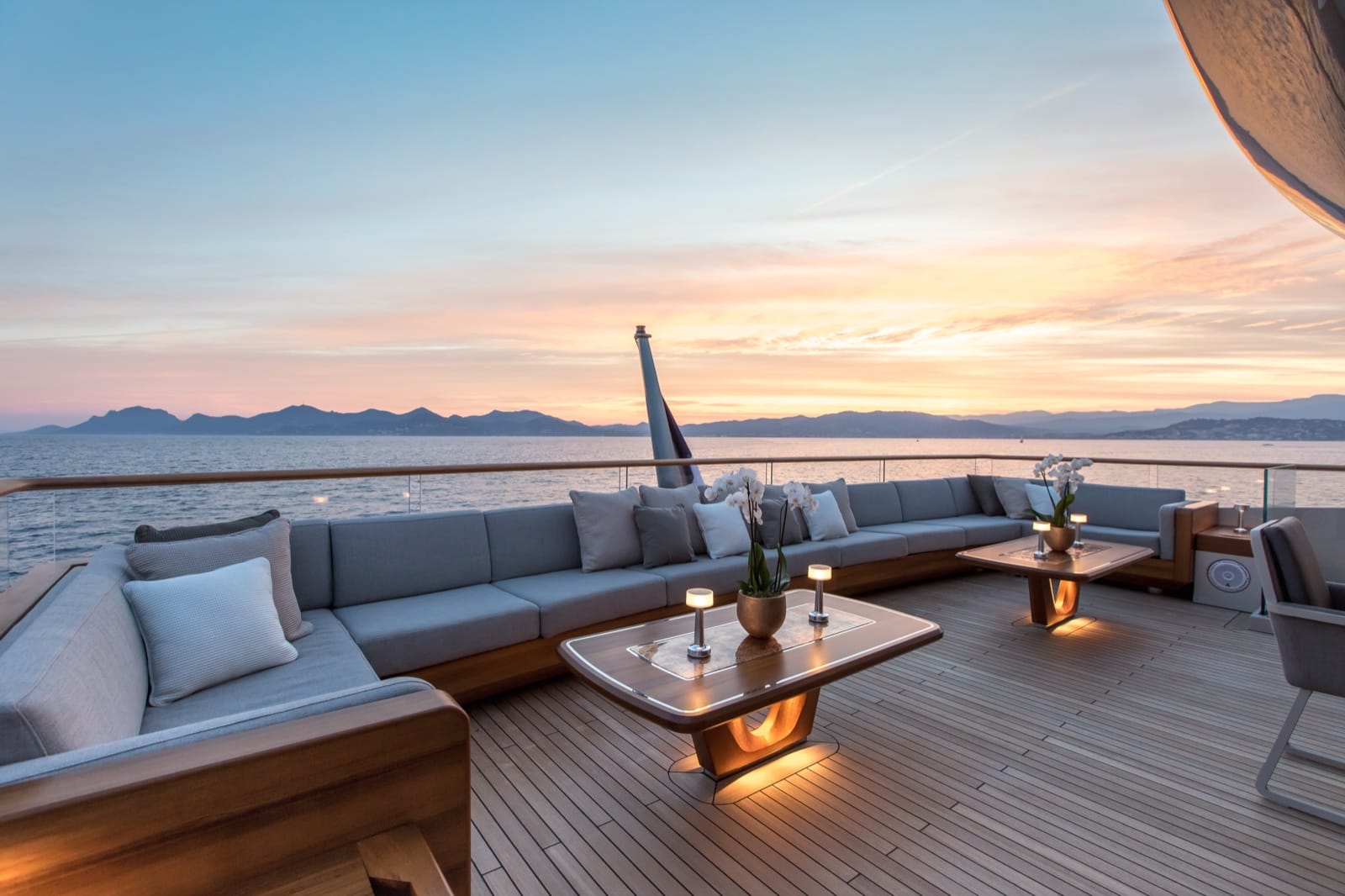
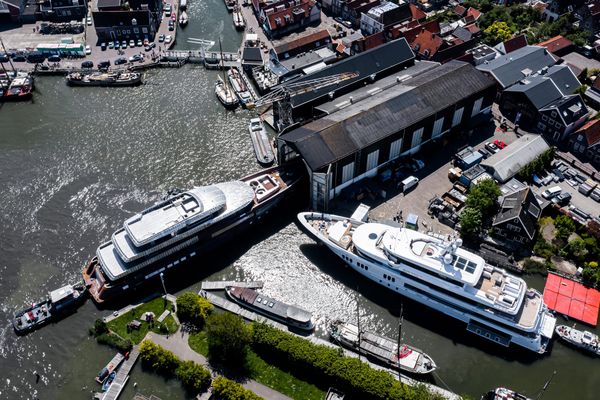
Several years after the sale, Orsi and former Baglietto executives Euro Contenti and Edoardo Ratto, as well as many shipyard workers, followed Orsi to Genoa, where they bought an old commercial shipyard and modernized it. “Guido’s vision for Baglietto had been to provide a choice,” says Karsenti. “At the time, you could either get lower-end superyachts from Italian yards or high-end vessels from the Dutch yards. He wanted to offer a high-end alternative in Italy.”
Orsi and his team brought that idea to Tankoa. But the good old boys needed help with marketing in a new world of yachting. In 2012, Karsenti convinced the Tankoa team to bring in Francesco Paszkowski, Baglietto’s longtime designer, to modernize its first 65-metre. “I went to his studio in Florence, we redesigned everything, and a month later, we had a letter of intent for Suerte,” says Karsenti.
During the downturn, many yacht owners lost money with yards that went belly up. To limit those concerns, Tankoa is offering owners bank guarantees against possible closure. “Even if we were to shut our doors, the owner would be refunded under this guarantee,” says Karsenti. “That didn’t happen with other yards. Baglietto, for instance, had many angry clients when they went bankrupt in 2010.”
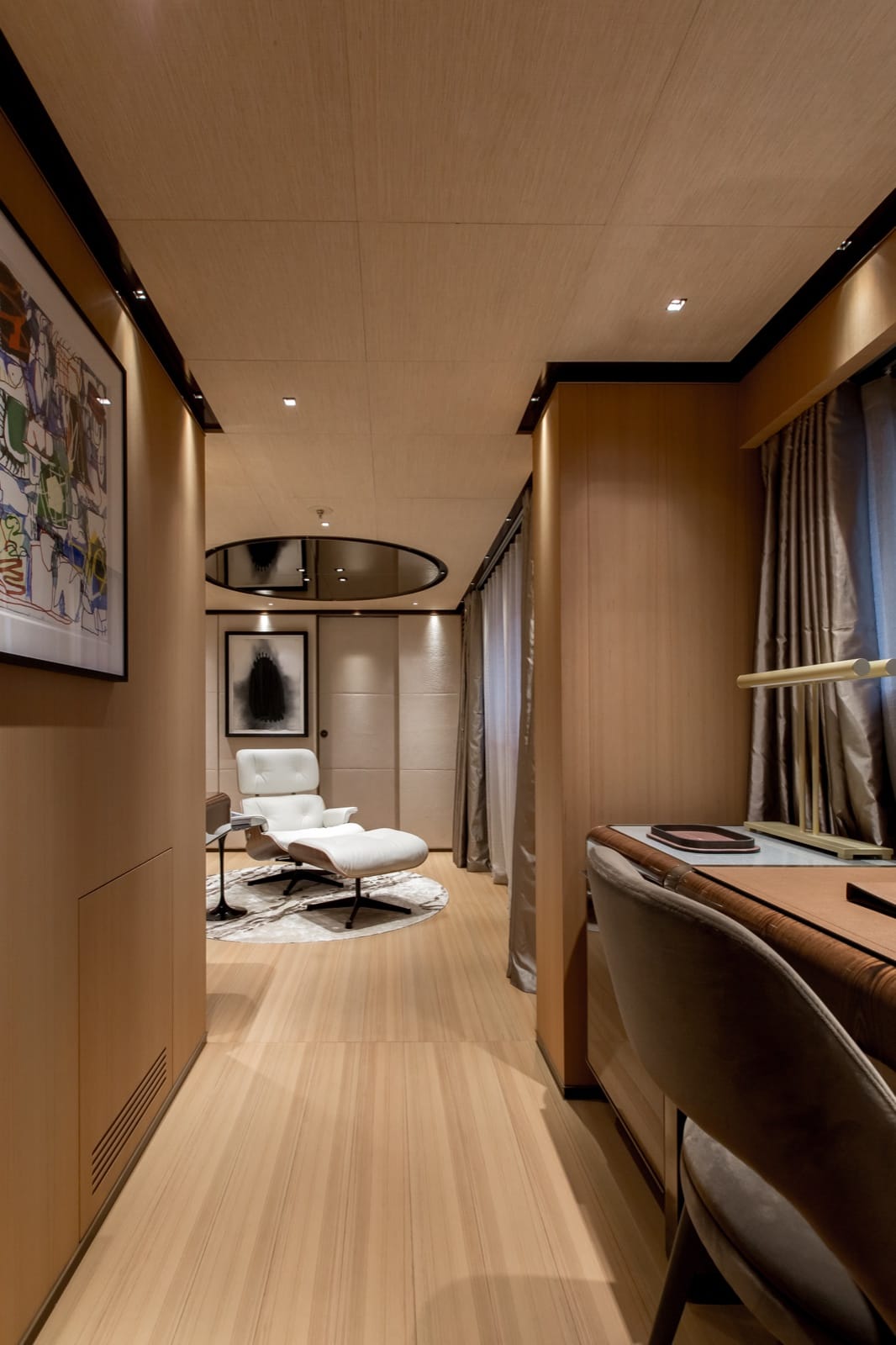
So is Baglietto now one of the industry’s losers? Hardly. Italy’s second oldest boat brand (after Codecasa) was acquired in 2012 by the Gavio Group, a diversified company with 4 billion Euros in annual sales. Beniamino Gavio, a serial yacht owner who has a love for historic brands, saw the company was in tatters, so he invested millions in its La Spezia shipyard, and broadened its product line.
“Our goal was to create a new era for this 163-year-old brand, but in stages,” says Michele Gavino, Baglietto CEO. Francesco Paszkowski is still Baglietto’s chief designer, but the yard also commissioned younger Italian studios like Hot Lab and Santa Maria Magnolfi, and even Mulder Design in the Netherlands, to create fresh new styles. The company also retained much of its labour force for its institutional knowhow. A new shipyard and the Gavio Group’s financial stability have coaxed new owners to the brand. “Last year was a good year,” says Gavino, adding that Baglietto signed five new contracts. “This year will be another important year. We are in negotiations that should push our balance sheet into the black.”
The storied brand, noteworthy launches, broad range of sizes and designs, and a modern shipyard have all contributed to Baglietto’s comeback. “We’re able to deliver many lengths and styles,” says Gavino. “That convinces owners that we’re a serious shipyard. That’s critical because owners are cautious and want to spend their money in the most efficient way. But they also want a unique piece of floating art.”