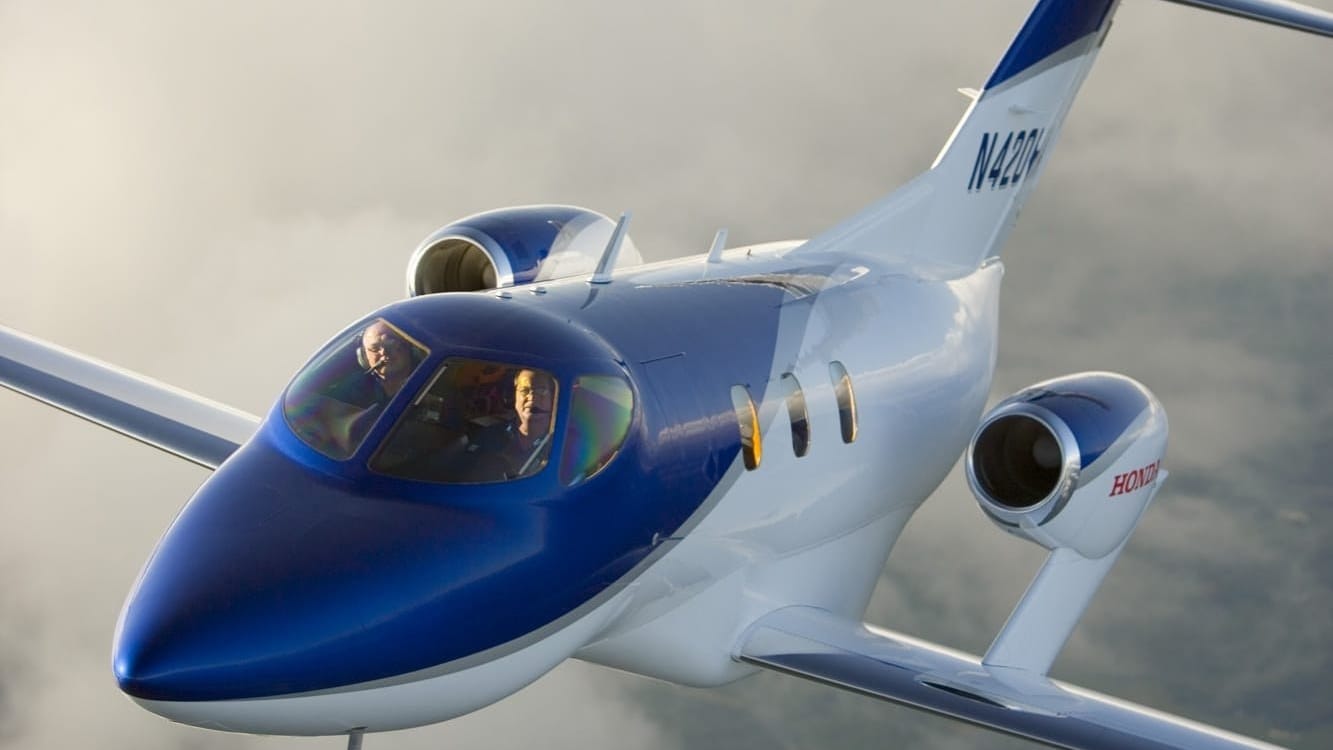
Honda is a company that produces just about everything: cars, trucks, motorcycles, scooters, watercraft, ATVs, marine engines, lawn and garden equipment, and even electrical generators. Critically, though Honda may be the largest engine-maker in the world - producing more than 14 million internal combustion engines each year - they always do their homework first. This company only ventures into a new market assured that it can create a product that performs better and at a higher value than others in the same group.
So how is it that this venerable company decided to reach for the skies with its new HondaJet? Well the key criteria were to develop a lightweight business jet with a larger cabin, lower fuel consumption, and higher speed than existing business jets.
Unfortunately for Honda it will have a great deal of competition when its jets finally start to be delivered in 2010. Manufacturers such as Eclipse, Cessna and Embraer, have announced plans to offer very light jets (VLJs). These VLJ are targeted towards small business owners who do not need (or do not wish to pay the substantially larger sums required) to purchase aircraft from Gulfstream, Bombardier or Boeing. Typically VLJs weigh no more than 4,500kg and are flown by a single pilot. They generally sell for between 1.5 million and 4 million USD.
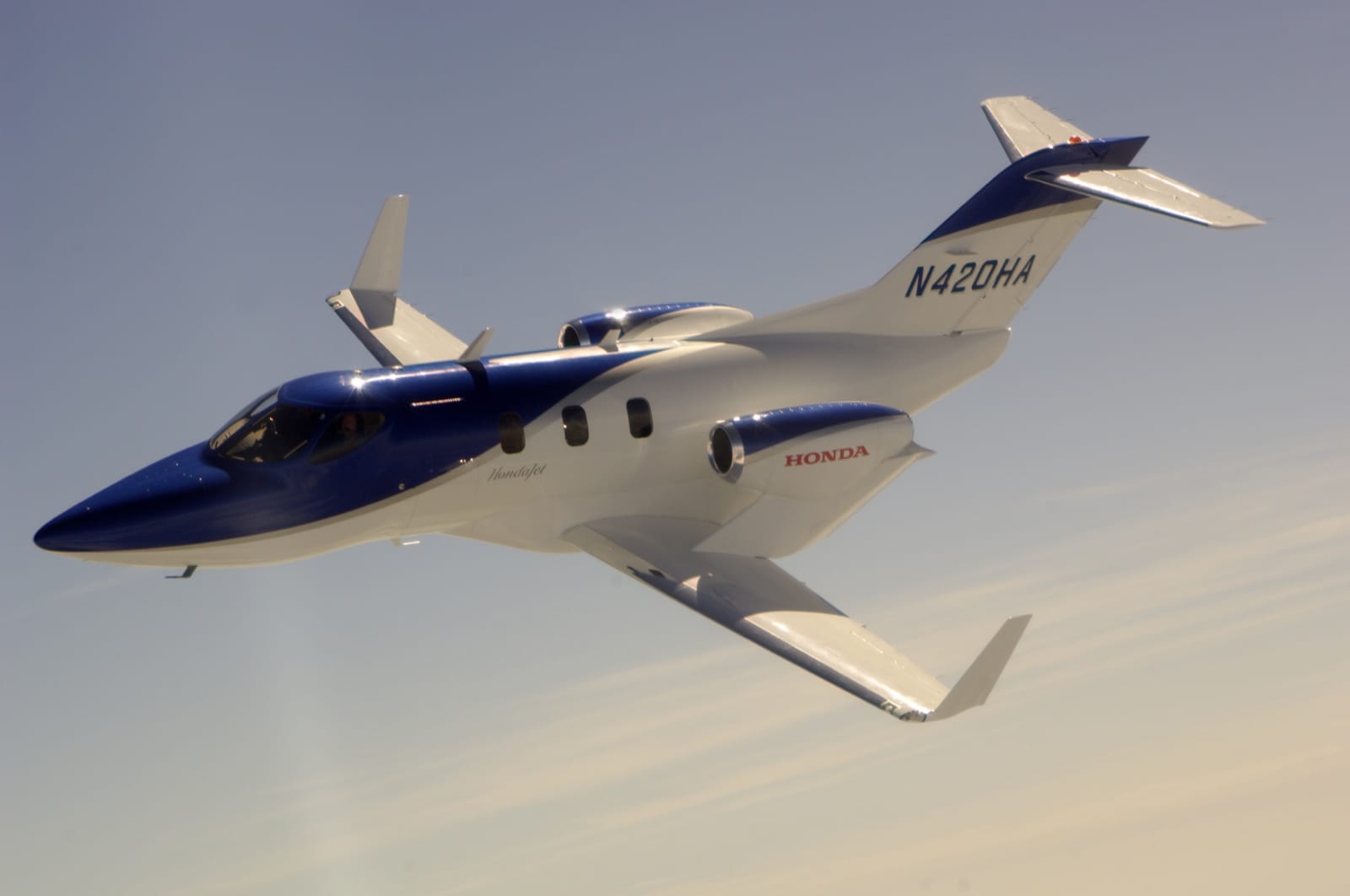
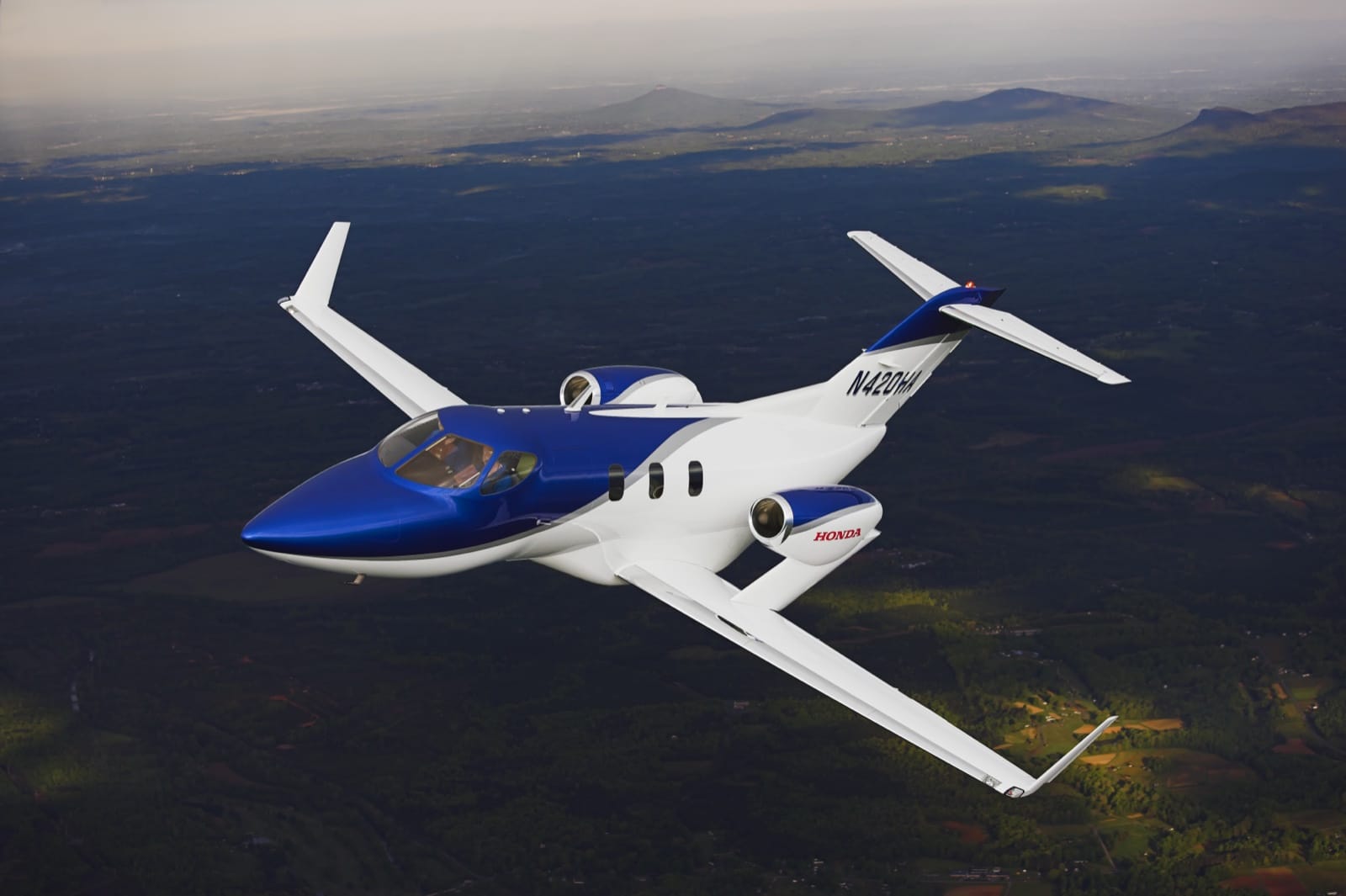
But the unique features of the 8-passenger HondaJet are what set it apart. For one, the engines will be mounted over the wings, as opposed to under (as is the case with larger aircraft) or over the tail (like most private jets). This original set-up improves the aerodynamic drag while also freeing up cabin space. Another significant, but less noticeable advancement was the extensive use of composite materials instead of aluminum which saves weight, therefore allowing the aircraft to use less fuel. The end result is that the HondaJet is the fastest and most fuel efficient aircraft in its class, with a 420 knot cruising speed, a range of 1,180 nautical miles, and a 30-35 per cent better fuel efficiency than the competition.
The HondaJet is a singularly unique option, positioned between LJs and VLJs. Whilst offering as much space as the larger classed light jets, it has much lower operating costs than any LJ and better performance even than any VLJ or light jet. So the only remaining stumbling point is price and in that regard the HondaJet is once again very competitive. All in all, this vehicle represents an extraordinary achievement in aeronautics.
What HondaJet
Price 3.65 million USD
Production Once production starts in 2010, the expected output is for around 70 aircraft a year.
Why A VLJ that travels faster, offers more room, a larger range and less fuel consumption makes for a winning combination.

www.hondajet.com