A casual visitor to our region might easily conclude that cats are not particularly liked or well cared for. After all, stray cats can be found plundering the garbage and roaming the streets of Beirut, Muscat and Dubai, to name but three cities. Yet pet cats have always been popular in the Arab world. Islamic tradition holds that the Prophet Mohammad loved cats, allowing his favourite cat, Muezzah, to sleep undisturbed on his cloak. Pedigree cats have always outnumbered the humble tabby in Arab homes, with Siamese and Persian types being the most popular. But increasingly, the hybrid Bengal cat – descended from the Asian Leopard Cat – is becoming the cat fancier’s feline of choice.
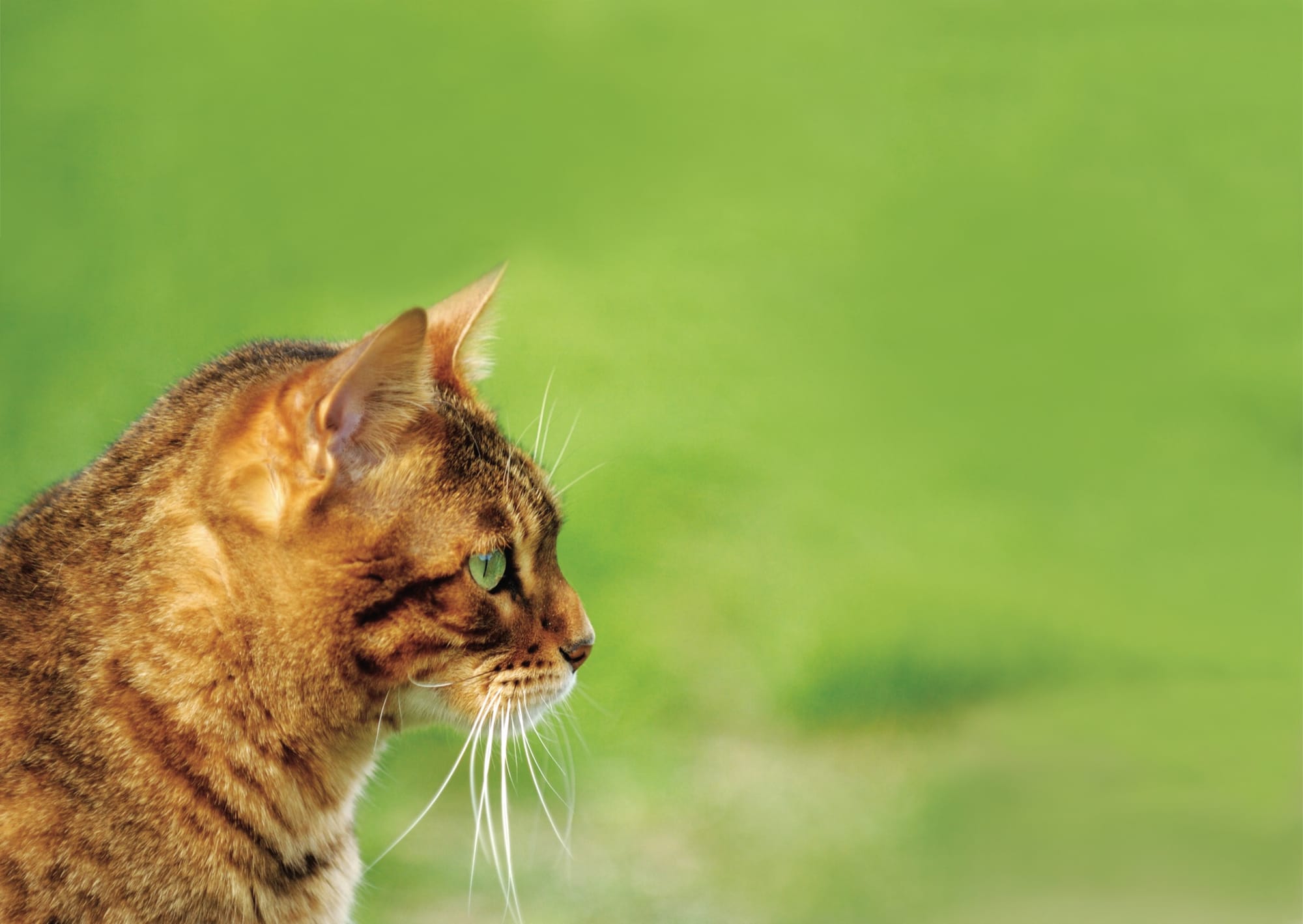
“The Bengal cat has a wild look about it, and is quite different from any other cat,” says Bill Levinson, Secretary of the Bengal Cat Club in the UK. “In particular, the coat is unlike any other; the feel of it is extremely silky and luxurious. People like the look of it.” As befits its wild descent – only fourth generation or greater cats from the Asian Leopard Cat are allowed to be kept as domestic pets, any closer to its wild ancestor and you need a special licence. The cats’ faces have feral expressions with small, rounded ears, intense facial markings and pronounced whisker pads. Its body is often larger than average, very muscular, and with hind legs slightly longer than its front legs, which gives it the appearance of permanently stalking its prey. But it’s the coat that owners of Bengal cats fall in love with. Not only thick and soft to the touch,
the distinct ‘rosette’ markings should ideally have two distinct colours and be visible all over the cat’s fur, including on the belly. There are ‘marbled’ Bengal cats, but for many owners, it’s the rosette markings that are preferred, being another sign of their feline companion’s close descent to wild cats.
In a day and age where genetically manipulating crops or poultry to produce hardier wheat or more succulent birds is pretty much accepted practice, it is surprising to learn that the Bengal cat came about as a bit of an accident. In the 1970s, American scientist Dr Willard Centerwall was researching the partial immunity that leopard cats have to feline leukaemia. With the aim of passing on this immunity to domestic cats, he cross-bred Asian Leopard Cats with domestic cats. These experiments proved unsuccessful, but the resulting offspring combined the nature of domestic cats with the appearance of its wild parent. This piqued the interest of a local breeder, Jean Mill, who is credited with developing a rigorous breeding programme that led to the acceptance of the Bengal cat pedigree by The International Cat Association. Incidentally, the name ‘Bengal cat’ comes from the taxonomic name of the Asian Leopard Cat, prionailurus bengalensis; the cat is not descended from the Bengal Tiger in any way.
Refreshingly, for those who find other domestic cats rather lethargic, and prone to lazing in the sun as opposed to engaging with their owner, Bengal cats have a playful, if sometimes demanding, nature. And, uniquely for a species known for its vehement dislike of water, Bengal cats will happily play in paddling pools, or even sit underneath running taps. This lively nature needs some careful handling, however. “Like with any animal, it depends how they’re brought up. They need socialisation, and probably a lot more than other cats,” warns Levinson. Bengal cats are generally high-energy, intelligent and curious, often following its owner around the house. Generally, they are also happier if they are played with or petted, rather than simply being held. Nonetheless, if trained properly, Bengal cats are friendly, and perfectly safe around children, as the more ‘wild’ traits of its ancestors have been bred out. Some owners have also claimed that they can ‘walk’ their Bengal cat on a leash. You may look a little strange, but it’s probably a sensible thing to do if you want to take your cat outdoors in our traffic congested cities.
Bengal cats are easier to care for than you would think from such a diva. “Some may have delicate stomachs, and you shouldn’t change their diet too often” cautions Levinson. “I often recommend that people feed their cat dry cat food, or one of the specialist Bengal cat foods that are available now.” It seems that the biggest obstacle to owning a Bengal in the Middle East, is finding a pet shop that has them. It is possible to export the cats from the US or Europe, but the amount of paperwork and bureaucracy varies from country to country, can be lengthy and daunting for the individual buyer.
However, there are a few shops that have begun to offer Bengal cats for sale. Petzone, the one of the largest pet shops in Dubai, imports its Bengal cats from Hungary. “We provide our kittens with the relevant papers, pet passport, vaccination records and a microchip for identification should it get lost,” says the store’s representative, Olan Mendoza. Potential buyers also should be aware that according to Dubai municipality law, kittens must be over four months old before they can be sold – so you won’t be able to purchase a newborn. And if you live in the Mecca governorate in KSA, you may not be able to buy one at all: following a request from the Commission of Virtue and Prevention of Vice in August last year, the governorate decided to ban the sale of pet cats and dogs altogether.
Bengal cats certainly fall into the luxury pet bracket – a kitten will usually cost you in the region of 1,000 USD to 1,500 USD. However, if you are looking for a truly unique pet that not only has the call of the wild, but also the docility of domestication, the Bengal cat may very well be the feline for you.
Contacts
Petzone
Dubai, UAE
Tel +971 43211424
HYPERLINK "http://www.petdubai.com" www.petdubai.com
Bengal Cat Club
XXX, UK
HYPERLINK "http://www.bengalcat.co.uk" www.bengalcat.co.uk