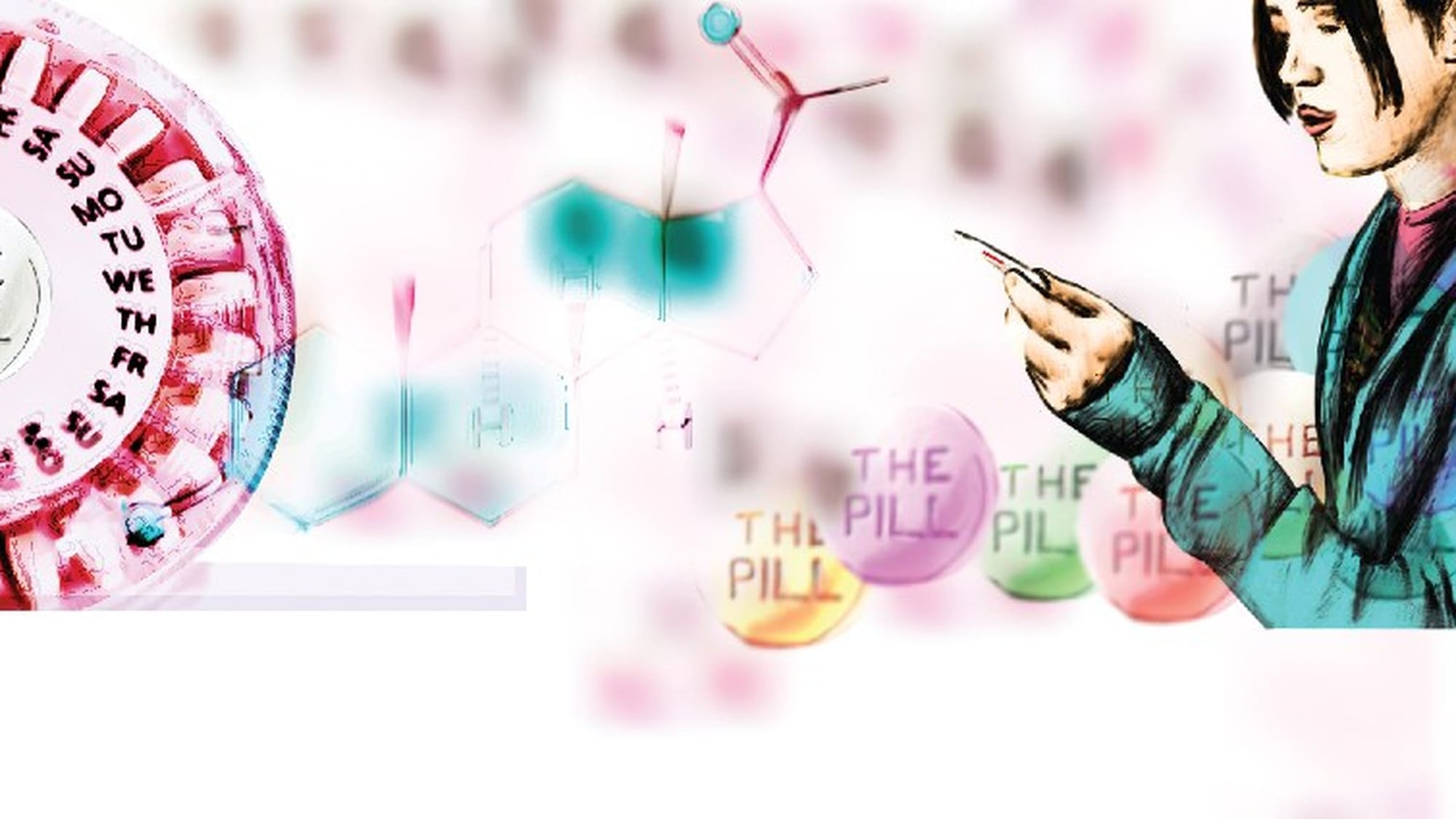
The Pill doesn't just prevent unplanned pregnancy; it also offers a number of other benefits. Women who take it for at least one year are 40 per cent less likely to develop uterine and ovarian cancers. The benefits increase the longer the Pill is taken, with an 80 per cent reduction in risk for both ovarian and endometrial cancer if used for over 10 years. This reduced level of risk persists for at least 20 years afterwards. That’s the stuff of miracles.
But it’s not just cancer that the Pill can help with; it regulates irregular periods, controls acne, reduces menstrual cramps and relieves the symptoms of premenstrual syndrome, or PMS. It also reduces the symptoms of endometriosis and polycystic ovary syndrome, and decreases the risk of anaemia. Contrary to public belief, there is no evidence that modern, low-dosage pills cause weight gain. All in all, it has to be one of the most effective preventative measures available to women today.
The benefits of the Pill don’t stop at health. There is a host of positive social effects linked to the widespread use of the Pill. Women were suddenly marrying later, attending professional schools and generally enjoying a wealth of options that had previously been unavailable to them. Sure, it sparked the sexual revolution, but the birth control pill also changed women's professional lives forever. For the first time, more women identified themselves as workers than as homemakers. In 1970, 70 per cent of women with children were at home; 30 per cent worked. These days that's more or less reversed and the number of women in the workplace has overtaken that of men. As of 2009, women represented half of all US workers and are the primary or co-breadwinners in nearly two-thirds of American households. That's a far cry from 1967, when women made up only one-third of the US workforce.
Without the Pill, women would almost certainly not have climbed the corporate ladder in any number of fields. The Pill levelled the playing field, no longer did women have to be mothers first and careerists second, now their critical career-building years - their 20s and early 30s - were spent in the office, not being barefoot and pregnant at home.
Today, more than 100 million women around the world start their day with the Pill. Named as the most important scientific advance of the 20th century, this tiny tablet, no bigger than a pinkie nail, is tremendously powerful, however also, sadly, widely misunderstood. Despite the social concerns over the drug, two things are for certain: one, the Pill and its accompanying contraceptive options facilitate greater freedom for women, and, two, it’s most definitely here to stay.