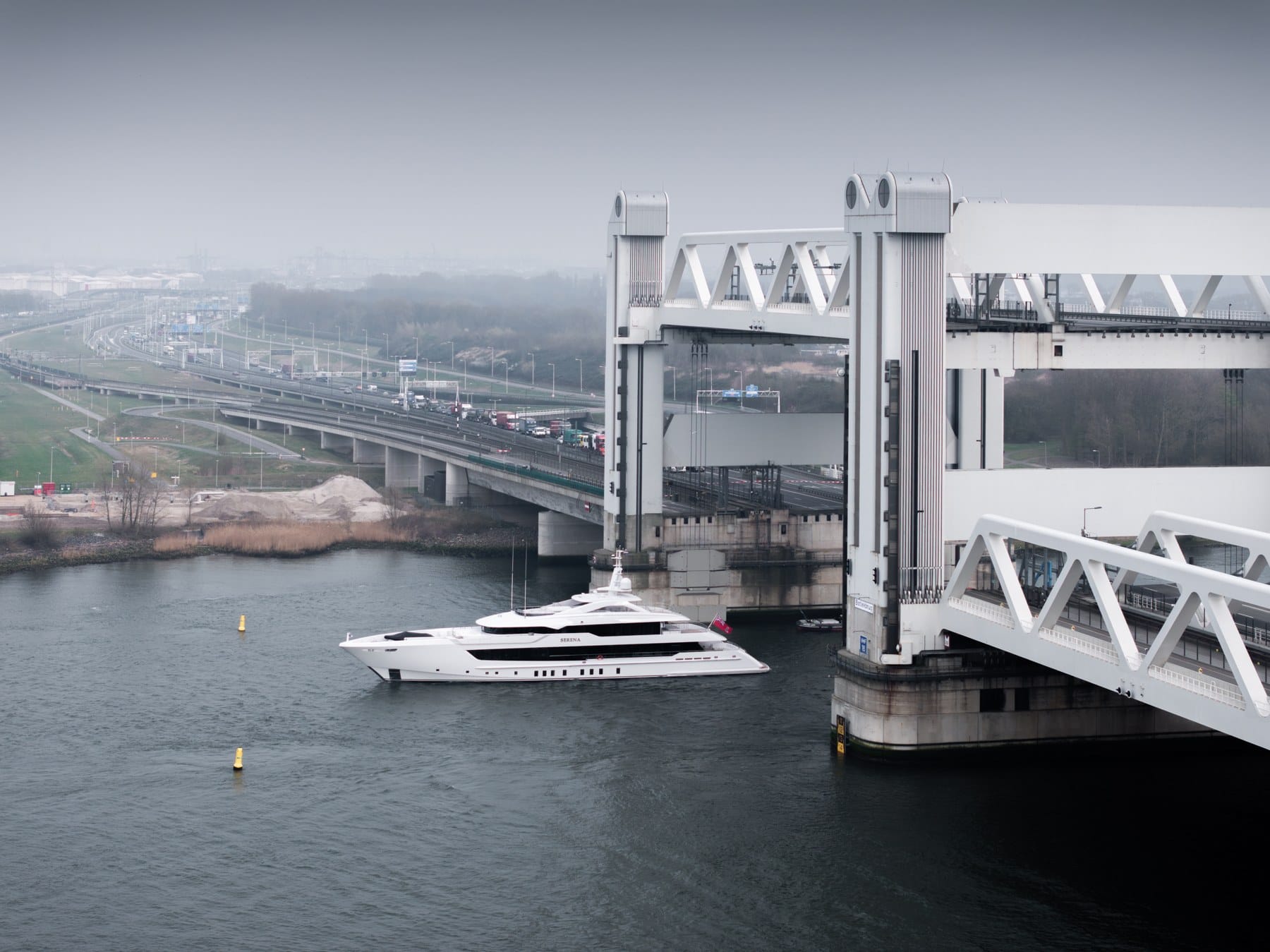
By the time you’ve stood beneath a 102-metre hull in a misty polder, the prefix of “super” to “yacht” feels insufficient. The Dutch call this place ‘Yacht Valley,’ a lowlands constellation of shipyards, craftsmen, and suppliers that quietly builds the most coveted boats on Earth. Over a few days on the Yacht Valley Press Tour, we, alongside a small pack of journalists got to shuttle from one cathedral-like shed to the next, peering up at metalwork as precise as watchmaking and paint so perfect it looks like mirror. The surprise wasn’t the scale or the gloss, it was the vibe: a national industry where rivals cooperate, share knowledge, and seem sincere when they say that growing the pie beats hoarding the slice. If Silicon Valley sees the future in lines of code, Yacht Valley sees it in lines of hull, and the Dutch, famously allergic to peacocking, have engineered a rare trick: leading the top of the market without acting like it. Order books tell the story: people are building bigger yachts with larger gross tonnage – the measure of interior volume – so they can enjoy more amenities and carry a plethora of tenders and toys. Now, Italy (followed by Turkey) may produce more boats in terms of units, and Germany may dominate in the 100+ metre niche, but the Netherlands is the world leader in terms of production output – they have the highest average length and gross tonnage, as well as highest average value, which ipso facto means the best quality. Why? Because the genuinely wealthy pay a premium not because they're sheep but because superior quality justifies the price.
Feadship
Its name is an acronym for First Export Association of Dutch Shipbuilders. It was founded in 1949 to market Dutch custom yachts to a foreign market who could afford them. The alliance eventually consolidated around two core builders (Royal De Vries and Royal Van Lent), and a naval architect (De Voogt). Since the 2000s it has expanded modern facilities in Aalsmeer, Kaag, Makkum, and Amsterdam, enabling it to keep up with the Germans in building larger yachts of over 100 metres.
On the tour, we got to hear about their positioning as an early mover in sustainability (the 83.5m Savannah was the world's first hybrid superyacht and the new 118m Breakthrough – commissioned by Bill Gates – is the world's first hydrogen fuel cell yacht). Clearly, the company takes pride in shaping industry trends and everything it does, it does to the nth degree, which is how it remains the benchmark when it comes to no-compromise custom builds – steel and aluminium sculptures that can take three to four years from signature to champagne smash. The sensation inside a Feadship hall is part art museum, part science lab: robotic arms and laser trackers working around hand-sanded fairing that looks seamless from inches away. The point, several people told us, is not speed. It’s perfection at scale. Think of Feadship as the Rolex of yachts, even the second-hand market shows they're able to hold value like no other.
Oceanco
Oceanco plays at the XXL end building the sort of yachts that look perpetual in satellite photos. As a matter of fact, it's one of only a handful of Northern European yards capable of building 80 to 140m custom megayachts but, where some others whisper, Oceanco has no qualms about making a bang with statement yachts. (Which make sense when you consider it’s the new kid on the dock – founded only in 1987.) Its early business model built hulls in South Africa and completed them in the Netherlands, but thanks to sizeable new investment in the 2000s, Oceanco shifted decisively into fully custom builds above 80m, consolidating at a state-of-the-art facility in Alblasserdam, which is the most impressive purpose-built facility in the industry. Located on the River Noord with direct access to deepwater routes, it features a multi-storey climate-controlled dry dock with integrated outfitting halls that feels less like a shipyard and more like aerospace. No wonder Jeff Bezos built his 127m yacht Koru here.
Amels & Damen Yachting
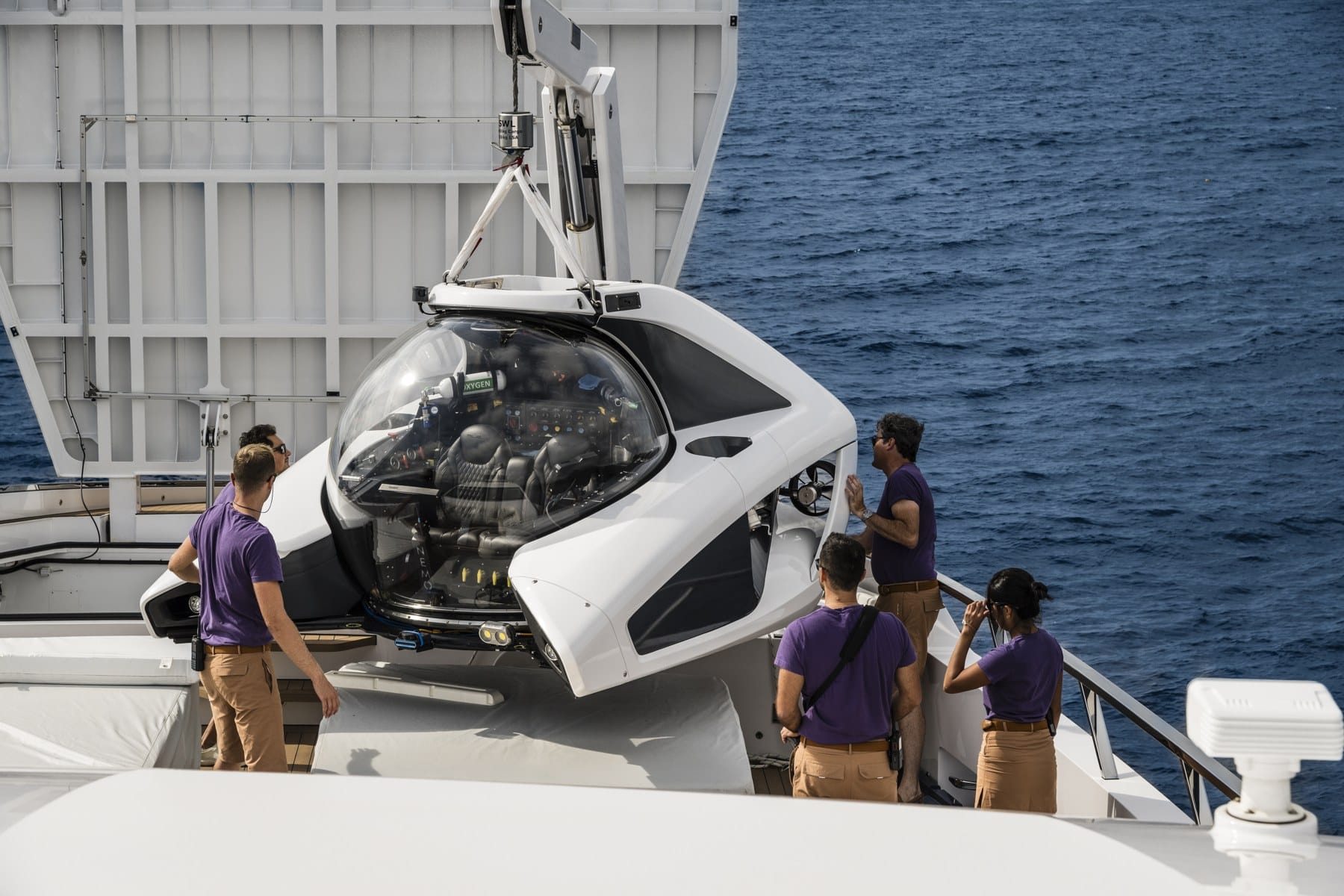
Amels and Damen Yachting share a family name and a philosophy: bring some of the efficiencies of series building to a world that worships the bespoke. Amels’ Limited Editions gives owners a proven engineering platform with the freedom to personalise the fun parts – interiors, decks, beach clubs – without waiting forever or paying to reinvent the wheel. Damen Yachting, meanwhile, helped create a new category: yacht support vessels that shadow the mothership with toys, tenders, helicopters, even submarines, plus they created a SeaXplorer line for far-flung, ice-class adventure. It’s the practical Dutch mindset applied to fantasy: dream big, deliver on time.
Heesen Yachts
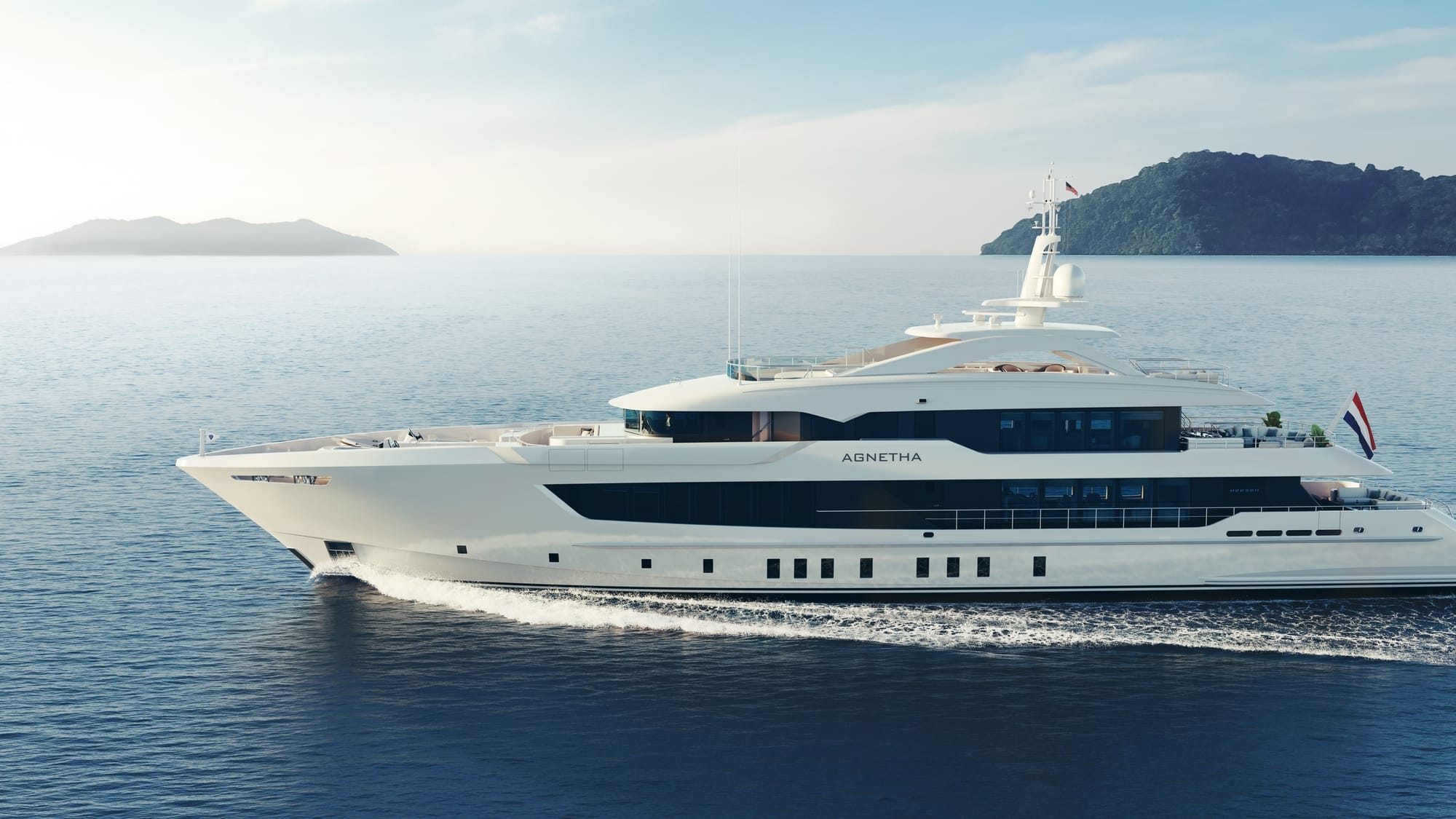
Heesen in Oss reminds you that aluminium is a supermaterial – strong, light, and capable of complex curves when it’s in the right hands. Their sweet spot is in the 40 to 60-metre range, with multiple proven platform series, although one of the four yachts they produce a year is typically a full custom. Even so, speed remains part of the mythology. As it should too, for they pioneered all-aluminium semi-displacement yachts long before the phrase was fashionable. They'll fold in hybrid know-how where silence and efficiency matter more than top speed, but Heesen likes to speak in the language of knuckles and knots: reduced drag, efficient lift, a hull form that doesn’t fight the ocean so much as find an understanding with it. And the first time you see a Heesen move – really move – the physics explains itself in a sheet of rising water and the slow exhale you realise you’ve been holding. That bow (often "near-vertical" or "reverse" in its profile) doesn’t punch; it parts. And the wake pulls itself neatly back together, tidy as a well-made bed.
Royal Hakvoort
This family-owned yard stands at the edge of the old town of Monnickendam, where wooden houses lean a little in the wind and the church carillon marks the hours as it has for centuries. It’s nestled in a corner of North Holland that know boats the way a baker knows dough. Here, in a landscape stitched together by dike and canal, shipbuilding grew out of necessity and became an art. Which is how Hakvoort went from building workboats and fishing vessels more than a century ago to boasting a coveted “Royal” designation (earned for longevity and excellence) and building yachts with scale and sheen. Its most notable project is the 63m Scout, and even though the dock has a max capacity of 65 metres, they just signed a 70-metre project – some lengthening is in order then. It’s rare to find a shipyard specialising in “smaller” custom yachts but Royal Hakvoort is that place.
Vitters
Vitters is one of Holland’s modern standard-bearers for fast, custom sailing yachts – quietly situated in Zwartsluis yet known across the world’s oceans. Born from centuries-long boatbuilding heritage and refined by contemporary engineering, a Vitters is a performance sailing superyacht in which precision and poise are inseparable. Think powerful, easily driven hulls; feather-light, push‑button sail handling; and interiors crafted with a level of calm, tactile luxury that feels as considered as the engineering hidden below. Though discreet, the yard’s portfolio speaks for itself: elegant cruiser‑racers and globe‑ranging ketches like the 86m ketch Aquijo (in collaboration with Oceanco), the regatta‑winning 46m Unfurled, and the refined 59m Maximus. They're also about to launch 'Project Zero,' a 69-metre ketch-rigged vessel that possesses no engines or generators, relying instead on a combination of wind, solar, and thermal energy. Yes, you read that right: no fossil fuels will ever be harmed in the making of a voyage aboard this Vitters – only the feelings of every other boat as she glides past the fuel dock.
Royal Huisman
In a country defined by water, where the wind still writes its signature across flat horizons, a small town called Vollenhove has spent more than a century quietly redefining what a sailing yacht can be. Royal Huisman, the Dutch custom shipyard with “Royal” status since 1984, doesn’t so much build boats as compose symphonies. You see carbon composite next to impeccably faired aluminium, hydraulic systems that could lift a house, and masts that pierce the sky. These are boats that will cross oceans under sail, with interiors that feel like a modernist townhouse. The romance is real; so is the engineering, for these guys make everything in-house (or their subsidiary Rondal) from large carbon fibre masts, to booms, rigging, hatches, and all other composites. Their most notable projects have been the 90m three‑masted schooner, Athena; the 58m performance sloop Ngoni and the 52m Special One, which is the largest sport-fisher ever made.
All in all, there has always been an easy cynicism about superyachts – they are, undeniably, the apex of private luxury. But a tour of the Dutch industry's sheds reveals a national talent stack that radiates outward: metalwork, composites, robotics, sustainable manufacturing, vocational training, export power. What we found was that the same supplier who perfects a stabilizer fin here may apply that expertise to offshore renewables there. The same apprenticeship that teaches a kid to fair a hull might be the start of a career in advanced manufacturing. And in a world that prizes instant gratification, there’s something subversively admirable about a culture that organises thousands of parts, hundreds of craftspeople, and years of patience into a single, seaworthy idea.
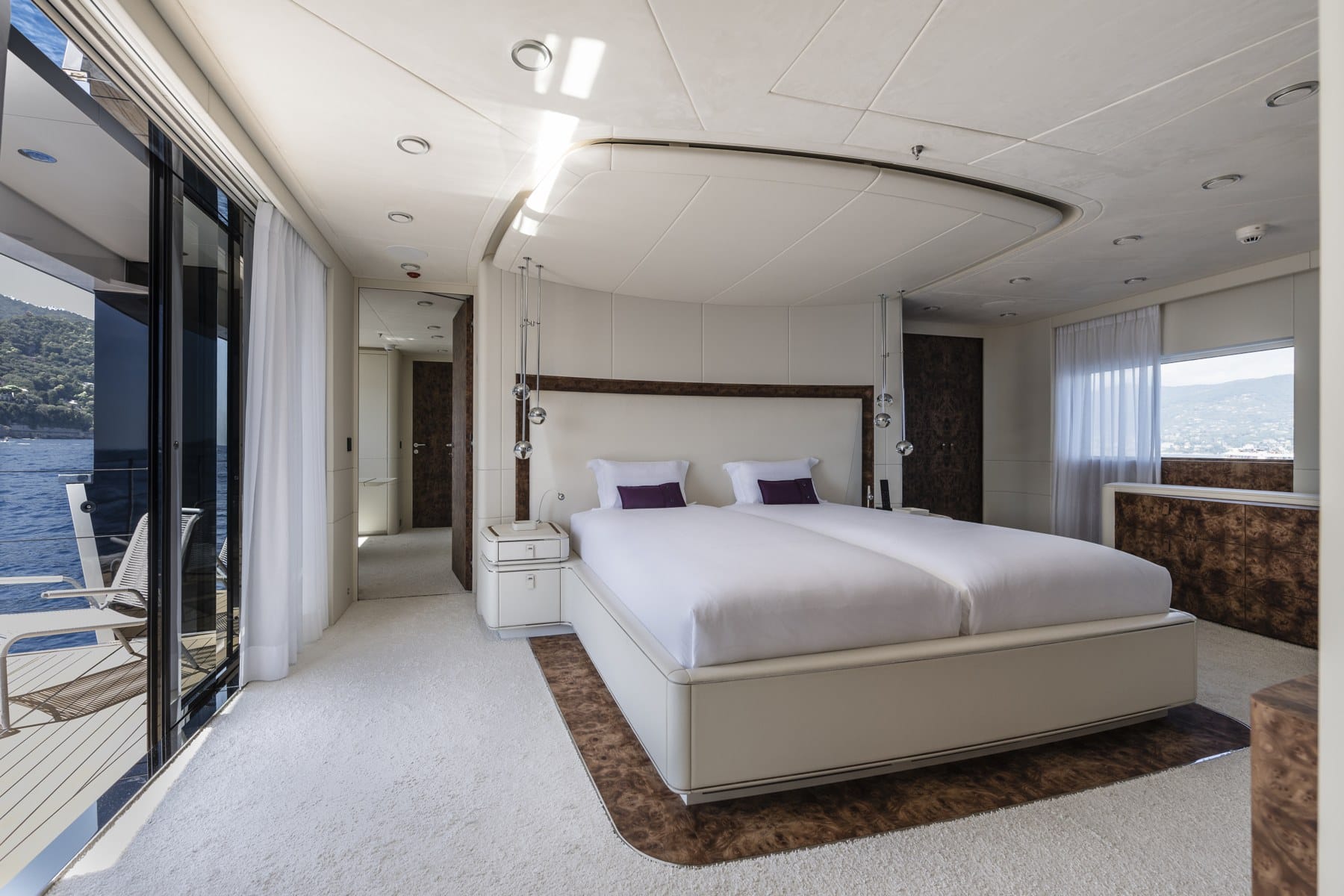
Yet beyond that, there's something profound. Managers here praise competitors for expertise – sailing craft over here, fast aluminium over there, expedition pedigree down the road. The yards of the Yacht Valley share a dense constellation of specialist suppliers – propeller masters, underwater lighting experts, HVAC whisperers, leather ateliers, paint magicians – whose apprentices move through training programmes that feed the entire sector. The logic is simple: if the Dutch collectively set the bar for quality, the global demand for Dutch yachts grows. Everyone wins. Apparently, their secret sauce isn't even a secret: meticulous craft, shared pride, and the unglamorous belief that if everyone does their part – together – the tide lifts all boats.
Left: A top view of the SeaXplorer by Damen, which is a new line of semi-custom expedition superyachts, from 60 to 105 metres, designed for global adventures in challenging environments. Above: The Yacht Valley Tour is organised by the Dutch superyacht industry to give international journalists behind‑the‑scenes access to major yards.
Previous: The Royal Hakvoort shipyard at Monnickendam has two sheds and produces one superyacht a year. Above: Our tour of Amels' shipyard was presided over by Jan van Hogerwou, the Commercial Executive of Damen Yachting. Top right: The Heesen shipyard in Oss has nine sheds (of which five are dry docks). Middle right: Sarah Flavell, the Marketing Manager at Damen Yachting, gave a presentation. Bottom right: Project Orion is the third in Heesen's advanced 50-metre aluminium series with hybrid propulsion. Opposite top: The impressive 79.5-metre Valor was days from being launched at Feadship's Aalsmeer yard during our visit in May. Opposite bottom: Oceanco's state-of-the-art dry dock facilities in Alblasserdam were built in 2015. The site includes a shipbuilding hall and a dry dock capable of building yachts up to 140 metres in length. Before launching a yacht here, the shed fills with 52.5 million litres of water, a process that takes 11 hours. Below: Amels Refit transformed this 72.2-metre Delta-built superyacht Moonstone giving her a significant extension to the transom and a full interior upgrade with layout changes.
Left: The 65-metre Royal Huisman Aquarius was handed over to her owner Bob Iger, the CEO of The Walt Disney Company, this year. She's described as a modern-clasic meaning she combines classic hull lines with an advanced, high-performance rig and sail plan. Bottom left: Touring the Heesen shipyard. Bottom centre: To give you a sense of scale, that's a 104-metre megayacht at the Oceanco drydock, filled with water. Right: An Amels scale model.