Words by Julia Zaltzman
Body/…
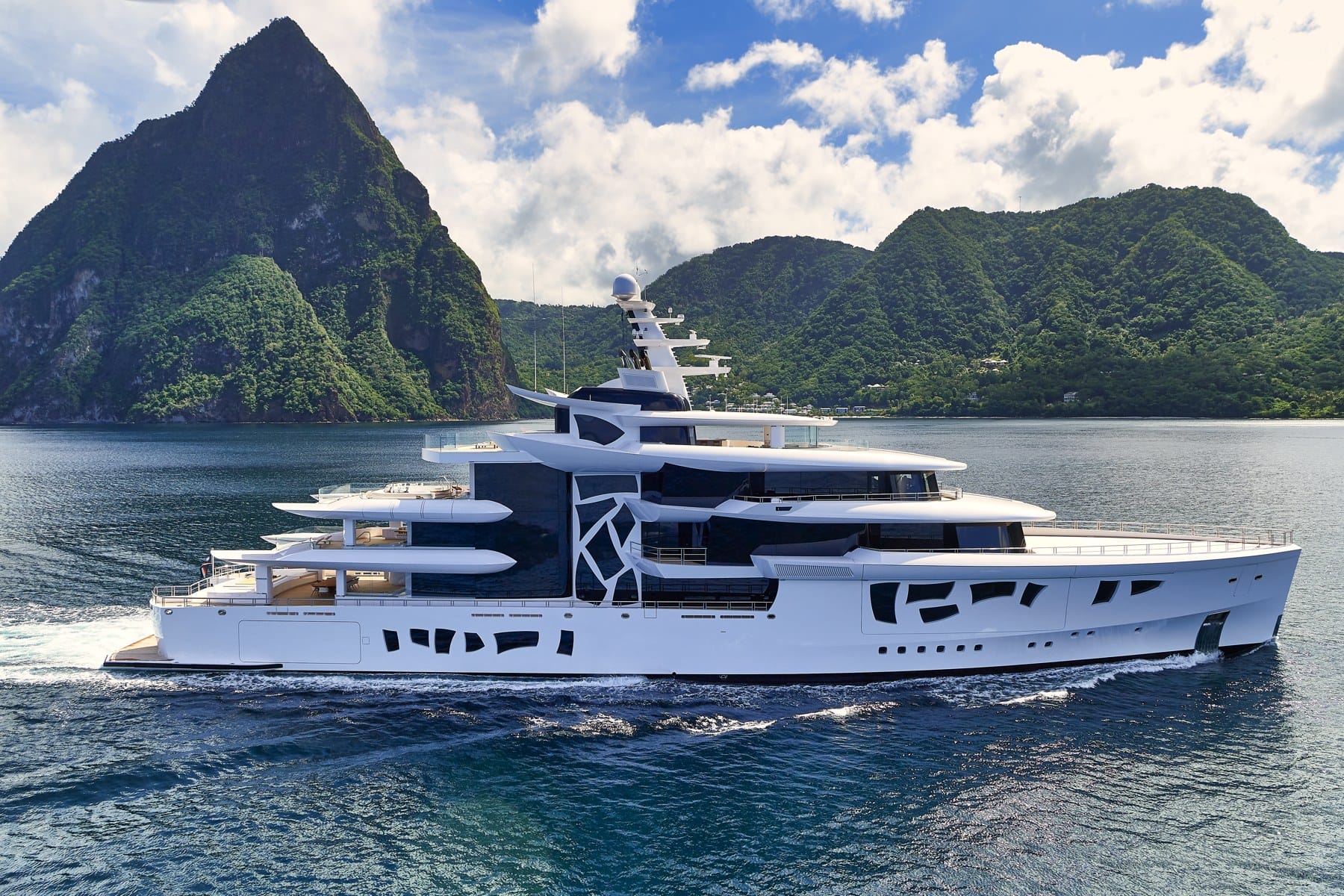
There are superyachts that follow the pack. And there are superyachts that break the mould. At a whopping 2,990GT, Artefact is the world’s largest 80-metre yacht in terms of volume, and that’s just for starters. The diesel-electric yacht is a platform for innovation and a shining example of what superyachts builds today are capable of. What’s more, it houses a sculptural yacht interior that is an ode to simplicity and future-proofing foresight.
“Artefact is the owner’s first yacht, and it’s his last,” said Captain Aaron Clark during a tour at the Monaco Yacht Show. “It’s been designed with the future in mind, but we didn't invent anything new. We took reliable, proven concepts that had been run on the commercial side and adapted them to the relative needs of a superyacht and the guest experience.”
After a successful series of sea trials in the freezing Baltic Sea that surrounds Nobiskrug's facilities in Rendsburg, the yacht was delivered to her owner in March 2020, just as the pandemic hit. A nine-month shakedown cruise ensued, giving both owner and captain the chance to test out the vessel to its limits.
From the outset of the project, the owner – an engineer and accomplished entrepreneur – set out to fix new standards for environmental stewardship within yachting and to enhance comfort at sea for guests. “The owner wanted to minimise emissions and the impact to the environment while furthering the use of cutting-edge technologies that can be deployed across all classes of vessels to promote cleaner seas and dramatically improved fuel efficiency,” says Vesna Bloetz, head of marketing at Nobiskrug.
The eco-focused features include an advanced DC Bus digital power management system – the first to be installed on a yacht – which allows the vessel to fully integrate multiple sources of power from solar cells, variable-speed generators and lithium batteries. This means Artefact can operate for a limited time without internal combustion engines. Twenty-three square metres of solar panels on the sundeck hardtop provide around 6kW of auxiliary power and the yacht has the potential to draw on future technologies, such as fuel cells.
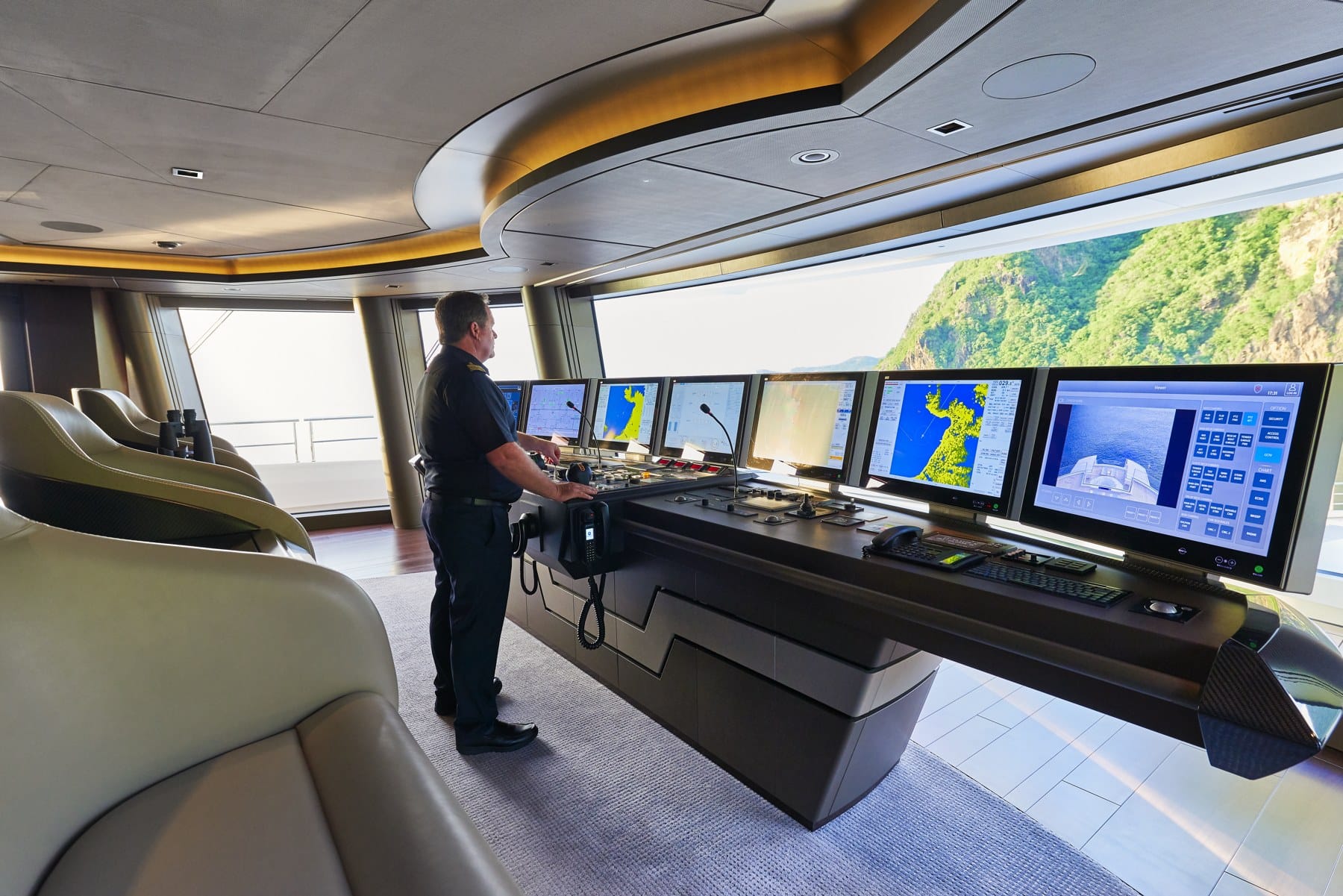
This allows Artefact to travel short distances on just batteries alone. The boat also features dual azimuthing pods that enable dynamic positioning (DP) to hold it in place without dropping anchor, therefore protecting sensitive seafloors and marine ecosystems.
“We travelled 13,000 nautical miles in the first year,” says Captain Clark. “We used our DP for 650 hours, even sitting on it for two weeks straight while waiting for ports to open back up. But it’s ideal for enhancing guest experience too, by turning them away from direct sunlight or showing them the best view. It’s my favourite piece of kit.”
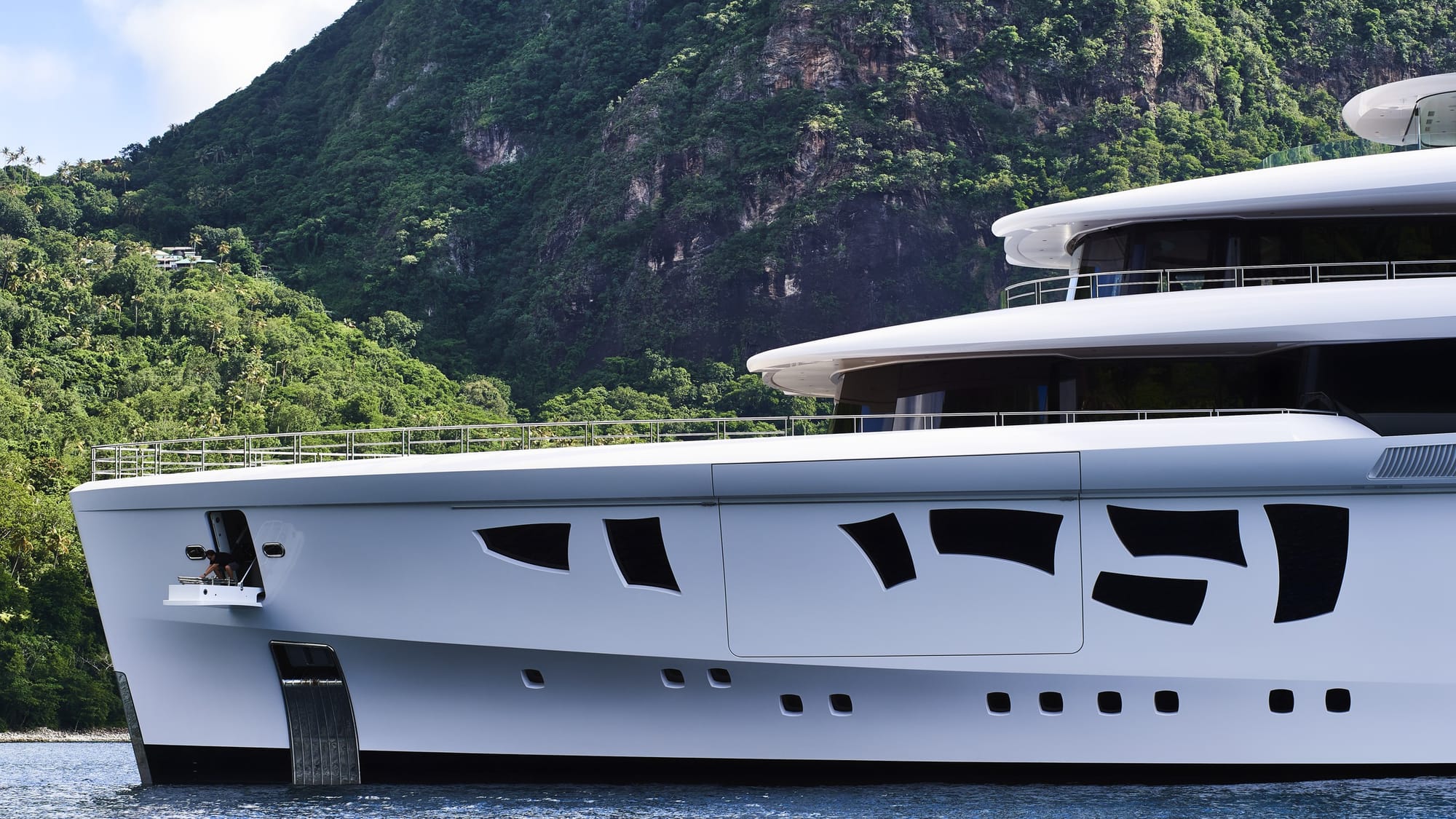
An incredible 750sqm of glass has been used in total, weighing a seismic 70 tonnes and tinted bronze for a warmer interior ambience. Running down both sides of the yacht it is the defining trait of the boat’s profile. That amount of glass is a yachting first and didn’t come without its fair share of challenges. The primary ones being weight, solar heat gain, optical properties and reflections of sound. But noise and vibration management specifications on board Artefact far exceed industry standards. As far as the guest experience is concerned, Artefact’s “acoustic signature” sits in harmony with its design.
To offset the significant weight, the steel hull is paired with a fiberglass superstructure. Using composite has enabled curved shapes to be moulded to create beautiful organic silhouettes, and even frees up future owners to alter the superstructure design should they ever want to. In a climate where yacht regulations are tightening up, Artefact was also the first superyacht to conform to IMO Tier-III emissions standards when delivered.
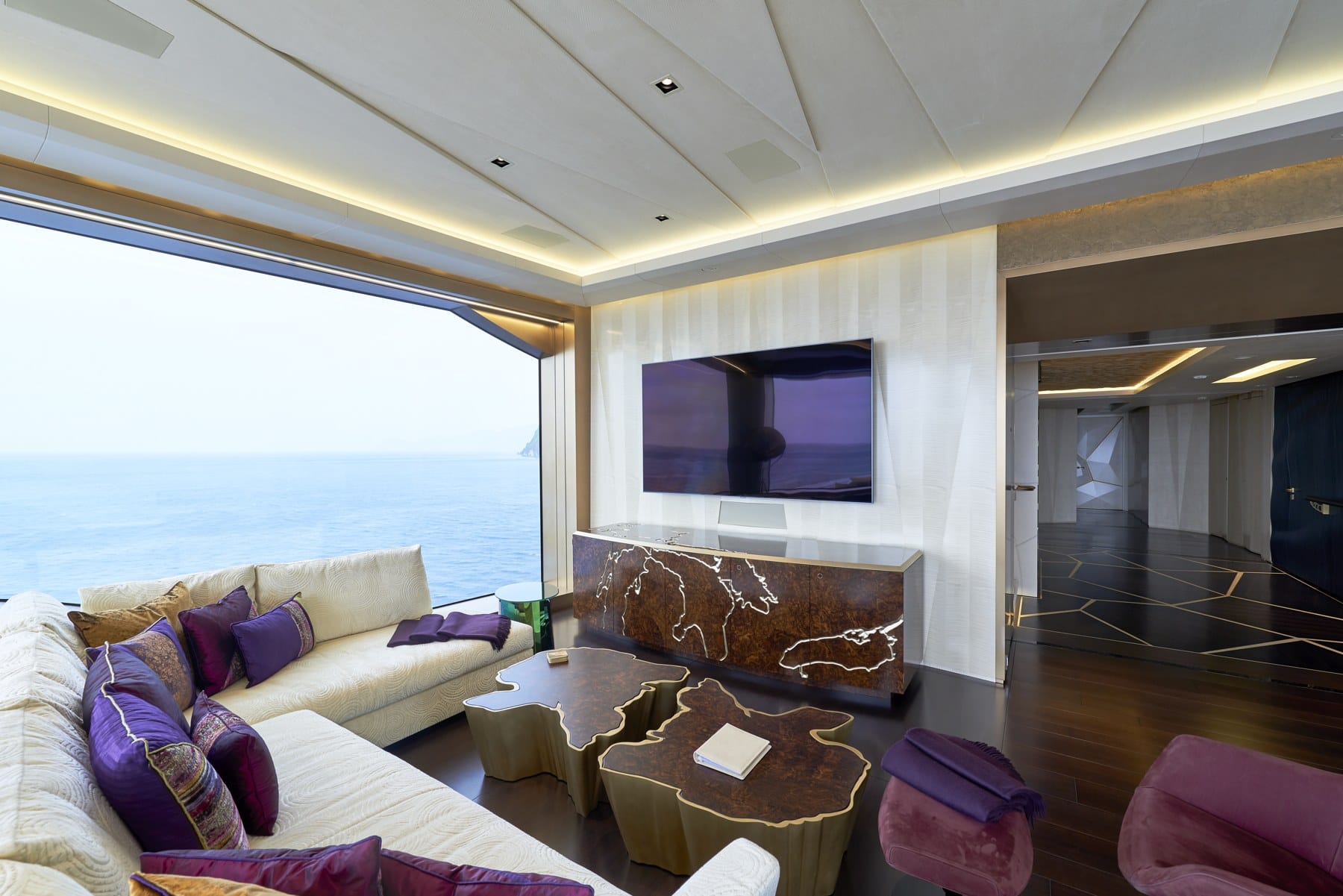
A contemporary and sophisticated interior by British studio Reymond Langton Design complements the futuristic façade. All eight guest cabins, accommodating up to 16 guests in total, are flooded with natural light providing an impressive space to wake up to. No door thresholds can be found anywhere on board – a design cue for wheelchair access should the owner ever need it. A Tai Chi room with extra ceiling height to accommodate a sword being held aloft is complemented by a dedicated crafts room; the owners have already stopped off in Sicily for three days of leather making tuition. Serviced by a total of 22 crew (a reduced number from the standard 32 thanks to the boat’s centralised service operations), the main entertaining spaces provide a clear connection to the outdoor marine environment and a view of the far-reaching horizon.
The holistic guest experience is further enhanced by sliding windows in the main saloon that create a connection between outdoors and in. “The guests can sit here in 35 knots of wind and comfortably dine together,” says Captain Clark. When ready to explore, a large eight-metre tender fitted with gyro stabilisation doubles up as a sports fishing tender by swapping out the lounge seat with a game fishing chair. Even the captain’s cabin is larger than standard, with its own private terrace.
The best view on board is undoubtedly afforded from the owner’s office. Minimalistic in nature, it comprises a desk and a view of the streamlined bow and beyond. “We kept this room clean for a reason. We didn’t want to ruin the whole aesthetic,” says Captain Clark. “I said to the owner during the design phase, when you walk out there one day you’re going to feel like a king. And when he goes out there now, that’s exactly how he feels.”