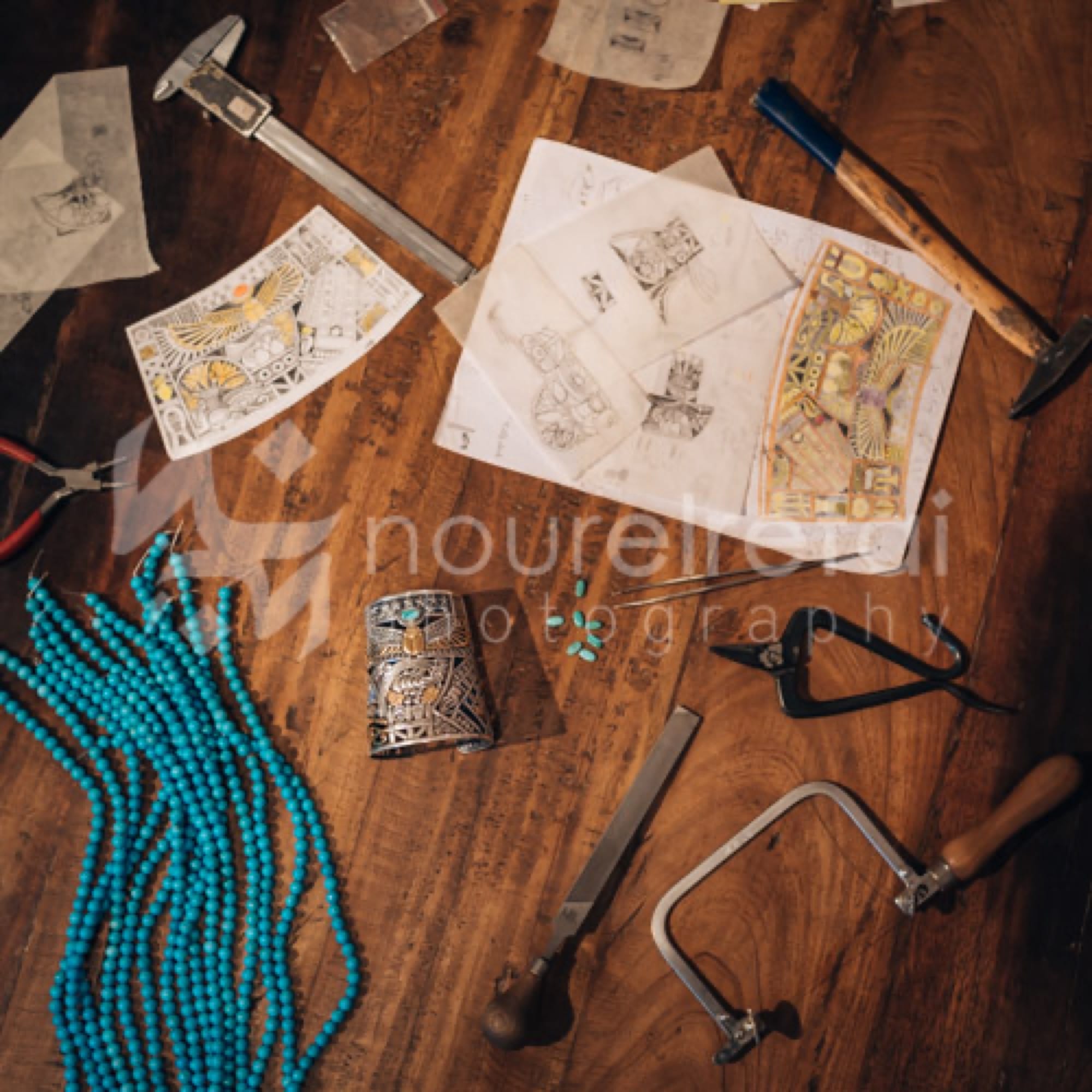
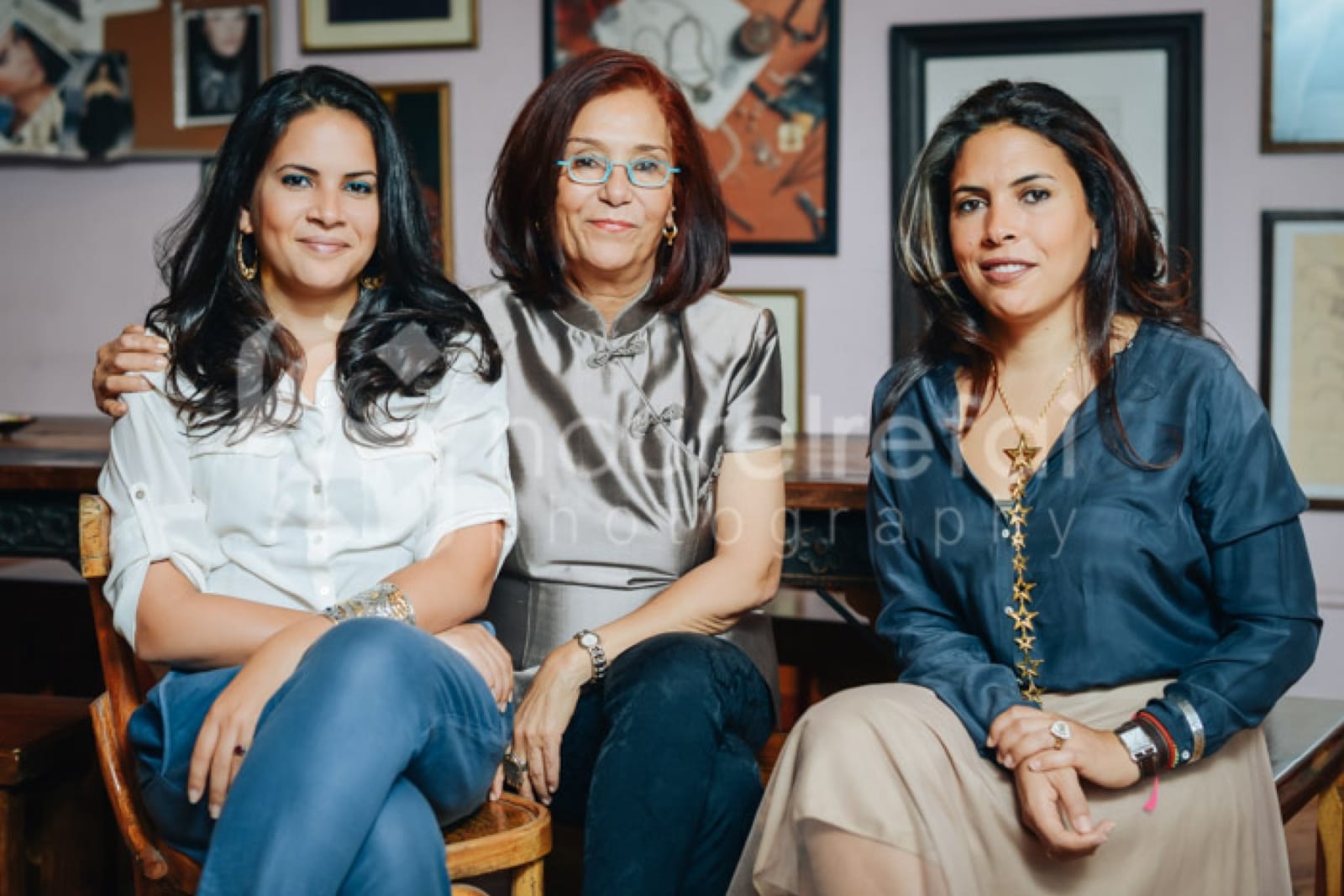
The company may have one name but the business is very much comprised of three. For Azza Fahmy, having her two daughters, or rather entire family, work alongside her is testimony to the saying that the whole is greater than the sum of its parts.
Azza Fahmy isn’t your typical family business in the Middle East. Firstly, it’s a women’s stronghold, run by Azza Fahmy and her two daughters. And secondly, it’s a marriage between the older and newer generations, the heritage of traditional, handcrafted jewellery with a contemporary outlook and feel.
Entering a designer’s inner sanctum is both intriguing and potentially intimidating. I certainly felt a light frisson of trepidation going to interview not just Azza Fahmy but her two daughters Amina and Fatma Ghali at their Cairo home.
Any sense of unease was instantly dispelled by their warm welcome and homey atmosphere. Instead of their own designs, walls were covered in paintings - mostly portraits - a lack of narcissism I appreciated.
Azza Fahmy and her daughters are very much a unit, a seemingly well-oiled system and the perfectly fitting pieces of the puzzle that make up Azza Fahmy Jewellery but as our conversation made clear, their success story still has many chapters to be written.
As I knew only a little about how Azza’s daughters became involved in the business, Amina enthusiastically shared their story as soon as we sat down.
“Our mother got us involved at a very young age. We used to go to workshops when we were four or five and learn all about threading and other techniques that someone so young might be able to handle,” she tells me. “We would travel to lots of exhibitions and help mum out with setting up. We’d go to museums and theatres to look at the costumes and accessories and read old books.”
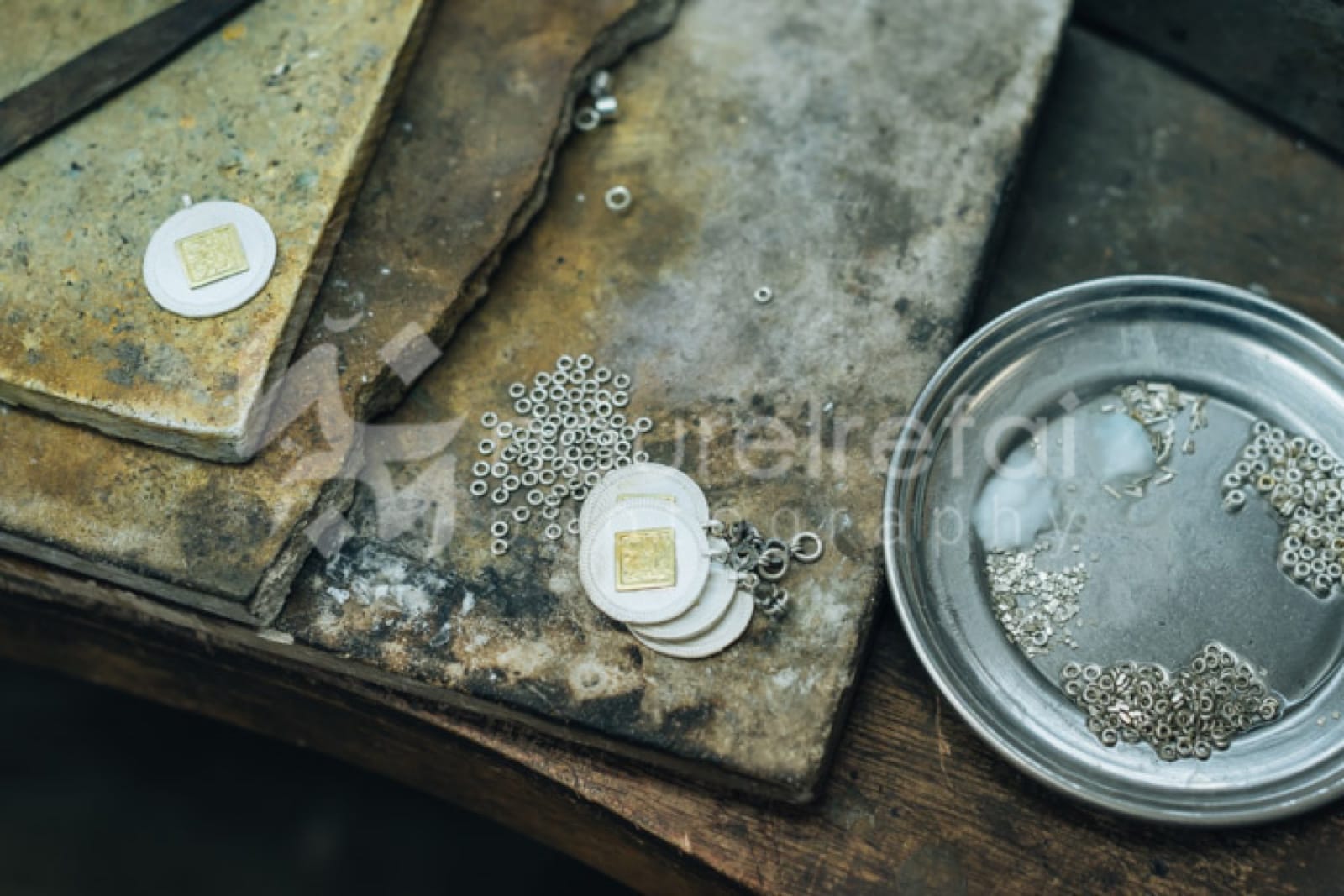
As if this was a story bursting to be told, Azza Fahmy – or as her children and colleagues like to call her now, AF – was quick to jump in. “You know, sometimes the circumstances of life oblige you,” Fahmy says. “I’m a single mother with two kids, they have to help me because someone has to. For example, when we used to travel to the States and someone had to do the ticketing, they would sit and do that. Someone had to polish or shine the jewellery, so they did that too.”
Not the easiest of times, then, for the family but they made the most of it, learning along the way. “When we went to the Oxford Craft Guild exhibition, someone had to do the setup, you know?,” Fahmy explains. “They say this is the best way to instil a business sense in someone, slowly and naturally.”
Fahmy did not pressure her daughters into becoming part of the business, rather things happened organically. She got them involved when she needed a helping hand but in the end, left it up to them to decide whether to stay or to leave.
“Of course when the next generation sees that what you are doing is successful, they are more likely to want to be involved. It’s an important aspect. They wouldn’t have wanted to join something that was a failure,” she continues.
While Amina is a designer like her mother, Fatma is responsible for the business side of Azza Fahmy Jewellery. Neither recalls a conscious decision behind this division of labour though Amina says that she was in Italy when she knew for sure she wanted to design jewellery for a living and remembers calling her mother to tell her of her decision.
“I studied lots of different kinds of art and discovered that jewellery was what I really wanted,” Amina continues. “I studied in Europe for 6 years. We were taught contemporary jewellery design, technology, techniques, shapes. I wasn’t really exposed to more traditional or classic styles during this period of my life. So I remember that when I returned, there was a gap in how I felt about design and how my mother felt about design and then slowly, I started to transfer to her what it feels like to fall in love with something that is so contemporary and so modern and something not coming from our part of the world.”
“But I also started to love jewellery that had its roots here and in other older cultures. I had a new appreciation for these techniques and the heritage of what we have here. So we started marrying our thoughts until we reached a completely new product. We almost never disagree,” she concludes.
“Craftsmanship in cultures with long histories needs a jolt every now and then, someone to come in and shake things up a bit,” Fahmy chimes in, her admiration for her daughter’s input and influence clear. “A craftsman may not be able to do that. Their strength lies in their handicraft and skill but the ideas need to come from an artist, and an educated artist. Here was an opportunity for someone with a bit of a Westernised viewpoint to look at Arab and traditional jewellery, take this heritage and turn it into something completely new. This is always the debate I have with Amina, how to take from our own culture and heritage. It’s an enjoyable debate between two people who understand their own heritage but also have a broader cultural education,” she elaborated.
Fatma, who until now has seemed to be the quiet observer, adds that just as with her sister, she has been part of the business as far back as she can remember and she formally joined the company in 2000, as a junior in the marketing department, while still at university.
“I actually thought I would be on the creative side,” she says. “My major was in Fine Arts but when I started to work, I realised I had a passion for the creative but in a very different sense of the word. What I did was more of institutionalising the business. My mother was very involved in everything and at some point when the company grew, it took away from her time as a designer. She is the most valuable asset we have, so I think this was my aim, to make sure that she focuses on design and how to change the company into an organisation that’s structured and after that, taking it to the next level and going international.”
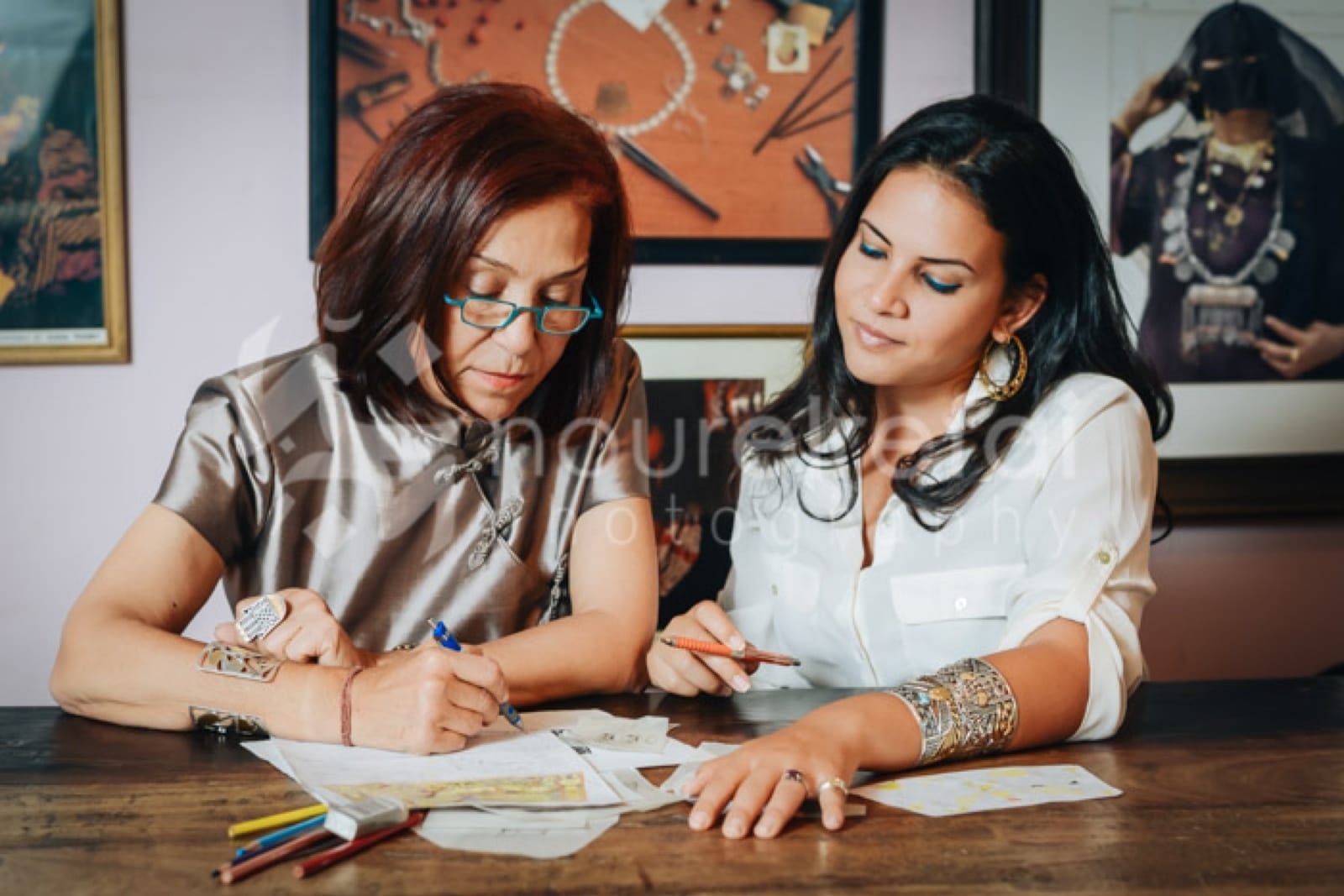
Azza is clearly proud of what Fatma has accomplished. “It is thanks to her that we have a structured industrial organisation but at the same time one that is still focused on beautiful craftsmanship”
“It went from being a one-woman-show into being a small organisation,” Amina adds. “What made Azza Fahmy’s name was combining art and culture and class. Even when the company had twenty people working in it, it was about art, research and heritage and mainly the craftsmanship that served it all. When Fatma joined, she turned that into something structured.”
Now, the women feel an efficient and effective system is in place that doesn’t compromise on quality, heritage or design, permitting the company not to lose sight of what brought it to fame in the first place.
Leaving my meeting, I have no doubt that great things lie ahead for this impressive trio. For as long as their admiration and co-operation remains intact, their company seems certain to evolve and prosper for a long time to come.