There is a piazza in Rome with no traffic, few people and a single mysterious door. The Piazza dei Cavalieri di Malta sits on the crown of the Aventine, the quietest and most beautiful of Rome’s seven hills. The square was designed by Piranesi, a man who loved a surprise.
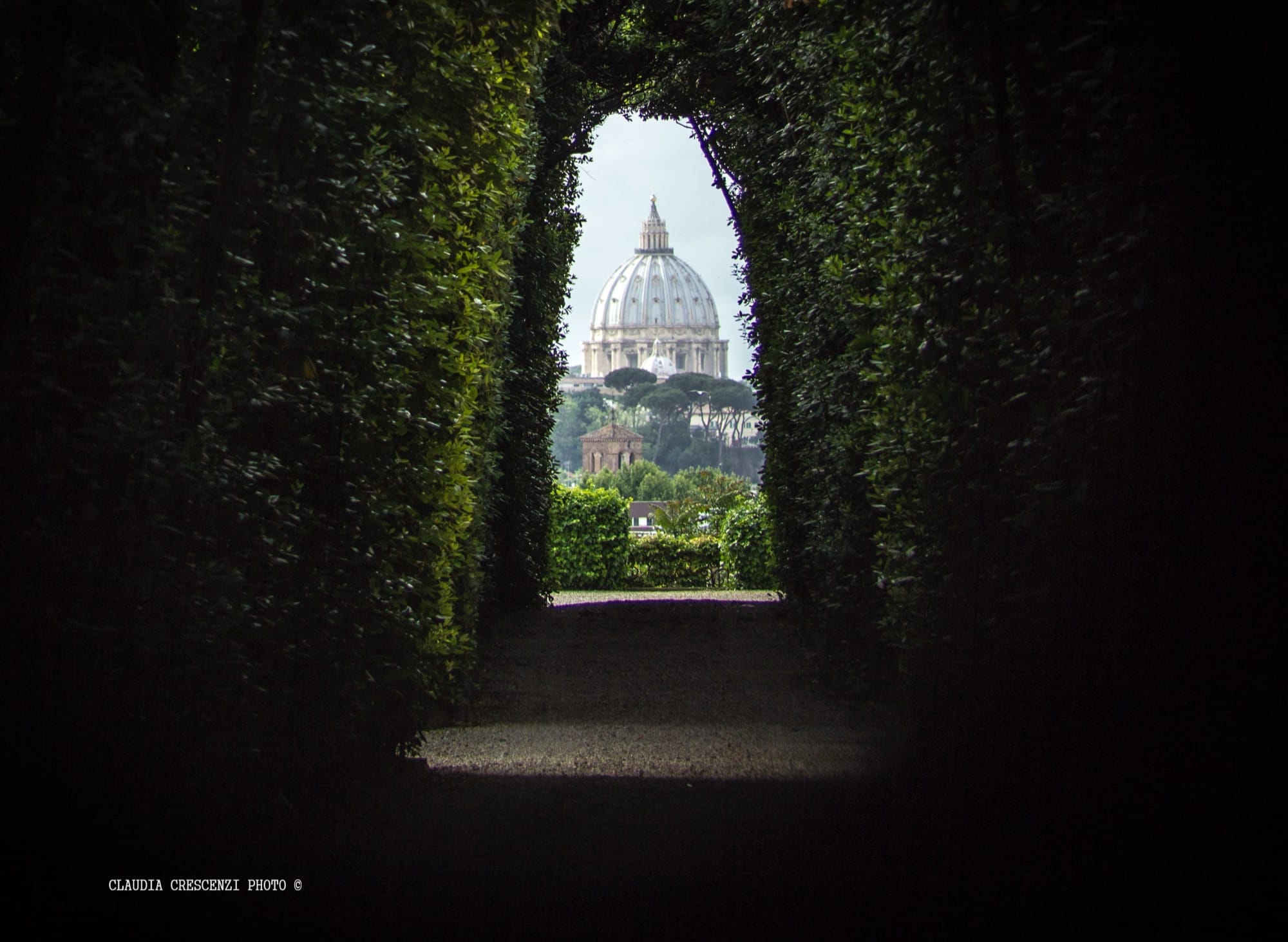
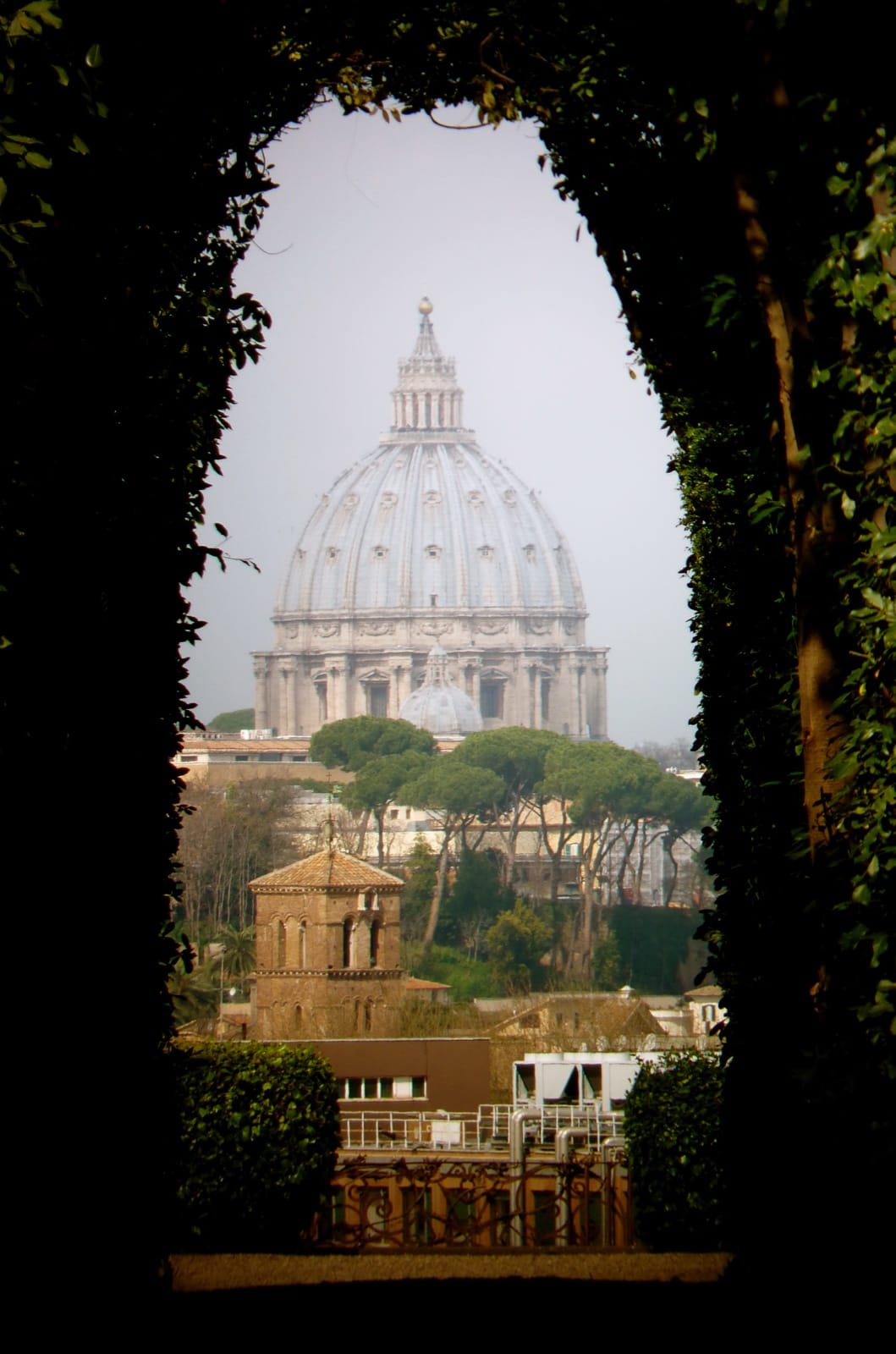
That single door is green and sits to one side of the square. It leads into the Priory of the Knights of Malta (Villa del Priorato di Malta). There is an elaborate keyhole, surrounded by an escutcheon, which has been rubbed bare by many hands. If you peer through, you will find Piranesi’s surprise – the dome of St Peter’s, almost two miles away, perfectly framed by the keyhole. The square, the door, the keyhole, even the garden within have been orientated to offer this private glimpse of one of Rome’s most famous monuments.
Given that Rome’s public face is so spectacular and well known, it is easy to forget that many of its best moments, many of its unexpected treasures, are behind closed doors. Beyond the great sights of the Colosseum, the Forum and the Vatican is another more private Rome, a city of surprises and unpredictable secrets. Beyond the grand hotels with their bustling lobbies is a more elegant and sophisticated Rome of private villas and luxury apartments from whose rooms you can embark on the adventure of making Rome your own.
Rome is the kind of city in which tourist maps soon fade and a different, more personal kind of navigation takes over: one’s own adventure within the city. This may begin with the discovery of an old-fashioned workshop in a backstreet. It might include a romantic pause on a bridge beneath the silhouette of Castel Sant’Angelo. And it should definitely take in that restaurant with the wonderful straccetti con rucola.
Piazza del Popolo is central to my own private map of Rome. When I first came to the city 30 years ago, I stayed in a pensione just off this square. There was a high-ceilinged room, tall shuttered windows, a door with a pediment that I’m sure included cupids, a beautiful receptionist and the sound of a saxophone drifting up from Via Angelo Brunetti in the evenings. At night, when the saxophonist had gone home and the traffic ceased, I could hear the splash of the fountains in the piazza beneath the obelisk that Augustus had brought home from Egypt some 2,000 years ago.
Every morning, I sallied forth on a battered scooter someone had lent me, careening between ancient ruins, baroque sculpture and delicious meals, between Roman triumphal arches, the soft thighs of Bernini’s Proserpina in the Galleria Borghese and the divine croissants in a bar in the Via di Ripetta. I discovered – in those days everything was a discovery – Santa Maria in Trastevere, barnacled with age, its gold-hued interior freighted with incense and prayer. I made a pilgrimage to Velásquez’ portrait of Innocent X in Palazzo Doria Pamphilj and another to Sant’Anselmo on the Aventine where Benedictine monks filled the Roman dusk with Gregorian chant. I climbed the steps of the Capitoline at night to Michelangelo’s exquisite piazza where the equestrian statue of Marcus Aurelius stood bathed in moonlight. I came home late to Piazza del Popolo, hoping the beautiful receptionist might still be on duty. I only ever managed to exchange five words with her: “La mia chiave, per favore.” Tragically, “My key, please” was not a gambit to arouse her interest.
More than 20 years later, I came to live in Rome, graduating from visitor to resident. My Vespa habits haven’t changed – though perhaps the current model is less battered than that first one – but my personal geography of Rome has expanded to include its more private spaces. The famous sights will always be fascinating and still come, at the right moment, with a sense of discovery. But the Rome I explore now is a place of local streets and neighbourhoods, of private palaces and lesser-known sights, a Rome whose glories are often found behind closed doors.
That being said, there is no typical day in Rome – there are too many incidents to distract you. But here’s a Roman day, enjoyed recently in the cool sun of December. In the early market of Testaccio, where women feigned indifference to men feigning passion, I bought glossy aubergines and long plum tomatoes and hunks of flinty parmesan for an evening meal. Testaccio remains a fiercely Roman quarter, more local than Trastevere, its touristy neighbour across the river. And nowhere is more Roman than Volpetti, a shrine both to Roman food and to Roman excess. It overflows with prosciutti and salami, ravioli and biscotti, crostini and torte. White-jacketed attendants fetch plaits of mozzarella from milky bowls and slice ricotta like cake. In my view, every Roman day should start and end with food.
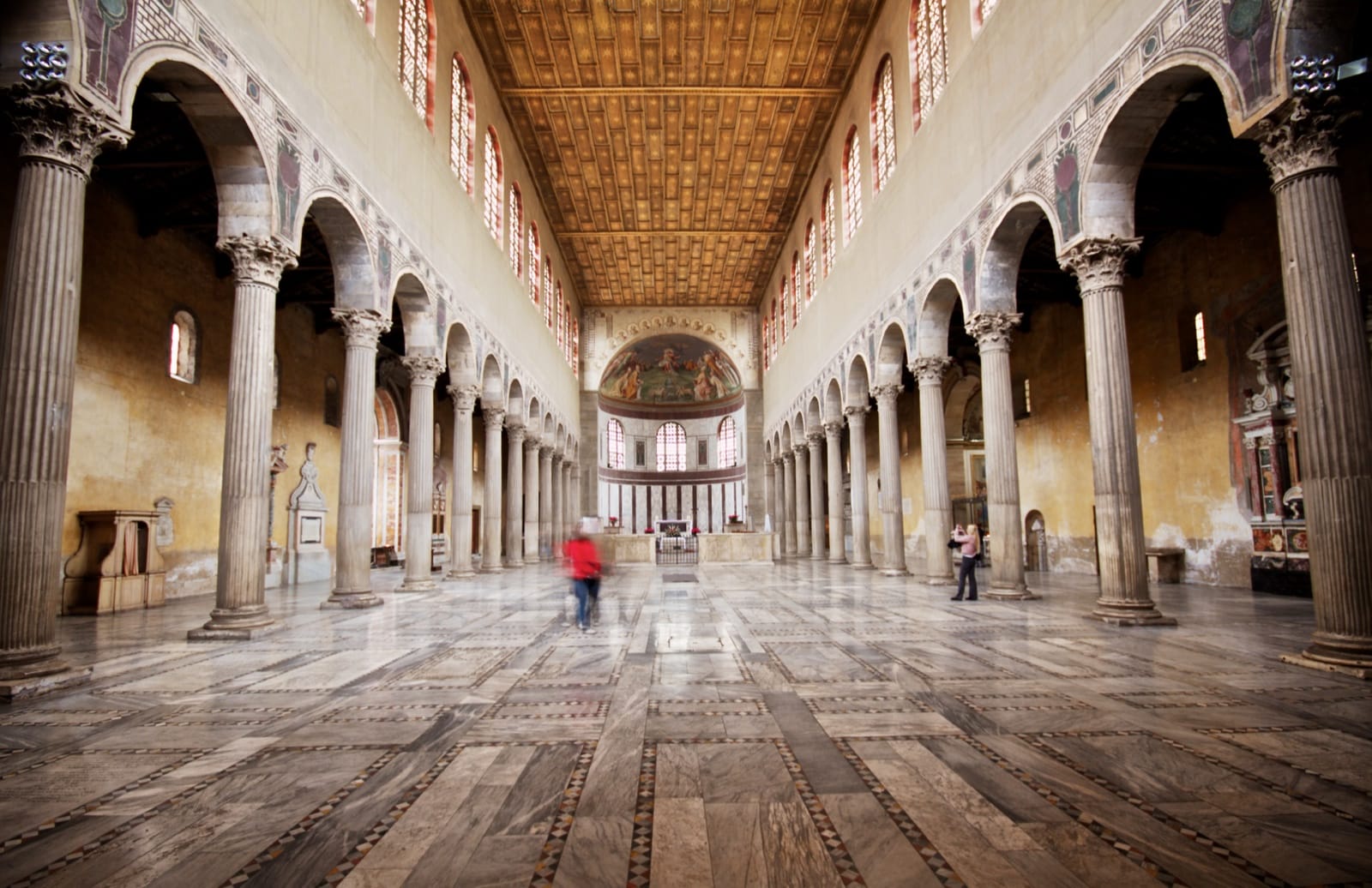
From the wonders of Volpetti, you can, as I did, climb the streets of the Aventine to Piranesi’s square and its miraculous keyhole. In this city, it’s always a matter of knowing which doors to push, which bells to ring, which keyholes to peer through – as demonstrated by the character Jep, in last year’s Oscar-winning film La Grande Bellezza. Further along a leafy avenue, you’ll find the colossal doors of Santa Sabina. Virtually empty most days, this is one of my favourite spaces in Rome; few places give such a powerful sense of the city’s antiquity. Built in the fifth century, the basilica’s bare, atmospheric interior feels more like Roman temple than Christian church. Columns of light slant down across the great void from the clerestory, where you’ll feel alone with the ghosts of the early martyrs lurking in the shadows.
For my part, I didn’t linger since I had an appointment in the Centro Storico, Rome’s finest Renaissance building. The Palazzo Farnese, now the French Embassy, is normally closed to the public but with the right number to call and a little advance booking, the doors swing open for a private tour. Upstairs is one of the greatest masterpieces in Rome, the Carracci Gallery, easily the peer of Michelangelo’s Sistine Chapel. But while the latter tells a Biblical story, Carracci has opted for indulgence. He has gone back to the pre-Christian gods, scantily dressed mythological figures who cavort across the ceiling and walls in what looks like a delighted orgy.
I then had lunch in the Chiostro del Bramante, close to Piazza Navona – not private but it feels secret. You enter the church through a narrow door, climb steep, unmarked stairs and emerge in a first-floor loggia where you find an elegant café. From the tables in the arches you gaze down on the perfect symmetries of the architect Bramante’s cloisters among the tumble and chaos of Roman rooftops.
Back on my trusty scooter, I sailed the length of the Lungotevere to the Circus Maximus, the venue for the ancient charioteers, whose driving habits still manifest themselves in modern Roman traffic. Beneath the oval race-track where Ben Hur once thundered up and down is an underground shrine, discovered in the 1930s – the Mithraeum of Circus Maximus. I had arranged a private visit, which is highly recommended.
Descending a stairwell in a nondescript modern building brought me to another door. I stepped across its threshold into the third century as suddenly as Alice slipped into Wonderland. Beneath ancient arches, the bare rooms were in a state of almost perfect preservation down to the inlaid marble patterns of the floor. They were once dedicated to the mysterious cult of Mithras. A splendid frieze depicted the ritual that took place here: the sacrifice of a bull. A chill emanated from the walls. Many metres below the Roman streets, I had entered another world.
And this is exactly why I came to Rome, to the pensione off the Piazza del Popolo, all those years ago – to enter another world.