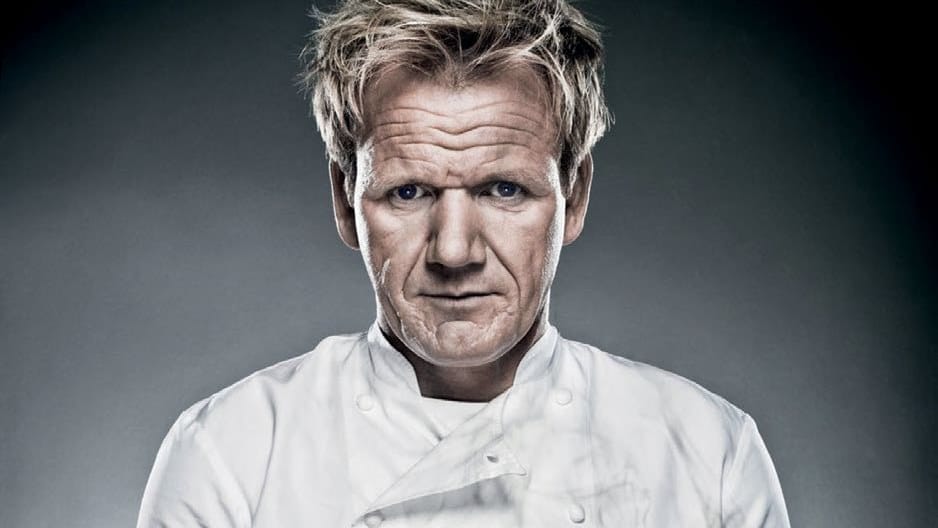
With restaurants in Europe, America, Japan and the Middle East, Gordon Ramsay is a busy man. But when we meet at the St. Regis in Doha, there’s no evidence of stress beyond his slightly furrowed brow. He’s in Qatar to promote two of his restaurants – Gordon Ramsay (for fine dining) and the more casual Opal – and looks relaxed and resplendent in chef’s whites. “I’m happy to be back,” he says, smiling.
Ramsay’s worldwide recognition means that wherever he goes, his presence creates a stir and Doha’s diners are no different – lunch and dinner at these two popular eateries being fully booked well in advance of his visit.
Notorious for his tantrums in the kitchen, the fearsome character I envisaged is in fact light-hearted and ready to banter. “Let’s deal with the elephant in the room,” he begins, referring to the closing of his restaurant Maze on The Pearl, Qatar’s lavish man-made island development. “Closing Maze was a smart move financially, for one obvious reason – the alcohol ban in 2011,” he says. “Things have to work commercially as well. Just like a magazine, if the readership disappears then you have to reinvent yourself.” Which is exactly what he did, by opening his restaurants in the prestigious St. Regis hotel in Doha a year later.
It could have been so different. Ramsay once dreamed of a career as a professional football player but after a knee injury forced him to hang up his boots in 1985, he enrolled in a hotel management course and soon developed an ambition to cook instead. He joined Maxim’s in London after graduating, followed by stints at Marco Pierre White’s Harveys as well as the brothers Michel and Albert Roux’s Le Gavroche. In 1990, still only in his twenties, he moved to France, to work under the likes of Joel Robuchon and Guy Savoy.
In 1993, he became part owner of Aubergine and in the three years under his stewardship, the London restaurant earned two Michelin stars. It was perhaps inevitable that Ramsay’s craving for prestige would lead him to go it alone. In 1998, he opened an eponymous restaurant, which earned three Michelin Stars within three years of opening. It was to mark the beginning of a long road of successful ventures around the world, cookery books, a television career and being decorated by the Queen.
Part of Ramsay’s success can be attributed to his ability to marry high-class cuisine with classic comfort food, a combination that appeals to a vast cross-section of diners. As do his restaurants, which vary from casual bistro-style to sumptuous fine dining. His books have also proven popular, reducing complex recipes to easy-to-follow steps for making homemade delights like porcini mushroom risotto and rich chocolate fondant.
The day we meet for brunch, some of the classic dishes on the menu are given the Ramsay makeover. We start with the quintessential Eggs Benedict, which bursts with flavour as the runny yoke mixes with his deliciously creamy Hollandaise. A staple it may be but it’s one of the best I’ve ever tasted. Next up is the famous Opal Wagyu burger. This perfectly formed mini-burger in a lightly toasted bun is thick and meaty, yet melts in the mouth. Topped with Comte cheese and served with hand-cut crispy chips and homemade ketchup, it is mouth-wateringly moreish and puts to shame those thin, limp and flavourless offerings touted by most burger chains. We finish with a traditional Eton Mess, which Ramsay perfects with meringue that’s sweet and crisp on the outside and chewy inside - the mixture of flavours and textures are exquisite.
With such an array of delicious dishes on offer, I’m curious as to what this infamous chef’s last meal of choice would be, were he ever in such a situation. “I’d keep it British with a prawn cocktail to start, Beef Wellington for main course, then a rich chocolate fondant with ice-cream for dessert,” he tells me.
Ramsay explains how he not only reviews his own restaurants but also constantly researches others – he eats out with his team at least 300 times a year, his presence always creating a furore. “I love sitting on the other side of the table but unfortunately, every time we walk into a restaurant nothing happens for an hour as they think we are there as a crew!”
Of course, he is well aware that his television fame from reality shows like Ramsay’s Kitchen Nightmares, coupled with his fondness for expletives, has helped make him a household name but he’s adamant that there’s much more than strong language to his shows. “I get sick to death of people judging me. I want the results of what I do to be judged,” he says. “It’s too easy to point fingers, ‘Oh look he’s swearing again and getting upset.’ Television is not a gimmick. I take that stuff seriously.”
He then tells me that he tries to stay grounded by balancing huge budget programmes like Hell’s Kitchen USA, with shows like Gordon Behind Bars, where he attempts to train prisoners to cook food. “I don’t get carried away with the Hollywood set. Yes, it’s LA and you are seen in 200 different countries but I’ll come off the set with a two-million dollar budget per episode and be happy to walk into a prison and do a cutting-edge documentary on how important it is for prisoners to work and give back to society.”
Juggling a television career with running restaurants is a compromise with which Ramsay seems content. “I like switching jackets, doing both. I don’t want to be chained to a stove and have a heart attack at 65 with no life,” he says, suddenly looking serious. He’s also quite realistic about the stresses of being a full-time chef. “I’ve done my time, it’s insanely high-pressured, it’s a young man’s game. I also want a life outside of the kitchen, I’m a father of four.”
Aware that the future of his own business and the restaurant industry in general, relies on chefs developing new techniques, Ramsay tells me that he’s created an apprentice scheme and that he’s enthusiastic about investing in new talent. Though he’s a harsh taskmaster, he speaks passionately about his staff. “People only get to see ‘Gordon Ramsay’ but if you could understand the wealth of talent underneath me, it’s incredible. We have a huge amount of money put aside for young chef development. It’s critical, not just for your business but for the future and where food is going.”
Despite Ramsay’s success, there have also been failures, including the closure of restaurants in South Africa, Canada and Australia. He’s understandably loath to dwell on these. “I think everyone has regrets, I’ve made some mistakes, but I’ve had a lot of success. I’m not very good at looking back, life is too short.”
I press for just one regret, one thing he would like to change. He looks at me seriously for a moment and then smiles, “To love vegetarians more,” he laughs. “That’s hard though, from a chef’s point of view.”
Ramsay may be labelled one of the most tempestuous chefs in the world but behind his tough persona is a humorous individual with infectious energy, who craves challenge. “I need to be busy, active and stay focused, I always need that one personal goal. Whether it’s a marathon, an Iron Man or opening an restaurant.”
Retirement is evidently a word this obsessive celebrity chef will never entertain. “I decided to go for the pinnacle, the responsibilities on my shoulders are immense but what the hell am I going to do if I stop?”