It’s an image we all know but few have seen with their own eyes. Earth’s vast curve, sheathed in swirling cloud, patterned with oceans and continents and ringed with the shimmering blue halo of the atmosphere that encases all that we know. Imagine looking out on the blackness of space, studded with glowing stars while you float weightlessly. Grainy footage of Neil Armstrong walking on the moon in 1969 created generations that dreamed of becoming astronauts. And in the next few years, rocket travel is expected to become a reality and open to anyone with one or two hundred thousand to burn.
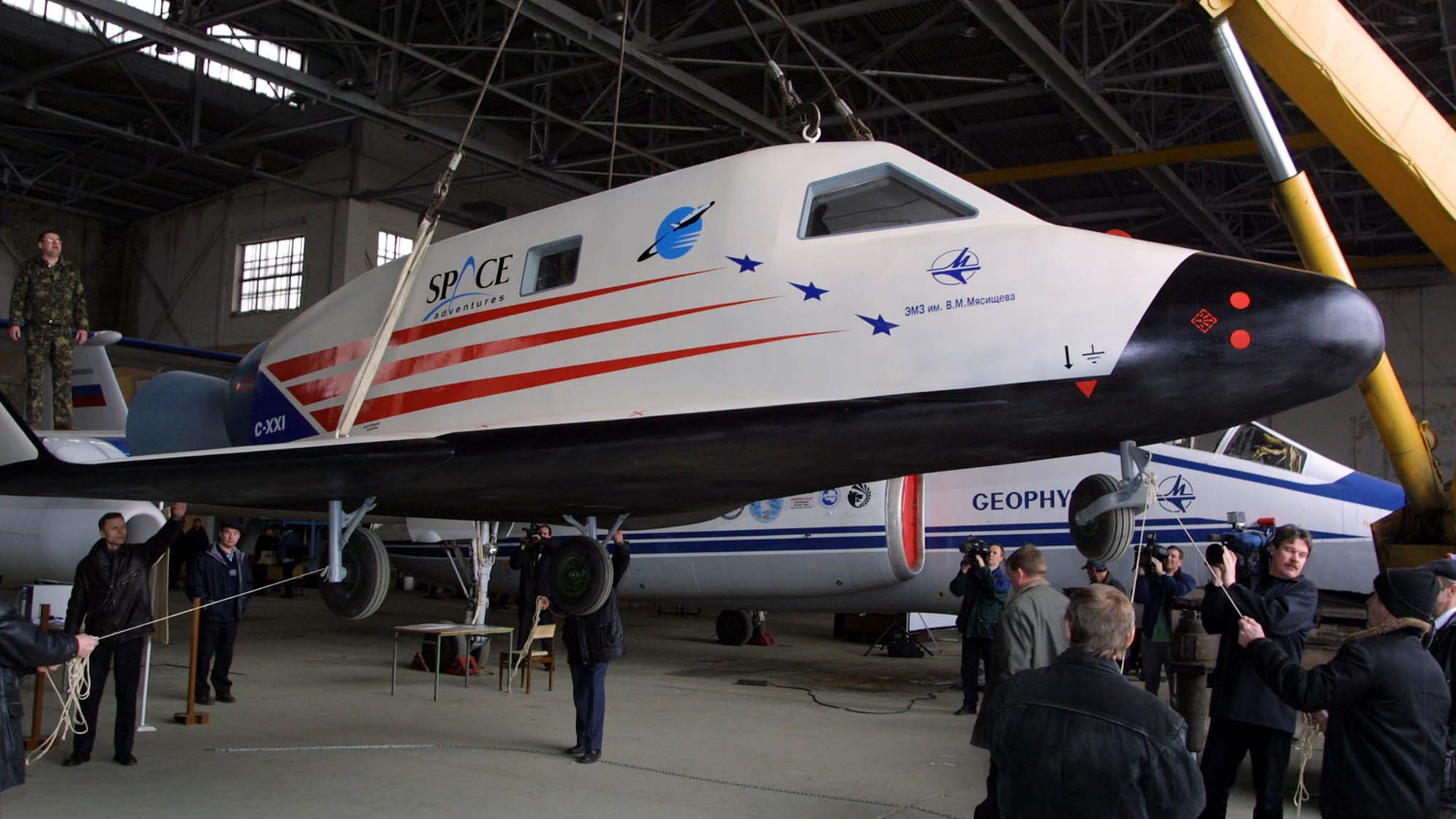
Space Adventures is currently the only company to offer orbital trips in partnership with the Russian state space agency. For 30 to 40 million USD, you can launch from Baikonur, Kazakhstan to join the bi-annual Soyuz spacecraft and hurtle around the earth at 28,000 kilometres an hour to rotate the crew at the International Space Station. For 45 to 55 million USD, you can also do a spacewalk from the ISS, becoming one of the few astronauts ever to float freely in space. Training is at the Yuri Gagarin Cosmonaut Centre in Star City, Russia.
The big one for space adventurers is the lunar mission. For 100 million USD, Space Adventures will arrange for private astronauts to ‘lead the first important manned space expedition of the 21st century’ to explore the far side of the moon and watch the awe-inspiring majesty of earthrise. Several private paying ‘tourists’ have been to the International Space Station, starting with New Yorker Dennis Tito and more recently Hungarian Charles Simonyi. The private astronauts have so far taken part in research programmes, learned Russian, trained for months and parted with about 20 to 25 million USD each.
But if spending millions of dollars and months of gruelling training are off the table, wait a few years. Space travel’s next wave will consist of three to four days of training at a spaceport and a two to three-hour jaunt to just above the official start of space, about 100 kilometres up, for about 200,000 USD. The starting pistol fired in 2004, when aviation pioneer Bert Rutan’s SpaceShipOne won the 10 million USD Ansari X prize. While introducing revolutionary technology, Rutan proved that private companies could launch humans into space. Space tourism, previously dismissed as the futuristic dream of space geeks, became a possibility. And the dollars started pouring in. “There’s a renaissance happening in private enterprise, in innovation in invention, in attitude, in excitement, in pioneering spirit,” says John Spencer, president of the US-based Space Tourism Society. “There’s a gold rush in the sky.”
A new generation of business and technology millionaires mean more potential customers looking for new thrills. “What changed is that we realised there was a market for suborbital flight,” says Eric Anderson, ceo of Space Adventures. Resorts on Mars may be years away, but people will pay to blast into sub-orbit for a few hours. By aiming lower, the industry looks set for lift-off.
Companies are pouring millions into the new industry. Just before SpaceShipOne’s winning flight, Rutan licensed the technology to entrepreneur and adventure junkie Sir Richard Branson and Virgin Galactic was born. Rutan’s company is building a fleet of SpaceShipTwos for Virgin in California and test flights are due to start next year. Blastoff is expected in late 2009.
Space Adventures – which propelled Simonyi and other tourists into orbit in partnership with Russia – and Virgin Galactic are all taking deposits. Amazon.com founder Jeff Bezos has also joined the race with his Blue Origin company, while Paypal founder Elon Musk’s Space X is developing rocket technology, as is Sprague Aeronautics. For the discerning astronaut, there is even an Orbital Outfitters to sell or loan you a spacesuit.
Galactic’s president, Will Whitehorn, confirmed that scientist and author of A Brief History of Time, Stephen Hawking is registered to make a rocket flight pending medical approval. Architect and design guru Philippe Starck is also listed to go up, and will design SpaceShipTwo’s interior. Other would-be space travellers reportedly include Brad Pitt, Sigourney Weaver and Moby. Space Adventures and Virgin Galactic say they have each taken around 200 deposits.
Virgin Galactic, which calls itself ‘the world’s first spaceline’, appears to be furthest ahead. Sub-orbital customers will have three days of pre-flight training and preparation at the spaceport, to learn about the spaceship, safety and coping with zero gravity. The flight will last two and a half hours. Rockets carrying six passengers and two crew members will set off once a week to start with, and Virgin expects about 80 percent of people to be fit to fly.
Rutan’s revolutionary spaceship – about the size of a corporate jet – rises to 60,000 feet in the same manner as a regular plane, rather than risking the expensive and accident-prone vertical blast-off. Then it detaches from the mother ship and the rocket motors fire, says Whitehorn. “They’ll go in six seconds to the speed of sound, within 30 seconds they’ll be doing about 5,000 kilometres per hour and after a few minutes they’ll be in space,” he says. In sci-fi style, the seats go flat into the floor of the cabin, the two pilots will cut the rockets so the ship coasts silently and the new-fledged astronauts float weightlessly for about seven minutes. “They’ll have panoramic views about 1,500 miles [2,400 kilometres] in each direction of the galaxy, the rest of the solar system and looking down the planet Earth below them,” he said.
Rutan’s genius is also in the re-entry, a risky moment for conventional rockets. SpaceShipTwo’s wings fold and it floats back into the atmosphere then becomes a glider for a gentle descent to landing. Laughing gas and rubber powers the craft (yes, really), which Virgin says is safer than the usual highly combustible fuel.
Spaceports are another buzzword in the race to develop New Space, as the fledgling private industry is known. Space Adventures has announced plans for a port in Ras Al-Khaimah, the northernmost Emirate in the UAE. “We believe the Middle East and Gulf is a logical hub for space tourism,” says Anderson. The port should open within two to three years. Whitehorn believes Virgin would consider flying out of an Emirates spaceport, but had no plans to build one. It is a forsaken spot in New Mexico that is likely to become the Cape Canaveral of private space travel, when Spaceport America opens in 2009-2010.
So will the suborbital trips be safe? Even Apollo 11’s Buzz Aldrin, the second man on the moon, said at an International Symposium on Personal Spaceflight last October that he would pass on private spaceflight. “The good news is that what we’ve learned from the aviation industry, which in the early days was extremely dangerous for passengers, is that we must have solid, realistic and logical regulations, extreme testing of these vehicles and systems and clearly state to people that this is dangerous, if you don’t want to take a risk, don’t do it,” Spencer says. Both Virgin Galactic and Space Adventures will test-flight their rockets about 100 times. Branson intends to be on the first flight with members of his family. “We wouldn’t be going into this unless we believed we could build a system that is safe,” says Whitehorn.
Given that the sky is no longer the limit; the new space racers are already setting their sights deeper into space. “In the long term we’d certainly like to create a system that’s capable of going orbital…and this system does look like it has the makings of that,” says Whitehorn. Las Vegas hotel magnate Robert Bigelow is developing a “space hotel” of inflatable modules using NASA technology, and hopes it will be floating in orbit and open to tourists and researchers by 2012. Getting to the private space station will be the challenge, and to that end Bigelow is offering a 50 million USD prize to any US company that can build a private space liner capable of ferrying people and cargo to orbit. So far, there have been no takers.
But Spencer reels off the possibilities: three-dimensional basketball, zero-gravity ballet, a dune buggy race around the moon, orbital cruise ships and space super-yachts. And that’s just the start. “The space tourism and space sports industry are a means to an end,” says Spencer. “The technology we develop, the capability for operations and the social perspective will stimulate large-scale, long-term exploration and colonisation, settlement beyond Earth, on the moon, on Mars and large space resorts and colonies,” he says.
Suborbital flight sounds tame in comparison.
Contacts
Space Adventures
Virginia, USA
Tel + 1 703 524 7172
HYPERLINK "http://www.spaceadventures.com" www.spaceadventures.com
Virgin Galactic
HYPERLINK "http://www.virgingalactic.com" www.virgingalactic.com