The minute we walked into the Bamboo Bar, I knew I’d been there before. Easing into my seat, I saw myself with my father as a child, sipping fruit juice through a straw, listening to the pianist play something vaguely Bacharach-ish and feeling all grown-up because I’d been allowed to stay up long past bedtime.
Until that moment, nothing about the Oriental Hotel - a cluster of towers from different eras centred on an old colonial-style building beside the oily waters of Bangkok’s Chao Phraya river- had seemed familiar. But given the enormous transformations of the last two decades, which have turned a formerly low-rise and charmingly decaying city into a metropolis of sky-trains, thrusting glass towers and constant bustle, perhaps that shouldn’t have come as a surprise. Plus, I’m fairly sure that the last time I’d sat there, I was only seven.
Once (and possibly still when my father and I would pass through Bangkok on our way back home to Taipei), the Oriental was one of the world’s most legendary hotels. Known for its flawless service and impeccable surroundings, it was the epitome of luxury as defined by an era that didn’t measure such hallmarks in acres of marble, carats of plating or the number of stars it could autonomously add to its ranking.
Like its sisters elsewhere – Shanghai’s Peace, London’s Waldorf, Paris’ Ritz, Beirut’s St. Georges – the Oriental was a byword for sophistication, a well-heeled home away from home. For the high-flying (colonial) crowd it attracted, there was nowhere else to stay.
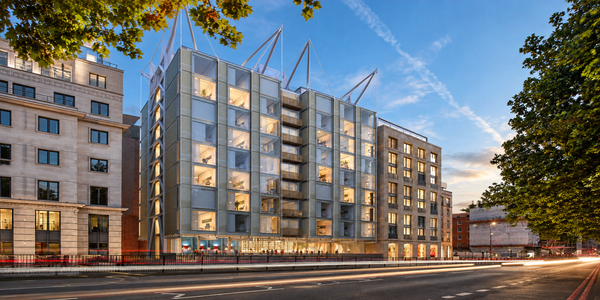
Well, perhaps until today. As I stand gazing out of the floor-to-ceiling windows that dominate the living room of my cool cream and pale blue corner suite on the 14th floor of the new Oriental Residence, I am seized by a sudden sensation best described as transplanted familiarity.
For you see, while the Residence and the hotel share the same name (and, I am learning, the same passion for service and excellence) and once shared the same logo (which now belongs to the Residence alone), they are entirely separate entities.
The story is less curious than it sounds. Both properties belong to the same family, the scions of one of Thailand’s largest industrial and trading companies, Italthai. While they still own part of the hotel, Italthai haven’t run it since 1974, which is when Hong Kong’s Mandarin Hotel bought a 49 per cent share of the Oriental, took over its management and in the process, laid the foundations for one of today’s best-known luxury chains, the Mandarin Oriental.
The Residence then, marks the return of both company and family to the luxury hospitality industry. So while the two establishments aren’t related, the family connection and thus, the link to a distinguished tradition, means that for someone who has experienced both Orientals, the Residence feels more like a continuation than a new venture – a kind of past forward, if you like.
It’s a thought that will reoccur several times over the course of the coming days, as I get to know the Residence but almost as quickly as it occurs this first time, it’s eclipsed as lightning crackles across the leaden skies. Beneath me, the cushiony canopies of Lumpini Park writhe silently in the wind, gusts rippling the ponds and waterways that snake through the gardens of the muscularly Modernist U.S. Embassy complex and its lacy, almost gingerbread neighbour, the traditional wooden villa housing the Dutch ambassador. The skies open and the wall of glittering condominiums, hotels and office towers on the far side of the green swathe blur and then disappear behind a curtain of rain.
The following morning, I beg off the tour the hotel has arranged. It’s not that the places they are going aren’t interesting, it’s just that I’ve seen them before and I’d rather poke around the hotel. So after a breakfast of Eggs Benedict in Café Claire, the Parisian-esque eatery we’d dined in the night before, I go for a wander.
Like the airy, spacious rooms, the vaulting lobby is the work of local interior design practice, Chanintr Living. It’s an essay in cream, white and light with discrete floral displays adding splashes of vivid colour. Decidedly contemporary, it’s laced with a hint of the colonial, a style in which Thailand, never having been colonised, feels freer to express. One wall is decorated with a collection of black and white photos of Bangkok, architectural sketches, the old Oriental’s crest and, as is usual in Thailand, a small photograph of the King, who is also present in each room, in the form of innocent and charmingly intimate watercolours by one of the country’s top illustrators, Chiratorn Chirapravati, which recall the wistful illustrations that once graced in children’s books. A comfortable and inviting place to sit reading in the morning, the lobby is perfect for observing the comings and goings of guests, residents and staff alike. As the Residence is a mix of hotel and condominium, the lobby is divided into two reception areas, so guests and residents are taken care of separately.
From here, the windows of Mandopop, the Residence’s modern Chinese restaurant – which I later discover is done out in snazzy shades of black and blue with flourishes of purple and gold – are visible. Presided over by Singaporean chef Adrian Chua, it’s staking its fame on a menu that includes a mix of cleverly plated Szechuan, Hakka and Cantonese classics (think shumai and pan-fried garoupa in spicy sauce) and dishes with a light Fusion twist, such as pan-seared foie gras, which comes served with crispy duck skin.
But that’s still to come. For now, I make my way up to the fourth floor Playdeck, where the gym, sauna, children’s playroom and pool, complete with curtained cabanas, awaits. I’ve timed it perfectly. The early morning swimmers are done and the daytime crowd is yet to appear. The air is hot and humid and the cool kiss of the water offers welcome respite.
Modern Bangkok’s attractions are decidedly consumer-oriented. The cramped, aromatic alleyways of Jatujak, Bangkok’s world-in-a-world is a sublime to the ridiculous weekend market that sells everything; animal, vegetable and mineral, designer jeans to design objects, tourist tat and not-for-export Buddhist antiques, kitsch and kitchen sink. Jatujak’s so large, there are maps (and apps) to aid navigation.
Then there are Bangkok’s Hi-So charms. This semi-mocking moniker (it’s a contraction of ‘High Society’) describes Thailand’s see-and-be-seen crowd which populates glossy, high-end malls like Gaysorn Plaza and the ground floor of the Siam Plaza, glossy tourist markets, like the newly-opened Asiatique, an endless succession of restaurants, boutiques and shops occupying refurbished river warehouses, glossy art galleries, like Warp 54 in the emerging cultural district off Charoen Krung and glossy rooftop restaurant/bars like Park Society, the Up&Above and Sirocco, now over a decade old but which remains popular for its catwalk ambiance and the jaw-dropping view it affords from its 63rd floor location.
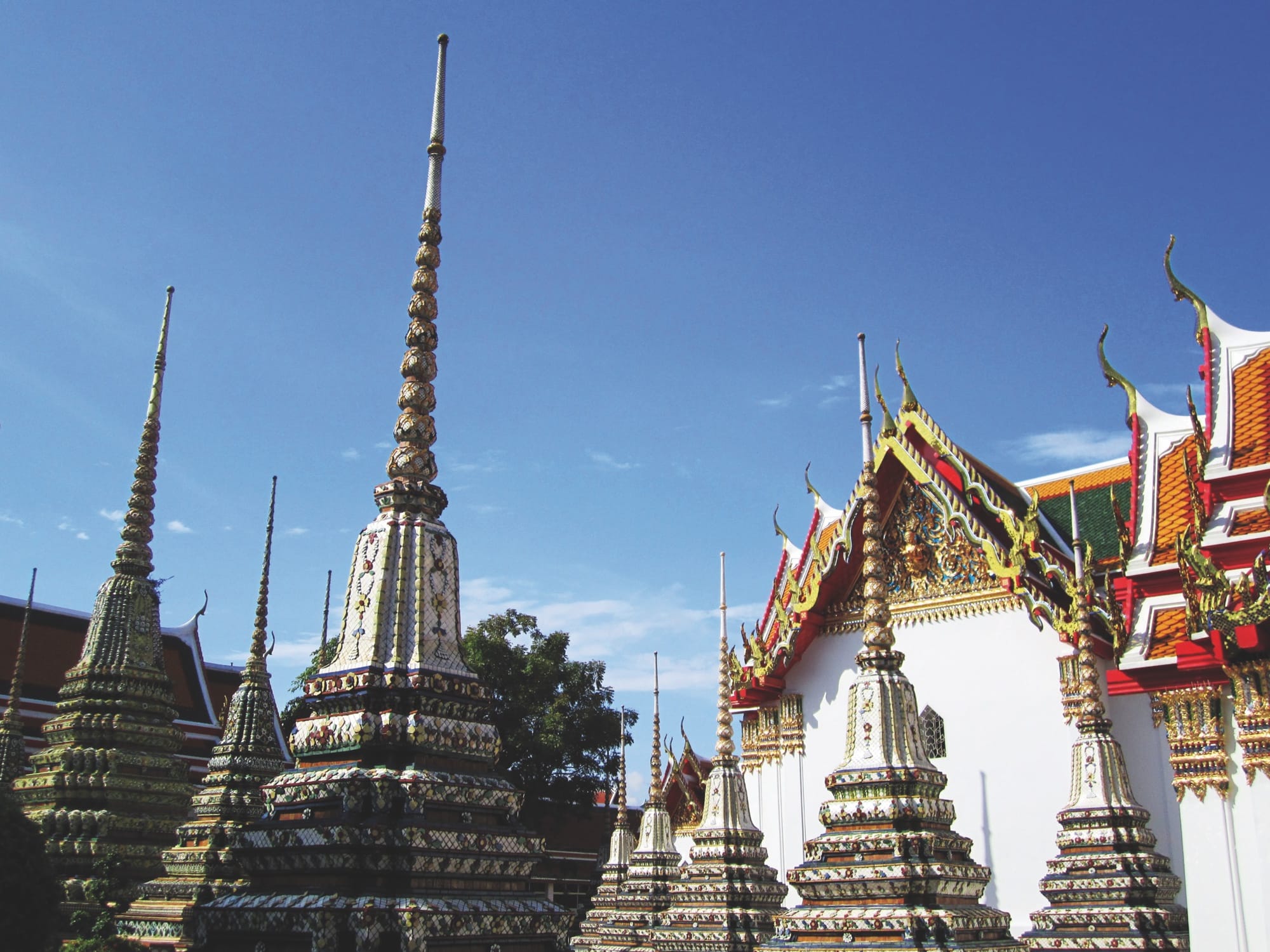
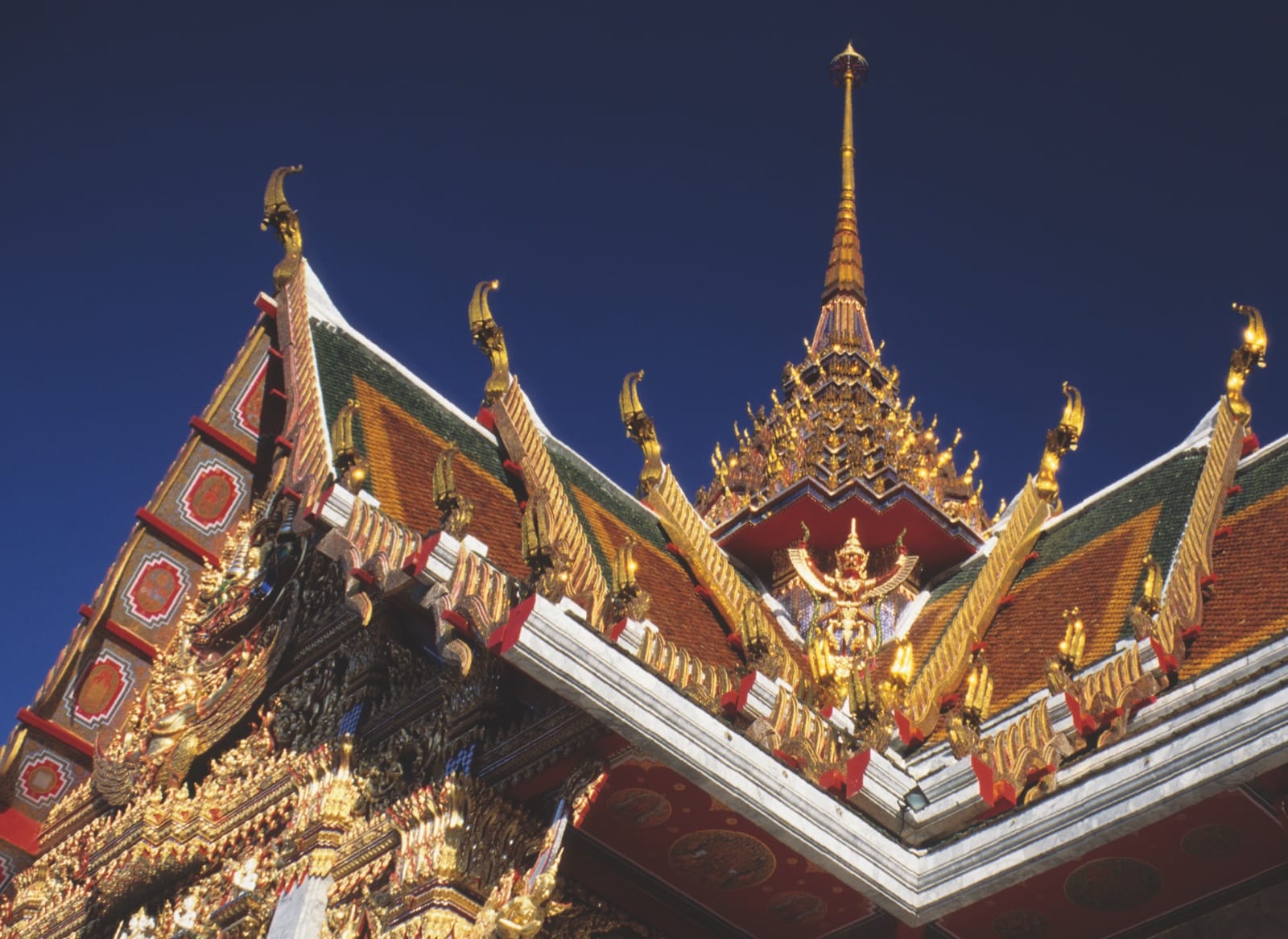
Personally, there are three things that I do on every visit. First, I take a riverboat and stop off somewhere along the way, sometimes at the improbably-tiled finials, flutes and towers of Wat Arun, a temple clad in a million shattered pieces of porcelain, with slippery steps awash in perspiring tourists or the Grand Palace, to wander agog through the gem-studded statues, kaleidoscopic murals and intricate carvings that decorate its every inch.
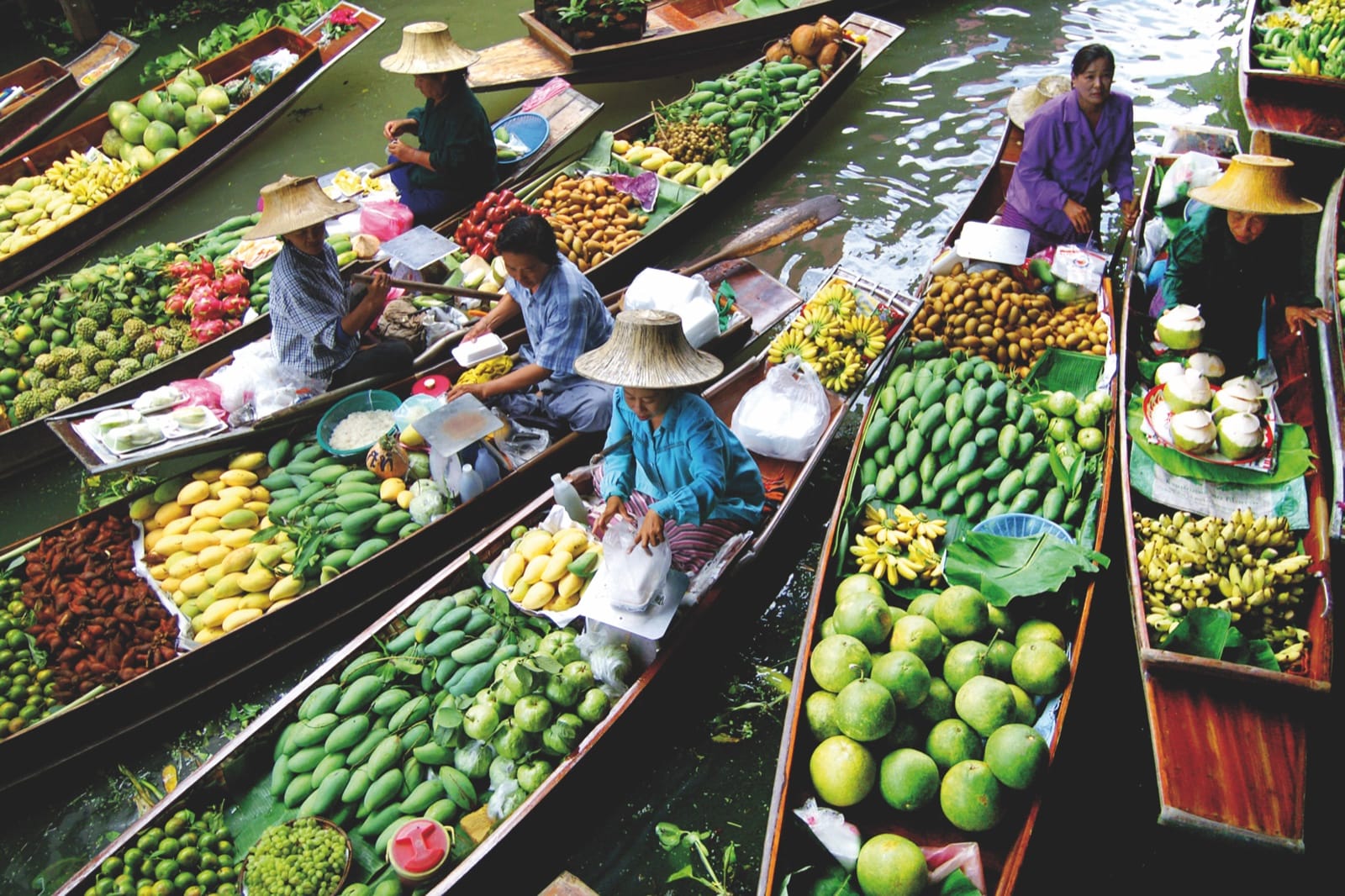
Second, I bounce around the city sampling as many of the tiny neighbourhood restaurants and street-stalls as I can. While ambiance may be lacking, the advantage of these places is that for a pittance, you get access to endless varieties of noodles, delicate soups, crisply fried plantains, barbecued seafood, fiery raw papaya salads, regional specialities and even international treats, like the succulent, crispy Cantonese roast duck I found on this trip, opposite the Darulabidin mosque at the intersection of Charoen Krung and Chan. As well as giving you the excuse to explore, prices and portions are manageable, meaning that you can flit from stall to stall, area to area, filling up as you go.
Finally, usually as Bangkok is beginning to overwhelm, I visit the Temple of the Emerald Buddha. Whether one is a believer or not, this is one of those (rare) places that exudes the kind of palpable spirituality one finds at sites like the Qubbat al-Sakhra, Lourdes or Haridwar, places sacred for so long that the air is pregnant with the prayers and imprecations of generations past. Almost always filled with worshippers, the temple still manages to radiate serenity. Most visitors sit gazing at the ethereally beautiful 2,000-year old statue of Buddha. Whether you follow suit or simply allow the cool, crepuscular atmosphere to work its magic, you will fall into reverie and when you awake, find that the world, your worries and every single vexation, has melted away.