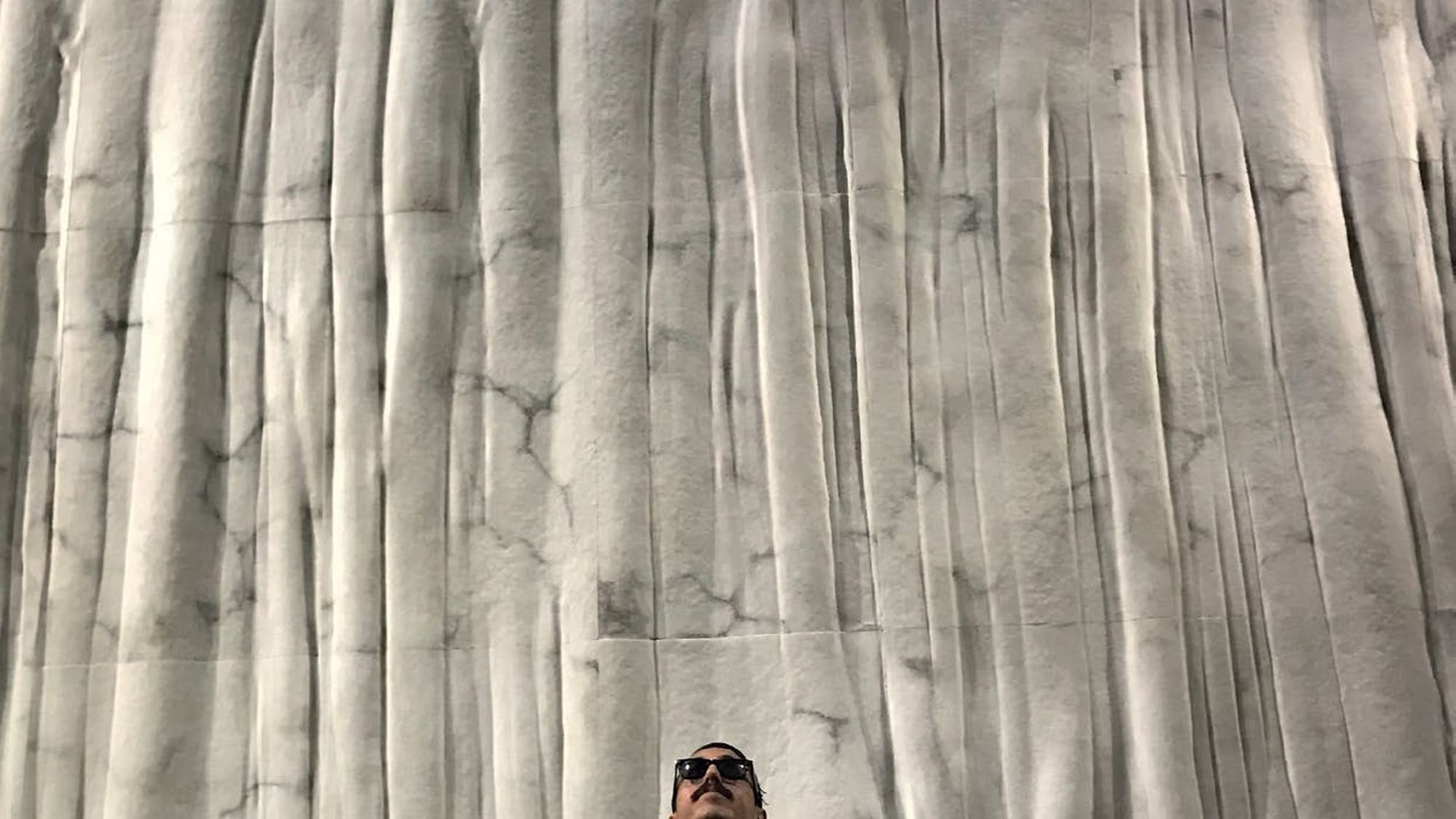
If there is one thing millennials hate, it is labels. Labels mean rigidity and inflexibility; they indicate stuffiness and the old-fashioned corporate nine-to-five monotony of their parents' generation. Rather than going to an office to do one specific job for years on end, young professionals are more likely to work on finite projects from home, coffee shops or co-working spaces. They do not want to be pigeonholed as engineers or entrepreneurs; they are makers.
While he is loath to admit it, the 30-year-old Nanu Al Hamad more or less fits the millennial mould. The closest shorthand description is that he is a Kuwaiti-American artist. He was born in Kuwait City and identifies as an Arab, despite a predilection for American culture cultivated during an upbringing in Southern California and years spent in Chicago and New York, yet he rejects the idea that his work falls within the traditional sphere of Arab art. Art, for Al Hamad, "doesn't need to look Arabic for it to be an Arabic design. I don't like geometric patterns or calligraphy, they are tacky to me. There's the idea that art coming from an Arab has to reflect a new Arab design, but I don't see it that way."
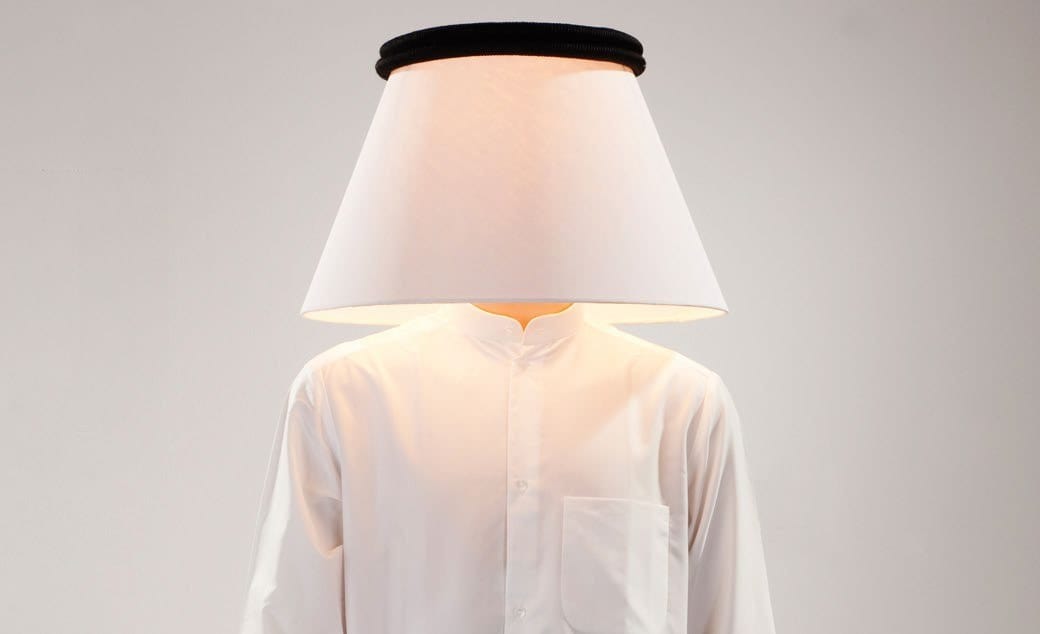
Indeed, of his large body of work, only one piece stands out as something you could point to as Arab. The whimsical Embarakiya lamp is made from a mannequin wearing a thobe, a traditional male garment of the Arabian peninsula. Instead of the man's head there is a lampshade that reflects the triangular shape of the draped kaffiyeh, topped with a black cord wrapped twice in imitation of the agal. It may be a work only an Arab could have made without facing accusations of provocation, but there is no profound deeper meaning. "I just thought it was funny," says the artist.
The sheer diversity of Al Hamad's work, as well as his development as an artist, is also in keeping with the stereotypical millennial resistance to specialisation. His career began with a focus on the aural experience, from music composition to architectural acoustics, managing the sound of a building through architectural materials. His graduation from university, though, coincided with the 2008 global financial crash, after which, he says, "no one was hiring in acoustics." Instead he accepted an assistantship at the Kuwait atelier of the architect Aziz Al Qatami.
Inspiration struck as he returned to the country his family had fled in the early 1990s, when he began designing furniture as the result of impulsively answering "yes, definitely" to a client who asked him to create a new office suite. "I had never designed furniture," Al Hamad laughs from his studio in Kuwait. "Aziz helped me though." His work made a splash, leading to commissions and a decision to focus solely, for a time, on furniture design. The short turnaround between design and realisation, compared with aural work, was a relief. "There's something about the immediate validity of doing furniture. The creation timeline is shorter, you see your idea come to fruition quickly as opposed to a building, or acoustics, which is intangible and so hard to see."
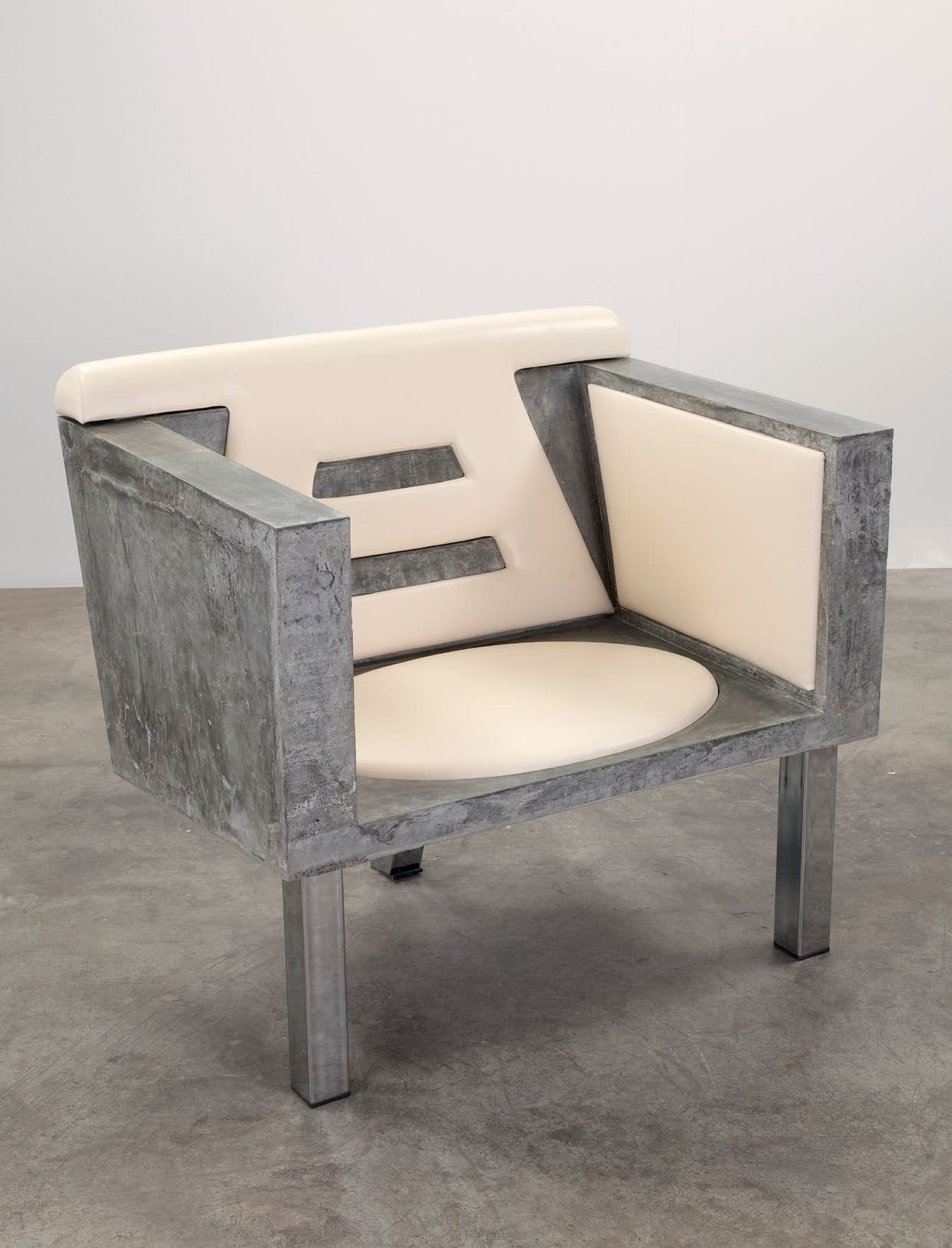
"The functionality of furniture is very important, the experiential tangibility. I like its interactivity, its usability as well as its deterioration. Furniture has a lifespan," he reflects. As interest grew, Al Hamad diversified and produced an entire collection of unique and surprising objects, ranging from sleek, futuristic office furniture to medical-paraphernalia-inspired bar accessories and nebulous objets d'art that elude easy description.
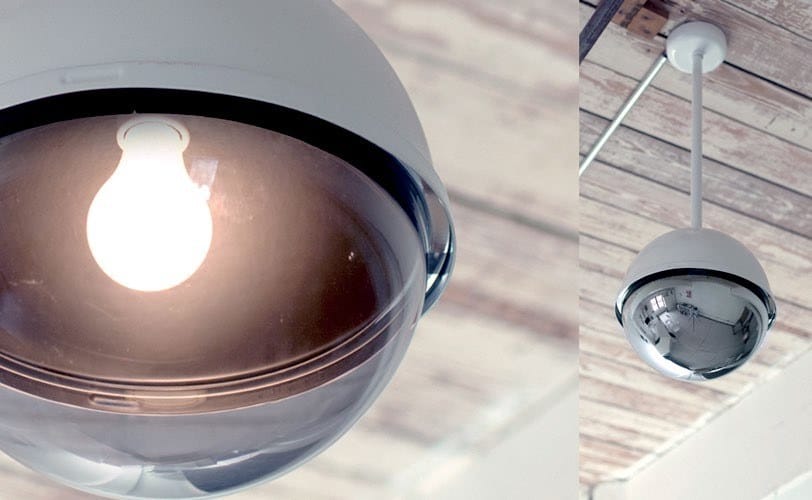
Bodily functions, and how society reckons with them, have become a theme as the work evolves. "I'm really into medical stuff at the moment," he says. "Everything made for the medical industry is extremely high grade and well developed, and considered so carefully, except for the final aesthetic. It's a product completely devoid of aesthetic consideration, but it ends up being beautiful to me." A running motif is the rolling IV stand: one iteration features a lamp, while a medical bag hangs from another, which the artist recommends filling with wine and using as a dispenser. Another lamp is a chair-shaped commode with a light in the receptacle.
There is an obvious element of shock value from which Al Hamad draws his creativity. "People aren't comforted when seeing something recontextualised. I like getting reactions, making people feel something before they use or sit on something, being surprised before they feel comfortable." Moving between Kuwait and the United States, he has developed a following in both worlds, as well as in the burgeoning arts hub of Dubai, where he has a standalone store and gallery representation. Not a furniture designer, nor a resident of any one country, and not a millennial, this year Al Hamad may have to get used to at least one label: successful.