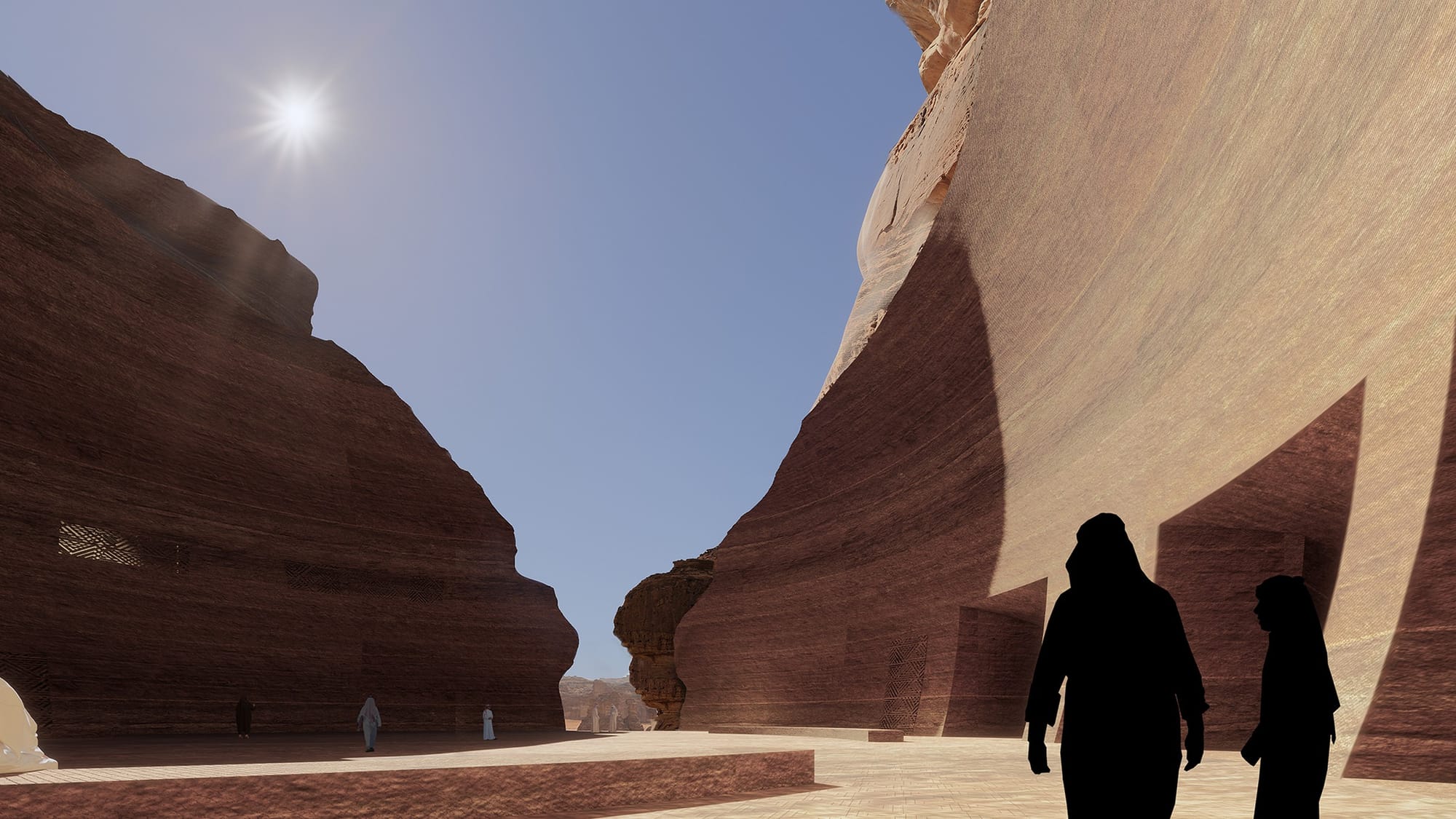
Designed by visionary French architect Jean Nouvel, the Sharaan Resort is currently taking shape in the Sharaan Nature Reserve of AlUla in north-west Saudi Arabia. AlUla is famous for its towering sandstone hills and heritage gems such as the archaeological site of Hegra, once an ancient city of the Nabataean Kingdom. The UNESCO World Heritage Site features more than 100 well-preserved tombs with elaborate façades cut into rocky outcrops, lending an indelible link to the past. Few landscapes in the world can compare, although parallels can be drawn with the ancient city of Petra, with its marvellous rock-cut monuments, and Lalibela's rock-hewn churches in Ethiopia.
Building on this rich history is the luxury subterranean resort of Sharaan by French starchitect Jean Nouvel. Expected to be complete by 2024, it will feature 40 guest suites and three resort villas, while a summit centre near the resort will house 14 private pavilions. For Nouvel, it was integral to honour AlUla's rich terrain, referring to the rocky formations carved by wind and time as "natural works of art".
"Building here is a real responsibility. The thing that's particular about Sharaan is that it's a virgin landscape. When you climb up a little bit you discover, through altimetry, that you get readings on the sky and on the horizon lines that are very different," Nouvel explains. "My philosophy is always to work with what's there. Building here means enhancing the site, it means giving it an added feature, it means providing it a visual focus, and it also means using all that's there. And I feel there's something here that needs revisiting, through a form of modernity, and this something is 'inhabiting the rock'."
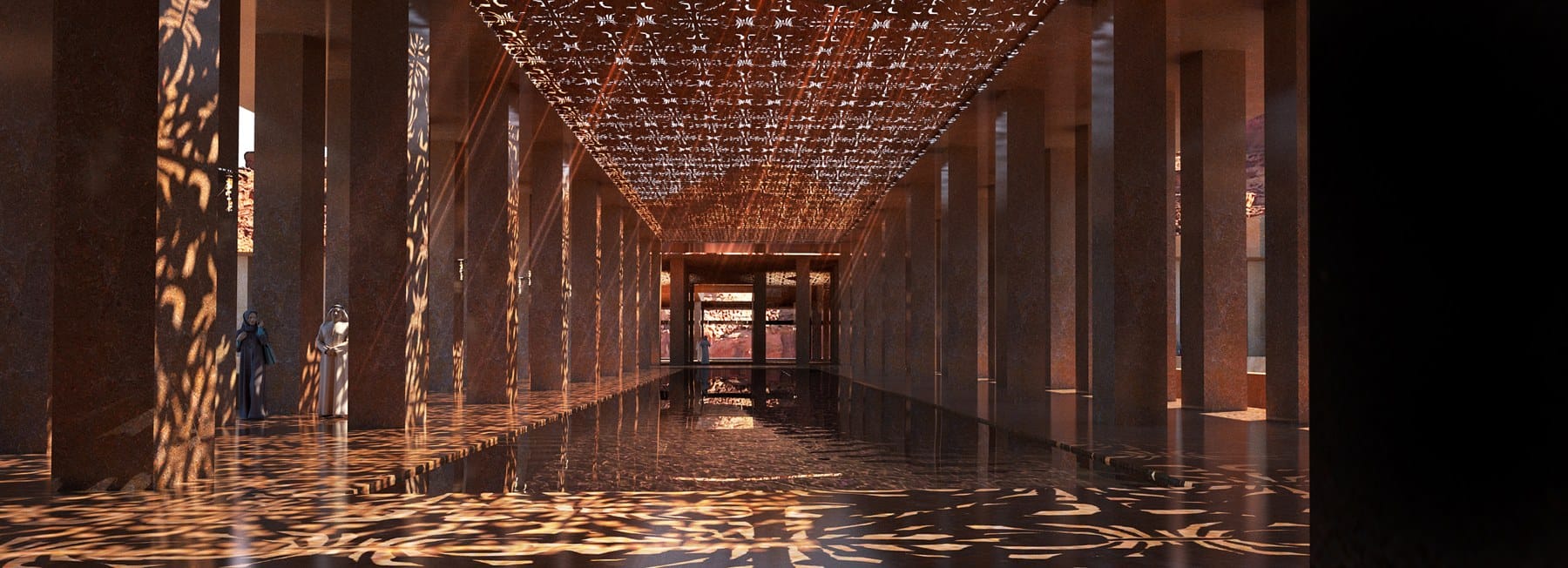
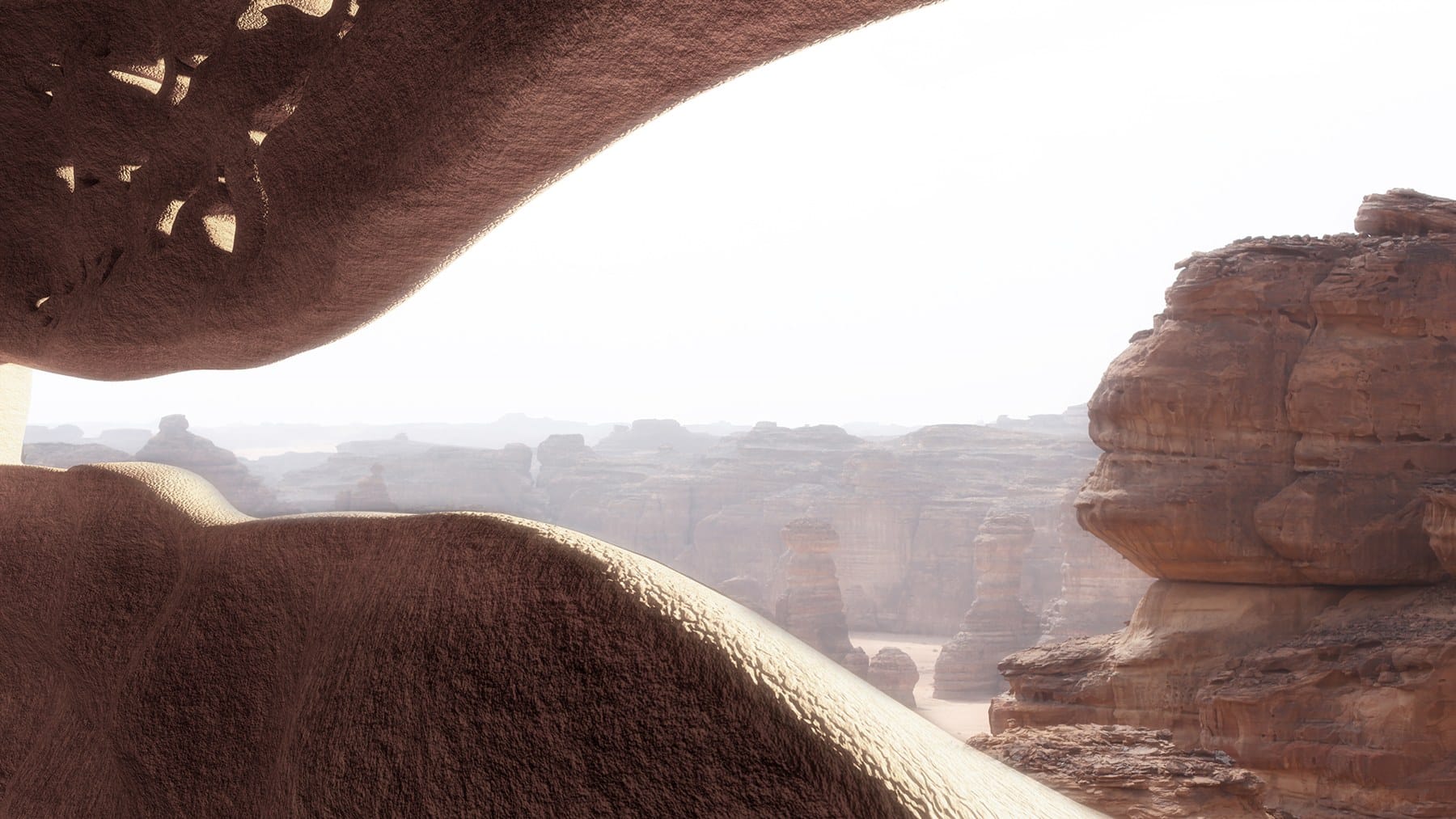
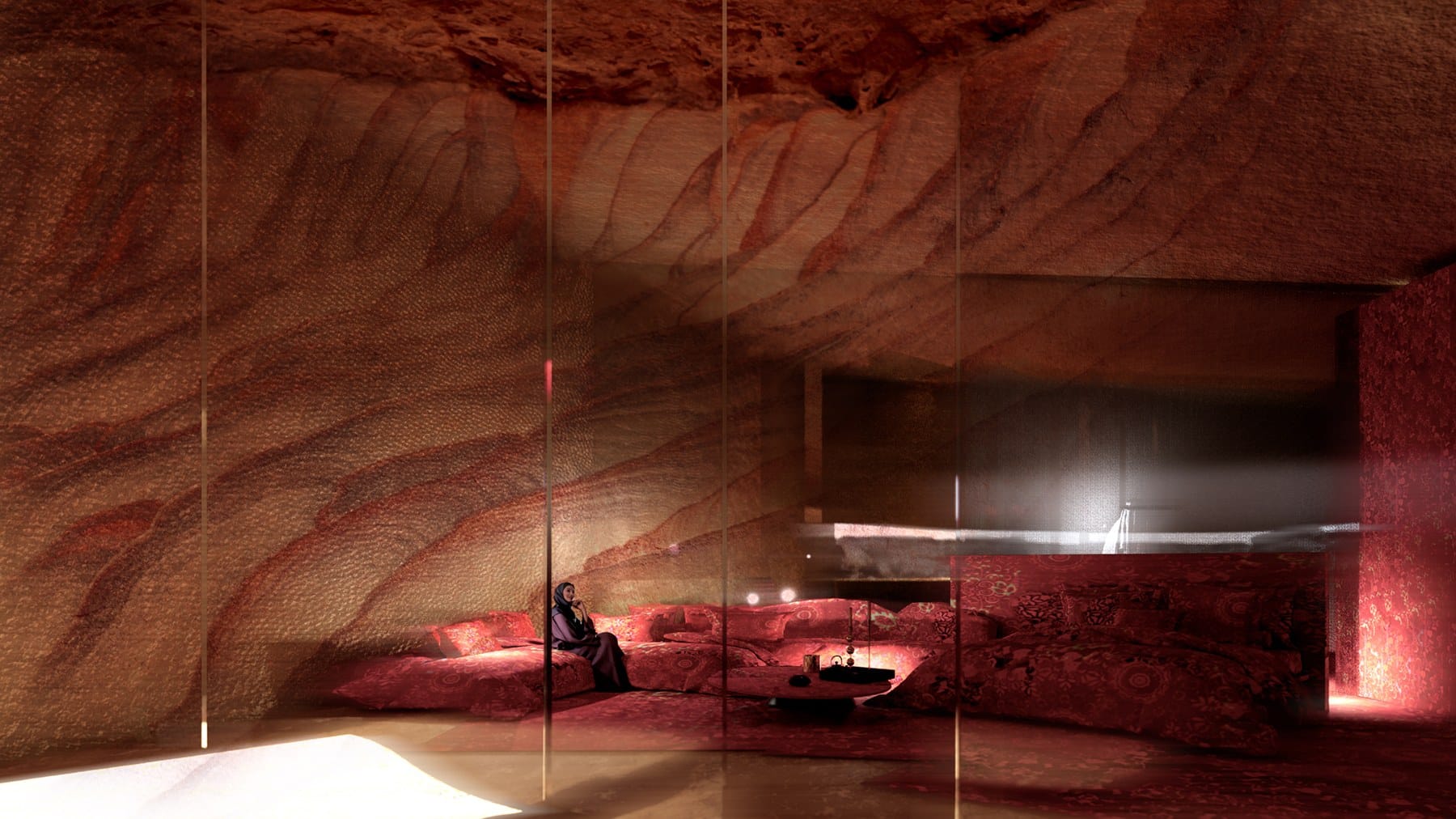
There really is nothing like it in the world: a hospitality project that's not built around rocks, but one that's actually hidden within. Its cave-like design cleverly enhances many of the elements that already exist, such as wind-blown motifs that give way to light and shadows, reminiscent of Arabesque mashrabiya, and internal rock formations that naturally frame picture-perfect views of the horizon ahead. The resort is centred around a massive 'lightwell' that welcomes sunrays to stream through the structure. Nouvel also wanted to create a very clear visual impact from the sky, so there is a large patio in the shape of a sphere that can be seen from above.
"It's something you discover there, like a big surprise," he adds. "Emotion is the basis of architecture and it's the basis of art. So, it's clear that on these rock formations, inside these particular rocks, there is something emotional going on. I feel that any building that might be built here without a direct connection to the rocky relief or to rock as matter, will disturb something. Here, the brief is to disturb, but in a different way, to disturb through emotion based on a poetic, philosophical, palpable material that's already there," he adds. "As soon as you go into a rock like this, into these particular depths, into the geography, into what amounts to a kind of entombment, you're there, in principle, for eternity."
Incredibly ambitious, Sharaan is set to become one of the most iconic pieces of architecture in the region, if not the world. With walls that are millennia old, it will continue to connect the natural and man-made worlds for centuries to come.