Chair Cross Check Armchair (1992)
Designer Frank Gehry
Price starts at 3,085 USD
Pritzker Prize-winning, LA based, architect Frank Gehry may be more recognised for his titanium-clad buildings such as the Guggenheim Museum in Bilbao, Spain, but he is equally adept at furniture design. The Cross Check Armchair is an inspired example of a visually striking design that explores the geometric formulations of space while offering full functionality. Named for his love of hockey and influenced by the woven construction of apple crates he had played on as a child, Gehry found that he could weave thin strips of wood into lightweight fluid forms. The ribbon-like designs transcended the conventions of style by focusing on the essential challenge of integrating material and structure. Indeed the chair requires no added structural support and is symbolic of Gehry’s innovative approach and mastery of engineering.
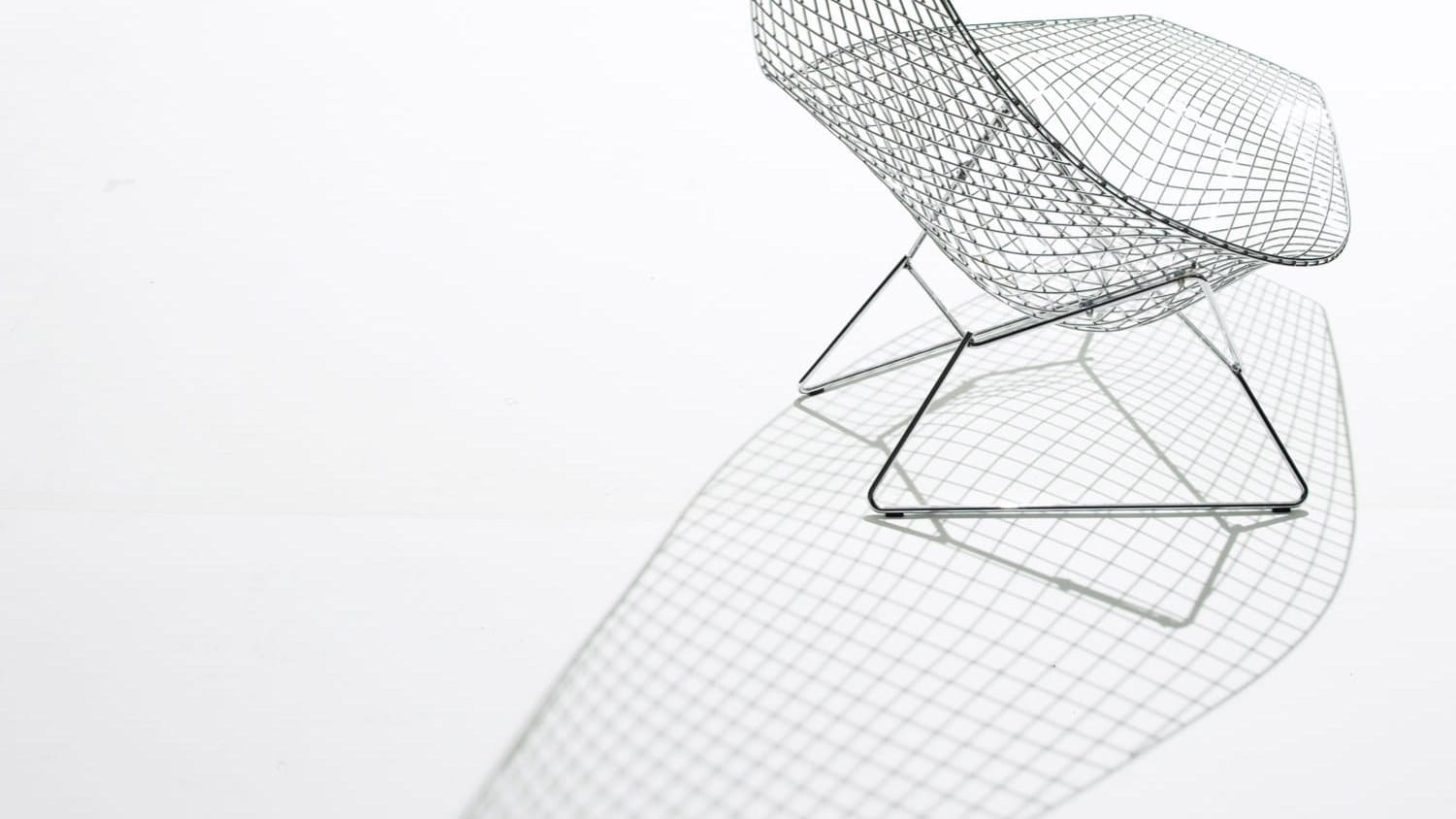
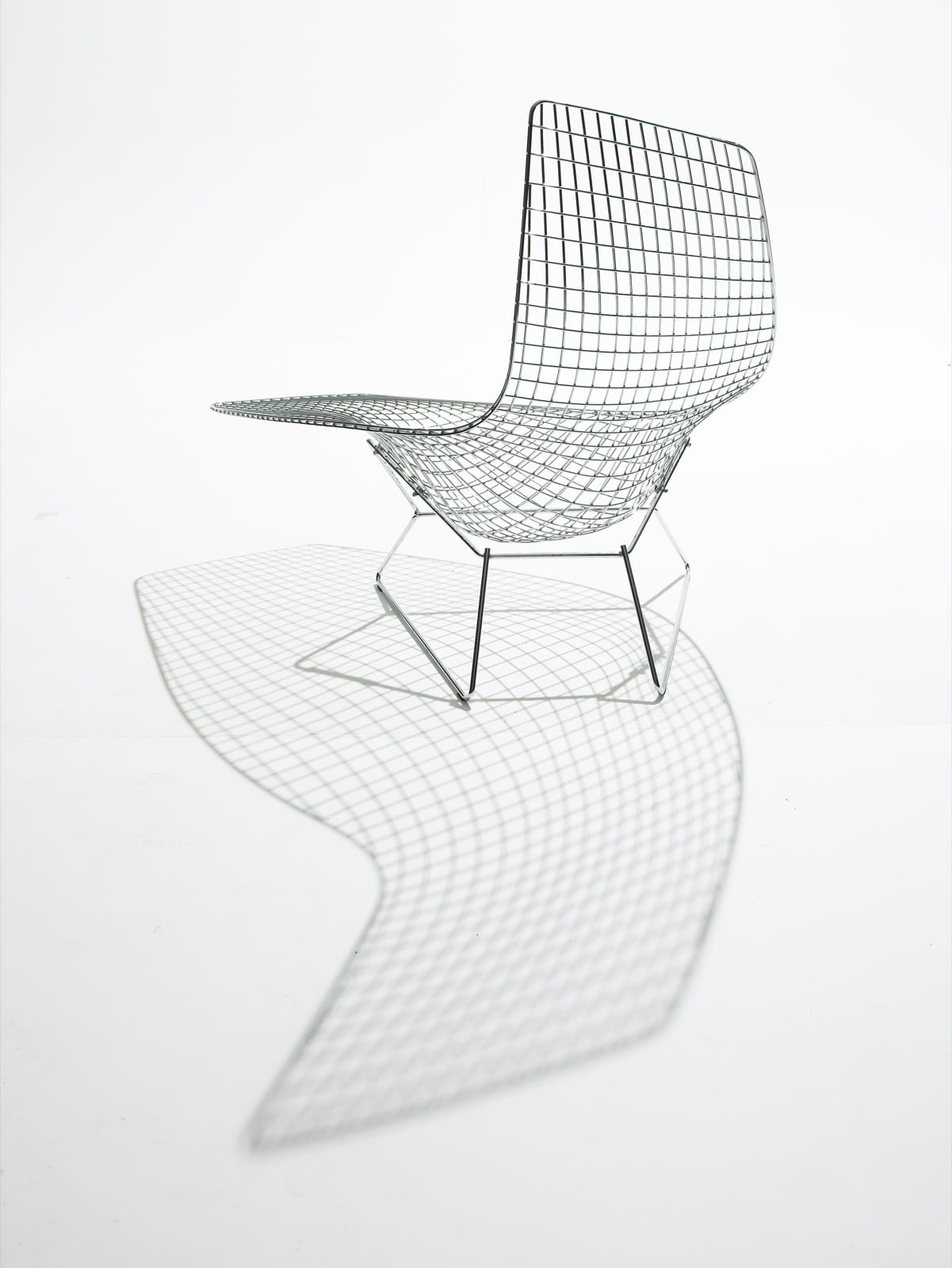
Chair Asymmetric chaise (1952)
Designer Harry Bertoia
Price starts at 4,985 USD
Harry Bertoia was an Italian-born artist and modern furniture designer that became a US citizen at the age of 31. Sculpted from bent metal rods, Bertoia designed the Asymmetric Chaise in the early 1950s, but never originally had it produced beyond prototypical form. Bertoia was fascinated by the relationship between form and space and is credited with having introduced industrial wire mesh to international furniture design. Delicate in appearance yet sturdy and durable, Bertoia stated that, "If you look at these chairs, they are mainly made of air, like sculpture. Space passes right through them." The organically-shaped wire-mesh Diamond and Bird chairs with their intricately textured details were so successful that, through the royalties he earned, the artist retired from furniture design and instead devoted himself entirely to sculpture for the rest of his life.
Chair Platner Lounge chair (1966)
Designer Warren Platner
Price starts at 3,675 USD
9/11 destroyed, American furniture and interior designer, Warren Platner’s most famous work, the ‘Windows on the World’. Located atop the North Tower of the World Trade Centre, this restaurant boasted the sensuous lines and dramatic design inspired by an ocean-liner. But one exuberant project aside, Platner was more recognised for his works of elegant understatement. Having devised the structure and production method for steel wire furniture, he launched a pioneering modernist collection of chairs, ottomans and tables. The harmonious forms of the collection were created by welding curved vertical steel wire rods to circular frames, producing a moiré effect that resembled a burnished sheaf of wheat. The intricacies were so great that some rods of steel require as many as a thousand welds. But it remains a breathtaking and enduring icon of 1960s Modernism.
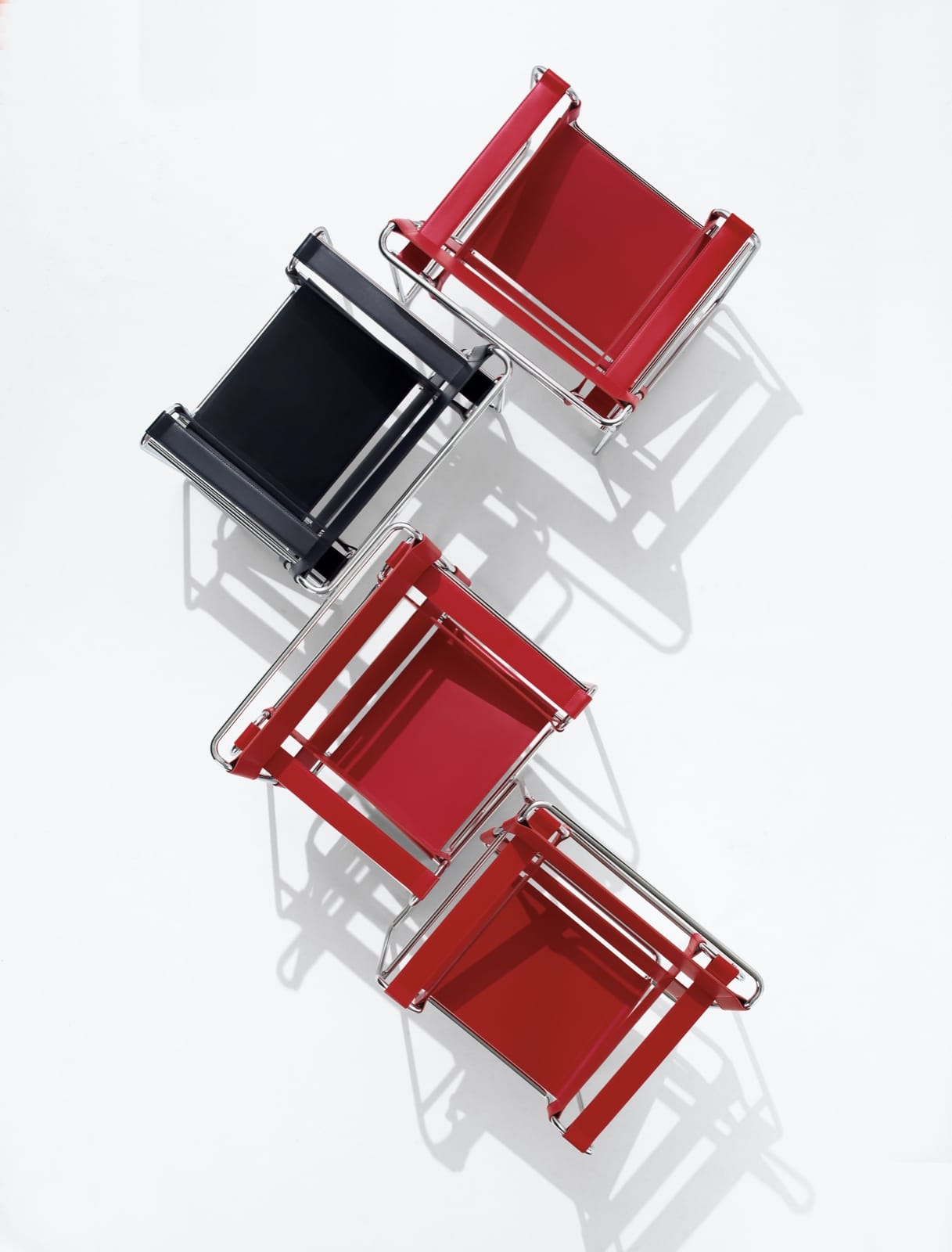
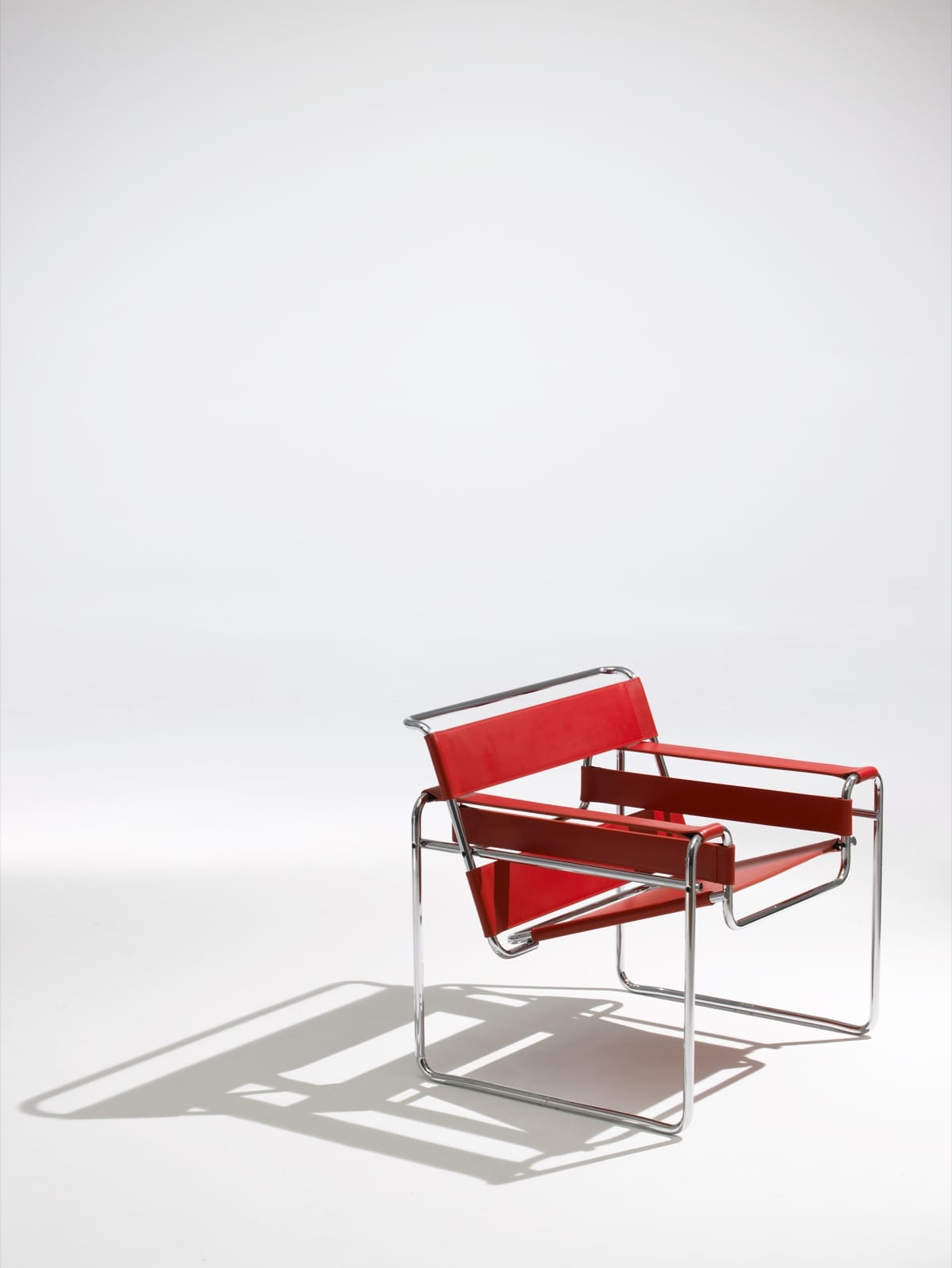
Chair Wassily chair (1925)
Designer Marcel Breuer
Price starts at 1,800 USD
Hungarian designer, Marcel Breuer's Wassily chair is arguably the most famous product of the legendary German design school, Bauhaus. Breuer, a founding father of Modernism, was in fact the head of the school’s cabinet-making workshop when he designed this chair. Originally named the B3, it was later renamed after Wassily Kandinsky, who as another member of the Bauhaus faculty, had received the first reproduction after having admired it. The Wassily is essentially a stripped down club armchair that relies on the tensile properties of steel. With its clearly articulated planes of stretched thick cowhide leather for seat, back rest, and arms, set within a light standard-strength tubular steel frame, it almost resembled a piece of Constructivist sculpture. So simple in form, yet comfortable, it is exemplary in its use of the Bauhaus design philosophy.
Chair Barcelona chair (1929)
Designer Ludwig Mies van der Rohe
Price starts at 4,050 USD
Though Mies van der Rohe had been a member of the faculty at Bauhaus, he went against the grain when designing the Barcelona chair. Bauhaus designers claimed to want functional, mass-produced furniture for the working class. But this model was expensive to make and not at all easy to mass-produce. The grounds were that it was custom made for the King and Queen of Spain during the 1929 World Exposition in Barcelona. The result was a serenity of line and refinement of proportion so characteristic of the designer’s highly disciplined architecture. Supported on each side by two chrome-plated, flat steel bars, this chair will be remembered best for how it showed the world the manner in which negative space can be used to transform a functional item into sculpture.
[Low res images are in apple folder. If Knoll finally get around to giving us high res ones then may be we will add a sentence as a footnote: All the chairs mentioned are available from www.knoll.com]