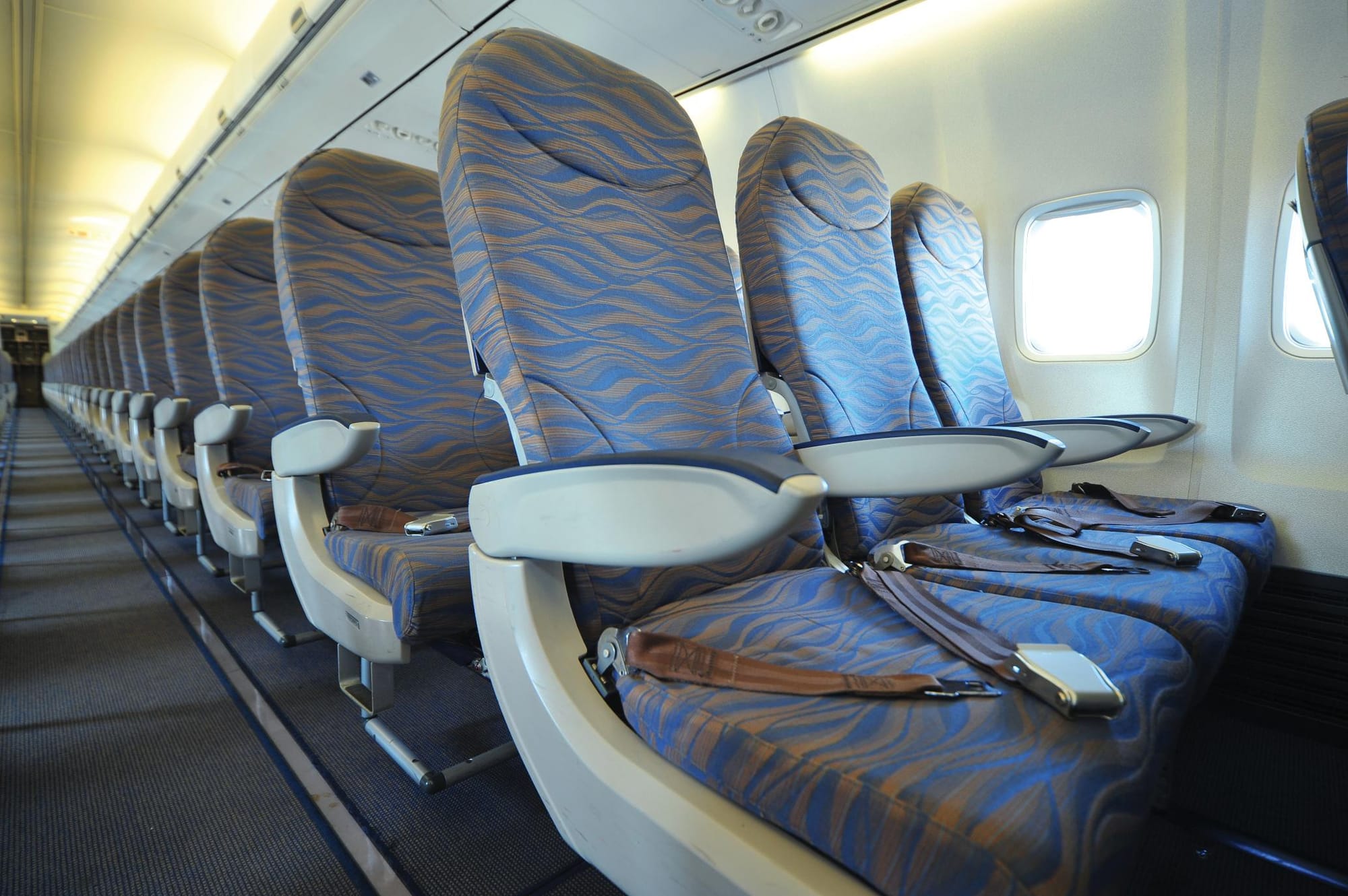
Over the past few years the region has seen an increase in the number of budget carriers. Mostly operating out of Saudi Arabia and the UAE, these airlines democratised Middle Eastern travel making it more affordable, safer, more efficient and therefore making international travel far more widespread among our growing populations. In turn, by reducing the cost of air travel, sometimes dramatically, companies like Flydubai, Sama, Air Arabia and Jazeera Airways have, between them, carved up a significant share of the regional aviation market. It’s no wonder tales of hard times among the region’s legacy carriers are heard so often.
The demand for low-cost airlines is clearly present, with evidence in the number of regionally owned airlines (previously mentioned) as well as the foreign firms, such as Air India Express and Smart Wings. As Ghaith Al Ghaith, ceo of Flydubai told Bespoke, “There is no doubt about the market for all low-cost carriers in the region.” The former Emirates senior executive Al Ghaith has overseen the transformation of state-owned Flydubai shortly after it was established two years ago. It was originally planned to operate from the new Al Maktoum International Airport at Jebel Ali, but with lengthy delays in completing that new airport, Flydubai based itself at Dubai's current DXB International Airport with a current staff headcount of over 500 including 220 cabin-crew and 120 pilots.
“We live in the middle of almost three billion people,” says Al Ghaith. “And if you can offer them this easy, low-cost way to fly, then most people will travel more.” He has a point, when choosing between the, sometimes outrageous, prices of a legacy airline and those of a budget carrier, there’s often little to discuss. But, the question is, how do Flydubai and its competitors offer such low prices?
The model is, invariably, a simple one. Amid these harsh economic times, it’s true that the prevailing concern of many travellers is to save money, but this doesn’t mean that an airline can afford to cut corners. Aware of the need to run safe, clean, modern aircraft, the companies explored how to reduce overheads and other costs without compromising quality. A cursory look at the airline industry highlights two major areas where savings can be made: overheads and fuel.
Flydubai seems to be guided by an overarching sense of simplicity in everything it does. To address the most important questions first: There are no cutbacks made in the realms of safety or levels of service. There are, however, great savings to be made in slashing overheads. Flydubai has attacked the issue from a number of angles. Unusually, for the airline industry, the company only runs one type of aircraft, Boeing 737-800NG’s; One type of aircraft means that fewer components need to be warehoused, there’s no need to train staff in diverse aircraft types and what applies to one aircraft applies to all. Economies of scale begin to open up when you’re equipping an entire fleet along the same lines and when any practice or approach can be applied to all your aircraft.
A further advance, and one that’s gathering pace in the region, is the concept of online check-in. By reducing the amount of paperwork, time and effort involved in checking passengers in, Flydubai is able to streamline the process and reduce costs. Surprisingly enough, it doesn’t seem that online check-in is particularly popular in the region, however with the expansion of budget carriers that’s bound to change.
The fuel is an altogether more difficult issue. However, there are ways to reduce costs, but as with so many other things, you reap what you sow and the investments are considerable. Flydubai’s 737s are NG’s meaning ‘Next Generation’ and, just as any vehicle becomes less efficient with age, new airliners are streets ahead of older models. The airline is currently operating one of the youngest fleets in the world, meaning that its fuel savings are considerable. The company endeavours to keep its jets in the sky as often as possible by operating efficient, smooth post-flight cleaning service, check-in and boarding procedures. All this means that the aircraft are flying as many hours as possible – a tangible benefit of owning new aircraft you might suspect.
Some of the most impressive savings have come about through the embrace of the latest aeronautical technology. Through the employment of winglets Flydubai has realised impressive savings. Winglets are an extension to the aircraft’s wing that, in the case of the airline’s 737s, add an extra 1.4 metres to the wingspan, and are aerodynamically designed to save up to four per cent more fuel than standard set ups. Typically, a winglet-equipped aircraft can use three per cent less power on take-off, and six per cent less when cruising. This saves Flydubai, and by extension the customer, the cost of between 75,000 and 125,000 gallons of fuel per aircraft per year.
The final area of saving is left to the customers themselves. Flydubai’s model is based upon offering the minimum basic service to their passengers and then allowing them to add on additional services in a modular fashion. If you want to put luggage in the hold, select your seat, or eat onboard, all that will cost you extra. It might sound all a little draconian, but, at the end of the day, passengers are voting with their backsides and they’re filling the seats time and time again. This low-budget, but tailored, service is wildly popular in Europe and the US and is quickly catching on in the Middle East.
The minimalist approach has certainly found a niche, since the first flight on June 1st, 2009 a network of 21 destinations is being strategically built. According to Al Gaith, “This makes Flydubai possibly the fastest-growing start-up airline ever.” The stats are impressive; the airline has carried approximately 750,000 passengers to date, accounting for 8,000 flights. Since launching its flights to Beirut and Amman in the summer of last year, traffic on the former route has increased by 33 per cent, while the latter has grown by 40 per cent. With such strong numbers in its first year of operation, the budget carrier is undeniably making an impact.
Not only are we seeing volume, but the efficiency and timing of it all are something to ponder. In the first year of business the airline operated over 8,000 flights and 85 per cent of those departed on time. On a recent business trip to the UK, this journalist took six flights, all on legacy airlines: four of them were late. As a regular flyer, there’s nothing more irritating than delays. Flydubai’s figures are all the more impressive when you consider that the company is only a year old. If a budget carrier can not only save us money, but get us to our destination quicker, then they begin to be a serious option.
The recent recession put the fear of God into the airline industry the world over. Bailouts were required by some of the most famous, established carriers in the world and a good few were in serious danger for quite some time. While the low-cost sector was by no means unaffected, it is perhaps, fair to say that they were the primary beneficiaries of the situation. “I cannot say that Flydubai was not affected at all, but at the same time I believe we had an added advantage. Low-cost airlines have lower operating costs than the legacy carriers and can therefore offer lower prices,” said Al Gaith. It’s hardly rocket science, but it’s an important point. On-line check-in, baggage restrictions and paid-for snacks secured the future of the budget carriers at a time when their more up-market rivals were floundering.
On the back of this robust performance in the face of economic woes, Flydubai is doing very well, growing despite the climate. “Our promise is to make travel a little less complex, less stressful and a little less expensive,” says Al Gaith. Mission accomplished. But Dubai’s budget flagship has grander plans on the table and expansion is in the offing, “We have a busy year ahead of us. Over the next few months we will take delivery of a further five aircraft to allow us to serve more than 25 destinations in total. We plan to achieve our goals and will do this by further expanding our fleet over the next five years,” Al Gaith said. At a time when the majority of companies are tightening their belt, Flydubai is expanding at a rate of knots. It takes a certain nerve to buck the trend, but there are sound reasons for their confidence.
Flydubai isn’t a new concept, it isn’t even new to the Middle East, in fact it isn’t revolutionary in any way, however it’s sticking faithfully to tried-and-tested models that emerged in Europe during the mid-1990s and it’s doing so better than the competition. The company has stuck to the bare-bones approach and expanded aggressively despite (perhaps because of) adverse economic conditions and is reaping the rewards. A regional, low-cost airline with 25 destinations in the next year? That’s something to champion.
www.flydubai.com