Pierpaolo Piccioli, you have a wife, children, a dog. Your work is very glamorous but you don’t even live in Rome. What kind of life do you live?
I don’t want to change my simple life in Nettuno, the place where my wife Simona and I grew up, and the place I wanted to escape from when I was a kid. Our children grow up there and it’s where we feel most comfortable. As a kid in Nettuno I dreamed of couture, fashion, even cinema, and it all looked so far away. I was looking at couture through images, not in reality. When I saw the reality of the clothes, I understood that when you see an image there is always a projection of yourself, and I wanted to keep my identity in that projection. I love my job and I want to be faithful to who I am, because that’s very important.
Does being Creative Director of Valentino mean that you are not only the stylist, but oversee all that is created inside the Maison Valentino?
As a Creative Director, you are the designer of the clothes, accessories and so on, but you are also responsible for the brand’s values. Collections become the keys with which you can deliver those values, ones that hopefully you believe in too. That’s why Valentino is my place. It’s where I can easily talk about my aesthetic and my vision. At the end of the day, our job is about witnessing our time through our vision of beauty.
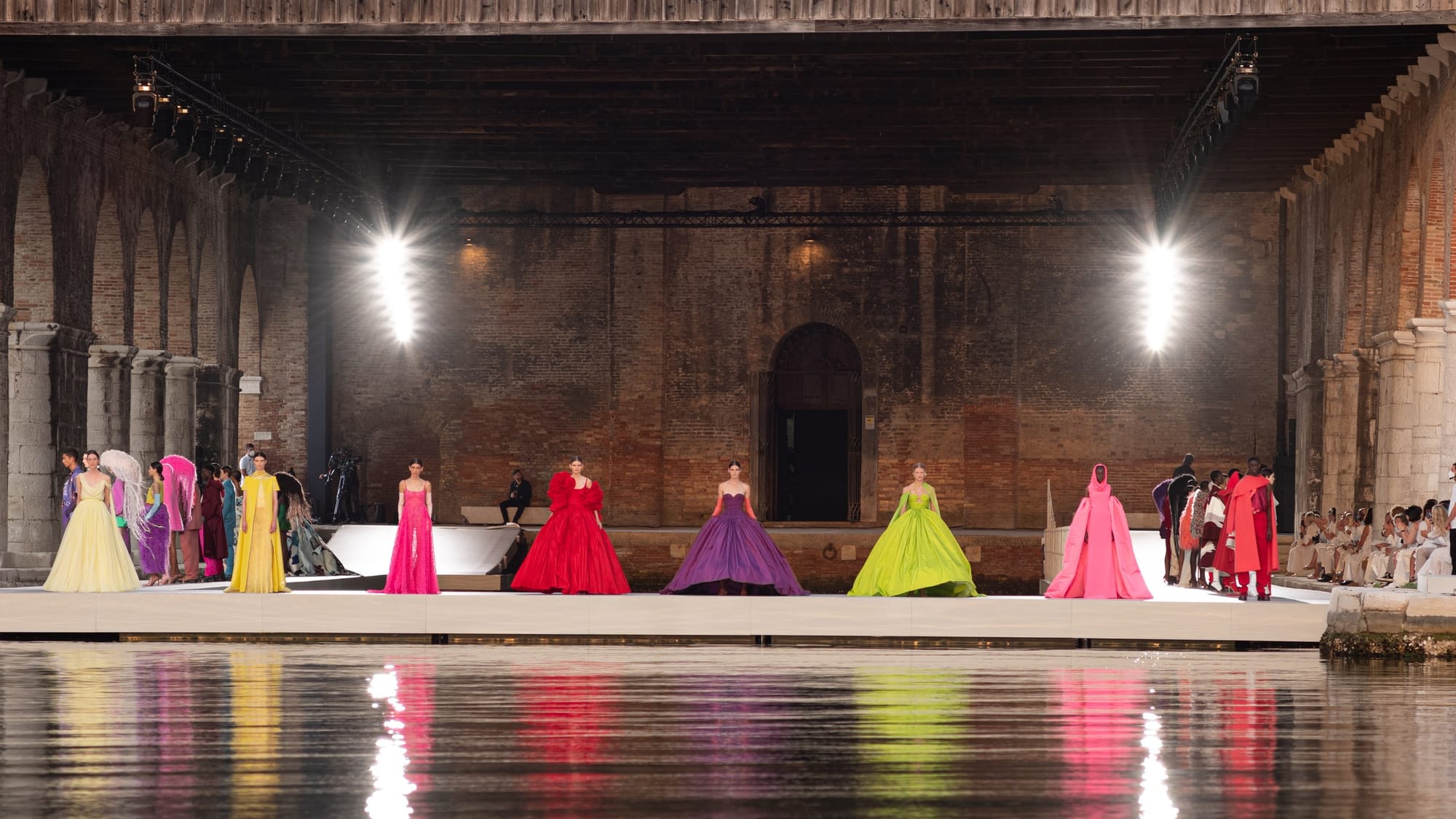
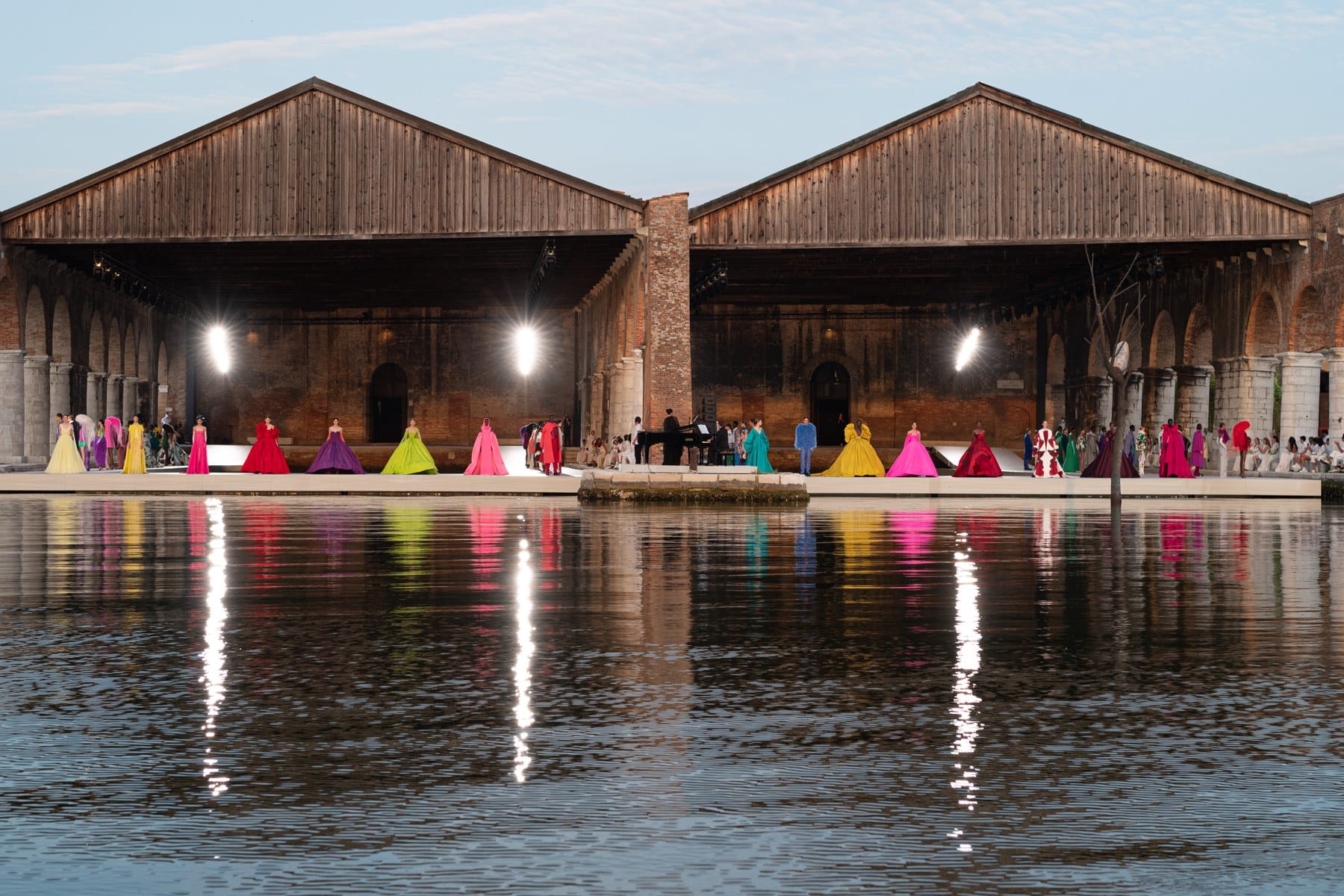
You just held a spectacular haute couture show in Venice, Valentino des Ateliers. How can haute couture survive in a world where most people buy their clothes from brands like Zara and Uniqlo?
Haute couture is the ultimate limited edition. Women who buy couture also wear denim and sneakers and things from Zara. It’s not dictatorial anymore, couture today is about the self-expression of women that want to be bold and unique. A celebration of one-of-a-kind-ness, you can embrace a different world through couture. It’s fine when a woman buys an haute couture coat and wears it with denim jeans and a t-shirt. Couture is not meant to be a total look.
Is this a big shift from when Valentino was very well known for its ‘lifestyle’?
I’m trying to include people that can appreciate beauty. I want to create a community of people that share the same values rather than a ‘lifestyle’. When celebrities like Frances McDormand and Carey Mulligan wear my collection at the Oscars, they are beautiful and glamorous as in the past but they also stand for the same values I stand for. It’s a link which goes deeper than just the aesthetic. It’s more emotional.
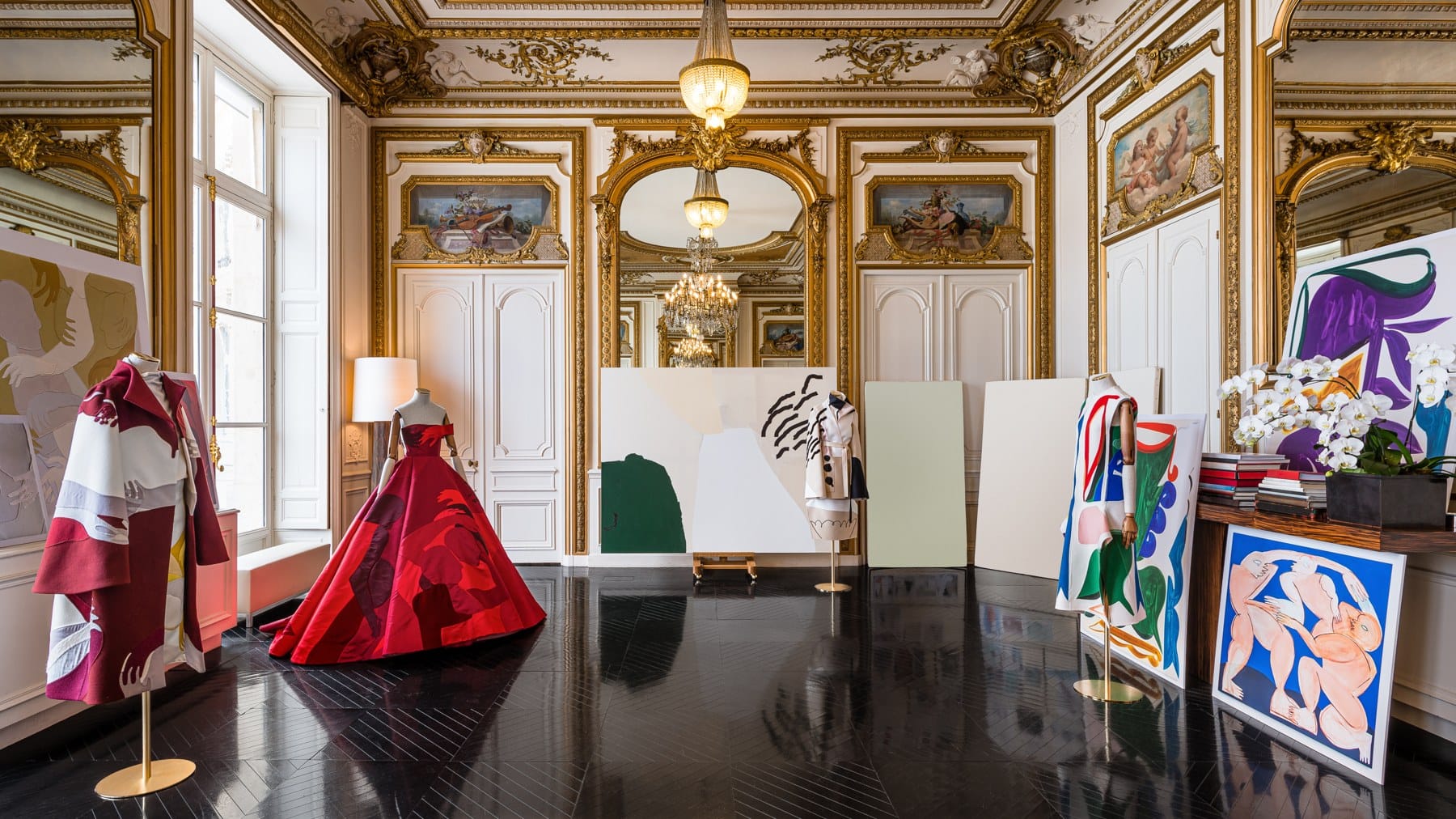
Valentino is famous for the use of red, but in Venice you used many other strong colours. Was this a fuller artist’s palette?
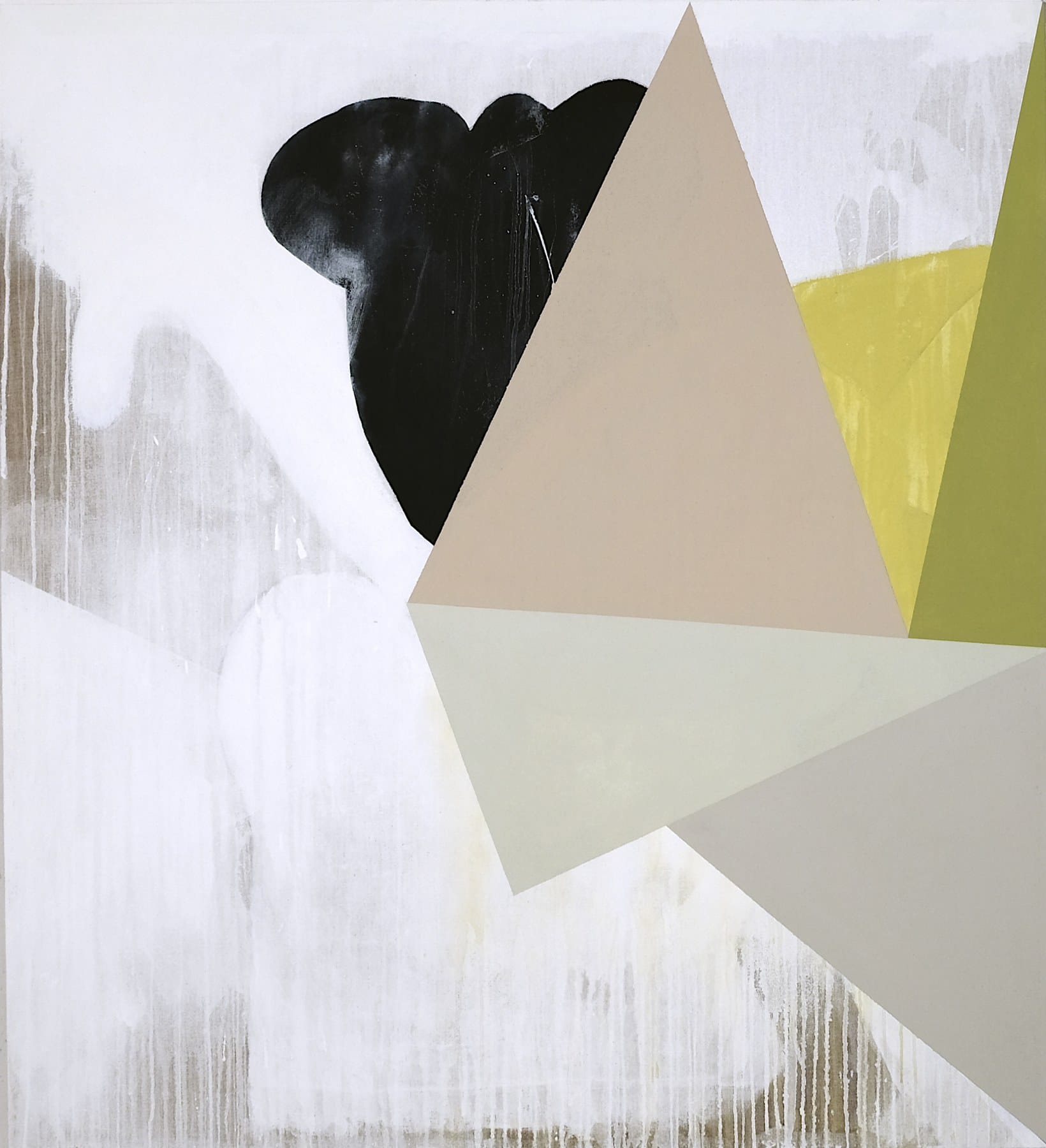
Art is for art’s sake, fashion has to be related to the body. They are different languages with different purposes. Being in dialogue with artists, mostly painters, I didn’t want just to create a couture dress with a painting applied on top, like a museum t-shirt. Talking with the artists changed my ideas, because I wanted not only to translate the space of the artwork but also to get the same spirit of the artist, to create movement and dimensionality. The painter Jamie Nares, with whom we did the last dress of the show, uses these big, big brushes to make just one sign. I decided not to do a coat that I had in my mind but to do a very feminine and dramatic dress, because it was more meaningful. Seeing this very feminine dress which came from our conversation as the last dress of the Venice show was an emotional moment for me that was both professional and personal.
Art has no practical purpose and is made to last. Is fashion made to last?
Fashion is not art because the purposes are different, but fashion can have the same dignity as art. Fashion is not forever as art should be, but our wish is to be a lasting witness to our times. Yves Saint Laurent led the change for women in the 1970s. His collections in the 70s and 80s were of the moment, but they will last forever because they witness a change of society, not only of clothes. A designer has a voice. Hopefully, as a designer doing couture you use your voice to lead change in the world of men and women.
How do you witness this Covid time, which none of us could have imagined before?
By hoping for a world with no boundaries, of genders, characters, sizes, ages, whatever it is. Values are much more important than barriers.
Pierpaolo Piccioli, the fashion show as spectacle is something quite new. Are shows like the one in Venice cultural events?
I start every collection with a very precise picture of the finale in my mind. I work back from that and start creating the collection, the colours, the casting. I want to involve all the people who work with me every day in that picture. I want them to give a feeling of lightness. I don’t want to see the technical, because when you show too much technicality you miss the magic about fashion. I explain my final picture to them because when choosing between two good colours I want the one that is closer to my final picture. In fact, I’m more interested in the balance of colours, because you don’t invent colours but you can invent a new balance of colour. You can link two things together that usually are far, and immediately, if it works, you have a new balance, a new harmony. That’s the real thing, the feeling of joy and hope that I want to deliver at the end of the show. I want art and fashion to be in conversation, and being in the Biennale, in that metaphysical space, was the real thing to me.
You like to listen and learn from young people, but can they afford to buy Valentino?
I love young people because they are free, and maybe most young people cannot afford the beauty of couture, but when you take your kids to a museum you don’t promise to buy the paintings. You educate them to beauty, to the fact that we are all different, all witnessing something through painting from our point of view, from our own deep emotion. Kids stand for the values that they believe in, they are not careless. Even in couture you educate them to lead change.
In the Italian Renaissance bottega Raphael or Michelangelo involved many other people. Do you need people around you?
For decades designers in Italy have been depicted as this solo big designer alone in their room with flowers and inspiration. If I didn’t have people with me, I couldn’t make my dream come true. I thank them every day for their passion. You need people that are involved with you. I have to inspire them, to explain to them, because every day I want them to put their passion, their fear, their love into a dress. I have two age groups in the atelier. People in their 60s and people in their 20s and 30s, mostly graduates, choose to be here. The generation in between do not, because doing something like a métier does not dignify the passion of career women. It’s important from my side to give people dignity, to give them value, because if not couture won’t exist anymore in Italian culture.
What is Valentino today?
It is freedom. It is equality. It is still beauty, but more beauty of identity than beauty of aesthetics. It’s deeper, multi-dimensional. I want to propose values to fashion. I want to be relevant, to embrace the world of today. I want to face it and not live in the past. Mr. Valentino himself is part of my job; I worked with him, I have a lot of respect for what he did, but without nostalgia. This house welcomed me years ago, and I’m very grateful for this but I have to be faithful to who I am. Being in Valentino for twenty years is also part of my DNA, my identity. Like Rome, it’s a past that lives in the present. But it is definitely the present. Valentino today is about now.
If you were a professor with students from many different countries – boys, girls, Chinese, Africans, Germans, whatever – when they say, “Listen, we want to be designers, we want to work with you, we want to become the new fashion people,” what would you say?
I would tell them to be faithful to who they are, not to change, and not to feel that they have to follow the stereotypes, to be in a box. I didn’t follow any rules. I come from the seaside and that’s part of who I am today. A designer has to have something that is beyond fashion, to believe in something deeper, something more emotional that touched you. It’s the same for fashion, for music, for cinema. You can create emotions through delivering your very personal idea of beauty.
Then ultimately you do want to make people beautiful?
I want people to be proud of who they are, exactly how they are. For both men and women I always look for grace, the harmony that comes from aura, more than beauty. It’s about something that comes from inside and outside together, and you can look for the same in both men and women. I think that it’s important today that we say, “Come as you are. You will be welcome.” That’s the most interesting idea of beauty for me.