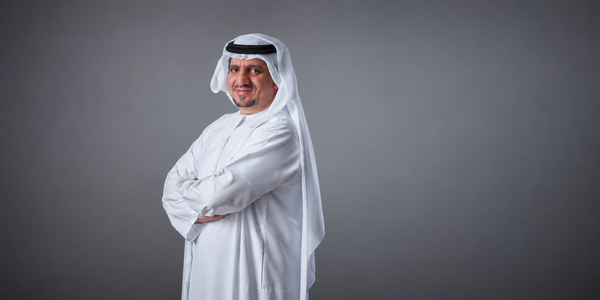
In the dingy lobby of a London hotel, Wadah Khanfar makes room for me on the sofa and says he is feeling fantastic. "It's one of the most beautiful moments in my life. You know when you wake up in the morning and you don't have that kind of responsibility – to watch the screen and make sure there are no mistakes – it is relieving. To be able to go swimming early in the morning and have breakfast and sit with your wife, it's amazing. I haven't done this for years."
Chilly weather has put him off bringing his five children on holiday to Britain but in a few days, after this first round of speeches and interviews is over, he and his family will go somewhere warm for a rest.
Khanfar has come to London from Doha via Cairo, where he met some of the leaders of Egypt's revolution. He never stops. He has been working 18-hour days for eight years, "Everywhere I go, I find myself watching the screen, whether sitting at home with my iPhone or my mobile, there’s always something."
A few months ago, at the age of just 43, Khanfar left one of the best jobs in the world. As director general of Al-Jazeera, he led the transformation of Arab television that some believe actually enabled the Arab spring to take place.
On TV and Twitter, he insisted the decision to resign was his own, to widespread disbelief but Professor George Brock, head of journalism at London’s City University, suggested he had sacrificed himself "to save Al-Jazeera". So is Al-Jazeera, which celebrated its 15th anniversary last November, under threat? If so, where from?
The channel's independence has been challenged from several directions recently, highlighting the tightrope it must walk in its dealings with the West on one hand and Arab states on the other. Khanfar has always insisted that the hefty subsidy paid by the Qatari royal family to Al-Jazeera did not buy editorial influence and says the support of the emir and the chair of governors insulated the channel from the complaints of foreign governments.
But the situation of Qatar itself has become more complicated, as the emir has pursued an active policy of punching above his tiny country's weight and shaping a new role for Qatar in international diplomacy. WikiLeaks showed Qatar badmouthing Egypt and promoting itself as an alternative broker in the Middle East, while there have been reports that the Taliban may open a Doha office from which to conduct negotiations with the Americans.
Khanfar's resignation followed the release of another WikiLeaks cable that showed him bending to US pressure over footage of injured Iraqi civilians, leading some to conclude that the Qataris sacked him to save face. His replacement by a member of the Qatari royal family, a former gas executive, has been seen as proof that the Qataris have adjusted the broadcaster's remit and drastically shortened the reins.
Khanfar says, however, that his departure has nothing to do with any of this. "Okay, we have millions of rumours about why and how and who, but the story actually is, that after this year of our coverage, I think we achieved the peak of our presence."
He talks about journalism with a joy and sincerity wonderful to hear for a fellow journalist toiling away in an organisation battling multimillion-pound losses in a British media landscape poisoned by the cynicism of some of its owners. Since I don't want to think he's not telling the truth, I believe him. It may be that Khanfar resigned because he knew the greatest days of his editorial freedom were behind him and that Al-Jazeera's coverage of uprisings closer to home in Bahrain and Saudi Arabia could not equal the glory of those February days when 24-hour rolling news helped ensure the safety of the Tahrir Square protesters. But resign he did.
"This Arab spring is going to continue for years," he says. "I don't think it's going to end tomorrow but the biggest part is to start the revolution and that has happened. The greatest success was in Egypt and Tunisia, in the rest of the Arab world we have a more complicated situation and on a personal level, I thought this is the right moment for me to move on, to become part of the building of a new Arab world."
Khanfar used to be a foreign correspondent and is full of great stories of life in the field. Although he must have been brave, reporting from Kabul and returning to Iraq through Kurdistan after he was kicked out, he does not seem all that interested in war. One of his favourite tales is of eating a rooster under the stars after getting lost in southwest Zimbabwe. Khanfar wrote a thesis on African democracy and thinks he would have ended up in a think-tank if Al-Jazeera had not offered him a job.
He has always been keen to use the camera himself. "I discovered that in order to write a magnificent piece you should shoot the images because once you are filming, you are writing the script in your mind," he says. Once a group of armed Pashtun farmers mistook the camera for a chemical-spraying device aimed at their poppies, but he made them laugh by playing his footage to them. "I wrote a magnificent report, they started complaining about the government, about the Americans. They showed me how they refine it [the heroin] and told me why they are doing it."
He and seven younger siblings grew up in a village near Jenin on the West Bank. His father was a teacher and Khanfar left to study engineering in Jordan, where he met his wife, a novelist, when she gave a speech to the student union. Impressed by her courage, he proposed the same day. His family remains in Palestine and Khanfar calls it "a very beautiful, simple, isolated life" but politics was everywhere. "There was a feeling of protest and resistance in 1982-83, long before the Intifada."
He describes the mosque as a crucial part of village life. "Yes, I am a practising Muslim and I go to mosque whenever I have time – not every day, as you see. For me, Islam is a moral reference point, a source of inspiration: to work collectively with people, to love people and to help them, to concentrate on universal values of mercy, co-operation and tolerance."
The other universal value Khanfar has adopted is democracy, which he believes will eventually stretch across the Arab world, including Qatar and Saudi Arabia. "Some people have started to be critical of the Arab spring, to say that extremists will be brought into parliaments and so on. In my opinion, you have to accept this and deal with the ramifications because there is no other way. If you reject this, what other way are you going to pick?”
"The West needs to be patient with us, democracy will not come in six months or six years. In the West it took centuries, so allow us a little bit of time to get used to it. Some of the opposition leaders in Egypt were released from jail after the fall of Mubarak so you can’t expect them to behave like polished diplomats."
Listening to this passionate speech and later to his sketch of the Arab world as he would like to see it in 15 years' time – "a model like the European Union where people can exchange goods and travel freely. This is how we can bring together the wealth of the Gulf, the human resources of North Africa, the minerals and agriculture of Sudan, to make a proper, solid economy" – it is easy to imagine Khanfar as a politician. Intelligent, firmly of the younger generation, with real achievements behind him, why shouldn't he lead one of the Arab world's new democratic parties? Is he looking for a job?
"No, I'm not looking for a job, actually, but I'm looking to establish a project with colleagues from various parts of the world, to work together collectively for the cause of media, to protect our profession and advance its status."A united nations of media?
"We cannot unite everyone but people who are like-minded and have a sense of mission. What we need is the media to put people in the centre." This sounds backroom-ish compared with the power of running an actual TV station broadcasting to millions of people and deciding, for example, with which words and pictures to tell a story.
But the line that divides world affairs from media is perhaps not in the same place as it once was. For most of last year, debate blew back and forth as to how significant a role media played in the Arab spring. First it was the Facebook or Twitter revolution, then opinion leaders, headed by the New Yorker's Malcolm Gladwell, bit back and said "clicktivism" was a load of nonsense.
Perhaps unsurprisingly, Khanfar believes Al-Jazeera did play an important, though supporting, role. Or rather, two supporting roles. "When you are telling people for 15 years that they have the right to express their opinion, I think that will definitely, in the back of their minds, create a new atmosphere. The second issue was that wherever revolutions started, we were banned, so how did we cover them? For the first time, we discovered how valuable the new media can be. Without people and internet activists, we would never have been able continuously to cover the revolutions, we would have had no footage. That is why I always say, may God bless the person who decided to put a camera in a mobile phone. If you see the coverage of Syria, for example, almost every single image we broadcast came from mobile phones. That was a moment when media liberated itself from state control and people stood fast to support us."
The dynamic nature of this relationship between people and media, where demonstrators supplied footage via phones and websites to journalists working in TV and on the internet, was transformative. "You are giving me something," says Khanfar, "I am using it to amplify your voice, so you are benefiting and I am benefiting. That kind of unity between new media and organisational, mainstream, institutionalised media was brilliant."
But it cannot solve all the world's problems. Khanfar was recently in Somalia and regrets that Al-Jazeera has not done more to communicate the desperation of people there. "I could not take it, I was crying, there was a mother of six who had to sacrifice three children on the road because they were too weak to walk. People have been killing each other for 20 years and nobody cares."
His greatest achievement at the station was a huge investment in reporting. "I did not like the atmosphere of the newsroom," he says of his arrival in Doha. "The newsroom is there to filter, to make order. The reporter is much more free, closer to the people and full of excitement." His answer was to hire more correspondents, increasing the number of foreign bureaus to 72 and cutting back on studio discussions.
His hope is that the news machine he has built is indestructible – or at least, like a vast bureaucracy or a giant ship, slow and difficult to turn around. "There is a very deep conviction in the heart of the people who work in Al-Jazeera that if it changes its editorial line, it will very quickly lose its audience," he says. "Al-Jazeera has its own style, it has more than 3,500 employees and I don't think anyone will have the attitude of changing it because they will lose."
The station also confers status on its backers and Khanfar hopes this is too precious to be squandered. The channel’s launch, the year after the new emir deposed his father, was the first clue to the new ruler’s global ambitions and Qatar's successful 2022 world cup bid is one example of how his "bright idea" has paid off. But observers believe the next few years will be a balancing act, as the tiny Gulf state with a native population of just 225,000 and the highest GDP per capita in the world, plus 1.7 million migrant workers with no political rights, works to promote its own interests amid a sea of political unrest.
Does Khanfar not see that his replacement by a royal looks like one more move by the forces that have mobilised across the region to turn back the revolutionary tide? "Of course there will be centres of power and old regimes protecting themselves, we have to expect that. There has never been a revolution without a counter‑revolution."
But his faith in the people is unshakeable. "In Egypt people are smart, and what is reassuring to me is that they are monitoring this process very carefully. I don't think the Arab world will go back."