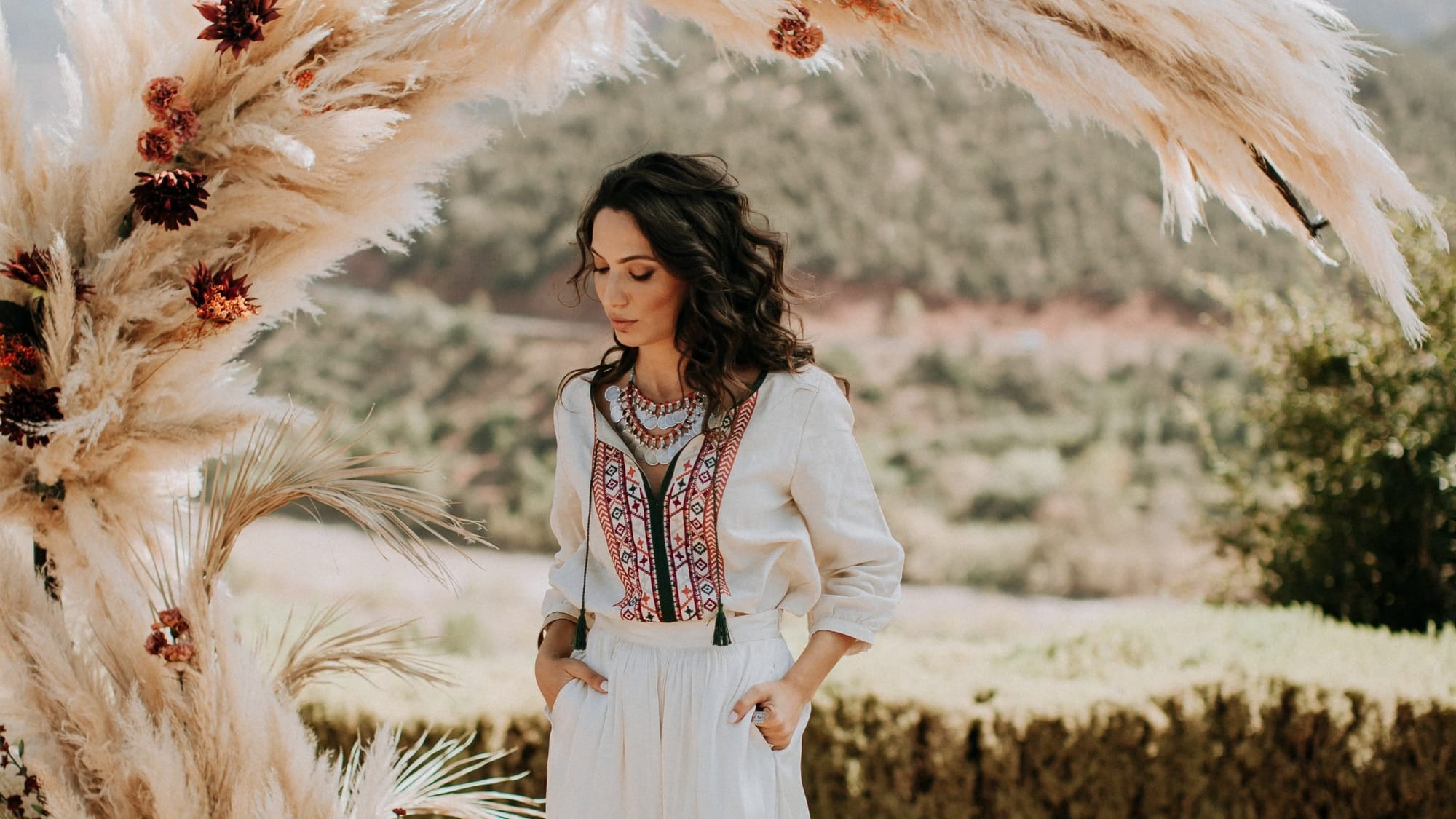
Could you describe your upbringing a little and how you went from being an architect to social media influencer and fashion designer?
I was born in Fez, Morocco in 1991 (I am 29 years old), I went to French school in Fez which really gave me the opportunity to embrace two different cultures, French and Moroccan as well learning many languages: Arabic, French but also English and Spanish. My parents are both architects and taught me the passion for Beauty in architecture but also in Arts, Craftsmanship and Fashion of course. That is why I followed their path and decided to study Architecture too.
So, after ma "Baccalauréat'', I flew to Paris to study Architecture in Paris Val de Seine School of Architecure. I also spent a semester in 2012 in Milan for an Exchange Program. At this time, I really wanted to keep in touch with my Friends and Family back home, so I started my blog "La Couleur du Moment" in 2012 to share with them my diary in Milan. Fashion was a key part of the content because I was sharing my "outfits of the day" on my blog. I quickly noticed that the audience was growing and it was not only friends and family who were visiting my pages, but a wider community and even brands. I have continued to work on my blog as a hobby until I finished school and I graduated from architecture.
Then I realized that I wanted to turn professional blogger and designer of my own fashion brand, because Fashion is a real passion for me and I love to create and share with my community.
Do you still work as an architect?
I am not working as an architect anymore but I am graduated from Architecture and I do not exclude the opportunity to work again on architecture projects someday. I am still very interested in architecture and read a lot of magazines on the subject which inspires me so much, for my Instagram page and my moodboards for every project I work on, especially for my brand Bahaar.
You were born in Morocco but matured into a global wanderer, is that how you see your label, a Moroccan brand with global appeal?
Exactly, Bahaar is a tribute to my Moroccan heritage: Fez, my hometown, is really the capital of craftsmanship in Morocco and even in the Arab world, since it is the oldest Medina in the world! My grand-mother used to sew kaftans, and I have always admired the beauty of caftans my mum, aunts and female relatives were wearing during family weddings and ceremonies. But I also wanted to refresh this heritage and to bring it to the 21st century while sharing it with the rest of the world. Today, social media are great tools to accomplish that. Now, I ship my collections up to Dubai, Hong Kong, New York and London.
When exactly did you start Bahaar and what difficulties were you required to overcome?
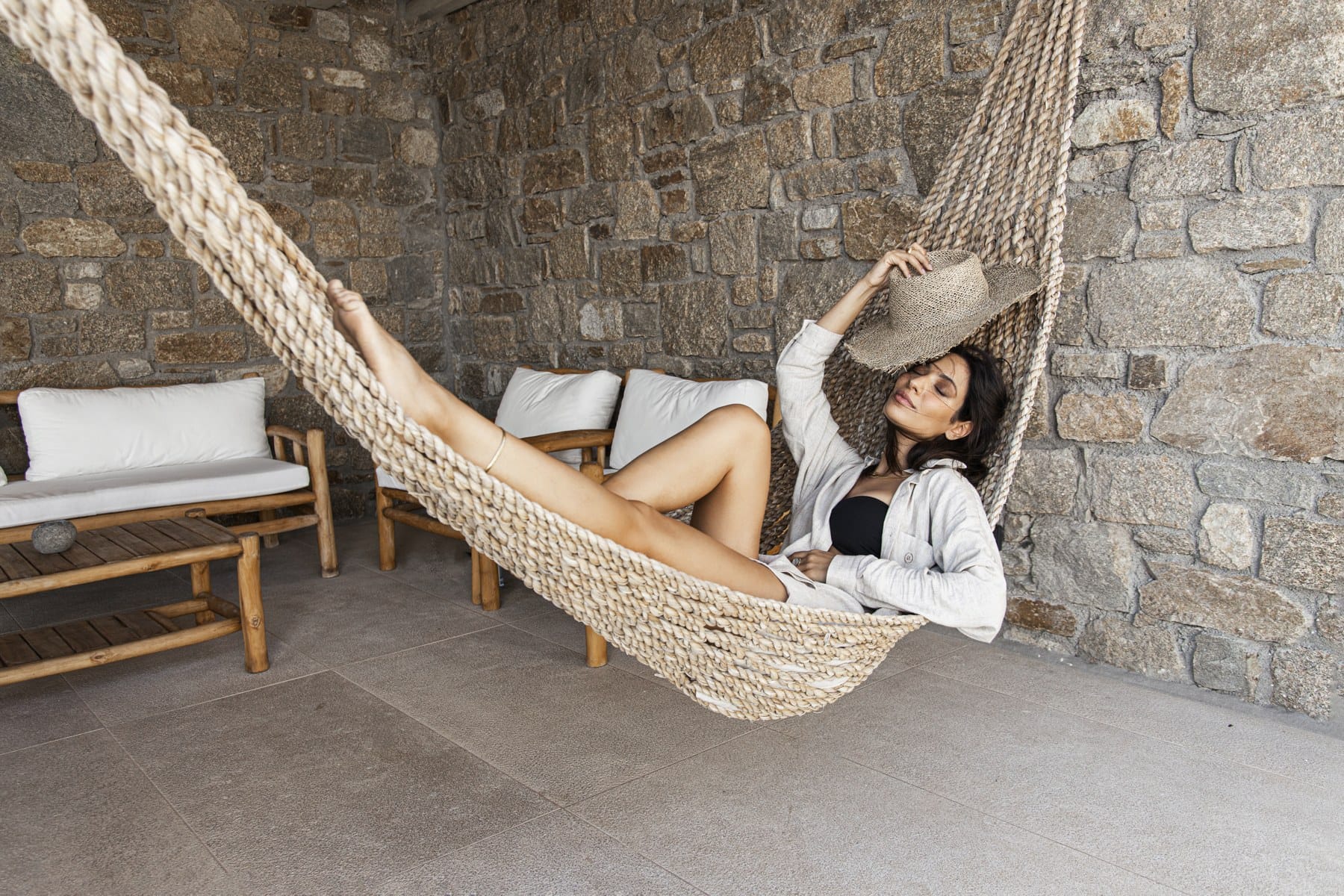
I have started BAHAAR two years ago, the brand is based in Casablanca and of course I had to overcome many difficulties. First, for the supply chain, the task was much harder than what I first thought because the textile workshops were not keen on working with a new small brand and were asking to produce a large volume of apparel, which was not realistic for me at that time. Then I had the chance to meet the founder of a smaller family-owned atelier who gave me the chance to produce my first collection, and we still work together now.
Among other difficulties for a moroccan brand is to have the international coverage because of the lack of diversity in the industry but I really feel that times are changing.
Apart from being Moroccan, you have described Bahaar as being epicurean and Bohemian, what exactly do you mean by those descriptions?
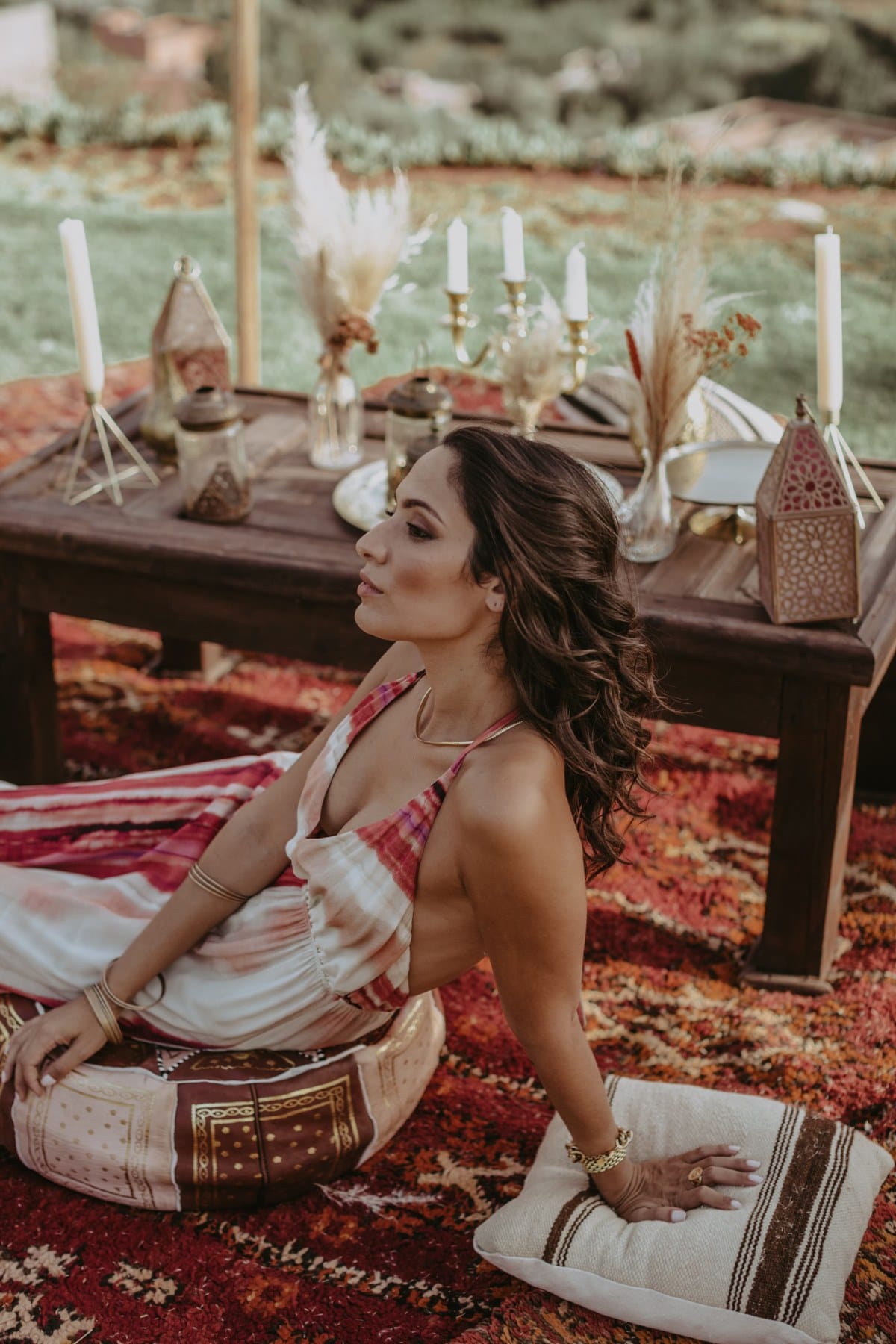
I describe Bahaar as Epicurean and Bohemian, because I see the brand as more than a fashion brand, but a label which showcases a Moroccan lifestyle where I think epicureanism is a philosophy of life. In Morocco, generally speaking, people like to enjoy simple things in life, as delicious moroccan cuisine (without obssessing on calories :)) with a warm glass of mint tea surrounded by family. Even when economic conditions are tough, there is sense of happiness ('Al hamdulillah will tell you every moroccan from any socio-economic background when you ask him how is he/she doing).
Morover, the naming of Bahaar, which means the sea in arabic evokes travel and well being. The fashion inspiration behind Bahaar is definitely "boho chic". The brand’s embroidered beach kaftans and kimonos are some examples of these epicurean and bohemian vibes.
Who is the typical Bahaar customer?
I would say there are two different profiles: one is a young woman with moroccan or arabic origins who is proud to wear a brand promoting her roots in a modern and twisted way.
An other profile is a fashionista from major fashion cities, such as Paris, London, Dubai... who loves the bohemian vibes and is seeking new emerging brand with an authentic and sustainable vision, such as promotion of local patrimony and conscious production.
What does it mean to you for your label to be ‘Made in Morocco’, what does that signify?
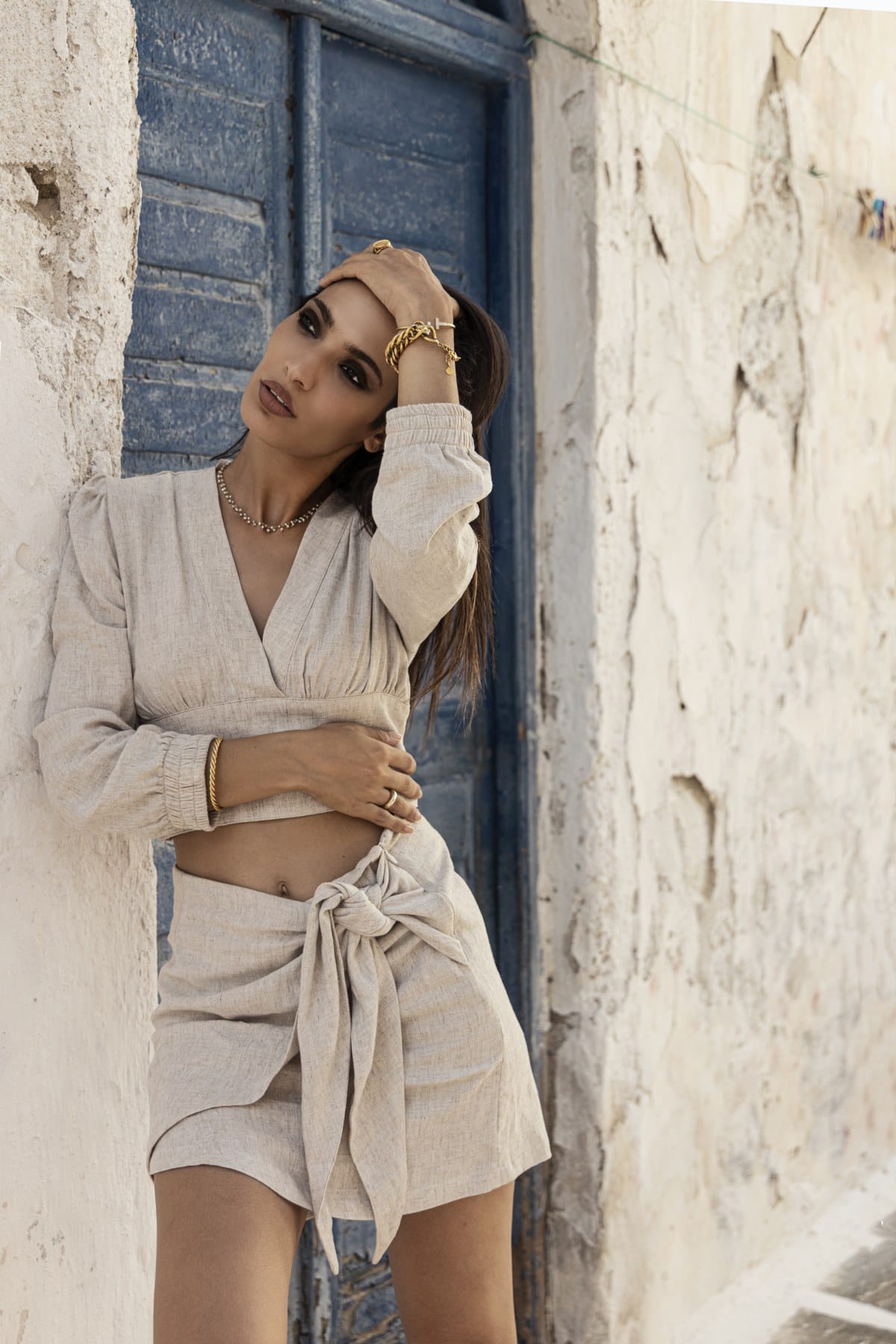
For me, "Made in Morocco" means that both inspiration and production are Moroccan. The brand relies on a local know-how in embroidery but also in patterns inspired by kaftans for example. The "made in morocco" also means for me sustainability because we source all fabrics locally using end-rolls from the local textile industry to upcycle it. I am convinced that it is high time for the textile industry to polute less and I want Bahaar to be a sustainable brand.
Are there any limitations to in Moroccan artisanal craftsmanship?
Moroccan artisanal craftsmanship is trully amazing and artisans have ancestral know-how but as designers, we have to work hard hand in hand with them to continually improve the quality and achieve international standards required from a premium brand.
Bahaar is also seasonless isn’t it?
Yes, we have designed some Bahaar essentials which can be worn all year long such as our oversize linen shirt, skirts, wide legs trousers... We also edited some evening dresses perfectly suitable for both winter holidays and summer parties.
It could be described as a resortwear label that centres around dresses, beachwear, tops and skirts, would you like it to grow into a fully-fledged ready-to-wear label or would you rather expand into lifestyle, swimwear, homeware or perhaps accessories?
As mentioned earlier, we see Bahaar as a lifestyle brand and I would love to expand the collections in the direction of lifestyle. Accessories is definitely a priority in the medium term. Especially since Morocco has a strong know how in maroquinerie, for example, and Fes is famous for its tannery where leather is processed by artisans.
Are you getting into recyclable materials? What about plus-sizes?
We upcycle fabrics in our process and we always prefer some plant-bases materials such as linen and cotton. We also are definitely looking to source recycled materials in the future.
Regarding plus-sizes, we have several designs which suit every morphology such as our kaftans which bring confort and style for everyone. We see sometimes a daughter buying a piece for her and another for her mother who wears a larger size. We really love noticing that two different generations adopt our designs.
How have you and your business had to adapt to the COVID-19 pandemic?
Personnaly, I was actually already used to work from home, so the lockdown has not really changed my habits but of course the pandemic has totally changed my travel plans. However, I try to always stay positive and I think it is a time when introspection can brings some good things and I think I needed some changes in my life, such as spending more time with my family.
Businesswise, the impact was really hard on the few retailers we were working on and consequently on our activity, but our core strategy has always been to be a digital brand, so hopefully the risk of a downturn in our sales has been mitigated. Moreover, I feel like customers have realized that they were consuming too much fast-fashion before the pandemic and that they want now to buy less but better products for them and for the planet, so they turned into smaller conscious brands like ours. Last but not least, our community on social media have really shown support and bought our summer collection event if it was issued late because of the interruption in the supply chain during lockdown in Morocco. We are so grateful for that!
Finally, where can our readers currently buy Bahaar?
They are all more than welcome to visit our eshop: www.bahaarofficial.com and our Instagram page: @bahaar_official. And they can also follow my personal page @sofyabenzakour!