There’s a certain irony to the fact that I’m leafing through James Hilton’s ‘Lost Horizon’, while the glittering Bosphorus Strait clearly defines the horizon from my hotel window.
Much less ironic is that the fictional utopia in Hilton’s story – a lamasery in the mountains of Tibet, whose inhabitants experienced longer lives, serenity and inner peace – is where the Hong-Kong based Shangri-La hotel and resort chain gets its name.
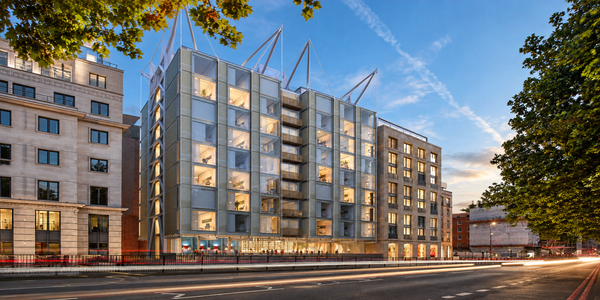
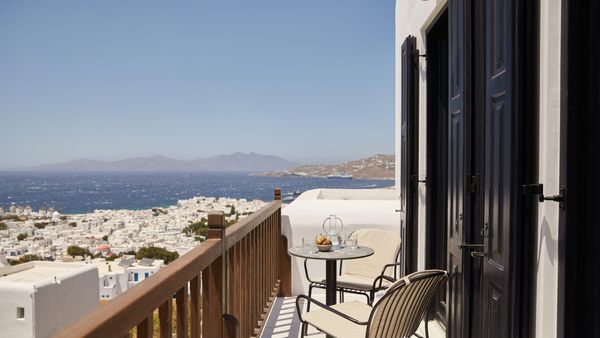
The Istanbul outpost of perfect peace is located in the well-to-do neighbourhood of Beşiktaş, on the European side of the city. In the panoramic view that unfolds from my room, I can see the Asian part of Turkey, with domes and minarets dotting the green hills rising from the shore. In so many ways, it feels as if I’m in the heart of what used to be known as the Orient here, rather than on the line that separates two continents. That the restored six-storey Neoclassical building housing the hotel was a 1930s tobacco warehouse is hard to believe. It feels more like a majestic Ottoman palace with its swathes of marble and traditional hand-painted vases and plates everywhere.
Walk through the doors and you cannot help but be drawn to the grandiose glittering chandelier that spills down from the dome-shaped atrium that lies at the centre of a winding staircase, twinkling ever so brightly. As your feet sink into the lavish carpeting and you notice the gentle scent pervading the place, you are served Turkish coffee as a welcome. It’s presented the traditional way with a ball of sweetened mastic wrapped around a spoon, which you dip into water and then chew on, to sweeten your mouth for the coffee.
A lot about being in the Shangri-La, no matter the location, is about rituals of service. It’s all in keeping with their motto that there’s no greater act of hospitality than to embrace a stranger as one’s own. As soon as I am settled in my room for instance, there’s a knock at the door and I am presented with a teapot of hot green tea.
Before I say anything about the room – I’m in a Premiere Bosphorus suite but almost all of the hotel’s 186 rooms and suites come with views over the straits) I want to mention something that accompanied me on my way up. It was a stunning 18-metre long silk painting, which appeared to move upward with me in a rush of pastel blues and greens, as I took the glass lift to my room. Especially commissioned for the hotel, it’s entitled ‘The Garden of Peach Blossoms’ and depicts a waterfall snaking through steep mountains. It makes a nice counterpart to the cascading chandelier. It’s one of over 1,000 pieces art in the hotel, a mix of European and Asian piece I’m told, although most of them look more Asian, like the Chinese ink landscapes in my room.
As I settle in, an immediate sense of soothing overcomes me. The room is a palette of creams and caramels, pearl greys and velvet cushioning offset by black furniture. The shimmer of the velvet is a subtler echo of the glitter and the glimmer of the lobby. As grand as it is, the lobby is too sumptuous, too ornate. You miss the details. The crystal and gold is overwhelming, but then I tend to prefer understated luxury anyway.
The next morning, I awake to the gentle cajoling of a pigeon perched on the lamppost below my window and my first sight is the Bosphorus stretched out before me. I can’t wait to get outside. Breakfast only reinforces my eagerness; the restaurant is surrounded by boats moored on the water. The selection is dizzying, a Turkish-style breakfast, including pastries like simit, acma, pogaca and börek and fried eggs with spicy sausage, a Chinese breakfast with Dim Sum and congee rice stew, even a Japanese breakfast with Bonito flake onigiri wrapped in seaweed, Miso soup, salmon roe and ponzu dipping sauce. Of course, there is also a standard Continental offering but I decide to go for the Lilliput omelette stuffed with Gruyere, spinach, sundried tomatoes, mushrooms and quail eggs, something rich, quick and easy.
The ambience of this all-day dining area is quite different to that of the lobby. Its rose gold floor lamps and spherical, interlocking ceiling pendants make it very contemporary, despite the marble and the dark chocolate oak furnishings are upholstered in warm hues of taupe, burnt orange and mineral blue.
I could have lingered longer but there is so much to explore outside. A ferry ride will take me to Asia and the hotel itself is only a short walk from the naval museum and the Dolmabahçe Palace. It is there, amongst the rooms made for 19th and 20th century Ottoman sultans, that I discover the true meaning of trompe l’oeil ceilings.
There’s so much to see in Istanbul, But after you’ve been to the mosques, to the Hagia Sophia and other sites from the Byzantine era or to the bazaar in search of antique carpets, after you’ve taken the ferry to the Prince’s Islands and it is time to return, you find that Shangri-La hasn’t only left you that book on the Lost Horizon for bedtime reading but the staff have also left you with a custom bookmark –a different one everyday – which bears an excerpt from Hilton’s novel. It’s a clever move and each somehow reminds you of the tranquil, enchanting world of Hilton’s imagination and which the hotel offers in buckets. That first night, I could have lain in the black marble bath forever, thumbing the remote controlling the TV smartly embedded in the large bathroom mirror but then there was still so much to do elsewhere in the hotel.
The Shangri-La is known for its signature Cantonese restaurant, the Shang Palace. Other than the Szechuan chicken which was not as spicy as I would have liked, I wouldn’t say the perfectly roasted Peking duck, the succulent shrimp dumplings or the freshly assembled salad with bits of salmon, juicy melon, orange rind and cucumber slices compared with the Chinese tea. Well, not the tea itself but the way it was served by a Kung Fu tea master, who was armed with a teapot that had the longest spout I’ve ever seen. In a ceremonial show, the tea master whirls the pot back and forth so quickly that it was like a blaze of fire, then he stops abruptly and honey-coloured tea is poured straight into your cup. It is all quite entrancing and dramatic.
As the final highlight of my stay, a little self-indulgence at the Chi Spa. I don’t know why I decided to forego the Asian-inspired treatments, which are based on traditional techniques for restoring balance to the body, but I don’t think I will ever regret choosing the hammam treatment instead. Lying on the cool marble slab, a woman poured water on me from a jug, forming rivulets that seemed to disappear around my limbs and neck. Then with a cloth dunked into a bucket of soapsuds, which she rolled around to swaddle me in a huge blanket of foam and moved across my body. It was the most spectacular sensation and I was immediately transported elsewhere. I was, I imagined, floating amongst clouds that were tickling me lightly as I passed. Later towel-dried and rubbed with Himalayan rose oil into a heighted state of stillness and serenity, I told myself that this must be what Shangri-La is really all about.
WHAT Shangri-La Bosphorus
WHERE Istanbul
OPENED May 2013
WHY A piece of Asian-inspired heaven, this hotel chain is known for its effortless blend of east and west. With a property now located at the point where the one physically becomes the other, the Shangri-La Bosphorus may have found its spiritual home,